
SANTO DOMINGO – A military training flight ended in an unexpected incident Wednesday afternoon, when an AgustaWestland AW139 helicopter belonging to the Dominican Republic Air Force crashed in the vicinity of San Isidro Air Base, the nation’s Ministry of Defense has confirmed. In what officials are calling a testament to the rigorous preparation of the country’s military air crews, every member of the helicopter’s team managed to evacuate the aircraft without harm. No fatalities have been reported, and no personnel involved in the flight suffered serious injuries. Defense department spokespeople emphasized that the quick, calm response of the crew during the emergency, rooted in their systematic training, was directly responsible for the positive outcome despite the crash. Early on-site assessments have confirmed that the aircraft sustained visible structural damage, though survey teams have not yet completed a full inspection to map out the full scope of harm done to the helicopter. Following standard procedural frameworks for military aviation incidents, the Dominican government has launched a formal comprehensive investigation to pinpoint the exact root cause of the accident. The investigation team will review flight data, conduct mechanical inspections of the wreckage, and interview crew members to reach a evidence-based conclusion. Officials also confirmed that the helicopter was fully covered by an active, valid insurance policy at the time of the incident. In a statement following the crash, the Ministry of Defense reaffirmed its unwavering commitment to upholding strict operational safety standards, maintaining full transparency with the public throughout the investigation process, and ensuring full compliance with all established national and international military aviation regulations.
作者: admin
-
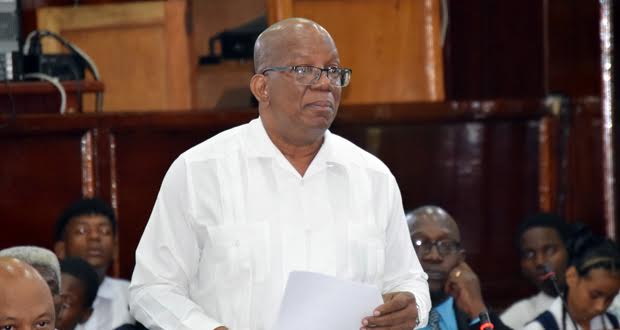
Pay salary hike, review budgeted projects now due to global crisis – former finance minister
As global oil price surges continue to squeeze household budgets across Guyana, a former senior finance official has laid out a series of urgent policy recommendations to the current Irfaan Ali-led administration, calling for immediate relief for working families and a flexible rethink of the 2026 national budget. Winston Jordan, who previously served as Guyana’s finance minister under the APNU+AFC coalition and previously held the role of budget director under the PPPC government, outlined his proposals during an interview with pro-opposition media outlet KAMS TV on Wednesday.
Jordan’s core proposal is an interim across-the-board increase in public sector wages and salaries, delivered far earlier than the traditional December timeline that he implies is often aligned with political timing. He argued that funding for this emergency relief is already available in the country’s current budget: the government has set aside a GY$9 billion allocation for cost-of-living mitigation that Jordan describes as “nebulous” and underutilized, saying the funds can be activated immediately to deliver relief to Guyanese struggling with soaring everyday costs.
Beyond immediate wage relief, Jordan is pushing for an early full review of the 2026 national budget, rejecting calls to wait until the midpoint of the fiscal year to address pressures stemming from the ongoing global energy crisis. He noted that global market shifts have drastically pushed up the cost of major infrastructure and public works projects, making the original spending projections outdated. Rather than sticking rigidly to pre-crisis spending plans, he said the government should re-evaluate all planned projects to assess their feasibility under current economic conditions.
As part of this budget reorientation, Jordan specifically highlighted the nearly GY$1 billion allocated to the Men on Mission (MoM) public project, suggesting that a portion of these funds could be redirected to expand direct cash grants for struggling households. He also called on the administration to speed up disbursement of the existing GY$100,000 cash grant program, putting much-needed money into families’ pockets faster.
Jordan also addressed other cost-of-living pressures rippling through Guyana’s economy, pointing to already implemented increases in domestic airfares driven by spiking aircraft fuel costs. He argued that the government should quickly move to negotiate fare adjustments for speedboat operators, noting that it is unreasonable to keep caps on fares that force operators to absorb immediate, sharp increases in operating costs that they cannot afford.
The former finance minister also criticized the current administration for its lack of urgent action on multiple fronts. He pointed out that during President Ali’s recent “Tea on the Terrace” social media broadcast, the head of state offered no concrete details on immediate or short-term measures to soften the blow of the global crisis on Guyanese households. He also called out the government for failing to develop and roll out a clear public policy and education campaign focused on fuel conservation, noting that no concrete measures have been introduced to crack down on predatory price gouging or expand alternative public transportation options to help households cut commuting costs.
-
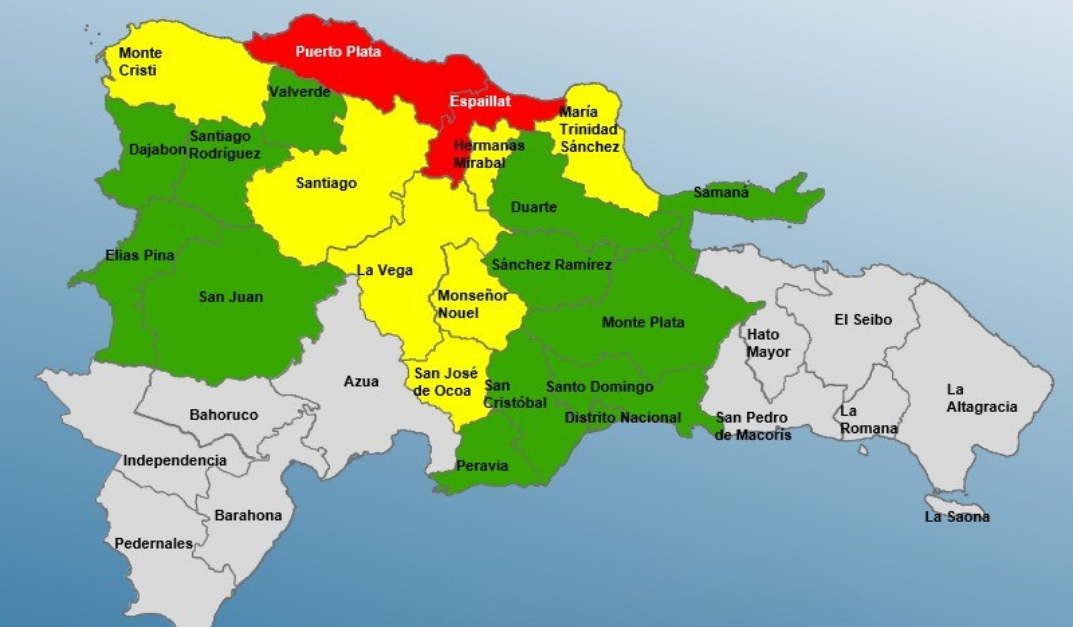
Puerto Plata and Espaillat remain on red alert amid heavy rain forecast
SANTO DOMINGO — Unfavorable atmospheric conditions driven by a prefrontal trough and warm east-southeast winds have prompted the Dominican Republic’s Emergency Operations Center (COE) to implement a graded national alert system across multiple regions of the country, with two northern provinces remaining on the highest warning level as forecasters predict prolonged heavy precipitation and extreme weather.
As of the latest update from COE, Puerto Plata and Espaillat, both located along the country’s northern Atlantic coast, continue to be under red alert — the most severe tier of warning for ongoing high-risk weather. The agency expanded its yellow alert, a secondary warning designation for elevated but less immediate risk, to 10 jurisdictions, including Monte Cristi, María Trinidad Sánchez, Hermanas Mirabal, Monseñor Nouel, Santiago, La Vega, San José de Ocoa, San Cristóbal, the province of Santo Domingo, and the National District, the country’s capital administrative region. An additional 10 provinces, namely San Juan, Elías Piña, Duarte (with specific focus on the flood-prone Lower Yuna region), Samaná, Valverde, Santiago Rodríguez, Dajabón, Monte Plata, Peravia, and Sánchez Ramírez, remain under green alert, which signals potential risk that has not yet reached higher warning thresholds.
National weather forecasting officials confirm that the combination of the prefrontal trough and warm moisture-laden winds will create conditions ripe for significant cloud buildup, periods of moderate to intense rainfall, sudden thunderstorm activity, and powerful wind gusts across large swathes of the country through the alert period. In response to the projected hazards, public safety officials have issued urgent guidance to residents living in all alert-designated areas. Local authorities are urging communities to avoid attempting to cross swollen rivers, creeks, and ravines, where fast-rising floodwaters can create life-threatening hazards, and to steer clear of all recreational water bodies while unstable conditions persist.
Maritime safety warnings also remain in effect along a large stretch of the Dominican Republic’s Atlantic coastline, extending from Manzanillo Bay in Monte Cristi province all the way to Cabo Francés Viejo in María Trinidad Sánchez. Along this route, operators of small and medium-sized watercraft have been advised to stay secured in port, as rough ocean swells, sustained strong winds, and poor visibility from heavy rain and lightning create major navigation risks for vessels not equipped to handle extreme sea conditions.
-
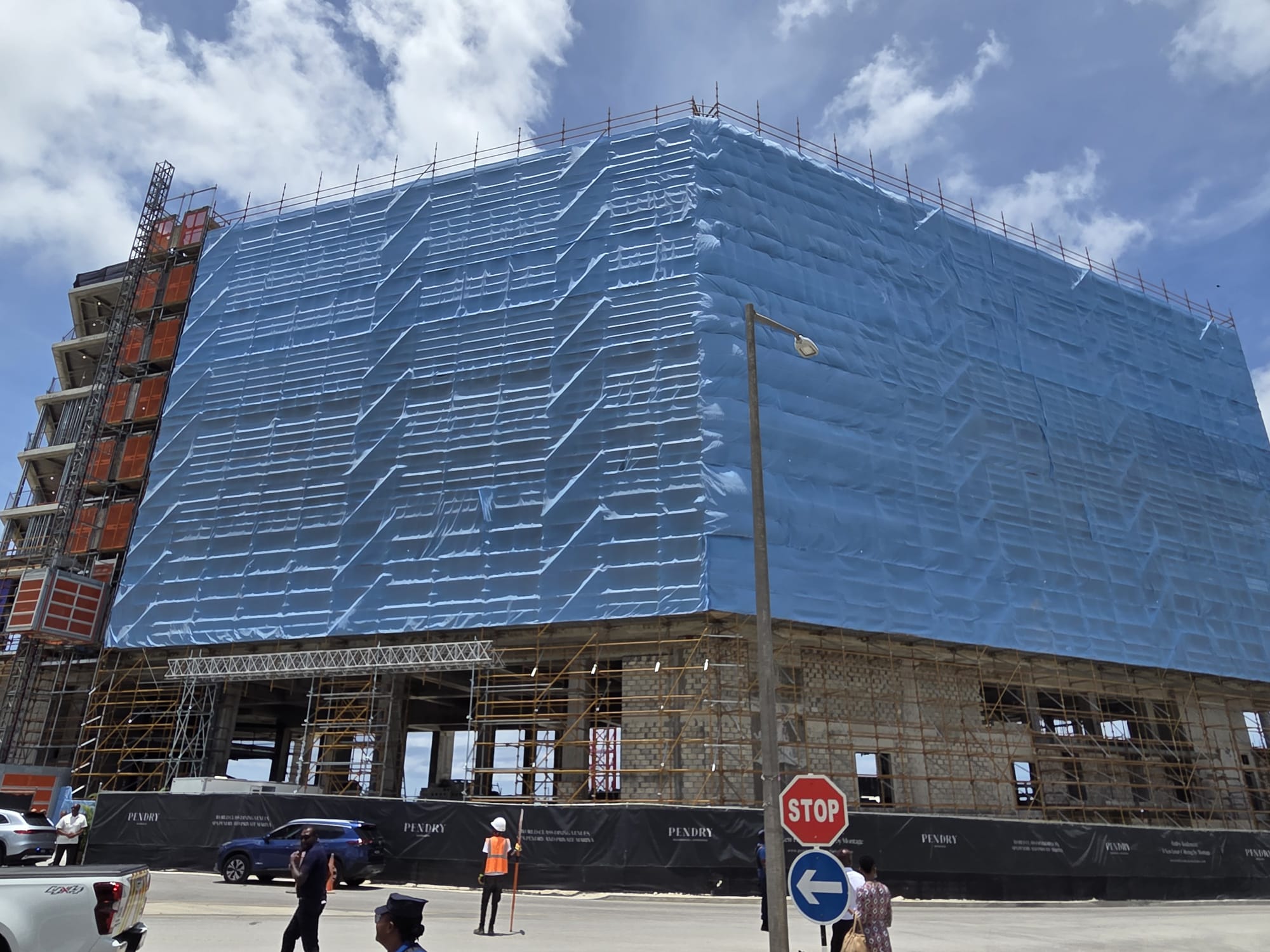
Pendry Barbados marks milestone as luxury resort nears completion
On Wednesday, a major milestone was reached for luxury hospitality in the Caribbean: developers celebrated the structural topping-off of Pendry Hotels & Resorts’ first ever international project, bringing the California-based brand one step closer to launching the Caribbean’s first Pendry-branded resort on Barbados’ scenic northwest coast, with full completion scheduled for 2027. The construction of this landmark mixed hotel-and-residential development is being handled by Aecon Construction Group, Canada’s largest publicly traded contracting firm.
The topping-off ceremony, which marked the end of the project’s core structural construction phase, drew high-profile attendance including Mia Mottley, Prime Minister of Barbados, alongside multiple senior government officials. The event doubled as an official formal introduction of the Pendry brand to the Caribbean region, positioning the upcoming resort as a signature global destination for the luxury hospitality group.
For Pendry’s founding family, the Barbados project carries far more meaning than just a business expansion. Michael Fuerstman, co-founder of Pendry Hotels & Resorts, shared that the development has already garnered widespread global attention among industry circles. “I travel around the world meeting clients and partners, and everybody wants to know about Barbados,” Fuerstman explained. “This is the one destination that creates the most excitement. It’s aspirational, it’s exciting, and it’s a great lifestyle.”
His father, Alan J. Fuerstman — founder, chairman and CEO of Montage International, the parent company of Pendry — recalled a personal trip to the island back in 1985, when his family visited to get a break from the stress of raising young children, including Michael. “To be standing here today, all these years later, is incredibly special for our family,” the senior Fuerstman said. He added that the entire resort was designed to blend seamlessly with Barbados’ natural coastal landscape, telling attendees: “Imagine just hearing the surf. You just open the windows and it’s so compelling. Our guests will hear that a little over a year from now.”
Leading the construction work, Aecon’s team emphasized that luxury hospitality requires rigorous attention to detail from the very earliest stages of development. Marty Harris, executive lead and senior vice-president of Aecon, noted that exceptional quality in hidden structural work is what ultimately creates a standout guest experience. “Luxury begins long before a guest arrives,” Harris said. “It begins in the foundations, the structures, and the details that will never be seen but will always be felt.”
Beyond construction, the project has also prioritized investment in local Barbadian communities. Aecon has already hired graduates from the Barbados Construction Gateway Training Initiative to work on the resort, and launched local outreach programs including the “From Our Home to Yours” community support initiative.
When it opens its doors in 2027 as scheduled, Pendry Barbados will feature roughly 80 oceanfront guest rooms and 46 high-end luxury residential units. The sprawling development will also include a 110-berth marina, the exclusive Pendry Yacht Club, a branded Pendry spa, and multiple unique dining concepts catering to both guests and local residents.
Michael Fuerstman noted that the project’s rare combination of amenities and setting makes it one-of-a-kind in the global luxury real estate and hospitality space. “I don’t know that there’s another hotel residential development like this in the world,” he said. “It’s very, very unique.”
Pendry leadership extended explicit gratitude to the government of Barbados for its ongoing support throughout the development process, which turned the brand’s first international expansion from a vision to a reality. Closing out the topping-off ceremony, Alan Fuerstman framed the project as a long-term investment in the island, not just a construction project. “We are building far more than a resort. We’re building relationships, creating opportunity, and laying the foundation for a legacy of hospitality that will extend well beyond these shores,” he said.
-

Central Bank going fully paperless by year-end
The Central Bank of Barbados has announced an ambitious plan to transition into a completely paperless, fully digital institution by December 21, 2026, a shift that is projected to cut annual printing expenditures by more than $70,000. Central Bank Governor Dr. Kevin Greenidge revealed the milestone timeline during an address to the Barbados Association of Administrative Professionals conference held Wednesday at the Lloyd Erskine Sandiford Centre, expanding on the details of the initiative in an interview with local outlet Barbados Today.
Dr. Greenidge outlined three core drivers behind the organizational shift: boosting operational efficiency, delivering significant long-term cost reductions, and modernizing the bank’s internal and external communication infrastructure. Beyond financial savings, he highlighted the environmental benefits of a paper-free workspace, noting that eliminating bulk paper storage creates a cleaner, more organized office environment. Early internal projections actually place annual printing cost savings closer to $75,000, a figure that does not include additional savings from reduced storage, handling, and logistics costs associated with physical documentation.
The full transition is not a sudden pivot, but rather the next phase of a multi-year digital transformation effort initiated by previous Central Bank leadership, according to Dr. Greenidge. When he took office, the groundwork for digital modernization was already in place, and his administration has advanced the agenda to create an end-to-end paperless digital ecosystem, rather than incremental digital updates to existing paper-based workflows.
To ensure a smooth transition for all staff, the bank has developed a full suite of custom digital tools to replace legacy paper processes, including cloud-based platforms for document uploading, collaborative editing, and real-time cross-team project work. Even core regulatory functions, such as bank supervision and application processing, have been moved entirely to digital systems. Currently, the initiative is roughly 70% complete, with progress accelerated by widespread staff buy-in and comprehensive upskilling programs. Every role at the institution — from entry-level support to senior leadership — has been equipped with digital tools tailored to their responsibilities, and all staff have completed targeted training to build proficiency with the new systems.
Recognizing that full digitalization could create barriers for members of the public less familiar with online systems, the Central Bank has built explicit digital inclusion provisions into the rollout to avoid leaving any demographic behind. For members of the public accessing core services such as foreign exchange approval, which is now fully digital, the bank offers in-person guidance to help users set up accounts and navigate online processes, enabling self-service for future visits.
As part of its broader commitment to digital literacy across Barbados, the institution has partnered with the Barbados Association of Retired Persons (BARP) to distribute more than 200 iPads to older adults, supporting ongoing community digital skills training. To address growing concerns around digital risk, the bank has also substantially upgraded its cybersecurity framework, launching a dedicated specialized unit that leverages artificial intelligence and other advanced technologies to monitor, detect, and mitigate emerging threats.
Dr. Greenidge emphasized that while the new BIMPay digital system offers significantly stronger cybersecurity protections than legacy infrastructure, no system can eliminate digital risk entirely. As a result, the bank runs ongoing public education campaigns to help users recognize common scams and fraud, and requires mandatory cybersecurity training for all staff, including regular phishing simulation tests that require additional training for employees who fall for simulated attacks. Dr. Greenidge also reminded the public that the Central Bank will never request sensitive personal or financial information over the phone, urging consumers to remain vigilant and avoid sharing details with unknown callers.
Widespread staff enthusiasm has emerged as a key catalyst for the rapid progress of the transition, with employees embracing the flexibility and efficiency of digital workflows. Staff can now access full documentation from any device — smartphones, tablets, or laptops — eliminating the need to carry large physical binders and notes, and cutting down the time required to locate and share critical information. What began as a top-down strategic initiative has now developed its own momentum, with staff taking ownership of the new systems and advocating for further digital improvements across the institution.
-
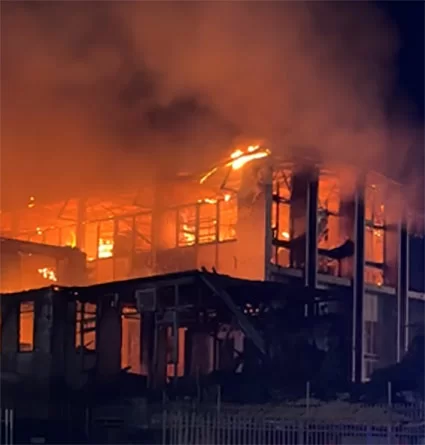
Felle brand verwoest pand in binnenstad
A large-scale, intense fire erupted at a building located on Heerenstraat in central Paramaribo, near the Happy Supermarket, at approximately 7:15 p.m. local time on April 22, local emergency services confirmed in initial reports. When first responder firefighters arrived at the incident scene, they encountered a fully out-of-control blaze that was already spreading rapidly across the structure. The intensity of the flames and the thick, heavy smoke generated by the fire prompted emergency officials to immediately escalate the response, calling in additional resources to tackle the emergency. As of the latest update, firefighting teams remain on site working continuously and aggressively to extinguish the fire, with a top priority of stopping the blaze from spreading to nearby neighboring buildings that sit adjacent to the affected structure. At this stage of the investigation, no official information has been released regarding the root cause of the fire. Local law enforcement has already cordoned off the entire affected area to preserve public safety, prevent unauthorized access, and keep civilian bystanders at a safe distance from the active hazard. No updates on civilian or first responder casualties have been released in the initial hours following the outbreak of the fire.
-
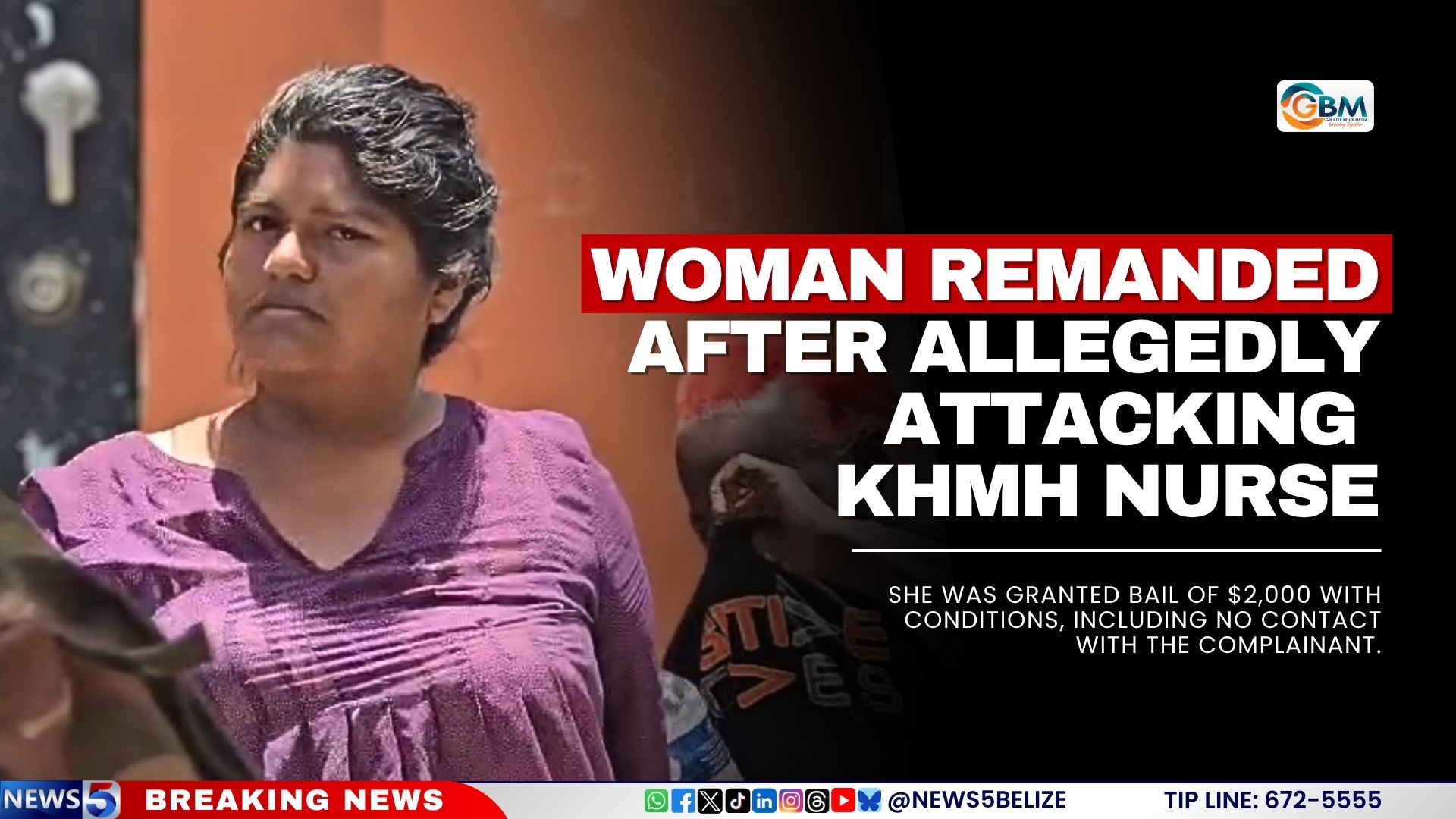
Woman Remanded After Allegedly Attacking KHMH Nurse
A shocking incident of violence against healthcare workers has unfolded in Belize City, leading to a 39-year-old woman being placed in custody after she failed to post bail following accusations of a brutal assault on a registered nurse. The accused, Dulce Portillo, now awaits her next court date at Belize Central Prison, after being unable to meet the $2,000 bail set by the court.
The altercation dates back to Monday night at Karl Heusner Memorial Hospital, the country’s leading public healthcare facility. According to official allegations, the conflict began when Nurse Viviana Lino was notified that a woman – later identified as Portillo – was physically striking a patient in the hospital’s surgical ward. When Lino stepped in to intervene and de-escalate the situation, Portillo turned her aggression onto the responding nurse.
In a formal statement to local law enforcement, Lino detailed the sequence of the attack: Portillo first pushed her, forced her onto a nearby hospital bed, and attempted to climb on top of her before grabbing a heavy IV pole and attempting to strike the nurse. When Lino managed to flee the room, the violence escalated further, with Portillo chasing her through the ward while still wielding the IV pole. Hospital security was quickly alerted, and local police were called to the scene to take Portillo into custody.
Portillo made her first court appearance on April 22, 2026, where she appeared without legal representation. When she attempted to address the court directly, Senior Magistrate Mannon Dennison intervened to stop her statement, in order to protect her from making self-incriminating remarks. The magistrate granted bail set at $2,000, with a standard condition that Portillo have no contact of any kind with Lino, the complainant in the case.
Unable to come up with the funds to meet the bail requirement, Portillo was immediately remanded to Belize Central Prison. Her next court hearing is scheduled for June 10, 2026, when the case will be revisited and legal proceedings will move forward. The incident has renewed local conversations around the growing issue of violence against healthcare workers, who often face unprovoked aggression while carrying out their duties in hospital settings.
-

Church leaders call for harsher sentences for gun offenders
A wave of violent crime has pushed Barbados’ top Christian church leaders to table sweeping, controversial reforms to the country’s gun and sentencing laws, demanding stiff, fixed prison sentences for murderers and illegal gun owners that they say will break the cycle of violence plaguing the island nation.
The call for reform comes just days after a brutal triple killing in the Thunder Bay neighborhood that left three young men dead, a tragedy that galvanized the National Network of Pastors & Combined Churches to call an urgent press conference Wednesday at Restoration Ministries International Sanctuary in Brittons Hill to lay out their proposals.
At the core of the group’s plan is a push to replace Barbados’ existing death penalty for murder with a rigid 40-year sentence without the possibility of parole, a sentence Apostle David Durant, a leading voice in the movement, argues functions as a meaningful life sentence that will act as a far stronger deterrent than current weak penalties. He stressed that for the cold-blooded, pre-planned homicides that have shaken communities across the country—like the recent mass killing—current lenient sentencing has failed to stop violent offenders, noting that a 10-year prison term is far too short to give potential killers pause before they act. Durant also drew a clear distinction between premeditated murder and non-premeditated cases such as murders of passion or manslaughter, arguing the harsher 40-year mandate should apply specifically to the gang-related and organized killings driving the current violence crisis.
For anyone convicted of unlawful possession of a firearm, the pastors are calling for a mandatory 10 to 15 year prison term with no exceptions. Durant insisted that immediate, lengthy custodial sentences will get repeat violent offenders off the streets immediately, breaking the criminal networks that have spread gun violence across the island. “We need stronger penalties. We cannot just give a slap on the wrist, we can’t do that any longer,” Durant stressed.
Beyond sentencing reform, the pastors called out systemic failures and potential institutional corruption that they say are enabling the flow of illegal guns into Barbados. Durant claimed the illegal gun trade is a well-organized criminal syndicate with connections stretching from grassroots criminal networks to high levels of national leadership, pointing to unsolved questions around how guns are smuggled in through shipping containers, and suggesting security scanners at ports are often not operational when shipments carrying illegal weapons arrive. “It has to be well-organized from the grassroots to an unspecified level… They have to know,” Durant said. “If guns are found in a container, who brought in the container in the island? Containers come to no name? Scanners not working at convenient times… we got to get real.”
While fellow church leader Apostle Timothy McClean endorsed the call for harsher post-conviction penalties, he warned that punishment alone cannot resolve Barbados’ deepening violence crisis. McClean emphasized that stric sentencing only addresses crime after it has already devastated communities, leaving behind broken families and children left without parents. He argued that national leaders and community groups must address the root causes that draw young men to violent gangs in the first place, saying “We need to work before the crime has occurred. What is causing men to commit these levels of crimes, to find gangs to be attractive? We need to get to that issue and we need to arrest that issue.”
Beyond policy advocacy, the church network has organized a nationwide spiritual mobilization to confront the crisis, kicking off with a National Evening of Prayer and Worship scheduled for Thursday evening at Golden Square Freedom Park. The event, which is set to begin at 6:30 p.m., is intended to address the growing climate of fear and emotional numbing that has spread across the country as violence rises, while bringing together citizens for collective prayer and community action.
Organizers say the gathering will not be just a routine worship service, but a targeted effort to pray for change, comfort for grieving families, guidance for national leaders, and an end to the wave of murder and violence. “We’re not going there just to have another service, but we really want God to do something… we want a visitation to this island,” Durant said. “We’ll be praying for the crime and the violence and the murders that are really bringing a lot of fear… and also… many families… that are grieving.”
The prayer gathering is the centerpiece of a month-long national initiative, with April declared a national Month of Prayer. Churches across the country have been encouraged to open their doors daily, and citizens are invited to join collective prayer for an end to violence three times a day, at 6 a.m., noon, and 6 p.m.
-
Tourism strategy signals shift to ‘Tourism 3.0’ model
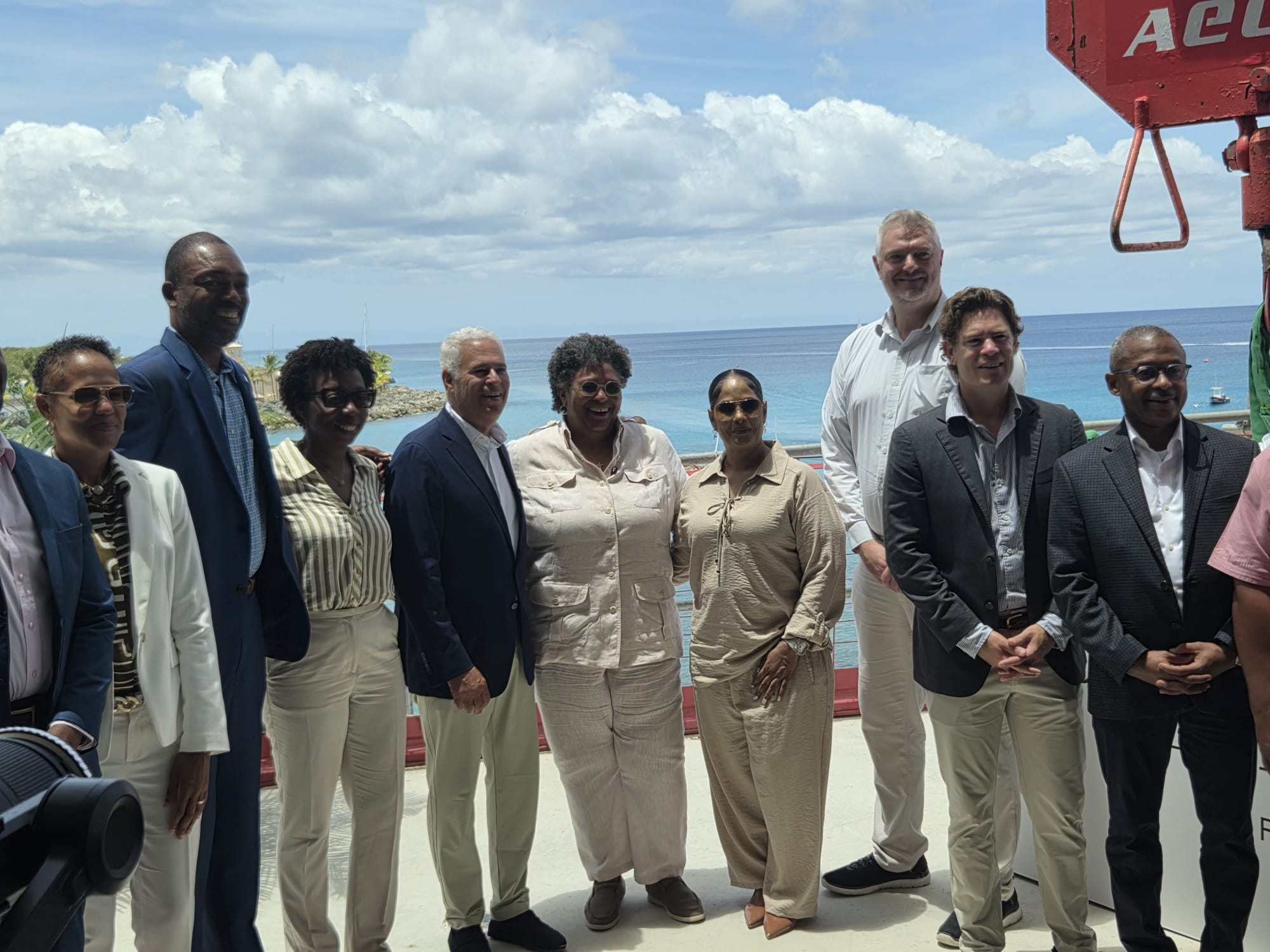
Against the backdrop of lasting global upheaval from the COVID-19 pandemic, Barbados Prime Minister Mia Mottley has announced a bold, forward-thinking overhaul of the country’s signature tourism industry, labeling the new vision “Tourism 3.0”. Speaking at a ceremony marking progress on the Pendry Barbados Residences — a luxury villa development under construction in the parish of St Peter — Mottley framed the shift as a necessary evolution beyond outdated industry models, designed to build a more competitive, community-rooted and globally integrated tourism economy.
Even as Barbados holds a global-leading track record for high repeat visitor rates, Mottley argued that incremental change is no longer enough to keep the island nation competitive in a transformed post-pandemic travel landscape. After six decades of growth under earlier tourism frameworks that have powered national development since independence, and five years since Barbados became a republic, the time has come for a strategic reset, she said.
At its core, Tourism 3.0 is built on what Mottley called a “judicious blend” of two pillars: expanded local Barbadian ownership of tourism assets, and strategic partnerships with international branded hospitality developments. This balance, she explained, lets the nation tap into the global marketing reach of major international brands to drive higher visitor arrivals, while keeping economic benefits anchored in the local community. Mottley emphasized that this model will reinforce Barbados’ global reputation as an unrivaled travel destination, making it easier for travelers worldwide to discover everything the island has to offer.
Mottley pointed to several large-scale hospitality projects already breaking ground across the island as tangible proof that the industry’s transformation is already underway. These include the ongoing Royalton and Hotel Indigo developments, as well as the upcoming Beaches Resort. She also expressed strong confidence that the Montage Group will finally revitalize the long-dilapidated former Four Seasons site — which she described as the “holy grail” of Barbadian tourism — putting an end to more than 20 years of underuse at the prime property.
A key strategic priority of the Tourism 3.0 framework is diversifying the island’s source travel markets. Last year marked a milestone: arrivals from the United States surpassed those from the United Kingdom for the first time in Barbados’ tourism history. Building on this shift, Mottley issued a clear directive to the Ministry of Tourism: secure new direct airlift connections between Los Angeles and Bridgetown. She noted that a non-stop 7.5-hour flight from the U.S. West Coast matches the flight time from London, opening access to high-value travel markets in Silicon Valley, San Francisco, and the Pacific Northwest, unlocking new economic potential for the island.
Addressing widespread shifts in the global labor market that have impacted hospitality sectors worldwide, Mottley reaffirmed her government’s commitment to a “New Deal” for Barbadian tourism workers. She stressed that frontline employees are the heart of the island’s tourism experience, and must be treated with dignity and fair compensation. Whenever the government offers tax and revenue concessions to tourism developers, she explained, a core condition is that employers guarantee wages and working conditions that support a decent living for local workers. Mottley tied this commitment directly to guest experience: stable, fairly treated workers deliver the high-quality hospitality that keeps visitors returning to Barbados.
Mottley also highlighted the community-centered ethos of the new approach, praising the Pendry Residences developers for their “neighbour-centric” planning. As part of the project, developers have committed to building a brand-new community fish market for the Six Men’s area, a tangible investment that benefits local residents beyond the tourism development itself. She reiterated that large-scale tourism projects cannot deliver long-term success unless they lift up and include local communities every step of the way.
Closing her address, Mottley called on all Barbadians to play their part in the new strategy, urging residents to maintain the island’s safety, cleanliness, and world-famous warm hospitality. Reminding the audience that long-term prosperity is not guaranteed, she said, “No one owes us a living. We must command the respect that will ensure we sustain our quality of life.”
-

Pastor urges mindset shift on ex-inmates rehab
Barbados is grappling with a sharp rise in violent crime this year, with 23 homicides already logged across the island, and a senior faith leader with decades of prison outreach experience is pointing to a largely overlooked culprit: widespread societal exclusion of formerly incarcerated people that perpetuates a vicious cycle of recidivism and violence. Pastor Timothy McClean made his urgent call for systemic change at a recent media event launching the upcoming National Evening of Prayer, a public gathering scheduled for Thursday at Bridgetown’s Freedom Park. Drawing on more than 30 years of prison ministry work, McClean pushed back against the dominant narrative that harsher policing and longer incarceration alone can curb violent crime, arguing that locking people up without addressing the underlying barriers to their successful reentry leaves the root causes of criminal behavior completely unaddressed. “For as long as I can remember, our church team has gone into prisons to teach, preach, and minister, working to bring meaningful heart change to incarcerated men through God’s grace,” McClean shared during the press briefing. “But arresting and locking someone up doesn’t fix the problem. Unless we help them transform their mindset and create pathways for them to rebuild their lives after release, we’ll keep seeing the same harmful outcomes.” McClean noted that Barbados already struggles with a disproportionately high recidivism rate, a trend he attributes to the lack of sustained, structured rehabilitation programming that continues both during incarceration and after a person re-enters society. He acknowledged that faith groups like his have long led reintegration efforts on the island, but stressed that fragmented, church-led work alone cannot close the gap. “It’s not that the church has abandoned this work,” he explained. “What we lack is continuous, well-supported programming inside correctional facilities that centers rehabilitation, followed by ongoing support once people return to their communities.” McClean detailed his own experience leading a targeted pre-release reintegration initiative, designed to support inmates in their final year of incarceration by equipping them with the skills and resources they need to build stable lives outside of prison. The program includes professional counseling, life skills training, and mentorship, but McClean said its impact has been severely undermined by widespread societal pushback against hiring and accepting former inmates. “The core of the problem is us – society itself,” he emphasized. “If we truly want to reduce crime, we have to change our collective mindset about people who have paid their debt to society.” McClean recounted repeated efforts to connect program graduates with entry-level work at local businesses, only to be turned away immediately. “I’ve walked freshly released inmates into business offices and asked owners to give them a second chance,” he said. “The answer has been an outright, unapologetic no every time.” Without access to legal employment or skills training, McClean warned, former inmates are left with almost no viable options to support themselves and their families after release. “When there are no jobs, where do they turn? That makes all of us complicit in the cycle of crime,” he argued. “Once someone is labeled a criminal, that stigma never goes away. When they get out of prison, there’s no way for them to get a foothold in mainstream society, so they end up going right back to the environments and behaviors that led to their incarceration in the first place, and the cycle of crime continues.” McClean closed his remarks by issuing a clear call to action to both the national government and the country’s private sector, urging both groups to step up and take an active role in expanding rehabilitation and reintegration efforts. “We need a widespread mindset shift: people coming home from prison deserve a chance to rebuild,” he said. “If we give them that opportunity to rejoin society as productive members, they won’t have to return to a life of crime.”