
Dominica’s premier cultural calendar is gearing up for a landmark celebration, as the National Cooperative Credit Union (NCCU) has formalized a sponsorship partnership with the Discover Dominica Authority (DDA) to back the 15th annual Jazz N’ Creole festival. Scheduled for Sunday, May 3 at the historic Fort Shirley, this year’s edition will center on the curated theme “Afro Elegance”, bringing a unique blend of musical artistry and cultural heritage to attendees.
作者: admin
-
No dangers in ferry service, says CEO
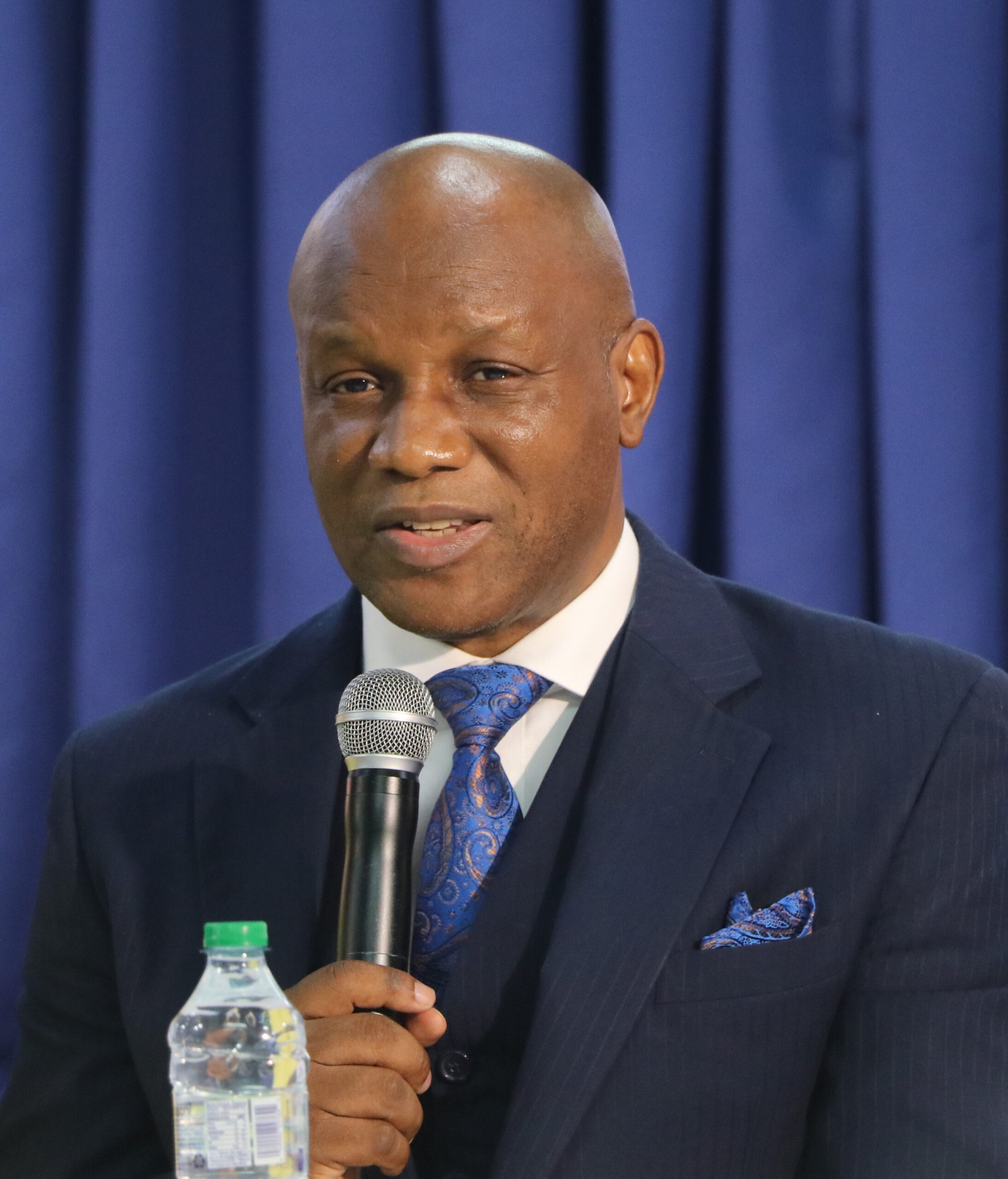
A heated debate has emerged over the viability of a new inter-island ferry network linking Barbados and member states of the Organisation of Eastern Caribbean States (OECS), after an industry consultant questioned whether the service could withstand the region’s sea conditions. Project leader Dr Andre Thomas, Chief Executive Officer of Barbados-based Pleion Group — parent company of service operator Connect Caribe — has pushed back hard against these claims, telling Barbados TODAY on Thursday that the vessels selected for the route are engineered to handle far harsher open-ocean conditions than the Eastern Caribbean ever produces.
The controversy began earlier this week, when economic aviation consultant Jeremy Stephen raised sharp doubts about the project, arguing that frequent high swells and choppy water would make the ferry service unworkable. Thomas rejected this assessment outright, noting Stephen’s concerns lacked credible scientific backing, and outlined the design and track record of the overnight cruise ferries Connect Caribe plans to deploy.
The vessels planned for the regional service belong to the large roll-on/roll-off passenger (Ro-Pax) vessel class, purpose-built to carry passengers, private vehicles and commercial freight across long-distance open water routes. Thomas pointed out that identical classes of ferries are already operated profitably year-round by major global shipping firms in far rougher international waters. These include DFDS’ cross-North Sea routes between Newcastle-Amsterdam and Copenhagen-Oslo, P&O Ferries’ Hull-Rotterdam service, and Brittany Ferries’ long-haul connections from Portsmouth to Caen and Santander.
Thomas explained that the ferries earmarked for the Caribbean corridor range from 20,000 to over 60,000 gross tonnage, with deep drafts, active fin stabilizers, on-board cabins, restaurants, and dedicated full decks for vehicles and cargo. These large displacement vessels are explicitly designed for overnight open-water operation in conditions far more challenging than any recorded in the Eastern Caribbean, he added.
“By any objective measure, the Eastern Caribbean is one of the calmest open-water ferry corridors in the world,” Thomas stated. “The claim that it is ‘too choppy’ to support a viable ferry network does not survive a five-minute look at global maritime data.” He added that modern large overnight cruise ferries operate daily, profitably, and year-round in waters that see wave heights two to five times higher than the Eastern Caribbean’s typical conditions.
To back his argument, Thomas cited publicly available data from the U.S. National Oceanic and Atmospheric Administration (NOAA) National Hurricane Center, which shows the Eastern Caribbean’s average significant wave heights sit between three and seven feet, or 1 to 2 meters. Even during stronger trade wind surges, wave heights only reach five to eight feet, or 1.5 to 2.5 meters — conditions that Thomas says are well within the normal operating parameters for the planned vessel class.
Thomas also pointed to longstanding regional precedent that proves the corridor is suitable for ferry operations. Germany’s FRS Group-owned FRS Express des Îles, formerly L’Express des Îles, has run scheduled passenger services across the exact same Eastern Caribbean stretch — connecting Guadeloupe, Les Saintes, Marie-Galante, Dominica, Martinique, and Saint Lucia — for more than 37 years, carrying roughly 850,000 passengers annually. This existing operation, Thomas argues, definitively confirms both that passenger demand exists and that the region’s sea conditions are suitable for sustained ferry service.
While smaller regional passenger ferries already operate in the area, Thomas noted that the Eastern Caribbean currently lacks a large, stable overnight cruise ferry service that connects a broader network of islands, accommodates vehicles and freight, and positions inter-island travel as a comfortable, experience-focused journey for both locals and visitors. The project leadership’s pushback against criticism comes as stakeholders work to advance the landmark regional connectivity initiative.
-
PM puts distance from Transport Board sell-off
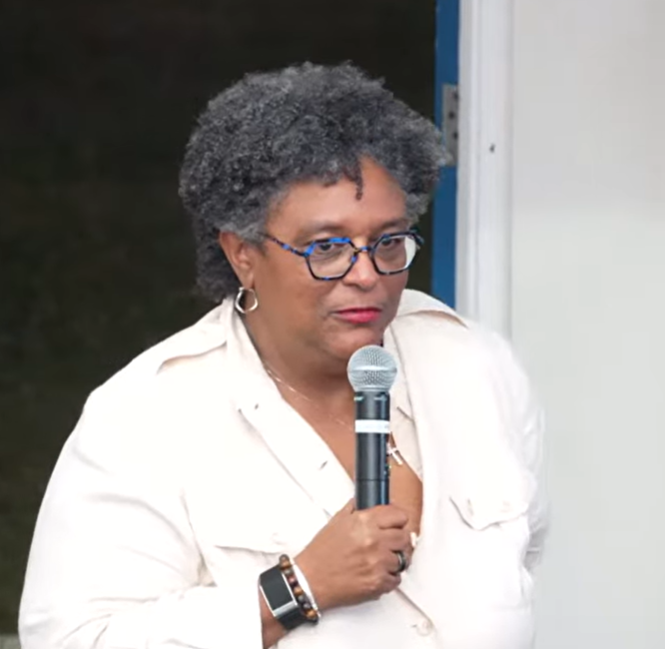
A heated debate over the future of Barbados’ state-owned Transport Board has taken center stage at a recent public policy forum, where Prime Minister Mia Mottley pushed back hard against growing speculation that her administration intends to fully privatize the public transit entity. Instead, Mottley has reframed the widely discussed restructuring effort as a worker empowerment initiative that pairs expanded employee ownership with stricter island-wide regulation to guarantee reliable service for all communities, including underserved rural areas.
The controversy reignited Wednesday during the Ideas Forum, where opposition St Peter candidate Jason Phillips of the Democratic Labour Party raised long-simmering public concerns about the government’s restructuring plans. Phillips echoed warnings first circulated late last year, when an official three-page letter from the Ministry of Transport and Works, signed by then-Permanent Secretary Jehu Wiltshire, was leaked to the public. The document confirmed that Cabinet had approved a transition to a new governing body, the Barbados Mass Transit Authority (BMTA), which would take over regulatory oversight of all public transit and hold the legal bill of sale for the Transport Board’s bus fleet. The leak triggered immediate pushback from the Congress of Trade Unions and Staff Associations of Barbados, which raised alarms about potential job insecurity and diminished service for rural residents.
At the forum, Phillips doubled down on those concerns, arguing that profit-driven private operators would inevitably abandon low-revenue rural routes — such as those serving Boscobel and Indian Ground, where ridership is often thin during early morning and late-night trips. “I can’t see a businessman wanting to take his vehicle… to deep Boscobel with three people in it,” Phillips said, calling for binding legislation to mandate that critical routes and consistent schedules be maintained regardless of profitability. He emphasized that his concern centered on reliable access, not opposition to worker ownership, stressing that the priority must be protecting vulnerable rural commuters who depend entirely on public transit.
Mottley drew a clear distinction between traditional privatization and what she calls “enfranchisement” to counter Phillips’ arguments, flatly stating: “There is no divestment of the Transport Board or privatization.” She explained that the proposed restructuring model would give Transport Board drivers and existing workers ownership stakes within the new system, rather than selling the entire entity to outside private investors. “We have said from the beginning that there is no divestment in the traditional sense. There is enfranchisement,” the prime minister said. “At the end of the day… the enfranchisement that is being entertained is to allow the drivers and the workers at the Transport Board to own.”
Under the plan, the newly created BMTA will serve as a centralized regulator overseeing all public transit services across the island, including the Transport Board’s buses, independent minibuses, and route taxis. Mottley noted that the fragmented current system lacks consistent day-to-day oversight, a gap the BMTA will fill by enforcing strict licensing requirements. Operators that fail to meet their scheduled route obligations will lose their licenses, and the authority will implement a route rotation system to ensure no operator is stuck with only unprofitable routes, while no entity can hoard high-traffic, high-revenue corridors at the expense of rural communities. “If at the end of the day you are not operating your route to the terms and conditions of the license… you are out,” Mottley said, adding that the structure guarantees equitable service for all regions.
Transport and Works Minister Kirk Humphrey reinforced Mottley’s position, dismissing any claims that outside private companies would take over the Transport Board. “There’s no company that’s coming in to own the Transport Board or none of those things you’re alluding to,” Humphrey said. He outlined that the government will retain supporting oversight while transferring bus ownership directly to workers, with the BMTA enforcing service standards to close long-standing gaps in rural transit. “The people will get a better service as opposed to less quality of service by the route that we are going,” he added.
Critics have pointed out that Mottley and other senior members of her administration previously openly described the restructuring as a divestment effort, even as they framed it as worker-focused. During prior parliamentary debates and media appearances, top officials repeatedly used the term “divestment of the Transport Board” to describe the project. Deputy Prime Minister Santia Bradshaw, who previously served as Transport and Works Minister, told Parliament that the “divestment of the Barbados Transport Board” was “a serious exercise in enfranchisement” and guaranteed that concessions for elderly residents and schoolchildren would remain in place. At a ceremony marking the handover of 35 new electric buses at Bridgetown Port, Bradshaw told reporters: “the government is moving ahead with divesting the Transport Board amid growing public opposition and establishing a new mass transit system,” adding that “when we speak of divestment, we also equally speak of the enfranchisement of the workers of Barbados and the workers of the Barbados Transport Board.”
The restructuring effort comes in response to decades of financial and operational instability at the Transport Board, which has required hundreds of millions in state subsidies to remain operational. Successive governments have called for a more sustainable funding model, while activists and opposition leaders have pushed to protect service access for low-income and rural commuters. The Mottley administration has repeatedly stated that vulnerable groups, including schoolchildren, pensioners, and low-wage essential workers, will retain their existing fare concessions and service access under the new framework. Despite the prime minister’s clarifications at the forum, Phillips maintained that the risk of profit-driven service cuts remains, and that ongoing public scrutiny will be needed to hold the government accountable to its promises.
-

As Gun Rules Ease, Where Are the Bullets Going?
In a policy shift set for April 23, 2026, Belize’s Firearms Control Board has moved to roll back regulations on select gun accessories and end a long-standing ban on .223 caliber rifles, reopening a long-simmering public debate: with looser gun rules in place, will illegally diverted ammunition end up in the hands of criminal groups?
For decades, residents of Belize have raised persistent alarms that legally purchased ammunition is flowing through a covert pipeline from licensed gun owners to the black market, fueling violent crime across the country. Now, as the country expands civilian access to firearms and ammunition, communities and policymakers are questioning whether existing regulatory frameworks can stop this diversion from growing into a larger public safety threat.
Francis Usher, CEO of Belize’s Ministry of National Defense and sitting member of the Firearms Control Board, laid out the government’s strategy to address the risk in an interview with local media. The core of the regulator’s approach is a major modernization of tracking and oversight, moving away from outdated paper-based systems to a fully digital ammunition monitoring infrastructure.
Under the new framework being rolled out, every round of ammunition sold to a licensed holder will be logged in a centralized digital system immediately after purchase. The platform will record key details: the number of rounds bought, the date of transaction, and the manufacturing batch number of the product. To enforce accountability, regulators will implement unannounced random spot checks, cross-referencing a license holder’s purchase records with their reported use.
For example, if a gun owner purchased 200 rounds of ammunition but reports no recent trips to an authorized shooting range, regulators will follow up to confirm the location and quantity of the unspent rounds, closing loopholes that previously allowed unaccounted-for ammunition to be diverted to criminal networks. Usher emphasized that while the new system is still under development and will never be completely flaw-proof, the Firearms Control Board is continuously refining the framework to improve public safety for all Belizeans.
“It’s not a perfect system yet. It probably never will be a perfect system but every day that the board is there, we try to develop it so that it gets safer for Belizean,” Usher said, adding that regulators are prioritizing closing regulatory gaps before they can be exploited by criminal actors, with the ultimate goal of ensuring every round of legally sold ammunition can be traced and accounted for.
-

Another Officer, Pattern Emerges in Police Domestic Violence Cases
Less than a week after a high-profile police domestic violence case collapsed in a Belize court, a second law enforcement officer has been slapped with serious violent offense charges, shining a spotlight on a concerning pattern of domestic abuse allegations against serving officers that face repeated procedural disruptions.
On the morning of April 23, 2026, PC Mercedes Chiac, an officer assigned to the Belize Police Department’s GI3 Unit, made his first appearance before the Belize City Magistrate’s Court. He faces two felony charges: use of deadly means to cause harm and wounding in connection with an alleged April 19 attack on his common-law wife, Rosie Munoz. The violent incident was reported to have unfolded at a residence on Riverside Street, where police investigators document a heated confrontation that escalated rapidly. According to official police accounts, Chiac assaulted Munoz by beating and choking her before grabbing a kitchen knife and stabbing her in the neck. Both Chiac and Munoz sustained stab wounds to the neck during the altercation, and a medical examination officially classified Munoz’s injuries as wounding, a serious offense under Belizean law.
Court proceedings hit an immediate procedural pause on Monday, as prosecutors confirmed they are still waiting for formal guidance from the Director of Public Prosecutions to determine whether the case will be heard moving forward in the lower Magistrate’s Court or transferred to the higher High Court for trial. No plea was entered from Chiac during the brief hearing. In a striking detail that mirrors the previous police domestic violence case that fell apart earlier this week, multiple court sources confirmed Munoz intended to withdraw the charges against Chiac. She was escorted to the court building by uniformed police officers but was not permitted to enter the courtroom for the hearing. Magistrates granted Chiac bail set at $2,000 Belize dollars, and ordered him to return to court for a next hearing on June 9.
This latest case comes immediately on the heels of public controversy surrounding another Belizean police officer, PC Phillip Garbutt, whose own domestic violence charges were withdrawn earlier this week after the complainant moved to back out of the prosecution. Legal analysts and domestic violence advocacy groups have already pointed to the two back-to-back cases as evidence of a troubling pattern: serving police officers facing domestic violence charges often see their cases collapse when complainants step back, a trend that many attribute to intimidation, systemic pressure, or personal relationship coercion that disproportionately impacts cases involving law enforcement personnel.
The new charges have already reignited public debate over how the Belizean justice system handles domestic violence allegations against police officers, with calls for independent oversight to prevent procedural breakdowns that let accused officers avoid accountability.
-
Construction of Caye Caulker Police Station to Resume
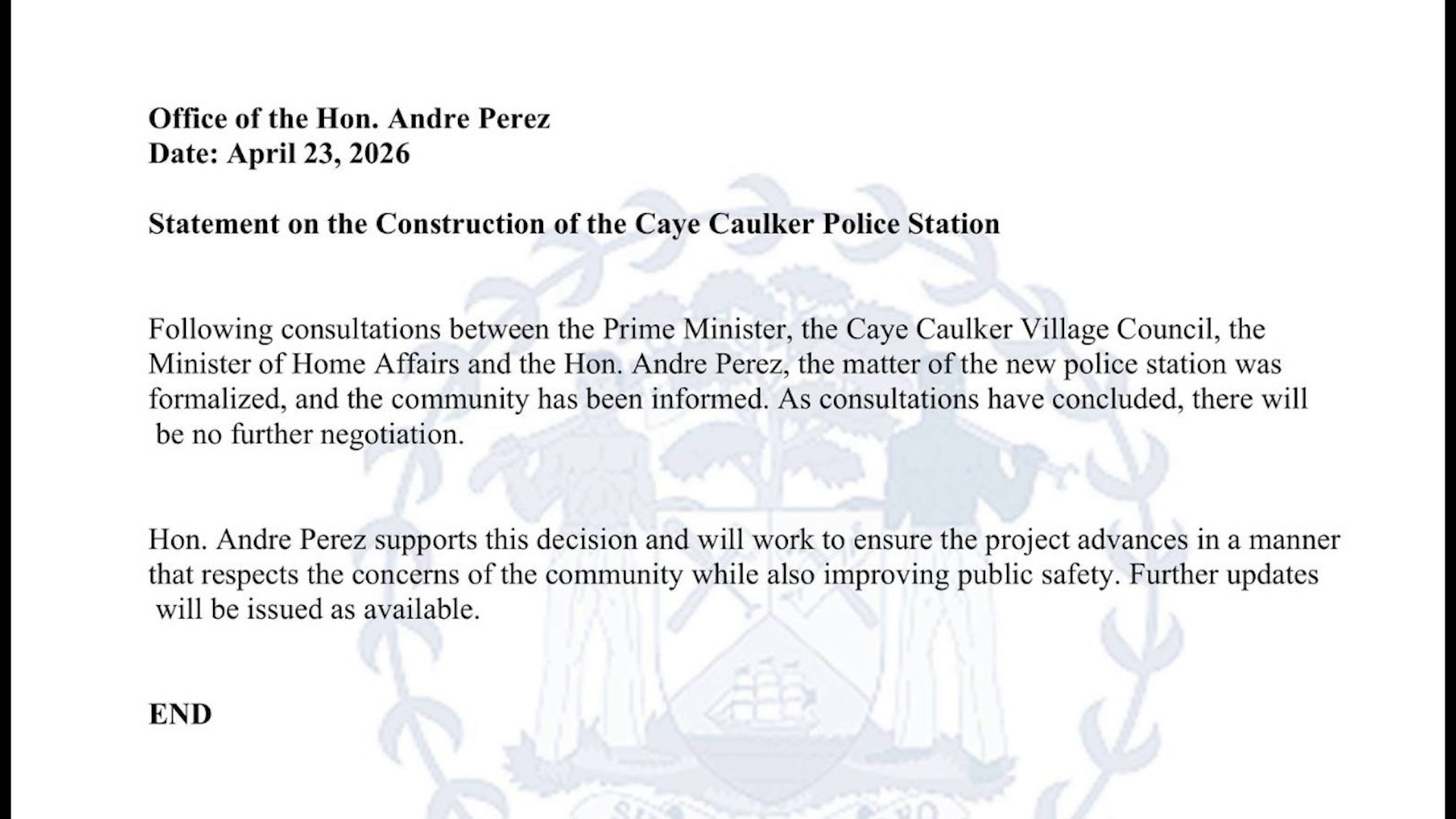
Community pressure has forced a major policy reversal from the Belizean government, clearing the way for the long-awaited construction of the Caye Caulker Police Station to restart on the originally earmarked public parcel. The controversy ignited after a private offer was made for Parcel 815 – the plot of land reserved years ago for the new police facility – sparking widespread panic among island residents that the critical public safety project would be scrapped, and the valuable coastal property would be transferred to private ownership.
For weeks, Caye Caulker residents organized to oppose the proposal, staging public protests, gathering signatures for a formal petition led by the local Village Council, and escalating demands for the government to honor its original commitment to build the police station on the designated site. Following the sustained public backlash, Belize Rural South Area Representative Andre Perez announced on April 23, 2026 that the government would reject the unsolicited private offer and immediately restart construction on Parcel 815.
Perez clarified that the proposal to redevelop the parcel was never a finalized deal, emphasizing that the offer had only been under preliminary review when the Easter contractor break created a natural pause in the project. “We are listening to the concerns of the Caye Caulker community, and they have made clear they want the police station built on Parcel 815, where it was originally planned,” Perez stated in an interview. “As a result, we have agreed to move forward as planned, and contractor mobilization will get underway next week. I respect the will of the people of Caye Caulker, and there was never any confirmed sale, signed paperwork, or finalized negotiation for the property. It was just an unsolicited offer, and we have chosen to set it aside.”
But while the government’s reversal has been hailed as a win for community organizing, the controversy has exposed deep-rooted concerns over transparency in public land decision-making on the island. Caye Caulker Village Council Chairlady Seleny Villanueva-Pott, who led the community’s pushback, said residents remain cautious, noting that the government’s public announcement lacks clarity and the core issue of land ownership remains unresolved.
The parcel was originally donated to the Caye Caulker community by a private owner, and the Village Council is now moving forward with formal efforts to secure full legal ownership of Parcel 815 for the local government. “The community has shown incredible unity over the past two weeks, and we have made it clear we will accept nothing less than full control of Parcel 815 for the people of Caye Caulker,” Villanueva-Pott explained. “We have launched a formal petition and are still gathering signatures, and we are already in consultation with two legal teams to explore our options. If we need to pursue legal action to secure ownership, the full community stands behind this effort. We are hopeful that this announcement means Parcel 815 will be returned to the community, but we will continue our fight until that is formally finalized.”
-

Guyana recalls High Commissioner to Canada
On April 23, 2026, Guyana’s Minister of Foreign Affairs Hugh Todd confirmed in an interview with local outlet Demerara Waves Online News that the country has recalled its High Commissioner to Canada, Keith George, who will now take up a new role as a senior advisor to Todd directly. While declining repeated questions about whether unstated personal factors contributed to the diplomat’s recall, Todd framed the move as a strategic adjustment tied to the rapidly expanding scope of Guyana’s diplomatic work, most notably the ongoing border dispute case the country has brought before the International Court of Justice (ICJ) against Venezuela.
According to unidentified sources, George left his Ottawa diplomatic posting back in September 2025 to travel home for the funeral of Elisabeth Harper, the former Permanent Secretary of Guyana’s Ministry of Foreign Affairs who passed away after a battle with cancer. He never resumed his post in Canada following that trip, the sources added. When pressed repeatedly on whether personal issues prompted his recall, Todd repeatedly declined to comment, eventually cutting short the phone interview before ending further discussion of the topic.
Instead of addressing speculation, Todd highlighted George’s decades of diplomatic experience and professional standing, describing the long-serving diplomat as an exceptional public servant with an unblemished, outstanding record of service to Guyana. “He served us well. There is nothing wrong with his record of service. I think he has done exemplary in terms of his diplomacy and in terms of his experience,” Todd told reporters.
Prior to his appointment as High Commissioner to Canada, George held the position of Director of Frontiers at Guyana’s Ministry of Foreign Affairs, giving him deep specialized expertise in the long-running border dispute with Venezuela that is currently before the ICJ. That case centers on legal challenges to the validity of the 1899 Arbitral Tribunal Award that established the current border between the two South American nations. It is this specific background that makes George a critical addition to the country’s legal and diplomatic team for the ICJ proceedings, Todd explained.
In recent months, Guyana’s ICJ legal team has lost two key figures: co-agents Elisabeth Harper and Sir Shridath Ramphal, both of whom have passed away. To fill these vacancies, the government has appointed Sharon Roopchand-Edwards, current Permanent Secretary of the Ministry of Foreign Affairs, and George as the new co-agents for the case. Carl Greenidge, a former minister under previous PNC and APNU+AFC administrations, will remain as Guyana’s lead agent for the proceedings.
Todd added that even while George was stationed in Canada, he remained an active member of the ICJ case working group. However, coordinating the complex work of the case remotely created significant logistical and operational challenges. Given George’s unparalleled institutional knowledge of the border dispute, bringing him back to headquarters to work on the case full-time was the most pragmatic decision for the country, the minister concluded.
-

Full probe into wiped consulate computer, London trust fund row — Bramble
In the wake of the November general election that brought the New Democratic Party to power, St. Vincent and the Grenadines’ foreign affairs chief has launched a thorough public investigation into two unusual administrative irregularities at key overseas diplomatic missions.
Foreign Minister Dwight Fitzgerald Bramble first outlined the troubling findings to lawmakers during a Tuesday parliamentary session, then expanded on the details during an appearance on Hot97 FM the following day, emphasizing his commitment to full transparency and public accountability for the new administration.
Shortly after taking up his appointment as Consul General to New York in March, Roland “Patel” Matthews reported a shocking discovery to Bramble: every piece of data stored on the consulate’s primary computer system had been completely erased. According to Bramble, no records of previous consular operations, administrative work, or diplomatic activities were left on the device when Matthews arrived. Access to the consulate’s computer system is restricted to the sitting Consul General via personal password protection, similar to how the foreign minister controls access to his own ministerial devices, Bramble explained.
Matthews succeeded Rondy “Luta” McIntosh, a nominee of the previous Unity Labour Party administration who took up the post in August 2022. Bramble confirmed that he has not yet spoken directly to McIntosh about the data wipe, but made clear that the former consul general will be questioned as part of the probe. The foreign minister declined to speculate on whether criminal charges will be filed against any individual, noting he is not a legal official and the investigation remains in its early stages. At present, the government is assembling a team of competent experts including specialized IT professionals to conduct a forensic review of the system and map out a full timeline of events.
Beyond the New York consulate data issue, Bramble also revealed that the country’s new High Commissioner in London has been blocked from taking control of a charitable trust fund created to support children across the nation. The fund, which receives ongoing financial support from European benefactors, is formally managed through the London High Commission and requires two authorized signatories for all transactions: one being the sitting High Commissioner, and a second who was an advisor to the previous Unity Labour Party government.
Bramble voiced public confusion over why the former government advisor was added as a co-signatory to the charitable account in the first place. Now, when current High Commissioner Brereton Horne and the new administration attempt to update the signatory list and bring the fund fully under official diplomatic control, they have faced stiff resistance from both the former High Commissioner and the ex-government advisor. Bramble said the deliberate obstruction creates the unsettling impression that the outgoing officials view the charitable fund as personal property, rather than a public resource for vulnerable children. “These things must stop,” he declared.
Bramble framed the decision to publicly disclose both incidents as a core fulfillment of the new Godwin Friday government’s campaign promise of open governance and accountability to voters. “The people voted me to work for them,” he said. “As long as I am there, I am going to do what I have to do to make sure that I serve the people.” He added that he welcomes fair, objective criticism of the administration’s work, noting that no government is perfect and there is always room to improve. Uncovering administrative irregularities inherited from the previous government, he argued, is a necessary first step to building meaningful progress for the nation moving forward.
-

$33M San Pedro Hospital Set to Transform Northern Healthcare
After decades of unfulfilled promises and years of detailed preliminary planning, one of the most transformative infrastructure projects in Belize’s modern healthcare history is finally moving forward at full pace. The new San Pedro and Caye Caulker General Hospital, a $33 million development fully funded by the Republic of China (Taiwan), is set to reshape access to advanced medical care for tens of thousands of residents across northern Belize once completed.
When it opens its doors, the facility will earn two key distinctions in Belize’s national healthcare network: it will become the country’s second-largest hospital, trailing only the capital’s Karl Heusner Memorial Hospital (KHMH), and only the second tertiary-level care center nationwide. This milestone fills a long-standing gap in advanced medical services for communities in the northern coastal region, where residents have long had to travel long distances for specialized treatment that was unavailable locally.
On a recent inspection of the active construction site, Area Representative André Perez for Belize Rural South shared his optimistic assessment of the project’s progress. Perez, who has represented the region where the hospital is being built, noted that crews are making the most of the current dry season to accelerate work, after past plans for the facility never moved beyond the drawing board.
“I’m pleased to see that it’s happening very rapidly. The building is coming along and of course we’re scheduled that if all goes well that we will be wrapping up by December,” Perez told reporters during the site tour. He acknowledged that unforeseen weather-related delays could push back the timeline slightly, but emphasized that current conditions have allowed contractors to move at an impressive pace. “Right now dry season so they’re moving swiftly as best as possible take advantage of it. So it’s a beautiful project. I’m very much excited.”
Beyond expanding the country’s overall healthcare capacity, the new hospital will also serve as a critical regional referral center for communities along Belize’s northern coast, including the high-population tourist hubs of Ambergris Caye and Caye Caulker. For decades, residents and visitors on these islands have faced urgent medical challenges requiring evacuation to larger facilities on the mainland, a gap that the new tertiary center will eliminate.
Perez highlighted that the project is the realization of a pledge that political leaders made to local communities more than a generation ago, one that never came to fruition until now. “This is something good for Ambergris Caye and Caye Caulker as well. Very important that this hospital is going to serve both communities,” he said, confirming that the facility’s scale puts it among the largest in the country. “According to the contractor, they’re sharing with me the size of the hospital makes it actually, if I’m not mistaken, it could be potentially the second largest hospital in the entire country next to KHMH. So very exciting. There’s so much work that is happening here for Caye Caulker and Ambergris Caye. It’s a promise that has been made decades ago and it never materializes.”
If construction remains on its current trajectory, the hospital will welcome its first patients as early as December 2026, marking a historic shift in healthcare access for northern Belize.
-
Private Landowners Caught in Maya Land Dispute Down South
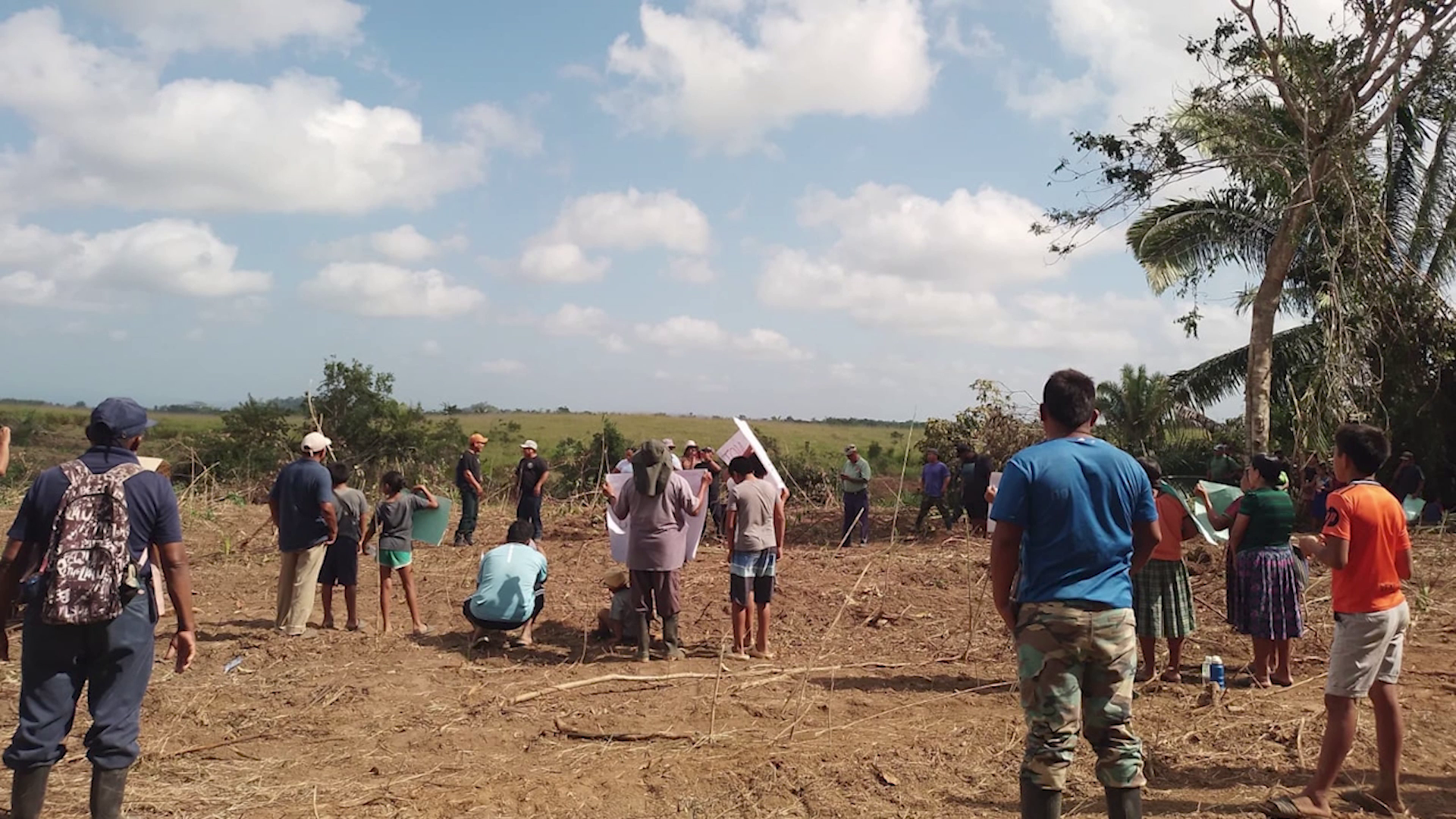
In the remote Toledo District of southern Belize, a long-simmering conflict over Maya customary land rights has escalated from a theoretical policy debate to an on-the-ground standoff that has split communities apart, leaving private landowners trapped between legal title and escalating communal claims. As the Belizean government struggles to deliver on years of promised legislation to formalize Indigenous land rights, all sides report feeling disenfranchised, raising the prospect of new court battles that could delay a resolution for even longer.\n\nAt the heart of the clash is a fundamental collision of two deeply held claims to land: Indigenous Maya communities argue that communal land tenure is a core part of their cultural heritage and survival, tying their identity, food sovereignty and spiritual practices to collective stewardship of the territory they have occupied for centuries. On the other side, more than 8,000 private landholders in the district hold government-issued legal titles to their properties, protected under Belize’s constitution, and say they face growing pressure from neighboring Maya villages that have laid claim to their land. The Toledo Private and Lease Landowners Limited, which represents these landholders, has warned that competing demands and misaligned expectations are eroding trust and stoking social friction across every village touched by the dispute.\n\nTasked with navigating this delicate divide is the Office of Indigenous Peoples’ Affairs, whose director Gustavo Requena has emerged as a key mediator working to keep open lines of communication between rival stakeholders. In an interview, Requena acknowledged the legitimacy of both sides’ positions, emphasizing the complexity of striking a fair balance.\n\n“As a Maya person it is easy to understand why the Maya people want communal land. It is a part of our heritage. That is how we work, our dependency on the land for our very existence, whether that be our food, our spiritual needs, all of these things that make us Maya people,” Requena said. “At the same time, we can understand that we have over eight thousand private land owners within this district and the constitution protects their rights to private property. So it is about trying to create this balance and that is what the Office of Indigenous People’s Affairs does, try to be the neutral voice in all of these conversations – and that is not easy.”\n\nDespite ongoing mediation efforts, progress on national legislation to codify Maya land rights has stalled for years, leaving frustration at a boiling point. All major stakeholders – private landowners, Maya communities, and the Toledo Alcaldes Association – report that their concerns have been ignored by policymakers, and the standoff shows no signs of de-escalation.\n\nChester Williams, CEO of the Ministry of Indigenous Peoples’ Affairs, admitted that the deadlock will almost certainly lead to new litigation, as both factions believe their interests are not being adequately represented in the draft legislation. Still, Williams pushed back against widespread criticism that the current administration has dragged its feet on the issue, saying the prime minister has issued a direct order to pass the law before the government’s current term ends.\n\nWilliams noted that the issue’s extraordinary complexity has thwarted progress for previous leaders, pointing to his predecessor Liselle Alamilla, who served as commissioner of Indigenous Peoples’ Affairs for five years without delivering a final resolution. “I don’t think it is because she did not want to, but rather because of the complexity of the issue. If it was easy, she would have gotten it done within the five-year time,” Williams said, adding that Alamilla has since shared valuable insight from her tenure that is guiding the current government’s work. “We have to ensure we look after the interest of every person who are going to be affected. This is not something the government can just wake up and say we are going to do this.”\n\nFor now, deep divisions remain between all parties involved, as the government forges ahead with a legislative process that officials acknowledge is fraught with complexity, but necessary to resolve one of Belize’s longest-running Indigenous rights disputes.