作者: admin

  • Players who cover mouths to face red cards in new anti-racism rule at World Cup

    Players who cover mouths to face red cards in new anti-racism rule at World Cup

    VANCOUVER, Canada – Global football governing body FIFA has announced sweeping new disciplinary rules for this summer’s 2026 men’s World Cup, co-hosted by Canada, Mexico and the United States, that will see players issued straight red cards for two controversial on-pitch behaviors, designed to address longstanding issues of racial abuse and unsportsmanlike protest. The changes were formally signed off during a recent meeting of the International Football Association Board (IFAB), held this week in Vancouver, ahead of the upcoming FIFA Congress scheduled for Thursday.

    The first and most high-profile of the new regulations targets deliberate attempts to hide verbal racial abuse from match officials and cameras. Under the new rule, any player caught covering their mouth during a confrontational exchange with an opposing player can be issued a red card at the referee’s discretion, with final authority resting with the competition’s organizing body. The policy was directly prompted by a high-profile controversy in February’s Champions League fixture between Benfica and Real Madrid, where Benfica winger Gianluca Prestianni was accused of repeatedly calling Real Madrid star Vinicius Junior a racial slur while covering his mouth to avoid being caught on audio recording. While Prestianni has repeatedly denied the allegation of racial abuse, he was ultimately banned for six matches (three of which were suspended) by governing bodies for homophobic conduct arising from the incident. The case highlighted a common loophole used by players seeking to hurl abusive language without being identified, which FIFA is now moving to close.

    A second equally sweeping rule change introduces red card penalties for any player who leaves the field of play in protest of a referee’s decision, and extends the penalty to any team official who incites players to stage such a walkout. In the most serious cases, FIFA confirmed that any team that causes a match to be abandoned through a mass walkout will automatically forfeit the fixture. This change comes in response to the widespread uproar following the 2025 Africa Cup of Nations final, where Senegal’s entire team, led by head coach Pape Thiaw and his technical staff, walked off the pitch in Rabat after Morocco was awarded a late stoppage-time penalty. Morocco forward Brahim Diaz ultimately missed the penalty, and Senegal went on to secure a 1-0 win in extra time. However, the Confederation of African Football (CAF) issued a shocking ruling last month stripping Senegal of the continental title over the walkout, bringing global attention to the need for clearer, stricter rules around pitch protests.

    The new regulations come as hundreds of FIFA delegates converge on Vancouver for Thursday’s FIFA Congress, the final major gathering of global football’s governing body ahead of the World Cup kickoff in June. FIFA officials have framed the changes as targeted, proactive steps to clean up the sport and address gaps in the existing rulebook that have allowed bad behavior to go unpunished in high-stakes matches.

  • Opposition calls for parliamentary oversight of cement shortage

    Opposition calls for parliamentary oversight of cement shortage

    KINGSTON, Jamaica — As Jamaica struggles to move forward with recovery efforts in the wake of Hurricane Melissa, a top opposition official is sounding the alarm over a persistent national cement shortage, urging immediate parliamentary intervention to address a crisis that threatens both reconstruction work and broader national economic progress.

    Anthony Hylton, the opposition’s spokesman on Investment, Trade and Global Logistics, laid out his call for urgent action in an official press release issued Tuesday, pushing for the crisis to be immediately referred to parliament’s Economy and Production Committee. Hylton says the full parliamentary body must conduct a complete, transparent probe into the root causes of the shortage, evaluate whether the current government’s response to the disruption has been sufficient, and work out targeted policy interventions that will lock in stable cement supplies for Jamaica’s medium and long-term needs.

    In the days leading up to his formal request, Hylton has held a series of consultations with core stakeholders across Jamaica’s construction sector, from independent contractors and domestic manufacturers to hardware retail operators and major infrastructure investors. Across these conversations, stakeholders have repeatedly shared urgent concerns: the ongoing shortage has already thrown construction project timelines off schedule, eroded confidence among local and foreign investors, put thousands of sector jobs at direct risk, and driven up input and consumer costs across the entire construction ecosystem.

    “You cannot credibly promise to ‘build back better’ if we cannot even begin building at all,” Hylton emphasized in his statement. “Cement is the non-negotiable foundational input for every part of our work, from post-disaster reconstruction to upgrading national infrastructure and building long-term economic resilience. Relying on last-minute imports as a stop-gap is not a meaningful strategy — it is just a temporary band-aid that does nothing to guarantee long-term supply security or protect domestic Jamaican jobs down the line.”

    Hylton added that the widespread destruction caused by Hurricane Melissa should serve as a critical wake-up call for policymakers to shift away from reactive crisis management and toward proactive, forward-looking planning. “Hurricane Melissa has made it painfully clear that Jamaica needs to be prepared to rebuild quickly and effectively when disaster strikes. That level of preparedness depends on planning and action today, not scrambling for reactive fixes after a crisis hits,” he said. “Parliament has a core constitutional and public responsibility to make sure the right systems and stable supply chains are in place to support national recovery and drive long-term inclusive development.”

    Hylton went on to note that a comprehensive national strategy to guarantee stable, reliable cement supply is no longer a secondary policy concern — it is an urgent priority. This urgency is amplified by multiple overlapping demands: the ongoing need for post-Hurricane Melissa reconstruction, the national government’s own commitment to building back stronger and more climate-resilient infrastructure, and rapidly rising demand from major new projects spanning housing development, tourism infrastructure, manufacturing facilities, and national climate resilience upgrades.

    The crisis has not come without explanation. Carib Cement, Jamaica’s dominant domestic cement manufacturer, released a public update last week confirming that weeks of unusually heavy rainfall across the island have severely disrupted its operations. The adverse weather has created major challenges for raw material extraction and processing, and contributed to unplanned equipment breakdowns and process disruptions that have pulled down temporary production levels.

    While the company acknowledged that some supply delays persist, driven by both elevated post-reconstruction demand and ongoing adverse weather conditions, Carib Cement gave public assurances that cross-functional teams are working around the clock to restore full, optimal production levels as quickly as possible.

  • US forces board ship suspected of heading to Iran port

    US forces board ship suspected of heading to Iran port

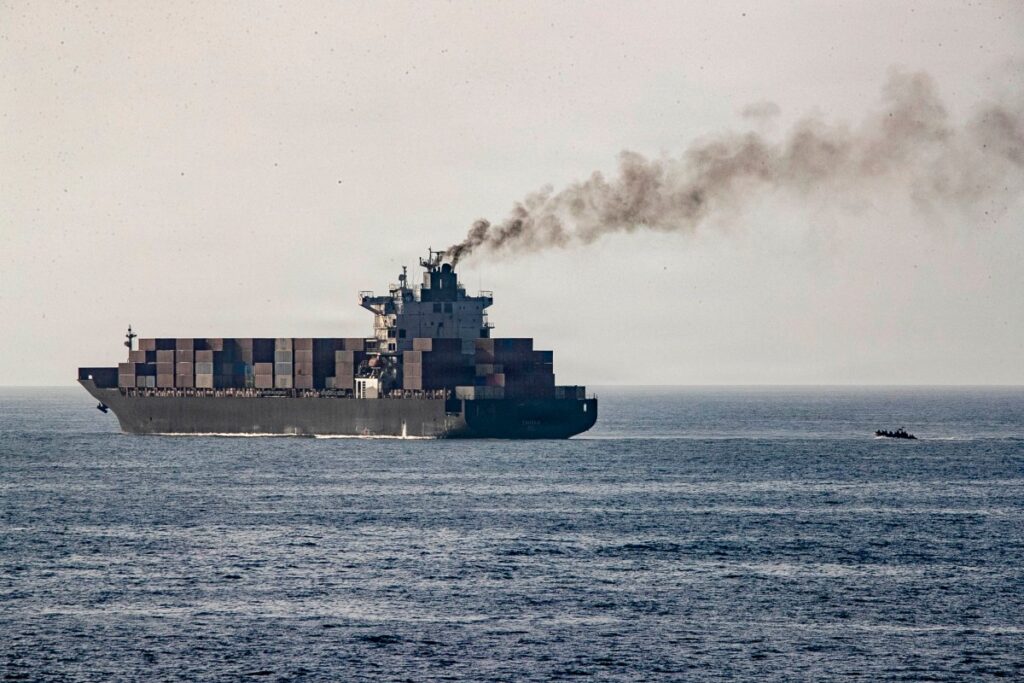
    In a recent operation highlighting the enforcement of Washington’s maritime restrictions on Iran, U.S. Marine forces boarded a commercial cargo ship in the Arabian Sea on Tuesday that had been flagged for potential violation of the American blockade of Iranian ports, U.S. military officials confirmed.

    Following the boarding operation, Central Command—the U.S. military unified combatant command that oversees all American military assets across the Middle East—announced via a post on the social platform X that the M/V Blue Star III had been cleared to continue its journey. The release came after a full search of the vessel confirmed that it had no planned port calls at any Iranian facility along its scheduled route.

    The command’s statement emphasized that U.S. maritime forces are maintaining a persistent presence across the region to uphold the blockade. To date, military officials report that 39 vessels have already been redirected from their original courses to ensure full compliance with the restrictions.

    Accompanying the announcement was a short video clip capturing the operation. The footage shows a military helicopter hovering low over the Blue Star III’s deck while Marines fast-roped down onto the stacks of shipping containers that line the vessel’s cargo hold.

    The current maritime standoff in the region follows a series of escalating developments. After the U.S.-Israeli joint air campaign against Iran launched on February 28, Iranian military forces moved to close the Strait of Hormuz—the strategically critical waterway that carries roughly a fifth of the world’s daily oil and global natural gas shipments. This closure upended one of the world’s busiest and most economically vital maritime chokepoint.

    Washington rolled out its official blockade of Iranian ports after a round of regional peace negotiations held in Pakistan failed to deliver any breakthrough towards de-escalation. U.S. forces began actively enforcing the new maritime restrictions on April 13.

    Speaking to reporters earlier this month, U.S. Secretary of Defense Pete Hegseth stated that the blockade will remain in place “as long as it takes” to achieve American policy goals. General Dan Caine, the highest-ranking active-duty U.S. military officer, further clarified that the restrictions “applies to all ships, regardless of nationality, heading into or from Iranian ports.”

  • Current and former UHWI CEOs fail to appear before PAC over audit findings

    Current and former UHWI CEOs fail to appear before PAC over audit findings

    Jamaica’s Public Accounts Committee (PAC) faced a striking absence of senior leadership from the University Hospital of the West Indies (UHWI) on Tuesday, as the parliamentary panel pressed forward with its review of alarming operational shortcomings uncovered in a recent Auditor General’s report. Neither the sitting chief executive officer Fitzgerald Mitchell nor his predecessor Kevin Allen appeared before the committee, and former UHWI board chair Wayne Chai Chong also declined to attend. Chai Chong notified the PAC he was currently outside the country, and confirmed he would be available to give evidence at a rescheduled hearing on May 12.

    According to PAC chair Julian Robinson, Mitchell communicated his decision to skip the hearing through the UHWI board chair, citing legal advice recommending his non-attendance. Despite repeated formal requests from the parliamentary body for a written copy of this legal guidance or a formal explanation for Mitchell’s absence, no documentation has been submitted to the committee to date. Robinson added that Allen, who had previously confirmed he would attend Tuesday’s sitting, failed to show up without offering any advance notice or clear justification for his absence.

    Robinson emphasized that the failure of the sitting UHWI CEO to appear, paired with the complete lack of formal documentation explaining his absence, represents a severe disregard for parliamentary authority amid ongoing scrutiny of high-stakes audit findings. “Now, I find, particularly related to Mr Mitchell, his absence and the absence of any formal documentation indicating why he’s not here, to be contemptuous of the PAC and the Houses of Parliament, given the very serious issues that have been raised in the Auditor General report, and given that he is the chief executive officer of the hospital,” Robinson stated.

    The PAC launched its review of the Auditor General’s findings on UHWI operations after multiple previous sessions failed to resolve outstanding questions about the hospital’s management and practices. During Tuesday’s hearing, Robinson drew the committee’s attention to existing provisions under Jamaica’s Senate and House of Representatives Powers and Privileges Act, which grants parliamentary committees the legal authority to compel individuals to appear and testify under oath.

    Peter Bunting, an opposition Member of Parliament representing Manchester Southern, threw his support behind the committee pursuing stronger enforcement action to secure the attendance of the absent UHWI leaders. Bunting argued that receiving private legal advice does not automatically grant an individual exemption from a parliamentary summons. He noted that protections against self-incrimination, the most common legal grounds for declining to answer specific questions, only apply in the context of active police or prosecutorial investigations. Even in those cases, Bunting added, individuals are required to appear before the committee in person to formally assert that right, rather than ignoring the summons entirely. “To just not appear and ignore the first request and then the summons, I think it would be contemptuous, as you said, and would require some action,” he added.

  • Mister and Mister Teen Universe International Jamaica pageants underway

    Mister and Mister Teen Universe International Jamaica pageants underway

    After months of open applications and rigorous selection, two groundbreaking male pageants for Jamaican contestants — Mister Teen Universe International Jamaica and Mister Universe International Jamaica — are moving steadily toward their June 21 grand finale, with 10 handpicked candidates already deep in preparation.

  • Shenseea scores for Jamaica with FIFA World Cup 2026 soundtrack

    Shenseea scores for Jamaica with FIFA World Cup 2026 soundtrack

    Jamaica is still processing the bitter disappointment of the Reggae Boyz’s failed bid to qualify for the upcoming FIFA World Cup, but a thrilling new development has emerged to lift the national mood: one rooted in iconic basslines, global cultural influence, and undeniable rising star power.

    On Tuesday, international dancehall sensation Shenseea announced a landmark career achievement via her social media channels: she has collaborated with legendary reggaeton pioneer Daddy Yankee to create a new track for the 2026 FIFA World Cup official soundtrack. Titled *Echo*, the collaborative single is already available for streaming on major global platforms.

    Landing a spot on the soundtrack for the world’s biggest single sporting event is no minor accomplishment. The FIFA World Cup draws a cumulative global audience of billions, and its official and affiliated soundtrack tracks often transcend the tournament itself, becoming enduring cultural anthems that define eras of global sport and collective celebration. From Shakira’s 2010 breakout hit *Waka Waka* to Wizkid’s widely acclaimed contribution to the 2022 tournament’s sonic identity, these tracks do not merely accompany the action on the pitch—they become an indelible part of the World Cup’s global cultural heartbeat.

    For Shenseea, the high-profile collaboration marks far more than just a personal career milestone: it catapults her into an elite tier of globally recognized musicians. Working alongside Daddy Yankee, the trailblazer who brought reggaeton from regional niche to worldwide mainstream popularity, places her at the creative intersection of two of the Caribbean’s most culturally influential musical movements, opening new doors for dancehall’s global expansion.

    Beyond the individual win for Shenseea, the collaboration carries profound national significance for Jamaica. Jamaican music has long been a dominant global force, with homegrown genres including reggae and dancehall shaping popular music soundscapes across every continent. Even so, high-profile direct involvement in a FIFA World Cup soundtrack at this scale has remained a rare achievement for Jamaican artists, with formal official partnerships tied to the tournament’s musical identity few and far between for the island nation. This moment is not just a career breakthrough for one artist—it is a major win for Jamaica’s global cultural brand, shining a bright new spotlight on the country’s ongoing musical influence on the world stage.

  • Jermaine Delattibudiere elected general secretary of Pan-American Draughts and Checkers Confederation

    Jermaine Delattibudiere elected general secretary of Pan-American Draughts and Checkers Confederation

    KINGSTON, Jamaica — In a historic vote at the 24th Pan-American Draughts and Checkers Confederation (PAMDCC) General Assembly, Jamaica Draughts Association (JDA) President and Deputy Superintendent Jermaine Delattibudiere has been selected to fill the role of PAMDCC General Secretary for the 2026-2030 term, marking a groundbreaking milestone for Jamaican draughts governance.

    This election breaks a 12-year streak of the general secretary position being held by representatives from Curaçao, and grants Jamaica its first-ever seat on the confederation’s top administrative body since PAMDCC was founded. Delattibudiere, who only took the helm of the JDA in June 2025, will carry a broad set of core responsibilities in his new regional role: drafting the confederation’s full 2026-2030 strategic development plan, overseeing all official correspondence between the PAMDCC, the World Draughts Federation (WDF), and the body’s 28 member nations, and managing technical regulatory compliance for all Pan-American draughts events.

    In comments shared in a post-vote press release, Delattibudiere outlined his priorities for the confederation’s next term. “Our work will center on quality administration, transformative growth, member service, and structured institutional development,” he explained. “PAMDCC has expanded dramatically from just 4 founding members to 28 nations across the Americas. The next step is to build on that existing foundation, expand access through new youth outreach programs, raise event hosting standards across the region, and operate a fully transparent, high-performing administration to drive sustained growth. Jamaica stands ready to lead this collective effort.”

    Delegates across the region voiced widespread support for Delattibudiere’s appointment, pointing to Jamaica’s recent work to bring all membership obligations fully up to date through 2026 and its consistent public commitment to growing the sport across the Caribbean. Regional stakeholders also celebrated a second major announcement from the assembly: the 2028 Pan-American 10×10 International Draughts Championships, officially branded “Reggae Draughts International,” will be hosted in Montego Bay, St James, Jamaica.

    For Jamaica, Delattibudiere noted, the appointment comes with dual domestic goals: the country will maintain its strong international standing in Pool Checkers 8×8 draughts-64 while investing in growing competitive performance in 10×10 Draughts-100 ahead of the 2028 home championship.

    Alongside Delattibudiere’s appointment, the general assembly re-elected Clifton Agata of Curaçao to the presidency by unanimous acclamation, with nearly the entire incumbent board retaining their positions. The full 2026-2030 PAMDCC leadership roster is as follows: President Clifton R. Agata (Curaçao), Vice President Ricardo Wever (Aruba), General Secretary Jermaine A Delattibudiere (Jamaica, replacing outgoing Hensley Rondei of Curaçao), Treasurer Lariza Wever-Maduro (Aruba), Tournament Director Amauri G Peralta Fernandez (Dominican Republic), First Youth Commissioner Carol Butcher (St Lucia), and Second Youth Commissioner Arwien Bhagwandas (Suriname). The only contested leadership shift came for the First Youth Commissioner post: incumbent Nicholas Ramsundar of Trinidad and Tobago chose to give up his seat to challenge Agata for the presidency, and lost by a wide margin.

    Delattibudiere’s path to the general secretary role began earlier in 2025, when he traveled to Suriname as Jamaica’s sole delegate to the 23rd Pan-American 10×10 International Draughts Championship — logistical challenges had forced the JDA to cut its planned four-person delegation down to just its leader. With strategic guidance from Jamaica Olympic Association (JOA) President Christopher Samuda and in close coordination with PAMDCC President Agata, the JDA successfully cleared all outstanding membership dues and obligations to bring its status fully current through 2026, a requirement that secured Jamaica’s voting rights at the general assembly and cleared the way for Delattibudiere’s candidacy.

    The 2028 Pan-American 10×10 championship, which will serve as the official qualifying event for the 2029 WDF 10×10 Draughts World Championships in the Netherlands, will include three competitive divisions: senior, women’s, and under-20. Jamaica’s winning hosting bid, developed with support from Samuda, will operate under JOA governance frameworks with additional backing from local government and non-governmental partners. The bid’s core arguments centered on the continental rotation principle and the long-unmet need for a major 10×10 championship event in the English-speaking Caribbean.

    Typically, the week-long Pan-American Championship draws between 150 and 200 competitors and officials to the host nation, and Delattibudiere emphasized that the 2028 event will deliver long-term benefits far beyond the competition itself. “Hosting isn’t just about one week of games — it’s months of intentional preparation that will leave a lasting legacy for the sport,” he explained. “We’re hitting the ground running to expand our JDA Draughts in Schools Programme, adapting the successful model already implemented in Trinidad and Tobago to build sustainable local infrastructure. When all visiting federations leave Jamaica in 2028, they will take home practical tools to grow youth participation in their own countries. That’s how we push back against the distractions of social media and keep draughts a relevant, accessible sport for new generations.”

  • GGPAJ welcomes US cannabis reclassification

    GGPAJ welcomes US cannabis reclassification

    KINGSTON, Jamaica — In a development reshaping the global cannabis landscape, the Ganja Growers and Producers Association of Jamaica (GGPAJ) has publicly hailed the United States’ decision to reclassify cannabis from a strict Schedule I controlled substance to a less restrictive Schedule III, framing the policy shift as both a landmark opening and a critical wake-up call for Jamaica’s homegrown cannabis sector. The GGPAJ outlined its stance in an official press statement released Tuesday, breaking down the far-reaching implications of the U.S. policy change for Jamaican producers.

  • Renowned philanthropist and blogger ‘Big Stone’ has died

    Renowned philanthropist and blogger ‘Big Stone’ has died

    KINGSTON, Jamaica — Jamaica’s political community and grassroots activists are grieving the loss of Claude “Big Stone” Sinclair, a prominent YouTube blogger and dedicated philanthropist, following a lengthy battle with advanced illness. Opposition Leader Mark Golding confirmed the news in an official statement shared to his social media channels early Tuesday, opening a flood of tributes from across the island for the community-focused content creator.

    In his heartfelt remembrance, Golding framed Sinclair as a steadfast advocate for marginalized Jamaican communities, describing him as a “true son of the community” whose life’s work centered on lifting up unheard voices. A caring figure with an unshakable commitment to justice, Sinclair built his public platform around amplifying the struggles of vulnerable groups that too often fall outside the scope of mainstream media coverage.

    Through his documentary-style content and on-the-ground reporting, captured through his camera lens and shared to his growing online audience, Sinclair brought critical overlooked social issues to public attention. He never backed down from advocating for what he viewed as right, and his magnetic personal presence drew diverse groups of people together to push for tangible change. Golding emphasized that Sinclair’s legacy will endure long after his passing, living on in the countless lives he impacted and the progress he helped achieve.

    Sinclair’s health had declined over a period of years: he first received a diagnosis of stage four prostate cancer, which he managed while continuing his advocacy work. In 2024, he suffered a bad fall that left him with a serious back injury, requiring invasive surgical intervention that worsened his overall health. Prior to his passing, a public appeal for blood donations was issued on Sinclair’s behalf to support his ongoing medical care, a call that drew widespread response from his supporters across Jamaica.

  • Seiveright warns against paralysis by debate in NaRRA dispute

    Seiveright warns against paralysis by debate in NaRRA dispute

    KINGSTON, Jamaica — As Jamaica’s House of Representatives prepares for a critical Tuesday evening vote on the National Reconstruction and Resilience Authority (NaRRA) Bill, a senior government legislator is pushing back hard against criticism that the proposed legislation contains fundamental structural flaws.

    Delano Seiveright, Member of Parliament for St Andrew North Central and Minister of State in the Ministry of Industry, Investment and Commerce, says the bill is equipped with robust guardrails and formal oversight structures designed to guarantee full transparency and accountability for all disaster recovery work. The legislation is intended to streamline post-hurricane reconstruction efforts, nearly three months after Hurricane Melissa devastated multiple Jamaican communities.

    While Seiveright emphasized that public review and robust parliamentary debate of the bill are not only necessary but welcome, he warned against allowing legitimate policy discussion to descend into crippling delays at a moment when coordinated recovery action is an urgent national priority.

    “I welcome the scrutiny. This is exactly the kind of legislation that should be debated seriously,” Seiveright stated in remarks Monday. “But we must be careful not to confuse accountability with paralysis. Jamaica cannot afford to talk itself into delay while communities are still recovering. We are good at talking issues to death.”

    To counter claims that the new authority would operate with unchecked executive power, Seiveright walked through a series of binding provisions outlined in the bill’s text. First, all projects undertaken by NaRRA must be selected from a pre-approved national project list, and all formal programs and implementation plans require explicit sign-off from the Cabinet before any work can begin, as laid out in Clause 17 of the legislation.

    “That alone defeats the idea that this is some unrestrained body operating on its own,” he added.

    Seiveright next highlighted Clause 9, which mandates that NaRRA maintain accurate, up-to-date financial accounts and operational records, and requires the authority to complete annual independent audits conducted by a registered public accountant. He noted that the bill explicitly grants Jamaica’s Auditor General the power to audit and examine NaRRA’s records at any time, with no advance notification required.

    “In addition, Clauses 10 and 11 require annual performance reports and audited financial statements to be submitted to the responsible government minister and formally laid before Parliament, ensuring direct, ongoing legislative oversight,” Seiveright explained.

    Transparency measures are further strengthened under Clause 20, which requires NaRRA to maintain a publicly accessible electronic registry of all approved projects. This tool will allow any Jamaican citizen to track which projects have been greenlit and monitor ongoing work, eliminating the hidden decision-making that has plagued past recovery efforts, according to Seiveright.

    “If people are concerned about corruption, then they should also look at the actual safeguards in the Bill,” he said. “Cabinet approval, full independent audit, auditor general access, reporting to Parliament, a public project register — these are not small things. This is the most scrutinized reconstruction framework Jamaica has ever put forward.”

    Seiveright also defended the bill’s expedited approval provisions laid out in Clauses 21 through 24, which opponents have framed as a bypass for standard governance checks. He countered that the streamlined processes are necessary to avoid the bureaucratic gridlock that has slowed disaster recovery in previous disaster events across the globe, noting that the provisions do not eliminate accountability — they restructure it to enable timely action. The bill requires all accelerated decisions to be accompanied by written documentation, expert guidance, public notice, and opportunities for stakeholder input before any approval is finalized, he added.

    “These clauses do not remove governance; they structure urgency. There must be written directions, expert advice, notice, and opportunity for representation before any escalation. That is not lawlessness. That is disciplined execution,” he said.

    Another key point Seiveright emphasized is that NaRRA is designed as a temporary, time-bound body, with formal dissolution requirements explicitly included in Part IV of the legislation. The authority will not become a permanent expansion of government bureaucracy, as some critics have claimed, he said.

    Drawing on lessons from major international disaster recoveries, Seiveright pointed to high-profile examples including Haiti following the 2010 earthquake, New Orleans after Hurricane Katrina, and Puerto Rico after Hurricane Maria. In each case, he noted, billions of dollars in pledged recovery funding was held up for years by fragmented leadership, overlapping bureaucracy, and a lack of centralized coordination, leaving vulnerable communities waiting for critical support.

    “The lesson globally is clear: recovery usually does not fail because of a lack of money. It fails because governments cannot organize themselves to deliver,” he said.

    Seiveright added that Jamaica’s existing broader democratic ecosystem adds additional layers of oversight that will keep NaRRA accountable. These include parliament’s Public Accounts Committee, chaired by Opposition MP Julian Robinson, the Public Administration and Appropriations Committee led by Opposition MP Peter Bunting, the national Integrity Commission, the independent judiciary, law enforcement, the free press, and the independent Jamaica Reconstruction and Resilience Oversight Committee chaired by Stanford University economist Professor Peter Blair Henry.

    While he acknowledged that no large-scale reconstruction framework can ever be perfectly crafted before launch, Seiveright said adjustments can be made as implementation progresses, and delaying the bill in search of perfection would only harm Jamaican communities waiting for recovery.

    “No major reconstruction framework will ever be perfect. There will be adjustments and improvements along the way. But perfection cannot become the enemy of progress. The urgency of now requires us to move, carefully, transparently, but decisively,” Seiveright declared.