作者: admin

  • Cabo Rojo’s $673M Compliance Trap: How Ley 47‑25 Forces Dominican Innovation

    Cabo Rojo’s $673M Compliance Trap: How Ley 47‑25 Forces Dominican Innovation

    The Dominican Republic’s entrepreneurial landscape faces a transformative inflection point with the implementation of Ley 47‑25, the new Public Procurement Law effective January 2026. This legislative overhaul replaces the previous Law 340‑06, moving beyond procedural adjustments to mandate that 30% of all government contracts—amounting to approximately $673 million from the $2.245 billion Pro-Pedernales Trust—must be allocated to micro, small, and medium enterprises (MIPYMEs).

    While superficially appearing as a compliance requirement, this mandate represents a fundamental structural shift with severe operational implications. The southern region, particularly Cabo Rojo, stands at a critical crossroads where this policy could either catalyze economic innovation or trigger a coordination crisis. The law imposes stringent penalties for non-compliance, including fines ranging from 500 to 5,000 monthly public sector minimum wages and potential permanent closure of establishments for severe violations. Notably, Article 20 criminalizes collusion with prison sentences of 2–5 years, effectively eliminating shell company schemes and overlapping consortiums previously used to secure contracts.

    The successful implementation hinges on developing execution architecture capable of rapidly scaling hundreds of SMEs to meet contracting modalities such as the Asociación para la Innovación partnership model. This creates both unprecedented opportunity and substantial risk—without proper operational frameworks, projects face delays, quality compromises, and reputational damage.

    Strategic analysts emphasize that Cabo Rojo must evolve beyond traditional tourism development to become an exportable intellectual property engine, leveraging the global Dominican diaspora and digital nomad talent pool. Dominican FinTech, CleanTech, SaaS, and IP ventures now have a historic opportunity to demonstrate operational readiness and transform regulatory mandates into market advantages. The ultimate success of this initiative will depend on converting policy requirements into predictable, scalable outcomes that position the Dominican Republic as a competitive player in global innovation markets.

  • LETTER TO THE EDITOR: Fact Check- Anthony Astaphan’s political defense of CBI and the reality of U.S. risk

    LETTER TO THE EDITOR: Fact Check- Anthony Astaphan’s political defense of CBI and the reality of U.S. risk

    A critical examination of recent U.S. visa restrictions on Caribbean Citizenship by Investment (CBI) programs reveals a fundamental disconnect between legislative compliance and operational credibility. While Senior Counsel Anthony Astaphan accurately notes that Eastern Caribbean governments have engaged in diplomatic dialogues and enacted statutory reforms, his legalistic perspective fails to address Washington’s core security concerns.

    The United States approaches risk assessment through a practical lens rather than a legislative checklist. From this vantage point, several unresolved issues persist: historical approvals under weaker due diligence regimes remain active liabilities, enforcement consistency shows significant variation, and information-sharing reliability with international partners continues to raise questions. Additionally, concerns regarding political influence over CBI administration and broader transparency issues, including the Cuban medical brigade situation, contribute to ongoing apprehension.

    Timing emerges as a crucial factor in understanding the current impasse. Contrary to Astaphan’s portrayal of proactive governance, the implemented reforms largely constituted reactive measures following intensified U.S. visa scrutiny, prior EU warnings, and already-eroded international confidence. The December visa restrictions represent a risk management posture rather than moral condemnation, essentially communicating: “Improvement acknowledged, but reliability not yet established.”

    Particularly telling is the divergence in perspectives regarding residency requirements. Where Astaphan points to legislative changes as evidence of compliance, U.S. officials evaluate substantive residence indicators—actual physical presence, meaningful jurisdictional ties, and integration sufficient for identity verification. Many CBI residency stipulations continue to be perceived as symbolic rather than substantive, undermining confidence in identity vetting processes.

    This situation ultimately reflects contrasting professional frameworks: Astaphan argues as defense counsel by emphasizing technical compliance and minimizing structural risks, while U.S. authorities operate as risk managers who discount promises in favor of demonstrable system resilience. The path forward requires Caribbean states to complement legal reforms with verifiable compliance measures, transparent data sharing, and sustained cooperation that convinces security professionals—not just diplomats—that international standards are consistently met.

  • Detour in Place as Drainage Works Continue at Hodges Bay

    Detour in Place as Drainage Works Continue at Hodges Bay

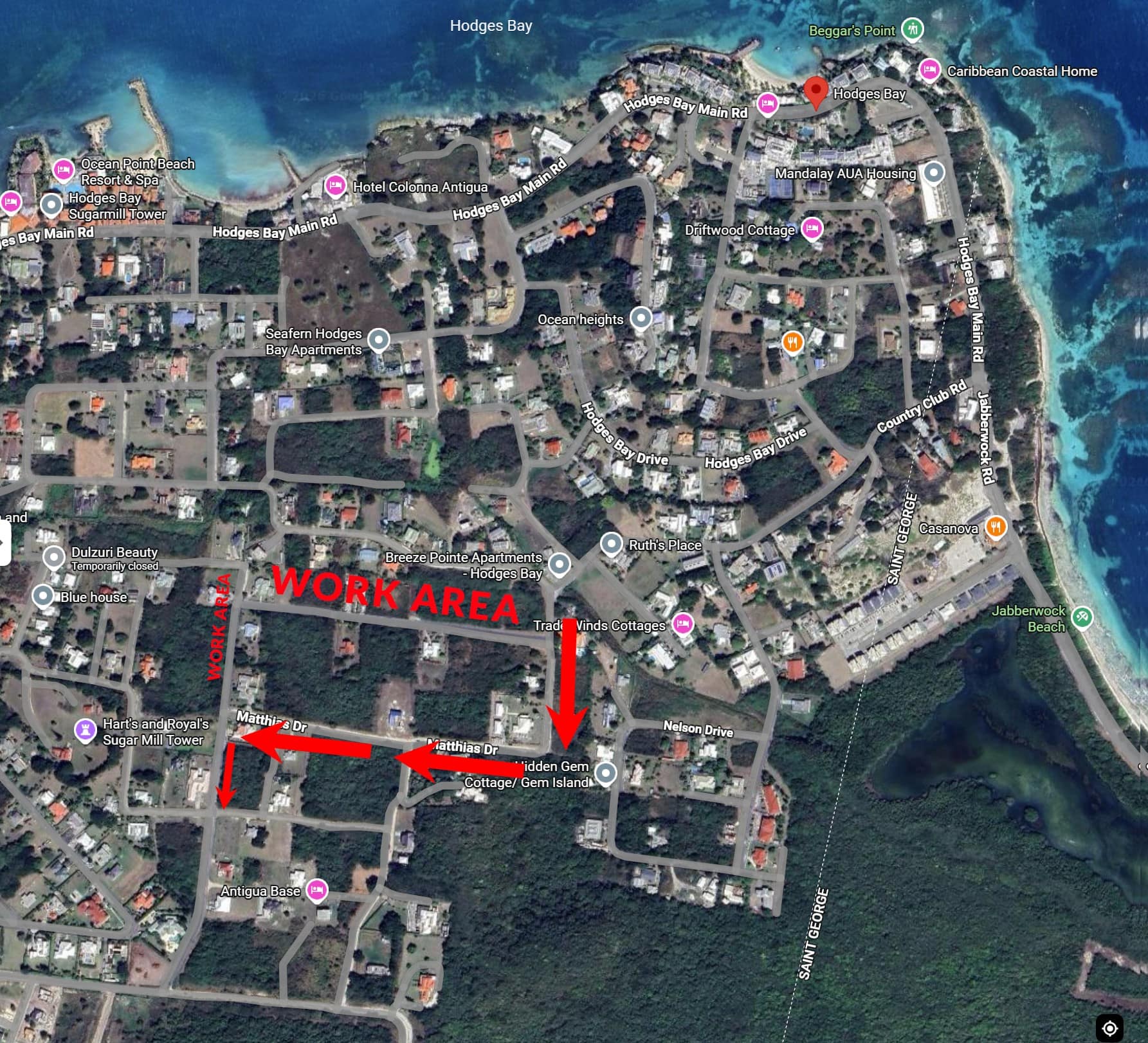
    Commuters navigating the Hodges Bay area are encountering significant traffic modifications as municipal authorities advance critical drainage infrastructure enhancements. The ongoing construction focuses on establishing a swale drain adjacent to Matthias Drive, situated south of the Breeze Pointe Apartments complex. This essential public works initiative has necessitated the partial closure of certain roadways, resulting in considerable transit delays during peak travel periods.

    Transportation officials have formally issued recommendations for motorists to employ alternative pathways to circumvent the construction zone. Suggested detours include utilizing Matthias Drive as a primary bypass or identifying supplementary access routes to reach destinations within the affected vicinity. The infrastructure development team has extended apologies for any inconveniences caused by the necessary construction activities, simultaneously expressing gratitude to both daily commuters and local residents for their demonstrated patience and cooperation.

    This drainage improvement endeavor represents a strategic component within a broader, comprehensive initiative aimed at reinforcing and modernizing the nation’s transportation infrastructure network. The swale drain installation specifically targets enhanced stormwater management capabilities, intended to mitigate flooding risks and improve road safety during severe weather events. Project coordinators confirm that construction timelines remain on schedule, with anticipated completion expected to conclude within the forthcoming weeks, pending favorable meteorological conditions.

  • Antigua and Barbuda seeks nominations to spotlight female philanthropists ahead of International Women’s Day

    Antigua and Barbuda seeks nominations to spotlight female philanthropists ahead of International Women’s Day

    The Directorate of Gender Affairs in Antigua and Barbuda has officially commenced the nomination period for its 2026 International Women’s Day Spotlight Series, a distinctive program dedicated to celebrating female philanthropists whose modest yet impactful contributions have substantially fortified community foundations nationwide.

    Under the resonant theme ‘Give to Gain,’ this year’s initiative deliberately shifts focus towards women whose altruistic endeavors, though frequently operating beneath the public radar, have generated measurable improvements in supporting vulnerable populations, advancing youth development, and enhancing overall community welfare. The Directorate emphasizes that the program’s core mission is to illuminate these selfless individuals who dedicate themselves to uplifting others and fostering sustainable positive transformation, thereby reaffirming women’s indispensable role as catalysts for societal advancement.

    Citizens are actively encouraged to participate by nominating women who exemplify extraordinary community service, demonstrate compassionate leadership, and exhibit an unwavering commitment to empowering their fellow citizens. Program officials clarify that eligibility extends beyond prominent financial contributors to include those whose generosity manifests through persistent, behind-the-scenes actions and grassroots activism.

    Prospective nominees must be submitted by the deadline of 18 February 2026, with all residents of Antigua and Barbuda eligible to participate in the nomination process. Submissions are accepted through multiple channels including physical delivery to the Directorate’s offices at Lower Nevis Street, postal mail, or electronic communication via telephone.

    This Spotlight Series constitutes an integral component of the nation’s broader International Women’s Day observances, scheduled for annual commemoration on March 8th. The campaign reinforces a fundamental societal message: women’s philanthropic contributions, whether through material resources or dedicated service, generate profound and far-reaching benefits for the entire social fabric.

  • K-9 Roni joins Royal Saint Lucia Police Force

    K-9 Roni joins Royal Saint Lucia Police Force

    The Royal Saint Lucia Police Force (RSLPF) has significantly bolstered its operational capabilities with the acquisition of K-9 Roni, a specially trained police dog generously donated by the French government. The canine specialist arrived on the island earlier this week accompanied by his handler, with formal training sessions scheduled to commence imminently with local K-9 unit officers.

    Police Public Relations Officer Zane Romulus confirmed that Roni’s integration into the force will substantially enhance the unit’s effectiveness in security operations. Concurrently, the RSLPF is developing comprehensive management protocols for its K-9 division, featuring ambitious infrastructure plans including state-of-the-art kennel facilities, specialized transportation systems for canine safety, and meticulously structured veterinary care programs.

    An official handover ceremony is being organized for the coming weeks to formally recognize this international security collaboration. This development follows high-level discussions between RSLPF delegates and French security counterparts during a January 19th visit to Martinique, where meetings were conducted with both the Gendarmerie and French Navy authorities.

    These diplomatic engagements, stemming from the ninth Franco-Saint Lucia Joint Security Meeting held in October 2025, have additionally paved the way for expanded training opportunities across multiple RSLPF units. The forthcoming programs will emphasize capacity building and strengthened cross-border cooperation mechanisms to effectively address regional security challenges.

  • Ciceron R.C. Combined wins schools Backyard Garden Competition

    Ciceron R.C. Combined wins schools Backyard Garden Competition

    In a pioneering initiative blending education with agriculture, Ciceron R.C. Combined School has emerged victorious in Saint Lucia’s inaugural Schools Backyard Garden Competition. The event, organized as a cornerstone of the Consumer Affairs Department’s Food Security Campaign during Business Month activities, saw Millet Primary School and Anse La Raye Primary School claiming second and third places respectively.

    Seven educational institutions from District Four participated in this innovative program, receiving vital seed contributions from the Taiwan Technical Mission. Students were tasked with establishing functional gardens while meticulously documenting their agricultural journey through video submissions. Additional participating schools included La Croix Maingot Combined School, Roseau R.C. Combined School, L’Abayee SDA Primary School, and Odsan Primary School.

    Educators observed remarkable student engagement throughout the project. Omica Common, Special Education teacher at the winning institution, noted how students incorporated traditional gardening techniques from their grandparents. The initiative sparked such enthusiasm at Anse La Raye Primary that Science teacher Lillian Stephens reported increased demand for farming club membership, leading to expanded projects including organic pesticide production and handmade flower pots.

    The Taiwan Technical Mission provided comprehensive support under Project Lead Maria Jaganath, who helped transform outdoor spaces into practical learning environments. The mission awarded monetary prizes to top-performing schools alongside recognition for all participants. This collaborative effort received additional backing from Saint Lucia’s Ministry of Agriculture and Ministry of Equity.

    At the January 15, 2026 awards ceremony held at the Archbishop Kelvin Felix Pastoral Centre, Dr. Charmaine Hippolyte-Emmanuel, Permanent Secretary for the Ministry of Equity, praised the project’s alignment with national youth development and food security objectives. She emphasized how the initiative demonstrated successful implementation of policy through effective partnerships, creating tangible community outcomes while acknowledging the crucial support from school administrators and staff.

  • VS waarschuwt Haïtiaanse overgangsraad: ‘We zullen gepaste actie ondernemen’

    VS waarschuwt Haïtiaanse overgangsraad: ‘We zullen gepaste actie ondernemen’

    The United States has delivered a strongly-worded caution to Haiti’s Transitional Presidential Council, signaling potential intervention if the Caribbean nation’s security situation continues to deteriorate. This development occurs amidst mounting international pressure for the interim governing body to organize federal elections in the violence-plagued country.

    In a sharply articulated social media statement released Thursday, the U.S. Embassy in Port-au-Prince emphasized that America’s primary objective remains “establishing basic security and stability.” U.S. Deputy Secretary of State Christopher Landau explicitly warned that any attempts to alter the composition of the unelected Transitional Council during its final months in office (through February 7th) would be perceived as undermining this crucial goal. Landau further indicated that Washington would respond decisively to such changes, stating that those supporting disruptive measures benefiting armed gangs would face “appropriate measures” for acting against the interests of the United States, the region, and the Haitian people.

    This warning emerges against the backdrop of Haiti’s protracted struggle with widespread gang violence, political instability, and systemic corruption. The U.S. stance is being viewed cautiously throughout the region, particularly following recent military operations in Venezuela on January 3rd that resulted in the abduction of President Nicolás Maduro. The Trump administration has consistently asserted that the entire Western Hemisphere falls within its sphere of influence under the “Donroe Doctrine”—a contemporary interpretation of the historical Monroe Doctrine previously invoked to justify American military actions including the Maduro operation and territorial claims on Greenland.

    Haiti’s current political crisis has deepened significantly since the 2021 assassination of President Jovenel Moïse. The absence of federal elections since that event has severely eroded governmental legitimacy, with the last elected leaders losing their mandates in 2023. This power vacuum has enabled criminal gangs to establish control over substantial territories, including approximately 90% of the capital city Port-au-Prince. The resulting violence has displaced over 1.4 million people and created severe food insecurity due to gang-controlled roadways. According to UN reports, approximately 8,100 people perished in the violence between January and November last year—a significant increase compared to 2024 figures.

    The Transitional Council, established in 2024 with nine members rotating leadership, was intended to lay groundwork for new elections. However, the body has faced criticism for its composition dominated by political and business elites, alongside allegations of corruption and internal strife. The United States exacerbated tensions by imposing visa restrictions on council economist Fritz Alphonse Jean in November. The planned phased elections, originally scheduled for last year, have been postponed until August while the Council’s February 7th mandate expiration creates additional uncertainty.

    UN Secretary-General António Guterres directly links Haiti’s humanitarian crisis to this political vacuum, citing escalating violence, food insecurity, and instability as the transition mandate concludes. Carlos Ruiz-Massieu, head of the UN Integrated Office in Haiti (BINUH), emphasizes the urgent need for transparent democratic processes and governmental unity, warning that gang violence threatens to disrupt electoral preparations. The UN is preparing to expand its multinational security mission later this year with additional troops to ensure free and secure elections can proceed.

    As Haiti’s fragile situation continues to deteriorate, the international community increasingly calls for stabilized governance and respect for democratic principles in the Western Hemisphere’s poorest nation.

  • U.S. finalizes withdrawal from WHO

    U.S. finalizes withdrawal from WHO

    The United States has officially completed its withdrawal from the World Health Organization (WHO), marking a significant shift in global health diplomacy. The departure, initiated through an executive order signed by President Donald Trump on January 20, 2025, follows a required one-year notice period but leaves approximately $133 million in outstanding financial obligations unpaid.

    According to United Nations officials speaking at a New York briefing, the withdrawal may not have fully met all procedural conditions. A Deputy Spokesperson for the UN Secretary-General noted that the WHO has not yet confirmed fulfillment of all requirements, specifically highlighting the settlement of outstanding financial obligations as a key condition that remains unresolved.

    The Trump administration’s decision to withdraw stemmed from multiple criticisms of the WHO, including allegations of mishandling the COVID-19 pandemic, failure to implement necessary reforms, and susceptibility to political influence from member states. The administration also criticized the organization’s funding structure, arguing that the U.S. contributed disproportionately compared to other nations, specifically noting China’s significantly lower contributions despite its larger population.

    Health experts worldwide have expressed concern about the implications of the U.S. departure, warning that it could weaken global disease surveillance and response capabilities, particularly in managing future pandemics. The United States had been one of the WHO’s largest contributors, providing over $600 million annually through assessed dues and voluntary contributions.

    The withdrawal represents part of a broader policy shift by the Trump administration away from international organizations perceived as not aligning with U.S. interests. Questions now emerge about how the United States will participate in global health coordination efforts moving forward, as the WHO remains the primary international body for disease prevention and response coordination.

  • Learning and Development Unit Opens 2026 with CME Sessions on Stroke Care and Cancer Detection

    Learning and Development Unit Opens 2026 with CME Sessions on Stroke Care and Cancer Detection

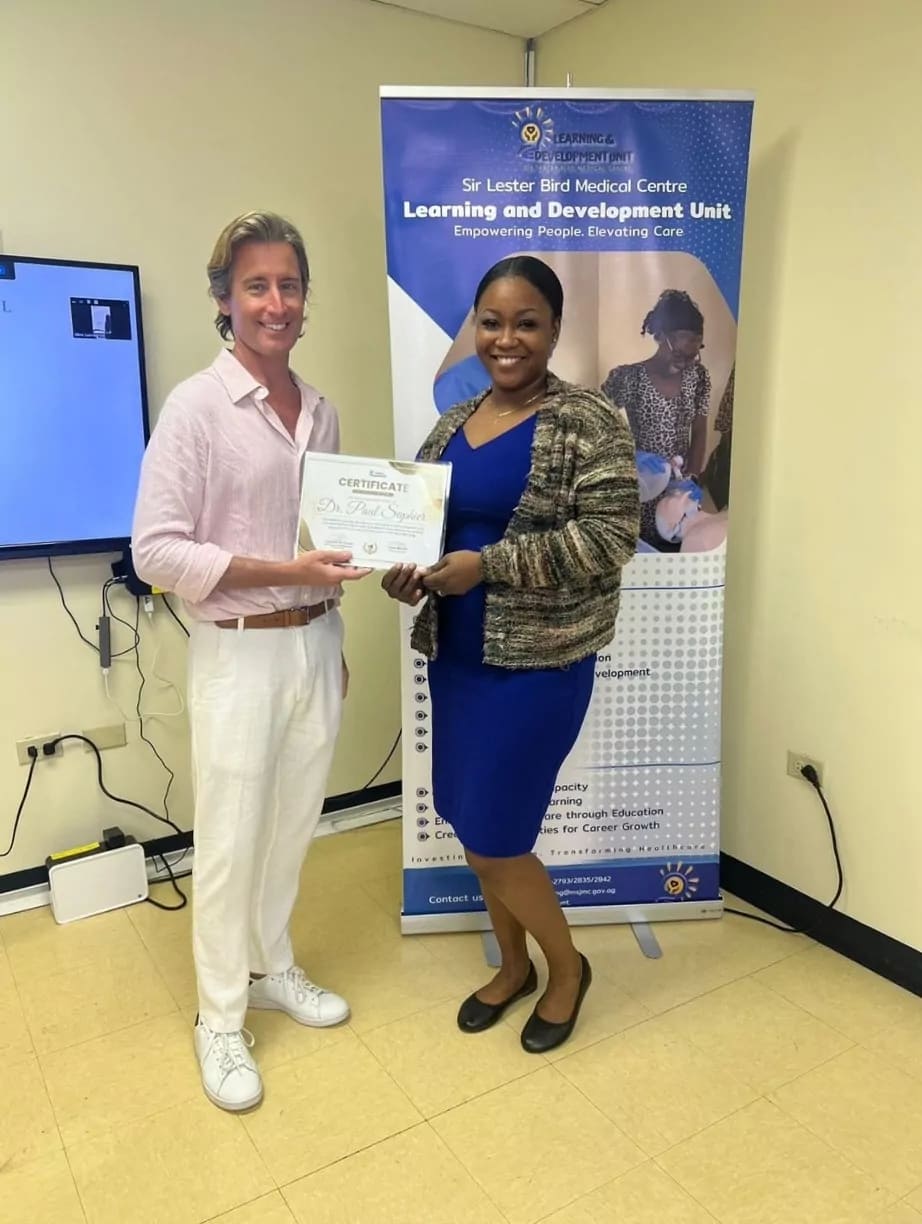
    Antigua and Barbuda’s healthcare sector has embarked on an ambitious professional development initiative with the commencement of the Learning and Development Unit’s 2026 educational program. The inaugural sessions, conducted by renowned medical experts Dr. Paul Saphier and Dr. Nicole Saphier, addressed critical healthcare challenges through two comprehensive Continuing Medical Education (CME) modules.

    The first session delivered an in-depth analysis of acute stroke management, emphasizing time-sensitive intervention protocols. Participants examined the implementation of mechanical thrombectomy procedures and explored adaptive strategies for both well-resourced and resource-constrained medical environments. The discussion highlighted systemic preparedness and clinical decision-making processes that significantly influence patient outcomes.

    A subsequent presentation focused on breast cancer detection methodologies, reviewing current screening strategies, diagnostic pathways, and treatment outcomes. The facilitators presented population-specific data and trends relevant to Antigua and Barbuda’s healthcare landscape, enabling participants to contextualize international best practices within local healthcare delivery frameworks.

    Program organizers emphasized the deliberate integration of evidence-based practice with equitable healthcare delivery principles. The sessions were specifically designed to bridge theoretical knowledge with practical application, ensuring that medical professionals can immediately implement learned techniques in clinical settings.

    Dr. Shivon Belle-Jarvis, Medical Director of Sir Lester Bird Medical Centre, endorsed the program’s approach, stating that continuous professional development remains fundamental to health system strengthening. The Learning and Development Unit characterized its methodology as ‘intentional learning’ – a focused educational strategy that prioritizes clinically relevant content while maintaining patient outcomes as the central objective.

    The Unit has committed to sustaining this practical, high-impact educational approach throughout 2026, with ongoing programs designed to enhance healthcare outcomes across the nation’s medical ecosystem.

  • Dominican Republic appoints new consul general to Antigua and Barbuda

    Dominican Republic appoints new consul general to Antigua and Barbuda

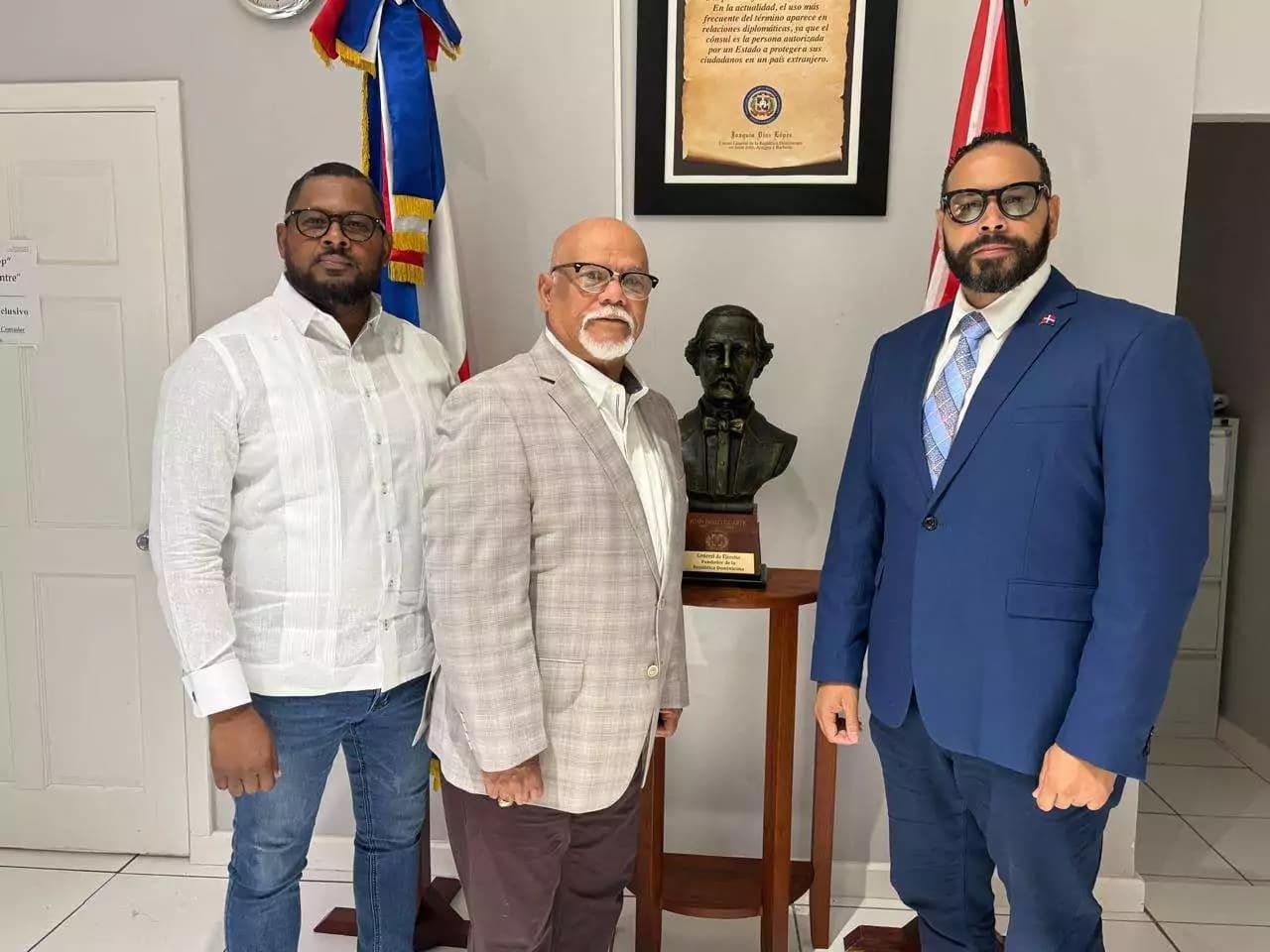
    The Dominican Republic has officially installed Julio Cesar Mateo Baez, colloquially known as Yulyn, as its new Consul General to Antigua and Barbuda. This diplomatic appointment follows the recent departure of former envoy Joaquin Lopez Diaz, marking a new chapter in bilateral relations between the two Caribbean nations.

    In his inaugural address, Consul General Mateo Baez emphasized his dual mission of serving the Dominican diaspora while fortifying diplomatic and cultural ties with Antigua and Barbuda. He characterized the host nation as a ‘valued partner’ whose citizens demonstrate remarkable dedication and work ethic, noting his encouragement from the historically strong relationship between the countries.

    The new consul issued a compelling appeal to Dominican nationals residing in Antigua and Barbuda, urging them to embody the role of cultural ambassadors through exemplary conduct and strict adherence to local laws. He emphasized that the behavior of expatriates directly influences international perceptions of the Dominican Republic.

    Mateo Baez’s diplomatic agenda includes scheduled courtesy visits to senior government officials in St. John’s during the coming weeks, where he will discuss matters of mutual interest and exchange formal greetings. His first official engagement will occur Sunday with attendance at a special service at Holy Family Cathedral commemorating the Bridging of Altagracia—a significant religious and cultural observance for the Dominican people.