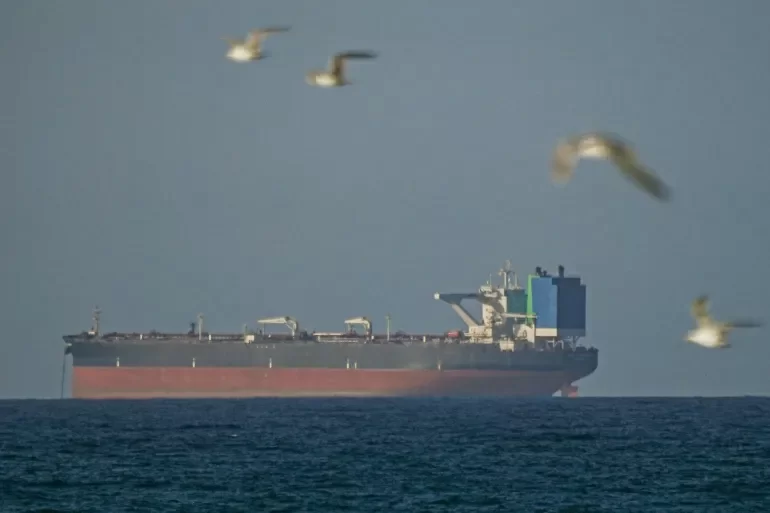
Weeks after a temporary two-week ceasefire between the United States and Iran that kept the critical Strait of Hormuz partially open, a cargo vessel waits off the coast of Oman to traverse the chokepoint. But this image of uncertainty is far from an isolated incident: geopolitical power struggles are rapidly unraveling the decades-old rules-based order that has kept global maritime trade secure and predictable, analysts warn. The warning comes after a sudden policy proposal from Indonesia that sent shockwaves through global shipping and insurance markets last week. Indoneisan Finance Minister Purbaya Yudhi Sadewa suggested imposing transit tolls on commercial vessels passing through the Strait of Malacca, a key global trade chokepoint, explicitly drawing inspiration from recent Iranian actions in the Strait of Hormuz. While Jakarta quickly walked back the controversial suggestion, industry analysts say it exposed a growing, dangerous shift: the once-stable system of open maritime navigation is becoming increasingly risky, costly and overtly politicized. “We have not seen the oceans this unsettled and dangerous since nations first came together to agree on shared rules for maritime navigation,” said Elisabeth Braw, a senior fellow at the Atlantic Council. For centuries, maritime shipping carried inherent risks, from piracy to rogue attacks. But in the decades following World War II, the international community built a comprehensive framework of treaties and agreements designed to guarantee open, safe passage for commercial vessels across global waterways. The results have been transformative: the World Trade Organization reports that global trade grew from roughly $60 billion in the 1950s to more than $25 trillion last year, with 80 percent of all global trade by volume moving across the world’s oceans. Today, however, experts agree that actions from major global powers including the United States, Iran, Russia and China are systematically undermining the rules that made this growth possible. The most high-profile flashpoint right now is the Strait of Hormuz, the narrow chokepoint through which roughly a fifth of global oil supplies pass. Starting in March, Iran restricted passage for dozens of vessels after joint strikes by the U.S. and Israel on Iranian targets. On April 13, the U.S. imposed a full maritime blockade on Iranian vessels and ports, and has since seized Iranian tankers near the strait and detained other vessels across the Indo-Pacific that it accuses of carrying sanctioned Iranian crude. In response, Iran has seized unauthorized vessels attempting to transit the strait and opened fire on multiple commercial ships passing through the waterway. These escalating tit-for-tat actions have worsened the ongoing global energy crisis, pushing oil and natural gas prices to multi-year highs. “Even without a full closure of the strait, requirements for transit approval and constant political pressure create massive cost increases and widespread uncertainty,” said Jack Kennedy, senior analyst at S&P Global. Kennedy pointed to a recent incident off the coast of Oman, where a container ship was fired on by an Iranian military patrol boat, leaving the vessel’s bridge damaged. He described the attack as “calculated use of force to demonstrate control without shutting down all traffic entirely,” a tactic that creates uncertainty across the entire shipping industry. Tensions are now spreading to other critical maritime infrastructure, including the Panama Canal. Earlier this week, the U.S. and multiple South American and Caribbean nations accused China of using “targeted economic coercion” against Panamanian-flagged vessels, claiming Beijing is detaining Panamanian ships in its ports as part of a broader effort to politicize maritime trade and undermine regional sovereignty. China has forcefully rejected the accusations, calling the U.S. claims hypocritical. A spokesperson for China’s Ministry of Foreign Affairs noted that the U.S. occupied the Panama Canal for decades and repeatedly violated Panama’s sovereignty, pointing to a long history of American interference in the region. The latest dispute comes after Panama’s Supreme Court canceled a concession held by a Hong Kong-based firm to operate two major ports along the canal, a move widely viewed as the result of U.S. pressure to roll back Chinese influence around the strategic waterway. Experts note that the vast majority of global maritime trade still operates within the existing legal framework, but the number of high-profile political exceptions is growing at an alarming rate. In recent years, maritime disruptions have become increasingly strategic and organized. Russian control of large swathes of the Black Sea during its full-scale invasion of Ukraine triggered global food shortages by blocking grain exports. In the South China Sea, China has been repeatedly accused of intimidating commercial vessels to enforce its disputed territorial claims, allegations Beijing has repeatedly denied. “Maritime action has always been a tool to exert pressure on an adversary’s economy and military. What has changed is the scale: the volume of container trade and the size of the global fleet mean disruptions ripple across the entire global economy far faster than ever before,” explained Jean-Paul Rodrigue, a maritime trade expert at Texas A&M University. Non-state actors have also amplified risk in global waterways. Houthi attacks on commercial shipping in the Red Sea have forced major shipping lines to reroute vessels around the Cape of Good Hope, adding thousands of miles of extra travel and billions in extra costs. The biggest long-term risk, analysts agree, is the precedent being set by increasingly frequent violations of the existing rules. The cumulative effect of these developments is a clear shift away from predictable, rules-based navigation toward a system where access, costs and safety are increasingly determined by power, influence and political interests. Non-state groups have also exploited gaps in international enforcement: the International Maritime Bureau’s latest report shows global piracy incidents have already reached their highest level in five years this year. These geopolitical tensions translate directly to tangible costs for global consumers. Vessel rerouting increases fuel consumption and transit times, pushing up operating costs for shipping lines. Insurance premiums and risk surcharges have skyrocketed in high-tension areas, and even short detentions or inspections can create cascading delays across global supply chains. As a result, shipping lines are increasingly reconsidering their routes, flag registrations and port calls to minimize political exposure. “The biggest risk is the precedent that emerges when multiple nations test boundaries through selective enforcement, new permitting requirements or tolls in international straits. When that becomes normalized, outcomes depend entirely on power dynamics and bilateral negotiations, not shared rules,” Kennedy said.
作者: admin
-

FOLS vraagt meer waardering voor onderwijsgevenden
On May 1, Suriname joins global Labour Day observances to honor the dedication, resilience and unwavering commitment of all working people who keep the nation’s social and economic systems running. This year, the Federation of Organizations of Teachers in Suriname (FOLS) has chosen the national observance to amplify the voices of the country’s education workforce, calling attention to the relentless daily efforts educators put forth to build Suriname’s future.
Day after day, teachers across Suriname show up to classrooms to nurture the nation’s youth, the cornerstone of the country’s long-term development. Even amid persistent challenges — from strained institutional resources to widespread economic pressure that has raised the cost of living for all households — educators have continued to prioritize their students’ growth. But FOLS, led by chair Bernice Barron, warns that sheer hard work and persistence are no longer enough for teachers to bear their growing daily burdens.
Barron’s organization emphasizes that it is long past time for Suriname’s educators to receive the tangible, meaningful recognition they deserve. A warm ceremonial greeting on Labour Day, the federation argues, means little when teachers struggle to cover monthly household bills and teach in outdated, inadequate classroom facilities that do not support student learning.
FOLS has laid out three core pillars that constitute real appreciation for the teaching profession. First, it demands fair compensation and benefits: a living wage and secondary employment terms that align with the heavy responsibility and societal importance of teaching. Second, it calls for improved working environments, including safe, supportive learning spaces at every education level, from primary school through higher education. Third, the federation is pushing for clear long-term career security, so teachers can focus entirely on their core mission of educating students without constant financial and professional anxiety.
Crucially, FOLS stresses that this campaign is not a request for special favor, but a demand for what teachers are legally and ethically owed. The organization is calling on national and local authorities to implement permanent, structural improvements to the education system’s employment provisions, so that Suriname’s educators can continue to carry out their vital work with dignity.
-
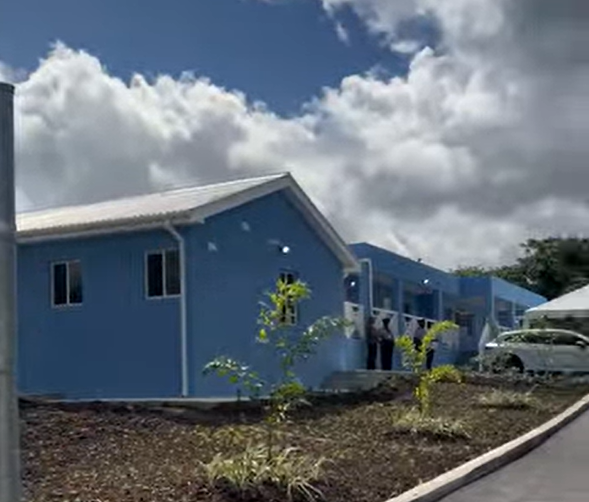
St Thomas Outpatient Clinic reopens May 5
After months of renovation work to enhance care delivery, residents across St. Thomas and its neighboring communities are preparing to regain local access to critical primary outpatient care, as the St. Thomas Outpatient Clinic at Rock Hall prepares to welcome patients starting Tuesday, May 5.
The facility, which closed to carry out targeted upgrades, will operate on a set weekly schedule once it resumes services: general practice consultations will be available to the public every Tuesday, Thursday, and Friday between 8:30 a.m. and 4:30 p.m. Local residents should note one key exception to the May 5 launch: the on-site pharmacy will not open alongside the clinic, and will instead begin filling prescriptions one week later, on Tuesday, May 12.
In an official statement shared by the government, Jamaica’s Ministry of Health and Wellness framed the clinic’s reopening as a key milestone in the ministry’s long-term strategy to reinforce the island’s primary healthcare system. By upgrading local community facilities like the Rock Hall clinic, officials aim to expand equitable access to routine care for residents who previously had to travel farther for basic outpatient services. The ministry is urging all members of the public living in and around St. Thomas to take advantage of the updated facility and its improved services.
-
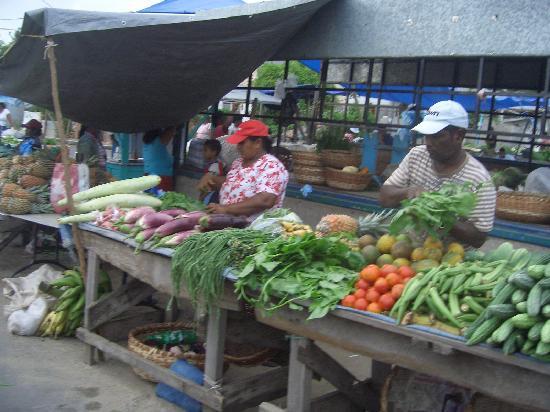
Opposition recommends fuel subsidies, price controls to ease cost of living
As of Friday, May 1, 2026, Guyana’s main opposition bloc has laid out a series of policy demands targeting the country’s rapidly escalating cost of living, calling on the ruling government to leverage unexpected revenue windfalls from global commodity price shocks triggered by the Israel-U.S. conflict with Iran to deliver immediate relief to households.
Dr. Terrence Campbell, parliamentary leader of the opposition A Partnership for National Unity (APNU), laid out his core proposal in a press briefing Friday: temporarily amend the country’s Natural Resources Fund (NRF) Act to unlock surplus oil revenues for immediate retail fuel subsidies. The geopolitical conflict has sent global crude prices soaring far beyond the projections that underpinned Guyana’s 2026 national budget, generating unanticipated extra income for the oil-producing South American nation.
Currently, the NRF Act mandates that all current-year resource revenues are transferred to the country’s consolidated fund only the following fiscal year, a rule that blocks immediate access to the new windfall. Campbell argues that cutting fuel costs at the pump is the most effective root-level intervention to slow broader inflation, since higher transport and energy costs filter through to raise prices for nearly all goods and services across the economy.
“Easing pressure at the source, right at the pump, is the simplest and most direct way to deliver relief to all Guyanese,” Campbell told reporters.
Data underscores the scale of recent price increases: just two months before the outbreak of the Israel-U.S.-Iran conflict, state-owned Guyana Oil Company sold gasoline for 170 Guyanese dollars (GY$) per litre. As of Friday, that price has jumped to GY$208 per litre. Diesel prices have seen even steeper growth, surging from GY$168 per litre pre-conflict to a range of GY$210 to GY$268 currently. Global benchmark Brent crude traded at US$108.35 per barrel on Friday, nearly $50 above the US$59 per barrel projection included in the 2026 national budget. Campbell added that Guyana is also collecting elevated tax and royalty revenues from gold, which was trading at US$4,611.35 per ounce on Friday, far above typical forecast levels.
Campbell also criticized the government’s existing GY$3 billion cash support package for rice farmers, who have raised alarms over spiking costs for fertilizer, fuel, transportation and irrigation water. Dismissing the targeted payout as insufficient relief, he noted “man shall not live by rice alone,” arguing that broad-based fuel relief would benefit all sectors of the economy, not just agriculture. “A one-off payout for rice farmers won’t deliver the broad relief we need when prices are rising across every category. Most inflation starts at the pump, so that’s where relief needs to start,” he explained.
In addition to fuel subsidies, Campbell called on the administration to roll out an additional GY$200,000 cash grant for households, labeling the current government “uncaring” for its failure to address widespread financial strain.
APNU Opposition Leader Azruddin Mohamed echoed the calls for broader intervention, drawing a parallel to a recent regulatory move by the country’s central bank. After Central Bank Governor Dr. Gobind Ganga mandated that commercial banks cap the spread between U.S. dollar buying and selling rates at three percentage points, Mohamed argued the government could use similar regulatory power to impose price caps on essential consumer goods to rein in cost of living increases.
“We need to establish price controls, and even government-managed retail outlets to cap prices for staple food items. Without intervention, prices will only climb higher,” Mohamed told reporters ahead of the annual May Day parade, which was set to kick off from Georgetown’s Middle and Carmichael Streets. He also called on national trade unions to take a more aggressive stance in advocating for living wages for public sector employees.
Separately, Dawchand Nagasar, General Secretary of the National Association of Agricultural, Commercial and Industrial Employees, confirmed he held talks with the Minister of Labour last week to discuss updating minimum wage levels in both the public and private sectors to reflect current inflation.
-

Soca royalty reigns at Fort Christian Lot as St Thomas Carnival Village comes alive
On a balmy open-air night at St Thomas’ iconic Fort Christian Lot, the U.S. Virgin Islands Division of Festivals delivered a career-defining evening of Caribbean culture, headlined by two of soca music’s biggest names: Hypasounds and Alison Hinds. Thousands of excited carnival-goers packed the historic grounds, turning the venue into a sea of movement and celebration that reinforced St Thomas Carnival’s reputation as one of the most vibrant cultural events in the Caribbean.
As sunset faded and the stage lights cut through the dark, the night built steadily toward the highly anticipated headline sets. When Hypasounds stepped onto the stage, he immediately seized control of the crowd, drawing on his years of experience performing across the Caribbean to read the room and stoke energy to a fever pitch. The dynamic performer wove through his catalog of hits, showcasing his versatility as an artist and the effortless charisma that has earned him a devoted global fanbase, particularly among female followers. Every note landed with precise flair, keeping the energy soaring from his first opening chord to his final bow. The crowd responded with unbridled, unfiltered enthusiasm that could only be found during peak carnival season, singing along to every track and filling the Fort Christian Lot with deafening cheers.
No night of carnival soca would be complete without a performance from the undisputed Queen of Soca, Alison Hinds, and the decades-long icon delivered a set that lived up to every bit of her legendary reputation. Stepping out to roaring applause, Hinds connected with the crowd with the warm, unshakable confidence of an artist who has spent her career commanding stages of every size. She effortlessly held the audience in the palm of her hand, proving exactly why her title as Queen of Soca has remained unchallenged for more than 30 years.
Far more than just a single concert, this standout night at Carnival Village served as a powerful reminder of the U.S. Virgin Islands’ status as one of the Caribbean’s premier destinations for cultural celebration. When St Thomas commits to putting on a show, it delivers on every promise of joy, community, and world-class performance. Held annually every April, St Thomas Carnival continues to grow in popularity, drawing visitors and music fans from across the globe, and nights like this are a perfect testament to its enduring appeal.
For Hypasounds himself, the show was a homecoming of sorts: the artist has long spoken publicly about his deep affection for the U.S. Virgin Islands, counting the territory among his favorite places to perform, and that heartfelt fondness shone through every minute of his high-energy set. Event organizers extended special gratitude to the USVI Division of Festivals, production partner Riddimstream, and Michael Knight and his full band, who provided the dynamic live instrumentation that elevated every performance and brought the night’s music to vivid life.
The momentum from this unforgettable St Thomas show shows no signs of slowing down for Hypasounds. Next on his tour schedule is a stop in Barbados for Patrice Roberts’ highly anticipated I Am Woman event, set to take place on Mother’s Day. The event, which celebrates women’s contributions to Caribbean music and culture, will feature some of the region’s most talented artists, and fans are already rushing to secure entry — organizers are encouraging Barbadian fans to book their tickets early to avoid missing out. Following the Barbados stop, Hypasounds will hit the stage again this very weekend in Atlanta, Georgia, kicking off a string of upcoming dates that promise as much excitement as the St Thomas carnival night.
Fans can keep up with Hypasounds’ upcoming tour dates and new releases by following him on all social media platforms @hypasoundsmuzik. His latest single, *Too Like*, is available for streaming now on all major digital music platforms.
-
Two in custody after suspected arson incident airport site
An arson attack targeting construction vehicles at the site of Dominica’s flagship international airport project in Wesley has triggered a swift official response, with two people now in police custody assisting with ongoing investigations, the country’s Minister for National Security Rayburn Blackmoore has publicly confirmed.
The incident unfolded earlier this week, when three heavy trucks owned by Chinese contractors working on the infrastructure development were deliberately set on fire. Blackmoore made the confirmation during a live radio interview on DBS Radio Thursday morning, where he emphasized the gravity of the attack against a project framed as transformative for the Caribbean nation.
“I cannot speak as to the motive of whoever did that. That is for the police to investigate. But what I have been advised is that two people in custody assisting the police with this investigation,” Blackmoore stated during the interview. “It is critically important therefore for the people who are responsible to be arrested and of course for there to be a due process.”
The minister issued a firm condemnation of the arson, labeling the action an unambiguously criminal act that does not reflect the views or values of the Dominican public, especially people living in the nearby communities of Wesley and Woodford Hill. He pushed back against any framing that would cast the attack as a targeted action against the Chinese construction partners, noting instead that it was an attack on the entire nation of Dominica.
“This is certainly not an act against the Chinese contracting team, CR5 or MMC. This is a criminal act against Dominica, against all of us, perpetrated by criminal vagabond elements who must be pursued in the highest degree of intensity by the police,” Blackmoore said.
He took the opportunity to clarify that local communities surrounding the airport construction zone have maintained a consistently welcoming and supportive stance toward both local and international workers on the project. “Residents of both communities have been very embracing to the employees of the international airport and are supportive of the project itself,” he added.
Beyond addressing the arson incident, Blackmoore underlined the outsized historical and economic importance of the international airport project, describing it as a landmark national achievement that has been generations in the making. He also recognized the longstanding partnership between Dominica and the People’s Republic of China, noting that China has consistently stood with Dominica through periods of crisis, and called on local citizens to continue upholding a spirit of goodwill toward the project’s foreign workers. He urged community members to cooperate with law enforcement to help identify the remaining perpetrators. “Let us make them feel welcome and let us together make sure that we do everything possible to assist the police to identify those vagabonds, these criminals,” he said.
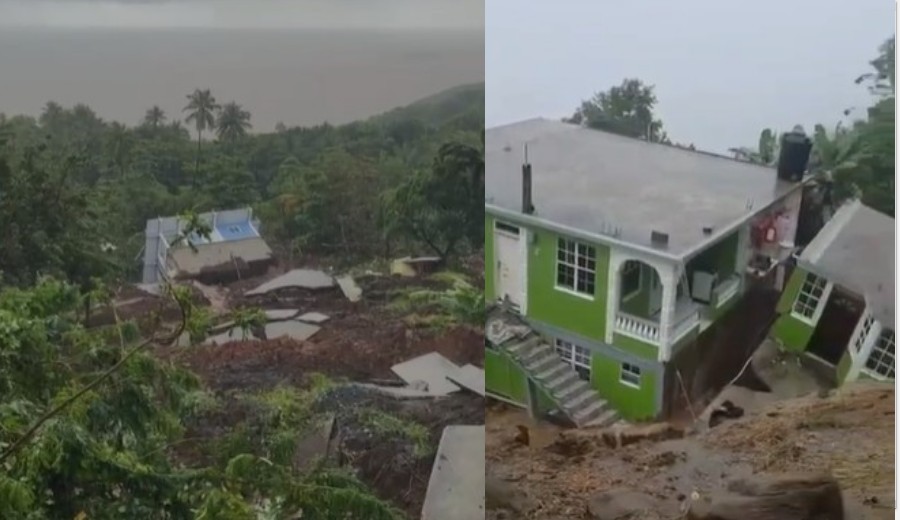
The interview also touched on separate recent weather-related disaster impacts in the Kalinago Territory, where five homes were completely destroyed and 18 households have been displaced or affected by recent extreme weather. Blackmoore gave assurances that the government will bring in independent, specialist experts in hydrology, geology, and engineering to conduct comprehensive risk assessments of the affected area, and develop evidence-based recommendations to protect at-risk local communities moving forward.
Closing out the interview, Blackmoore reaffirmed the international airport’s central role as a foundational pillar of Dominica’s long-term economic growth and prosperity. “This ought to be a proud moment for us. We are building this airport that generations 60 years ago only dreamed about. It is critical for the survival of our country and for generations to come,” he said.
-

Daryll Matthew says work to begin immediately on priority projects in St. John’s Rural South
Fresh off securing another term as the representative for St. John’s Rural South, lawmaker Daryll Matthew has wasted no time in mapping out his legislative agenda, confirming that planning and on-the-ground execution for high-priority local infrastructure projects will get underway without any delays. In a detailed post-election interview with media outlets, the Member of Parliament-elect laid out his priorities for the opening months of his new term, noting that ongoing community improvement works will continue uninterrupted while new signature initiatives move from the planning stage to implementation. Matthew emphasized that road upgrade projects that were already launched in the constituency will maintain their current momentum, after which the local leadership will shift its full attention to a slate of larger community-focused developments. Among the most anticipated projects on his immediate to-do list are two landmark developments: a purpose-built community centre in the Radio Range neighborhood and the formal establishment of Tyndale Park, a new public green space for local residents. “I have two big signature projects that I’m going to commence the planning and working on them immediately,” Matthew stated in the interview, making clear that the transition from campaigning and policy outlining to tangible action is already underway. For the incoming term, Matthew said the priority has shifted from drafting campaign pledges and conceptual projects to delivering concrete results for constituents, with administrative and pre-construction steps set to launch in the coming days to keep the developments on track. Beyond the two headline projects, Matthew confirmed that routine constituency services and engagement with local residents will remain a core part of his work moving forward. He added that sustained outreach to community members and ongoing small-scale infrastructure upgrades will form a key part of his broader agenda as he kicks off his new term in office.
-
APNU, WIN appeal to trade unions for support to dislodge PPPC from office
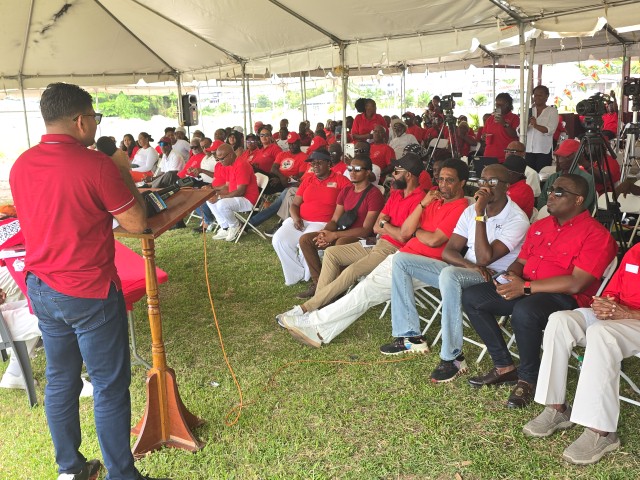
On May 1, 2026 — International Labour Day — Guyana’s main opposition figures gathered with members of the Guyana Trades Union Congress (GTUC) following a low-turnout parade to mount a coordinated call for cross-group unity aimed at unseating the incumbent People’s Progressive Party Civic (PPP-C) administration ahead of the 2030 general and regional elections.
The march, which stretched from Georgetown’s Parade Ground to Woolford Avenue, drew only 300 attendees representing affiliated GTUC unions, a far smaller crowd than organizers had anticipated. Even with the muted turnout, speakers at the subsequent post-rally meeting held at the Guyana Local Government Officers Union used harsh language to criticize the ruling government’s record on worker rights and economic policy.
GTUC President Norris Witter opened the sharp critiques, framing the PPP as a public hazard that required collective action to eliminate. “For me the PPP is a dangerous disease and, therefore, we must work together to determine what kind of dangerous medicine is required to get rid of this disease,” Witter stated, arguing that broad-based unity — rather than divisive sectarian politics — was the only path to removing the government from power.
Dr. Terrence Campbell, parliamentary leader of the main opposition bloc A Partnership for National Unity (APNU), expanded on this call, extending the demand for unity beyond opposition political parties to include trade unions and civil society groups. Campbell labeled the current administration a “wicked, evil, inhumane, despicable regime” and urged union members to back opposition-led protests on any issue — from cash grant increases to electoral reform — ahead of the 2030 vote. “When we call a protest whether it be for cash grants or a protest for a new voters list or biometrics; whether invited or uninvited, I would expect to see my union brothers standing there with us,” Campbell said.
Azruddin Mohamed, Guyana’s Opposition Leader, echoed Campbell’s calls, pressing unions to mobilize around core worker grievances that include stagnant low wages and retaliatory administrative measures, such as punitive transfers for public sector workers who oppose the ruling government. Mohamed confirmed that he had provided financial support to the Guyana Teachers Union (GTU) during its recent strike for higher salaries, and committed that all opposition parties would collaborate with organized labor to secure better compensation and working conditions for public servants.
Mohamed also took aim at the government’s recent policy priorities, questioning how the country’s nearly GY$6 trillion 2026 national budget has failed to deliver tangible improvements to working people. He pointed specifically to a May Day brunch hosted by President Irfaan Ali for nurses at State House, noting that the healthcare workers face a three-year wait to receive just GY$16,000 in promised compensation, while First Lady Arya Ali conducted an official visit to Singapore. Closing his remarks, Mohamed urged union leadership to reorganize and mobilize to deliver a much larger turnout for the 2027 May Day parade, emphasizing that collective organizing is the only way to oust what he called a “dictatorship, deceitful, treacherous government.”
The event also exposed ongoing rifts within Guyana’s broader opposition coalition. Dorwain Bess, leader of the Vigilant Political Action Committee (VPAC), publicly called on Mohamed to honor his pledge to build genuine, inclusive collaboration across all opposition factions. Bess and his former coalition partner Amanza Walton-Desir of the Forward Guyana Movement have been locked in a public dispute over parliamentary representation following last September’s general and regional elections. Veteran politician Hamilton Green, who entered Guyanese politics shortly after completing his education, noted that the opposition’s biggest immediate challenge remains convincing ordinary Guyanese to join their political struggle.
-

The ‘biggest year ’: Jazz Fest 2026 officially opens
The highly anticipated 2026 edition of the Saint Lucia Jazz and Arts Festival kicked off its opening night with an electrifying, cross-genre lineup of country, calypso, dancehall, and bouyon, laying an energetic foundation for what organizers promise will be the largest and most expansive iteration of the event to date. The evening got off to a seamless start, with LM Stone taking the stage alongside Shervon Sealy and Amber Digby to warm up the gathered audience with soulful country melodies, gently drawing early attendees into the festive spirit. Building on this initial momentum, the next segment of the night honored the rich cultural legacy of Kaiso and calypso, centering both iconic veteran performers and exciting emerging voices of the genre. Veteran mainstays including Robby, Herb Black, Lady Leen, Educator, Invader, Translator, and Ashanti shared the spotlight with rising talents, such as Dezral, current Saint Lucian calypso and soca monarch Sly, and Jurgen. After the musical opening acts, the official formal inauguration of the 2026 festival got underway, featuring opening remarks from Dr. Ernest Hilaire, Saint Lucia’s Minister of Tourism and Deputy Prime Minister, followed by Prime Minister Philip J. Pierre, who delivered the official declaration opening the festival. In his address to the packed audience, Hilaire emphasized the festival’s extraordinary growth trajectory, noting that the 2026 staging is the most ambitious and far-reaching in the event’s history, with early turnout already outpacing records set by previous years. “This year is our biggest year in terms of the number of activities that we will have. The Arts Festival has grown beyond belief,” Hilaire stated. He highlighted major new expansions to the 2026 program, including three original theatrical productions, an expanded Icon Series that incorporates culinary arts, and programming spread across a broader geographic footprint across the island. Hilaire added that the festival has evolved far beyond its original focus on music to create opportunities for a full spectrum of Caribbean creatives, noting “our dancers in Saint Lucia will get an opportunity to perform with international artists… showing how the festival is expanding beyond music.” Following the formal ceremonies, Jamaican vocalist D’Yani shifted the energy with a soulful set of romantic ballads, performing fan favorites including “Letter” and “Please.” He connected deeply with the audience, surprising female attendees by handing out roses throughout his performance. The crowd’s energy surged when popular dancehall performer Valiant took the stage, delivering a high-octane set packed with chart-topping hits including “Baddiedeh” and “Dunce Cheque.” Valiant leaned into close interaction with fans, leaving the stage to mingle with the crowd and inviting female attendees on stage to join a lively dance competition that sent the audience’s excitement soaring. Reggae icon Capleton followed with a commanding, crowd-pleasing performance that earned one of the biggest reactions of the entire night. Renowned for his electrifying stage presence, Capleton had the entire crowd jumping and waving along to his iconic tracks, including the fan favorite “That Day Will Come.” His set featured standout unaccompanied a cappella segments and a surprise guest appearance from Jamaican performer Ffuriousmusic. The opening night closed on an unforgettable high note with a performance from Dominican “Bouyon Boss” Asa Bantan, who lived up to his reputation as one of the genre’s most high-energy performers with renditions of his popular hits “Stickly Local” and “If I Die Young.” In a signature moment that became a highlight of the night, Bantan distributed water bottles to the crowd, who joined in by splashing water into the air during his performance of the fan favorite “Wet Fete.” Between main stage sets, rotating resident DJs kept the momentum going, ensuring the audience remained engaged and energized from the first performance to the last. By the end of the night, the opening celebration had successfully showcased the festival’s commitment to diverse Caribbean musical talent and expanded creative programming, setting a powerful positive precedent for the remainder of the 2026 Saint Lucia Jazz and Arts Festival.
-

Two in custody after 3 trucks owned by Chinese contractors were allegedly set ablaze
A criminal arson attack targeting three vehicles owned by Chinese construction contractors at Dominica’s new international airport building site in Wesley has sparked an official investigation, with two people currently in custody assisting law enforcement with inquiries, the country’s Minister for National Security Rayburn Blackmoore has confirmed. The revelation came during a live public interview on DBS Radio on Thursday morning, where the minister offered new details on the incident that unfolded earlier this week.
When asked about the potential motive behind the attack, Blackmoore declined to speculate, noting that all lines of inquiry remain in the hands of investigating police officers. “I cannot speak as to the motive of whoever did that. That is for the police to investigate. But what I have been advised is that there are two people in custody assisting the police with this investigation,” he stated. Blackmoore emphasized that the top priority is holding all responsible parties accountable through the full, fair legal process, saying that those behind the attack should face the consequences of their actions behind bars at the Stockfarm prison.
The minister was careful to draw a clear line between the criminal attackers and the broader communities of Wesley and Woodford Hill, stressing that the arson does not align with the long-standing cultural values and social norms of Dominica or the behavior of local residents in the affected areas. He went on to highlight that local residents from both communities have repeatedly shown openness and support for the airport project and the workers employed on it. Instead of generic condemnation, Blackmoore called for clear, honest labeling of the incident for what it is: a criminal act with no broader popular backing.
Far from being an isolated issue targeting only the Chinese contracting firms working on the project — identified as CR5 and MMC — Blackmoore framed the attack as an offence against every citizen of Dominica. “This is certainly not an act against the Chinese contracting team, CR5 or MMC, this is a criminal act against you Curtis, against me, against Dominica, against us, perpetrated by criminal vagabond elements who must be pursued in the highest degree of intensity by the police,” he said.
Blackmoore also reflected on the transformative significance of the international airport project, which he noted is a long-awaited infrastructure development that Dominicans have anticipated for decades. He reiterated the long-standing friendly ties between Dominica and the People’s Republic of China, pointing out that China has stood alongside the Caribbean nation during its most challenging moments. Chinese nationals residing in Dominica are full, valued members of the country’s social fabric, he added.
To advance the investigation, Blackmoore called on all local residents to collaborate actively with law enforcement. “Let us make them feel welcome and let us together make sure that we do everything possible to assist the police to identify these vagabonds, these criminals,” he urged.