
In a heated political exchange, Central Leeward MP Orando Brewster of the Unity Labour Party (ULP) accused the opposition New Democratic Party (NDP) of distorting facts and failing to collaborate on critical national issues. Speaking at a ULP campaign rally in Layou on October 11, 2025, Brewster criticized the NDP for its approach to crime, claiming the party erected a billboard to ‘advertise crime’ rather than working with the government to address the issue. This accusation comes despite Prime Minister Ralph Gonsalves’ repeated rejection of the NDP’s offers to collaborate on crime prevention. Brewster also misrepresented Central Kingstown MP St. Clair Leacock’s stance on parliamentary salaries and hospital financing, further escalating tensions. The NDP defended its actions, stating the billboard aimed to spark a necessary conversation about crime. Meanwhile, Brewster faces a challenge from NDP candidate Conroy Huggins, a former educator who lost his job due to the ULP’s COVID-19 vaccine mandate. The political rivalry underscores deep divisions in St. Vincent and the Grenadines, with both parties vying for public support ahead of the upcoming elections.
作者: admin
-

Are our waste habits tarnishing the country’s beauty?
Beneath the lush landscapes and pristine beaches that make Saint Lucia a Caribbean paradise lies a growing environmental crisis—widespread littering and improper waste disposal. Dr. James Fletcher, Saint Lucia’s former Minister for Sustainable Development and current CARICOM Climate Envoy, has highlighted the island’s struggle with roadside garbage, polluted rivers, and beaches strewn with plastic. Despite its reputation as ‘The Helen of the West Indies,’ the island’s waste problem is among the worst in the region, threatening both its natural beauty and public health. Fletcher emphasizes that the issue extends beyond aesthetics, with blocked drains causing flooding, plastic waste harming marine life, and food waste attracting pests. He calls for a fundamental shift in public behavior, supported by stronger policies and affordable alternatives to single-use plastics. While initiatives like the Styrofoam and Plastics (Prohibition) Act and private sector efforts, such as Massy Stores’ plastic bag charge, have shown progress, Fletcher stresses the need for comprehensive solutions, including education, awareness campaigns, and innovative packaging made from local materials like banana stems or bamboo. The challenge, he notes, lies in changing entrenched habits, particularly among adults, to ensure long-term sustainability.
-
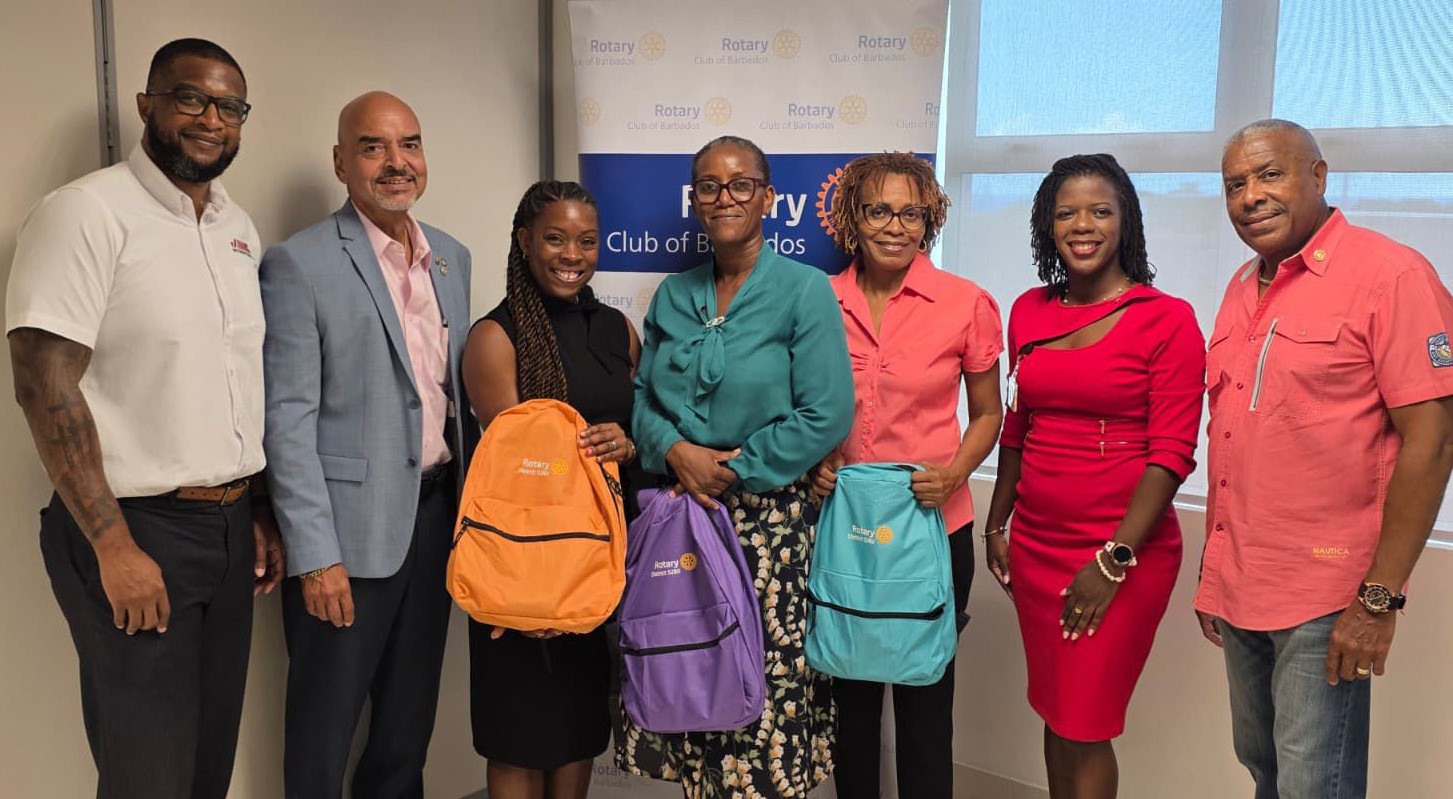
Rotary Club launches ‘Tools for Tomorrow’ to support students in need
The Rotary Club of Barbados has unveiled its transformative ‘Tools for Tomorrow’ initiative, designed to provide students with essential school supplies to enhance their educational journey. The official launch ceremony, attended by principals from Charles F Broome Primary, St Elizabeth Primary, and Half Moon Fort Primary, highlighted the program’s mission to instill hope and encouragement among students facing significant challenges.
Katrina Alkins, the club’s Director of Community Service, emphasized the broader significance of education, stating, ‘Education transcends classroom lessons; it’s about equipping our children with the resources they need to forge a brighter future for themselves, their families, and Barbados as a nation. Often, something as basic as a school bag, notebooks, or pencils can profoundly impact a child’s attitude toward learning and their confidence among peers.’
The initiative reflects Rotary’s enduring principle of ‘service above self,’ aiming to dismantle obstacles that prevent children from fully participating in their education. The Rotary Club also acknowledged the pivotal role of school principals in molding the nation’s future. ‘We extend our deepest gratitude to our principals for their unwavering leadership, patience, and dedication,’ Katrina added. ‘Your efforts shape not only young minds but also the character and destiny of our country. This project is our way of supporting you in the invaluable work you do daily.’
-
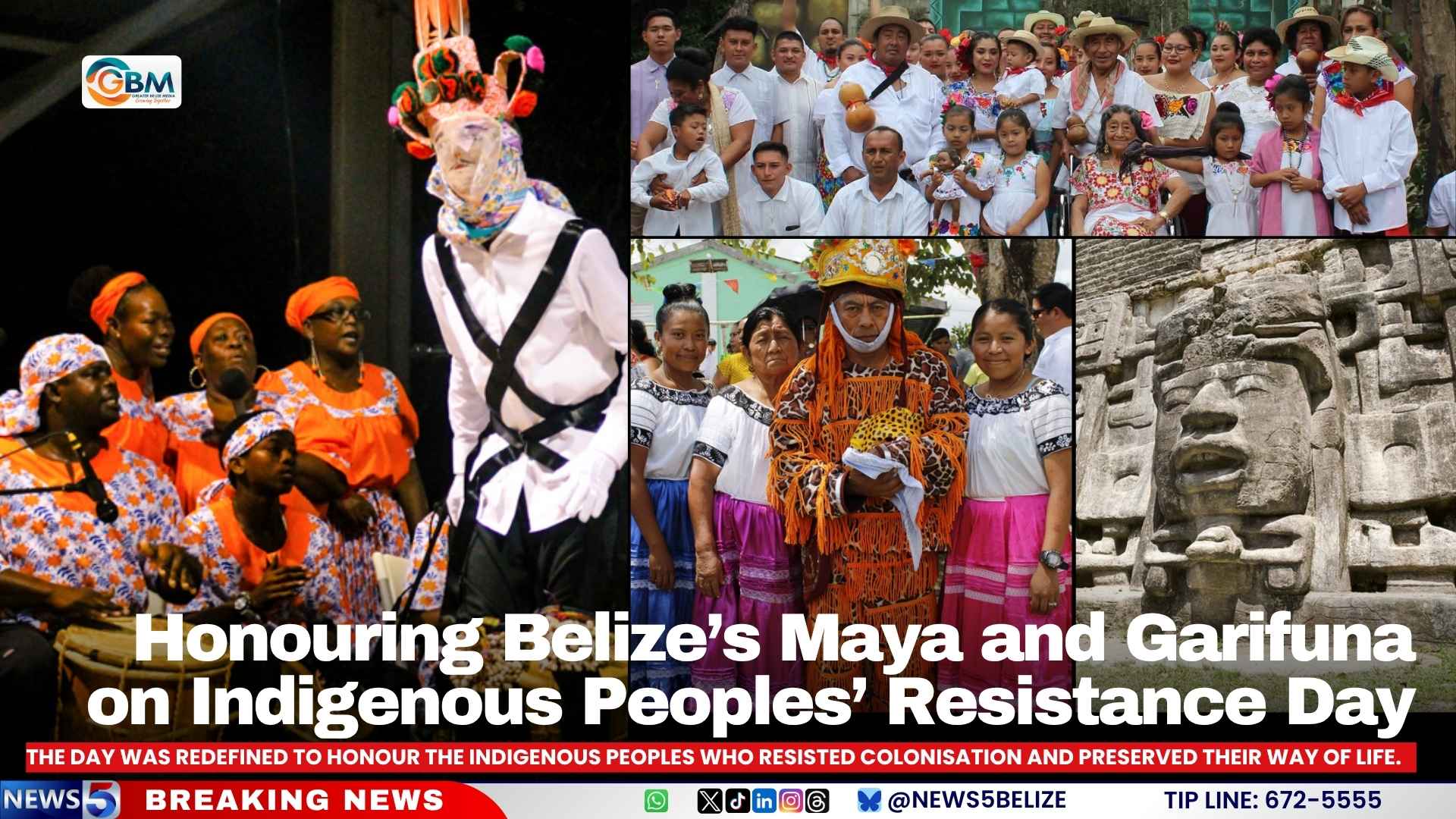
Honouring Belize’s Maya and Garifuna on Indigenous Peoples’ Resistance Day
On October 12th, Belize joins the Americas in commemorating Indigenous Peoples’ Resistance Day, a day dedicated to celebrating the resilience, culture, and enduring legacy of Indigenous communities. This significant occasion replaces the outdated narrative of ‘discovery’ with a focus on resistance, acknowledging that the lands Christopher Columbus encountered in 1492 were already inhabited by thriving societies. For decades, the day was observed as Columbus Day, but a deeper understanding of history has led to a profound shift in perspective, redefining the day to honor Indigenous peoples who resisted colonization and preserved their way of life. In Belize, the day pays tribute to the country’s two main Indigenous groups: the Maya and the Garifuna. The Maya, one of the region’s oldest civilizations, continue to uphold ancestral practices such as farming, spiritual ceremonies, and community traditions. Belize is home to three distinct Maya groups: the Yucatec Maya, the Mopan Maya, and the Ketchi Maya, each maintaining their own language, customs, and cultural identity while sharing deep historical and spiritual ties to the land. Many Mestizos in Belize also carry Maya ancestry, a legacy of intermarriage between Indigenous peoples and Spanish settlers during and after colonization, forming a unique cultural identity that connects Mestizo communities to Maya heritage. The Garifuna, descendants of West and Central Africans who intermarried with Indigenous Caribbean peoples on the island of St Vincent in the 17th century, are also honored today. Their culture, recognized by UNESCO in 2001 as a Masterpiece of the Oral and Intangible Heritage of Humanity, is celebrated for its language, music, dance, storytelling, and communal rituals. Beyond cultural expression, the Garifuna play a vital role in local governance, education, and the defense of ancestral lands, ensuring their heritage and identity remain alive for future generations. Today’s observance serves as a reminder of the need to protect Indigenous rights, cultural heritage, and land security, while also calling for reflection on Belize’s multi-ethnic identity and shared history.
-

COMMENTARY: Captain Neville – Dominica’s amazing boat builder and master mariner
In the annals of Dominica’s maritime history, Neville Ellison Wade stands as a beacon of ingenuity, resilience, and unwavering dedication. Born in Portsmouth, Wade was not merely a boat builder but a visionary entrepreneur and master mariner whose craftsmanship and ventures left an indelible mark on Dominica’s economic and cultural landscape. His life was a testament to innovation, perseverance, and a deep commitment to his community and craft. From his early entrepreneurial endeavors to his groundbreaking achievements in shipbuilding and navigation, Wade’s legacy continues to inspire generations. Wade’s journey began in the 1950s when, as a young boy, he built his first dinghy using grocery crates and breadfruit milk as glue. This early project foreshadowed a career marked by extraordinary accomplishments. By 1965, he had constructed a 20-foot boat powered by a converted car engine, demonstrating his relentless determination and mechanical prowess. Over the decades, Wade’s maritime ventures expanded significantly. He engineered cradles for hauling ships, acquired and outfitted commercial vessels, and successfully salvaged wrecks that others deemed impossible. His Atlantic crossings, including voyages on vessels like the M.V. Teresia and the Amazing Grace, solidified his reputation as a master navigator. Wade’s contributions extended beyond shipbuilding. He was a mentor, teacher, and community builder who inspired young Dominicans to dream beyond their island’s shores. In 2022, he joined Rebuild Dominica Inc., a U.S.-based nonprofit focused on agriculture, education, and community development, further cementing his role in nation-building. Neville Wade’s life was also defined by his faith and service. Whether negotiating overseas deals or gifting his labor for Portsmouth’s betterment, he embodied humility and strength. His legacy, often unrecorded in official histories, serves as a reminder of the unsung heroes who shape nations. As Dominica continues to honor its independence, Wade’s work stands as a testament to the creativity and perseverance of its people. His story is one of transforming challenges into opportunities and wreckage into renewal, ensuring that Portsmouth remains a center of maritime industry and innovation.
-

Gregory Sinaise, proudly continuing the Kwéyòl heritage legacy
The vibrant community of Belle Vue in north Vieux Fort, Saint Lucia, is widely recognized as the cultural capital of the island. Known for nurturing cultural legends such as the late Rameau Poleon and Patrick Gilo Benjamin, as well as the 2024 Groovy Monarch Sly, Belle Vue is a hub of traditional music, dance, and celebrations. Recently, the community honored one of its most cherished cultural figures, Gregory Sinaise, as part of its Kwéyòl Heritage Month festivities. Sinaise, a celebrated singer, musician, and lyricist, is a pillar of Kwéyòl heritage and a respected figure in Saint Lucia and the French diaspora. His contributions to the annual Kwéyòl Song Competition, including victories in 2014 and 2015, have cemented his legacy. Sinaise’s hit song ‘Lakouyante,’ a fusion of Zouk and Cadasse rhythms, remains a national favorite. In an interview with St. Lucia Times, Sinaise expressed his pride in his roots and his commitment to preserving Kwéyòl culture. He emphasized the importance of teaching Kwéyòl in schools and making resources like dictionaries more accessible. Sinaise, who is currently working on a new album, plans to continue spreading Kwéyòl culture through his music, even as he considers stepping back from the Kwéyòl Song Competition after this year.
-

92-Year-Old Seeks Another Term Ruling Cameroon
Cameroon, a Central African nation, has held a pivotal presidential election that could potentially extend the 43-year reign of 92-year-old Paul Biya, the world’s oldest serving head of state. The single-round election, conducted on October 12, 2025, is widely anticipated to grant Biya another seven-year term, despite facing 11 challengers. Among them is 79-year-old Issa Tchiroma Bakary, a former government spokesman who resigned in June to join the opposition. Bakary has garnered significant attention for his calls to end Biya’s prolonged rule. Political analysts attribute Biya’s likely re-election to his firm grip on state institutions and a fragmented opposition. Francois Conradie of Oxford Economics highlighted Biya’s ‘formidable electoral machine’ as a key factor in his expected victory. However, voters have expressed growing discontent over pressing issues such as unemployment, poverty, and the escalating cost of living. The Constitutional Council is set to announce the final results by October 26, 2025.
-

Onze eigen O.S. Maretraite
In a heartfelt tribute to their alma mater, the parents of Aashna Kanhai recently visited Openbare School Maretraite, a school that has been a cornerstone of their family’s educational journey for generations. The visit, marked by the symbolic handing over of an envelope to the school’s principal, Juffrouw Makdoembaks, was a gesture of gratitude and support for an institution that has shaped the lives of their children and grandchildren. The school, celebrating its 65th anniversary this year, has long been a beacon of discipline, community, and holistic education.
-
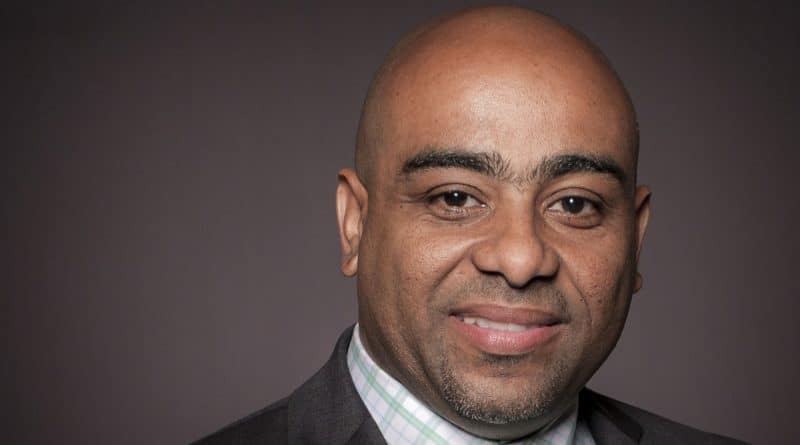
Ignite Media Launches: A Bold New Flame in Caribbean & African Diaspora Media
The media landscape has just been set ablaze with the launch of Ignite Media, a groundbreaking multimedia platform spearheaded by Franz deFreitas, the iconic voice behind the acclaimed ‘Voice of the People.’ More than just a radio station, Ignite Media is a movement designed to spark change, inspire connection, and challenge the status quo. Its mission is to deliver content that is ‘relevant, bold, creative, fearless, and unfiltered.’ DeFreitas, who left Observer Media on September 2, 2025, has channeled his energy into creating a platform rooted in editorial freedom, truth-telling, and civic empowerment. ‘Ignite is not just talk,’ deFreitas emphasized. ‘It’s a space for straight truth, fresh ideas, and real engagement with our listeners.’ The platform’s programming lineup includes daily talk shows, investigative exposés, live call-in forums, and multimedia extensions like podcasts and video reports. Initially launching online, Ignite Media plans to expand to terrestrial radio syndication, with collaborations across the Caribbean, the African diaspora, and beyond. At its core, Ignite Media is a cultural statement, proudly rooted in Caribbean and African identity while addressing global issues. Its content pillars focus on social issues, history, business, education, youth development, and political engagement. In an era of corporate and political pressures, Ignite Media stands as a fearless alternative, offering authentic dialogue and unfiltered truth. The platform’s promise is to inform, include, and inspire, backed by solid research and fact-based journalism. While the official launch date remains undisclosed, anticipation is already building for this revolutionary media venture. As one supporter aptly put it, ‘The world doesn’t need more noise — it needs more fire. Ignite Media is bringing the heat.’
-

What we lose when we forget Creole
Rhyesa Joseph, an educator, political scientist, and cultural advocate, emphasizes that Saint Lucian Creole culture extends far beyond the annual Mwa Éwitaj Kwéyòl celebrations. Her lifelong dedication to cultural preservation stems from her upbringing in Vieux Fort and Mon Repos, where she was immersed in authentic Saint Lucian traditions through storytelling, music, food, and community life. Through her research, Joseph has observed the gradual erosion of these cultural practices, driven by rising individualism, generational disconnects, and economic pressures that keep families apart. In an interview with St. Lucia Times, Joseph reflects on the state of the Creole language, its intrinsic values, and the urgent need for its preservation. Joseph highlights the dual nature of Creole’s current usage. While there have been some advancements, such as limited bilingualism in professional settings, the language’s overall usage has declined. She criticizes the superficial treatment of Creole, often relegated to aesthetic purposes or confined to October celebrations, rather than being integrated into year-round education and awareness. Beyond language, Joseph underscores the importance of traditional values and systems, such as Koudmen, a cooperative assistance model that once defined Saint Lucian communities. These systems fostered collective responsibility and a shared ethic, which are now threatened by societal fragmentation and external influences. Addressing the argument that Creole lacks global marketability, Joseph dismisses it as generational propaganda rooted in colonial prejudices. She explains how colonization sought to strip people of their identity, marginalizing Creole as the language of the “uneducated.” This historical stigma persists, perpetuated by an education system designed for English speakers. To combat this, Joseph advocates for daily practice, learning resources, and institutional support, such as mandating Creole in public programming. She emphasizes that Creole’s value lies not in its utility but in its intrinsic cultural significance. In her closing remarks, Joseph calls for a deeper appreciation of Creole as a carrier of history and identity, urging society to recognize its worth beyond superficial uses.