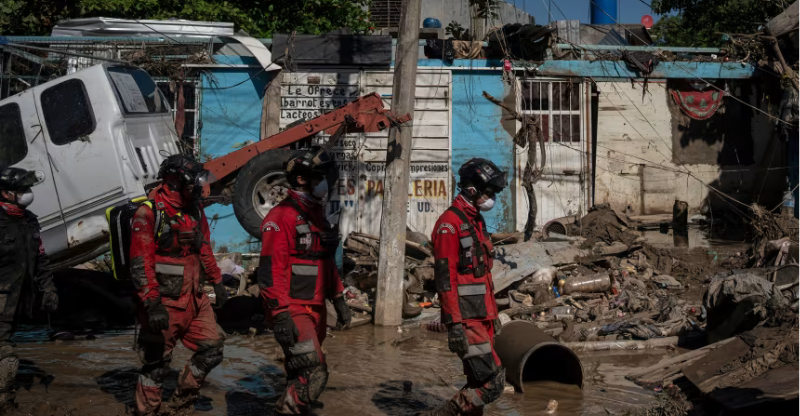
The catastrophic aftermath of last week’s torrential rains in central and southeastern Mexico has deepened, with the death toll climbing to 64 and 65 individuals still unaccounted for, as reported by Civil Defense Coordinator Laura Velázquez Alzúa. The relentless downpour triggered severe flooding and landslides, wreaking havoc across five states and leaving communities in ruins. President Claudia Sheinbaum has pledged to deploy “sufficient resources” without delay, emphasizing the nation’s ongoing state of emergency. The scale of destruction is staggering, with preliminary estimates indicating that over 100,000 homes have been affected. In riverside areas, entire dwellings have “practically vanished,” according to the President. In Poza Rica, an oil town located 170 miles northeast of Mexico City, residents were overwhelmed by the sudden surge of floodwaters. The Cazones River overflowed, unleashing over 12 feet (4 meters) of water into low-lying neighborhoods before dawn on October 10. Witnesses described hearing a terrifying “wall of water” before seeing it, accompanied by the deafening sounds of vehicles colliding as they were swept away. While some residents sensed the impending danger hours earlier and managed to flee with minimal belongings, the absence of an official warning system exacerbated the tragedy.
作者: admin
-

Attorney Bradley Flags System Failures in Budna Investigation
Attorney Richard “Dickie” Bradley has voiced significant concerns regarding the ongoing investigation into the abduction of Joseph Budna, emphasizing systemic failures and the need for transparency. Speaking on the program *Open Your Eyes*, Bradley highlighted the complexities of the case, particularly the involvement of police officers as suspects. He argued that an independent investigation cannot be conducted by the police themselves, given their potential complicity in the crime.
Budna was kidnapped in August, allegedly beaten, and subsequently handed over to Guatemalan authorities, with accusations of police involvement. The investigation has stalled for weeks, with recent recommendations calling for an independent probe. Bradley suggested that such an investigation should include retired judges or international agencies to ensure impartiality and prevent any attempts at influence or cover-ups.
Bradley also pointed to broader systemic issues, including the lack of whistleblower protections and insufficient guidance from the Bar Association. He stressed that individuals with evidence would be reluctant to come forward without legal safeguards. “We don’t have a whistleblower law, even in the face of something like this,” he remarked. He further criticized the legal community, stating, “The lawyers are no help. The Bar Association is stitched up.”
Regarding potential criminal accountability, Bradley noted that kidnapping under the country’s criminal code carries a minimum sentence of 10 years and could result in life imprisonment. However, details of the independent investigation remain unclear, leaving many questions unanswered.
-

SMA Alumni Reunion 2025 – Evening of Reflections and Recollections
In the ever-evolving digital landscape, social media engagement tools such as ‘Share,’ ‘Tweet,’ ‘Pin,’ and similar features have become increasingly popular among users. These tools, designed to facilitate seamless content sharing across various platforms, are now integral to the way individuals interact online. The rise of these features can be attributed to their ability to enhance user experience by simplifying the process of disseminating information, fostering connections, and amplifying reach. As social media continues to dominate the digital sphere, these engagement tools are expected to evolve further, offering more sophisticated functionalities to meet the growing demands of users. Their widespread adoption underscores the importance of user-friendly interfaces in driving online engagement and connectivity.
-

Dominica Bar Association statement leverages constructive criticism of night court implementation
The Dominica Bar Association has raised significant concerns regarding the recent initiative by the Ministry of Legal Affairs to extend court hours at the Magistrates’ Court. The new schedule, which introduces evening sittings from 2:00 PM to 9:00 PM starting September 8, 2025, aims to improve access to justice and reduce case backlogs. While the Association acknowledges these objectives as commendable, it has highlighted several potential challenges that could undermine the initiative’s effectiveness.
-

‘Roro Pou Coco’ Wins Chanté Kwéyòl Song Competition 2025
The annual Chanté Kwéyòl Song Competition, held on October 11, 2025, at Serenity Park in Castries, Saint Lucia, was a vibrant celebration of Kwéyòl music and culture. Organized by Kay Kwéyòl under the leadership of executive director Caron Tobierre, the event was originally conceptualized by the late Gene Chacom Leon. Sixteen talented artists took the stage, but it was DaGreat, performing as Papi Joe, who emerged victorious with his infectious track ‘Roro Pou Coco.’ The song, written by Livingston Norville and produced by Kerwin Bowers of Viral Riddims, captivated the audience and judges with its humor, rhythm, and creative storytelling that vividly depicted everyday life in Saint Lucia through the Kwéyòl language. Papi Joe expressed his gratitude, dedicating the win to those who keep Kwéyòl culture alive and praising the unity and talent showcased by all participants. The competition featured a diverse array of musical styles, including Dennery Segment, soca, rock, calypso, and kompa, reflecting the rich cultural tapestry of Saint Lucia. Papi Joe also highlighted his commitment to promoting Kwéyòl through music, with ‘Roro Pou Coco’ being one of two recent releases, the other being ‘BBL.’ Looking forward, DaGreat plans to release music videos for his Kwéyòl tracks and is considering a full Kwéyòl album, furthering his mission to celebrate and elevate Saint Lucian culture through his art.
-

Ministry of Agriculture Condemns Surge in Farm Thefts and Vandalism
The Ministry of Agriculture, Lands, Fisheries, and the Blue Economy in Antigua has raised alarms over a surge in vandalism and theft targeting farms and agricultural facilities. These incidents, which include crop destruction, livestock theft, and damage to critical infrastructure, are jeopardizing national efforts to enhance food security and promote sustainable agriculture. In recent months, farmers have reported extensive losses, including damaged irrigation systems, stolen produce, and missing or killed animals. These acts not only inflict financial hardship on individual farmers but also deter investment and participation in the agricultural sector, particularly among younger generations. The Ministry has been actively working to revitalize the industry through training programs, infrastructure support, and access to modern technology. However, the persistent issue of vandalism threatens to undermine these advancements and erode confidence among local producers. Beyond individual losses, agricultural vandalism disrupts the national production chain, increases operational costs, and ultimately affects food availability and affordability. The Ministry emphasizes that these actions also create social tensions in rural communities, where farming is a primary livelihood. To combat this growing problem, the Ministry is urging citizens to view agricultural vandalism as a direct threat to the nation’s food security. Farmers are encouraged to take preventive measures, such as improving lighting and fencing, forming neighborhood watch groups, and documenting incidents for law enforcement. Additionally, the Ministry is exploring partnerships with law enforcement and community organizations to enhance rural patrols, raise farmer awareness, and provide security assistance to vulnerable farms. Public education campaigns are also in the works to highlight the importance of agriculture and foster a sense of shared responsibility for protecting the nation’s food supply. The Ministry remains committed to creating a secure and supportive environment for farmers and stakeholders, emphasizing that safeguarding agricultural property is crucial to reducing food imports and achieving greater self-sufficiency. Every act of cooperation and vigilance contributes to building a stronger, more resilient Antigua and Barbuda.
-
Chinese Ambassador Bids Farewell with Cultural Celebration
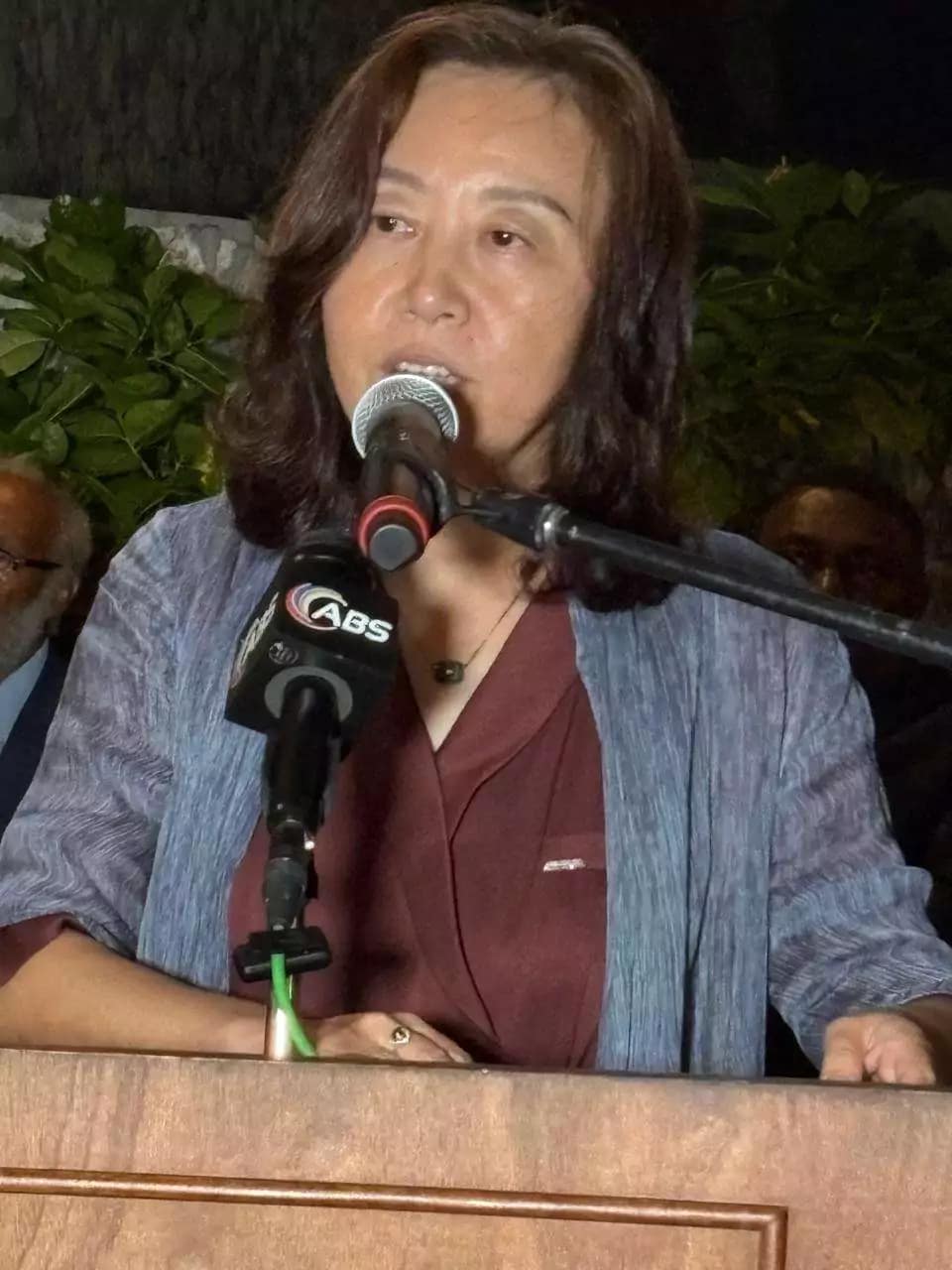
In a heartfelt farewell ceremony, outgoing Chinese Ambassador H.E. Zhang Yanling expressed mixed emotions as she concluded her four-year tenure in Antigua and Barbuda. Describing her departure as “bittersweet,” Ambassador Zhang reflected on the profound diplomatic and cultural bonds forged during her time in the Caribbean nation. The event, attended by Prime Minister Gaston Browne, Cabinet members, and fellow diplomats, served as a testament to the enduring partnership between China and Antigua and Barbuda. Ambassador Zhang extended her gratitude to the government and people of Antigua and Barbuda for their unwavering warmth and collaboration, emphasizing the “valuable” friendship that has flourished between the two nations. She reiterated China’s steadfast support for Antigua and Barbuda’s sovereignty and development, while also commending the country’s commitment to the One China Principle. The farewell celebration was enlivened by vibrant cultural performances, including steelpan music by Khan Cordice, a Mandarin song by a teacher from the Sir Novelle Richards Academy, and a traditional dance by the Elite Dance Company. Visibly moved, Ambassador Zhang expressed her deep affection for the nation, stating that Antigua and Barbuda would “always have a special place” in her heart. The event underscored the lasting impact of her diplomatic efforts and the enduring ties between the two countries.
-

Half of Journalists Consider Quitting as Burnout and Sleeplessness Rise
A groundbreaking global study on work-life balance in journalism has unveiled a profession in turmoil, with half of journalists confessing they have contemplated leaving their jobs in the past year due to exhaustion and burnout. The 2025 State of Work-Life Balance in Journalism Report, conducted by Muck Rack, surveyed over 400 journalists worldwide, revealing a distressing scenario of stress, overwork, and declining mental health in the media industry. According to the findings, 38% of journalists reported a deterioration in their mental health over the past year, attributing this to uncertainty about the future, financial pressures, and overwhelming workloads. Additionally, 42% have previously resigned from a position due to burnout, highlighting how persistent stress continues to drive talent away from newsrooms. Sleep deprivation is another significant issue, with 58% of journalists getting six hours or less of sleep each night, and 85% stating that their inability to disconnect from work adversely affects their sleep quality. The study also found that 67% of full-time journalists work more than 40 hours a week, and 83% frequently work nights or weekends. Despite these challenges, 56% of journalists plan to remain in the field for at least two more years, even though over a third are uncertain about their long-term future in journalism. When it comes to coping mechanisms, respondents identified exercise, counseling, and supportive colleagues as their primary sources of relief. However, only 19% reported that their workplace provides mental health services. The report also sheds light on shifting attitudes toward work flexibility, with 60% of journalists currently working remotely and nearly half expressing a preference for a hybrid work model. Nonetheless, issues related to workload and rest persist. Although many journalists are entitled to vacation, the study indicates that most do not utilize all their paid time off, primarily due to staff shortages, tight deadlines, and the fear of falling behind.
-
OECS Council of Ministers for Foreign Affairs: United strategy to protect livelihoods, enhance regional resilience, and promote collective prosperity
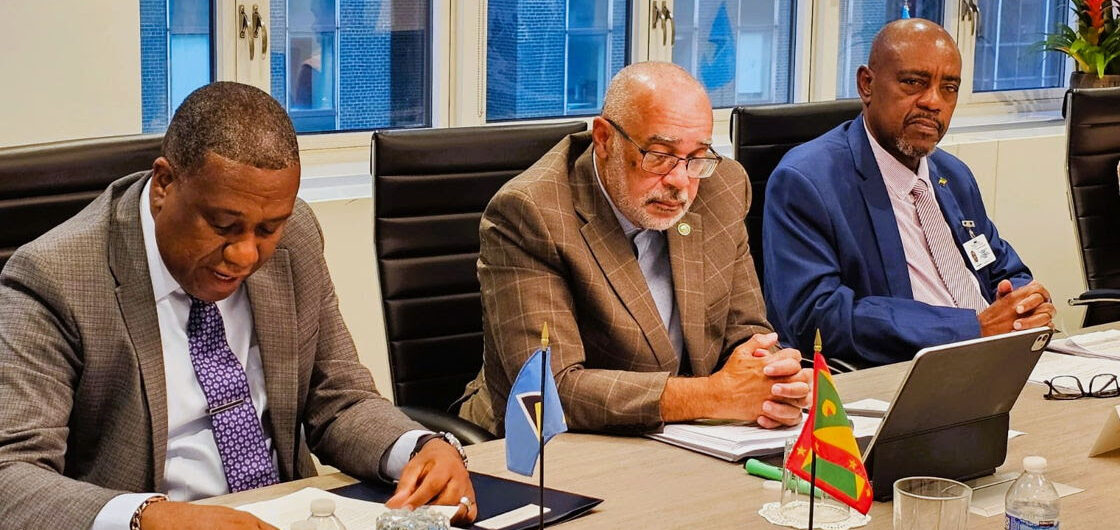
The Organisation of Eastern Caribbean States (OECS) convened its eighth Meeting of the Council of Ministers of Foreign Affairs (COM:FA) alongside the 80th Session of the United Nations General Assembly. This high-level gathering, held against a backdrop of global geopolitical instability, economic uncertainties, and intensifying climate crises, brought together Foreign Ministers from OECS member states to craft a unified strategy aimed at enhancing the resilience and sustainability of small island developing states. Dr. Didacus Jules, Director General of the OECS, underscored the Council’s pivotal role in addressing the region’s challenges through prompt, coordinated, and sustained actions. He emphasized that the discussions were not merely procedural but instrumental in shaping policies that directly impact the prosperity and sustainability of OECS nations. Dr. Jules remarked, ‘In these turbulent times, our mandate is clear: to safeguard resilience, defend sovereignty, and chart a sustainable future. Our strength lies in solidarity and strategy.’ Hon. Frederick Stephenson, Minister of Foreign Affairs of Saint Vincent and the Grenadines and incoming Chair of COM:FA, highlighted the critical role of small states in the global arena. He stated, ‘Though modest in size, our voices are indispensable. The seas are rising, but so too is our resolve. Our unity is our greatest asset.’ The meeting officially commenced with the transfer of the Chairmanship from Saint Lucia’s Hon. Alva Baptiste to Hon. Frederick Stephenson. Ministers addressed a wide range of pressing issues, including reforms to Citizenship by Investment programs, financial stability, and climate advocacy ahead of COP30 in Brazil. Progress was noted on the Free Movement of Persons initiative, with calls for policy harmonization and retraining of border officials. The ongoing crisis in Haiti was also discussed, with a focus on humanitarian aid and Haitian-led solutions. Updates on U.S. trade measures affecting OECS economies were provided, alongside commitments to boost diplomatic efforts to prevent fisheries bans. The expansion of the Canadian Seasonal Agricultural Workers Programme was endorsed, with Saint Vincent and the Grenadines confirmed as the host for the Eastern Caribbean Liaison Service (ECLS) office in Canada. Support was also expressed for the OECS Joint Embassies in Rabat, seen as a cost-effective platform to strengthen ties with Morocco and Africa. Antigua and Barbuda shared updates on the SIDS Centre of Excellence, the Island Investment Forum, and plans to host the Commonwealth Heads of Government Meeting (CHOGM) in 2026. The meeting concluded with a renewed sense of purpose, as ministers reaffirmed their commitment to safeguarding livelihoods, enhancing regional unity, and amplifying the Caribbean’s global voice. A virtual special session is scheduled before November 2025 to accelerate joint mission restructuring and solidify progress on the Council’s commitments.
-

PAAWS battles to home final eight dogs
PAAWS, the nation’s longest-running rescue shelter for dogs and cats, has issued an urgent appeal to find loving homes for its final eight dogs as it prepares to close its doors permanently. The Parham-based facility, which has been operational for nearly three decades, announced in August that it would suspend operations due to financial constraints. Despite rehoming over 30 animals in the past two months, the shelter still has eight dogs awaiting adoption. Gemma Handy, the organization’s Public Relations Officer, expressed deep sorrow over the closure, stating, ‘It’s with a heavy heart that we confirm we will be closing our doors for good in a month’s time. We had very much hoped to continue, but it is financially impossible.’ PAAWS has relied entirely on donations and volunteers since its inception in 1996. Handy emphasized the importance of finding homes for the remaining dogs, noting that they have received exceptional one-on-one care and training from dog trainer Amy Zukowski. ‘Every single one would make an amazing pet,’ she added. Potential adopters are encouraged to visit the shelter between 10am and 2pm or schedule an appointment by calling 784-5151. Handy also highlighted the possibility of trial adoptions and offered assistance with transportation. While acknowledging the disappointment of supporters, she expressed gratitude for the community’s unwavering support and pledged to assist other local animal charities, including the Antigua Spay & Neuter Clinic. Over the years, PAAWS has successfully rehomed more than 4,000 abandoned, abused, sick, and injured dogs in Antigua, providing them with a second chance at life. For more information, contact [email protected] or call/WhatsApp 784-5151.