作者: admin

  • EOJ awaiting ‘certain particulars’ from Accompong Maroons

    EOJ awaiting ‘certain particulars’ from Accompong Maroons

    The Electoral Office of Jamaica (EOJ) has confirmed receiving a formal request to oversee the upcoming leadership election for the Accompong Maroons in St. Elizabeth. Director of Elections Glasspole Brown stated that while the office is prepared to assist, it requires specific procedural particulars from the Maroon community before officially engaging in the electoral process. Brown declined to elaborate on the exact nature of these required details.

    The leadership transition follows the conclusion of Colonel Richard Currie’s five-year term on February 18. Since that date, at least five community members—including former colonels and returning residents—have declared their candidacy for the position. These prospective candidates have grown increasingly impatient, accusing Currie of deliberately delaying the election announcement due to concerns about potential defeat.

    Currie has publicly defended the delay, emphasizing that his current priority remains the community’s recovery from Category 5 Hurricane Melissa, which caused substantial devastation in October 2025. The hurricane severely damaged infrastructure, destroyed homes, and displaced numerous residents, subsequently disrupting the electoral enumeration process originally scheduled for November 2025.

    Complicating matters further, Ferron Williams—a former colonel and declared candidate—revealed that the originally designated chief of elections has withdrawn from the role. This development has created an administrative vacuum, prompting considerations to appoint a replacement from within the Jamaica Constabulary Force. However, such an appointment would require formal approval from the Police Commissioner, potentially necessitating official correspondence from the Maroon community.

    In a recent Instagram video address, Currie maintained his constitutional authority as chief until a formal election occurs. He appealed for patience from both local and diaspora Maroons, emphasizing the necessity of establishing a proper electoral committee and office to ensure a free and fair voting process amidst ongoing recovery efforts.


  • JLP councillor unshaken by demand letter from fellow Labourite

    JLP councillor unshaken by demand letter from fellow Labourite

    A significant political confrontation has emerged within Jamaica’s ruling Jamaica Labour Party (JLP) as Central Kingston MP Donovan Williams initiated legal proceedings against longstanding party councillor Rosalie Hamilton over allegedly defamatory social media comments. The conflict originated from private voice messages that were subsequently leaked from an internal JLP WhatsApp group, creating a public party rift that threatens to destabilize local political dynamics.

    Hamilton, who has represented the Rae Town Division for numerous years within the Kingston and St Andrew Municipal Corporation, received a formal cease-and-desist letter from Williams’ legal representatives at Richardson Law Chambers. The correspondence, delivered via email and WhatsApp, accused Hamilton of circulating “false, malicious, and highly defamatory statements” through multiple social media platforms including TikTok and WhatsApp.

    Despite the legal threat, Hamilton remained defiant, suggesting the leak was strategically engineered to intimidate her. She confirmed receiving the demand letter but declined to comment directly on its contents, instead highlighting that the original voice notes were intended for internal party discussion only. Hamilton alleged the existence of a conspiracy within party ranks to promote an alternative candidate against her in upcoming elections.

    In the controversial audio recordings, Hamilton explicitly threatened to campaign aggressively against Williams, vowing to ensure his electoral defeat. She promised to “open your file inna social media” and deliver a confrontation at the “right time,” indicating her intention to publicly challenge Williams’ political standing.

    The legal notice characterized Hamilton’s statements as demonstrating “reckless disregard for the truth” and causing “serious reputational damage, public embarrassment and ongoing distress” to Williams. Attorney Rodain Richardson referenced Jamaica’s Defamation Act of 2013, warning that failure to comply with demands within 48 hours would result in Supreme Court proceedings seeking injunctive relief and damages.

    The demands include immediate removal of all offending content, cessation of further defamatory statements, issuance of a public apology, and implementation of damage mitigation measures. This internal party conflict exposes deepening factional divisions within Jamaica’s political landscape as both figures prepare for potential legal and electoral battles.

  • Telecoms rebuild networks after storm but warn policy delays slowing roll-out

    Telecoms rebuild networks after storm but warn policy delays slowing roll-out

    In the wake of Hurricane Melissa’s devastating impact, Jamaica’s telecommunications industry is undergoing a massive transformation aimed at fortifying the nation’s digital infrastructure against future climate threats. The Category 5 storm, which initially disabled approximately 70% of the mobile network, has triggered unprecedented investment in network resilience despite facing significant regulatory challenges.

    Digicel has emerged as a frontrunner in reconstruction efforts, allocating US$10 million toward creating a more robust fiber network architecture. Chief Executive Stephen Murad revealed that within just over three months, 98% of the damaged network has been restored. The company’s strategy centers on constructing an island-wide fiber ring connecting major population and economic hubs while expanding underground infrastructure in vulnerable corridors. This approach emphasizes network redundancy, ensuring continuous service even when specific segments experience disruption.

    Beyond physical infrastructure upgrades, telecommunications providers are integrating satellite technology and backup systems to maintain emergency connectivity. Murad emphasized that while satellite serves as a complementary solution rather than primary infrastructure, it provides critical redundancy during crisis situations.

    Despite these technological advances, industry leaders report that bureaucratic obstacles are hampering progress. Charles Douglas, Senior Manager for Government and Regulatory Affairs at Flow, identified permitting delays as a primary constraint, noting that approval bottlenecks frequently disrupt capital investment plans and infrastructure deployment schedules.

    The sector faces additional challenges including stagnant revenues, rising operational costs, and persistent equipment vandalism. Industry estimates indicate that the Caribbean region requires between US$9 billion and US$14 billion to develop advanced, weather-resistant digital infrastructure. Douglas highlighted the need for clearer policy frameworks around emerging technologies like satellite connectivity, which currently operates without formal regulatory guidelines.

    Telecommunications infrastructure serves as the backbone for Jamaica’s financial services, tourism, education, and business process outsourcing sectors, making network resilience a critical economic priority. The post-hurricane reconstruction presents an opportunity to reengineer networks with enhanced redundancy, flexibility, and capacity to support the nation’s growing digital economy. Industry leaders emphasize that building back better requires coordinated investment and strengthened collaboration between utility providers and government agencies to create infrastructure capable of withstanding future climate challenges.

  • Sugar tax diluted

    Sugar tax diluted

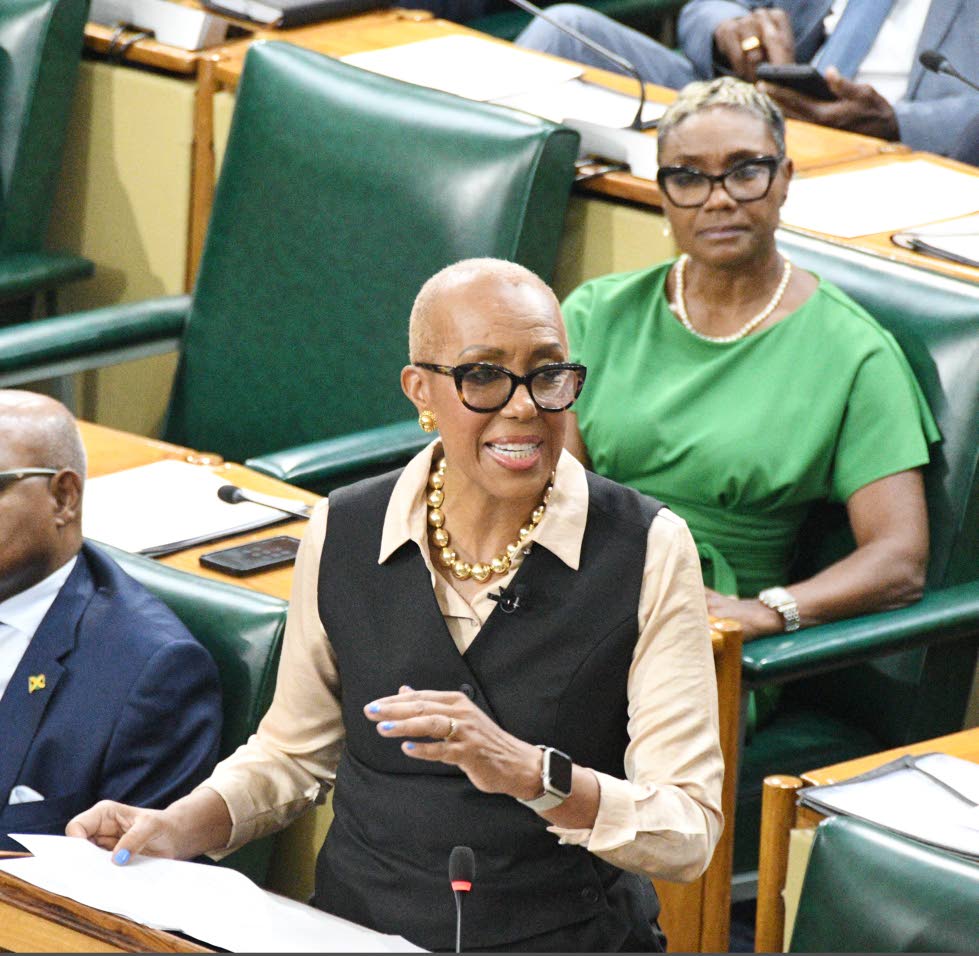
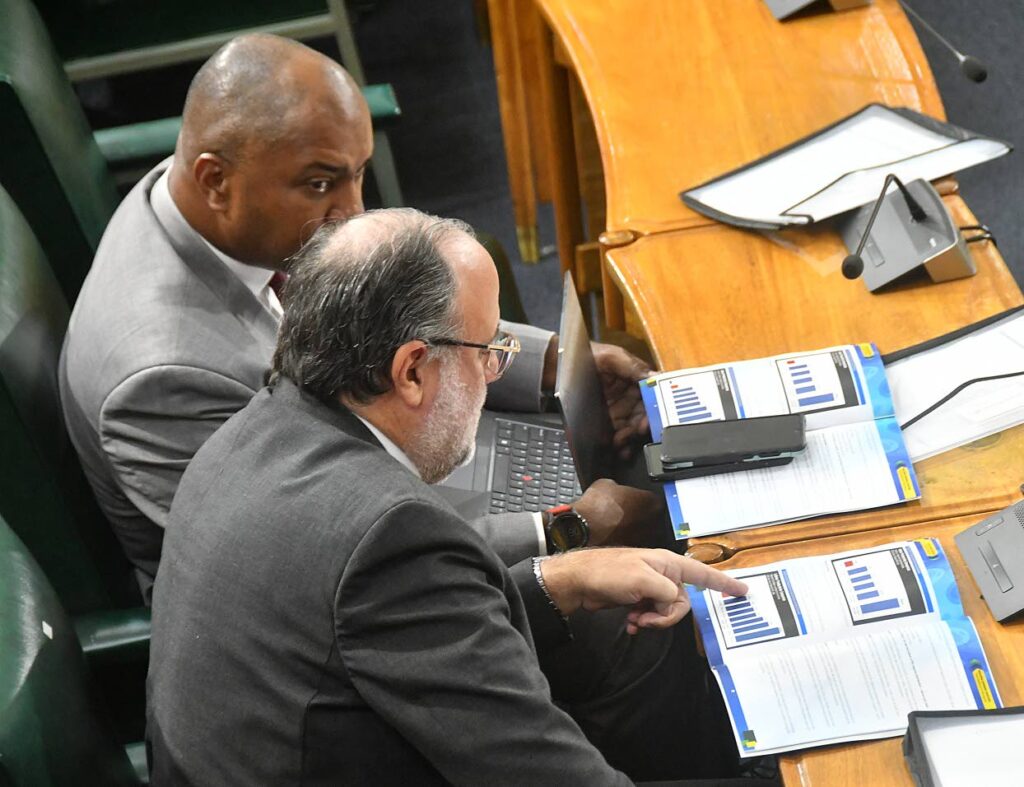
    In a significant policy reversal, the Jamaican government has abandoned its initial volumetric approach to taxing sugary beverages, adopting instead a refined sugar-content-based taxation system. The announcement came from Finance Minister Fayval Williams during the conclusive session of the 2026/27 Budget Debate in the House of Representatives.

    The original framework, introduced in February, proposed a flat-rate Special Consumption Tax (SCT) of two cents per milliliter of beverage. This structure was initially favored for its administrative simplicity and ease of enforcement. However, it faced immediate criticism from beverage manufacturers and importers who argued that it unfairly taxed low-sugar and high-sugar products identically, failing to incentivize sugar reduction.

    Minister Williams revealed that extensive consultations with industry stakeholders prompted a comprehensive reassessment. The revised policy, set to take effect on May 1, 2026—a one-month delay from the original April 1 implementation date—will impose a tax of $0.22 per gram of added sugar. This tiered mechanism ensures that beverages with no added sugar incur no tax, moderately sweetened drinks attract a modest levy, and high-sugar products face proportionally higher taxation.

    Williams emphasized that the primary objective of the SCT remains rooted in public health rather than revenue generation. The measure specifically targets the reduction of non-communicable diseases such as diabetes, obesity, and hypertension, which impose a severe burden on both the population and the healthcare infrastructure.

    The Finance Minister clarified that the government’s intent is not to undermine the beverage industry, which employs thousands of Jamaicans, but to reshape market incentives. By directly linking tax liability to sugar content, the policy encourages manufacturers to reformulate products toward healthier profiles. The government has committed to ongoing stakeholder engagement to address practical implementation challenges and will monitor the tax’s impact on pricing, consumer behavior, and product composition, remaining open to further adjustments if necessary.

    Concluding her address, Williams appealed to the Jamaican public to view the policy as a critical investment in national health, urging consumers to make informed choices that collectively contribute to a healthier, more productive society.

  • ‘Can’t be done!’

    ‘Can’t be done!’

    Jamaica’s Finance Minister Fayval Williams has delivered a forceful rebuttal to alternative revenue measures proposed by the parliamentary Opposition, declaring them fundamentally unworkable during her concluding remarks in the House of Representatives’ 2026/27 Budget Debate.

    Williams systematically dismantled proposals advanced by Opposition Finance Spokesman Julian Robinson and Opposition Leader Mark Golding, characterizing their suggestions as fiscally irresponsible and detached from practical implementation timelines. The Minister’s response came as she reinforced the economic framework previously outlined by Prime Minister Andrew Holness, emphasizing that the government’s approach prioritizes stability and measured growth over what she termed ‘political gambles’.

    Addressing Robinson’s suggestion to generate $8.6 billion through e-invoicing systems, Williams dismissed the proposal as unrealistic within the upcoming fiscal years. ‘There are no e-invoicing revenues that can be realistically expected in 2026/27—nor in the subsequent fiscal year—to replace $8.6 billion of revenue measures,’ Williams stated, noting that global experts recognize such systems require years to materialize properly.

    The Minister similarly rejected the concept of tapping ‘digital nomads’ as an immediate revenue solution, acknowledging the proposal’s conceptual merit but highlighting its lack of developed policy architecture, implementation details, and fiscal realism necessary for serious budget planning.

    Williams expressed particular alarm at Robinson’s suggestion to extract $1 billion from the Bank of Jamaica, reminding Parliament that legal amendments to the BOJ Act established strict guardrails around resource transfers to maintain central bank independence and inflation targeting regimes. ‘It is not advisable that a minister of finance calls the Bank of Jamaica and takes an additional $1 billion,’ she cautioned, questioning where such precedent might lead.

    Regarding Opposition Leader Mark Golding’s identification of $77 billion in potential compliance revenues, Williams pointed to apparent internal contradictions within Opposition proposals. ‘If the Opposition leader identified $77 billion of new revenues from compliance, why would the Opposition spokesman on finance need to borrow any money at all?’ she questioned, suggesting poor coordination between Opposition figures.

    Williams concluded that replacing recurring revenue streams with debt would create perpetual borrowing cycles, ultimately undermining Jamaica’s hard-won fiscal stability and reputation for prudent economic management.

  • Columbia: Doden bij vliegtuigcrash opgelopen tot 66

    Columbia: Doden bij vliegtuigcrash opgelopen tot 66

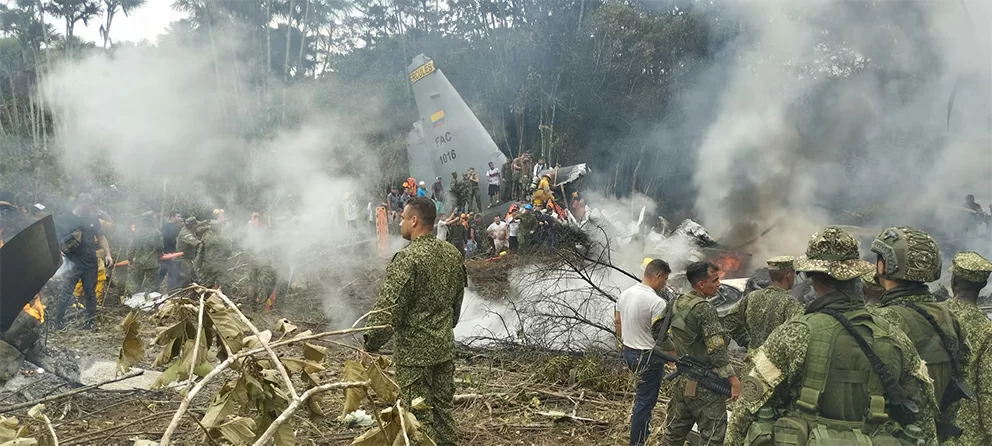
    A Colombian Air Force Lockheed Martin Hercules C-130 transport aircraft crashed during takeoff from Puerto Leguizamo on Monday, resulting in 66 fatalities among the 128 personnel on board. The tragedy occurred near the Peruvian border when the aircraft reportedly struck a tree with its wing at the end of the runway before crashing and igniting onboard explosives.

    The aircraft was carrying 11 air force members, 115 army personnel, and 2 national police officers according to General Hugo Alejandro Lopez, head of Colombia’s armed forces. Initial rescue efforts were spearheaded by local residents who extracted survivors from the wreckage and transported injured soldiers to hospitals via motorcycles before military vehicles could access the remote crash site.

    Defense Minister Pedro Sanchez confirmed via social media that search and recovery operations continue for four missing individuals despite challenging terrain conditions. Currently, 57 survivors have been hospitalized with 30 treated at military medical facilities in non-critical condition.

    President Gustavo Petro condemned bureaucratic obstacles delaying military modernization plans, stating on social media: ‘I will not permit further delays; this concerns the lives of our youth. Civil or military officials unable to meet this challenge must be replaced.’ Multiple presidential candidates for the May 31 elections expressed condolences and demanded thorough investigation into the incident.

    Lockheed Martin has committed to supporting Colombia’s investigation into the crash. The involved aircraft was among three C-130s transferred from the United States under excess defense articles programs in recent years. These Hercules aircraft have served Colombia since the late 1960s, frequently deployed for troop transport amid the nation’s six-decade internal conflict that has claimed over 450,000 lives.

    This incident follows a similar tragedy in late February when a Bolivian Air Force C-130 crashed in El Alto, causing over 20 fatalities and 30 injuries while sparking civil unrest after scattering banknotes during the accident.

  • Cuba celebrates 34th anniversary of diplomatic ties with Turkmenistan

    Cuba celebrates 34th anniversary of diplomatic ties with Turkmenistan

    The foreign ministry of the Caribbean island nation Cuba has publicly restated its unwavering commitment to advancing constructive bilateral relations with the Central Asian state of Turkmenistan, delivering the message in an official post on the social media platform X.

    The diplomatic partnership between the two countries dates back more than three decades, to March 23, 1992. That milestone came just months after Turkmenistan declared its full independence following the dissolution of the Soviet Union, where it had previously existed as one of the union’s 15 constituent republics.

    In the decades since formal ties were established, the relationship between Cuba and Turkmenistan has been defined by mutual friendship and collaborative action. Core pillars of the partnership include consistent reciprocal support in multilateral international forums, and ongoing work to strengthen both political and economic connections between the two nations.

    Despite the significant geographical distance separating the Caribbean and Central Asian countries, their bilateral bond remains rooted in fraternity, solidarity and a shared, clear ambition to expand collaborative work, particularly in multilateral and economic domains.

    Most recently, in December of last year, Serdar Berdimuhamedow, President of Turkmenistan, extended formal messages of congratulations to Cuban President Miguel Díaz-Canel to mark Cuba’s national holiday and ring in the new year. In his correspondence, Berdimuhamedow also extended warm wishes of lasting peace, steady progress and widespread prosperity to the Cuban people.

  • The US government ignores its own people, concludes Cuban F.M.

    The US government ignores its own people, concludes Cuban F.M.

    The top diplomat of Cuba has used his social media platform on X to amplify new polling data that reveals shifting American public opinion toward the decades-long U.S. trade blockade against his country, urging the Biden administration to heed the growing discontent and reverse the long-standing punitive policy.

    The Cuban foreign minister pointed out that 40% of U.S. adults now oppose the ongoing embargo, marking an 8-percentage-point rise in disapproval compared to previous measurements. He emphasized that this shifting trend reflects the will of a growing segment of the U.S. population, rather than the agenda of a small, hateful minority driven by warmongering. If the current U.S. administration were truly responsive to its own people’s views, he argued, it would immediately end what he called the criminal policy toward Cuba that inflicts mounting humanitarian harm on ordinary Cuban citizens.

    The findings come from a recent public opinion survey conducted by YouGov, which also broke down attitudes by partisan affiliation. The poll makes clear that opposition to the blockade is far from a uniform position across the U.S. political spectrum, but it holds overwhelming support for ending the policy among two key blocs: 65% of Democratic respondents expressed disapproval of the blockade, compared to just 16% who support it. Among independent voters, 41% oppose the embargo versus 21% who back it. The only group where a majority still favors the policy is Republican voters, 63% of whom approve of the blockade while only 15% disapprove.

    Beyond core attitudes toward the broader trade embargo, the survey captured additional insights into U.S. public opinion on related hardline policies. Nearly half of all respondents (46%) said they oppose, to varying degrees, the current U.S. policy that blocks oil shipments to Cuba from third-party countries. An even larger share of Americans — 61% — oppose any use of military force against Cuba.

    Across partisan lines, the poll also found broad agreement on two key points: most U.S. citizens hold a positive view of the Cuban people, and a vast majority support restoring full diplomatic relations between the two neighboring countries, a stance that crosses party lines.

  • Regional education conference celebrates Caribbean progress and calls for action

    Regional education conference celebrates Caribbean progress and calls for action

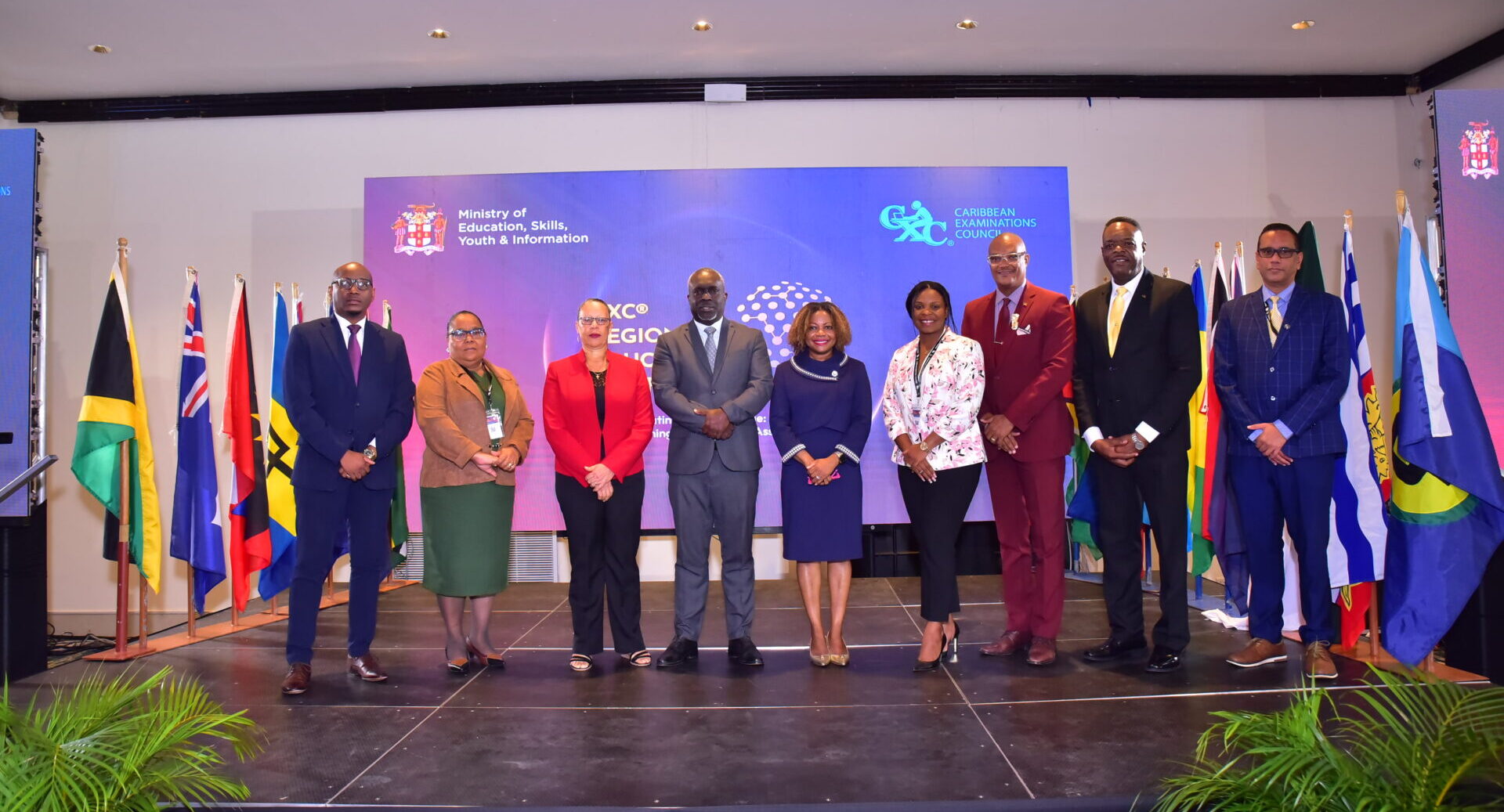
    JAMAICA — Against a backdrop of post-hurricane resilience, the Caribbean Examinations Council (CXC) successfully convened its inaugural Regional Education Conference and Ministerial Forum, bringing together nearly 400 education leaders from 27 Caribbean nations and international delegations. Originally scheduled for October 2025 but delayed by Hurricane Melissa, the four-day gathering demonstrated unwavering commitment to transforming regional education systems.

    Dr. Wayne Wesley, CXC’s Registrar and CEO, set the visionary tone by declaring knowledge the region’s most powerful compounding resource. “Every other resource—wealth, land, technology—can be hoarded or hacked, bombed or destroyed,” he stated. “But knowledge, once transmitted, multiplies. A teacher reaches 30 students. Those students reach thousands more. The compounding never stops.”

    The conference agenda addressed pressing contemporary challenges, including generative AI integration in classrooms, persistent literacy and numeracy gaps, and creating flexible certification pathways. A landmark Partnership Engagement Agreement with Caribbean employer groups signaled recognition that workforce preparation extends beyond traditional academic boundaries.

    Jamaica’s Education Minister Dr. Dana Morris Dixon highlighted the tension between technological advancement and educational fundamentals. “In the midst of this AI whirlwind,” she cautioned, “we must preserve what is most human and essential in education—curiosity, character, critical thinking, creativity, empathy, and purpose.”

    Guyana’s Education Minister Sonia Parag reinforced this balanced approach, warning against sacrificing foundational skills for digital transformation. “Digitization must not distract us from these fundamentals; it must strengthen and promote them,” she asserted, urging closer collaboration with CXC to align assessments with regional needs.

    The gathering coincided with a significant technological milestone: the successful administration of fully electronic and hybrid examinations across 17 Caribbean states in January 2026. With over 10,000 candidates completing nearly 18,000 subject entries, the results demonstrated Caribbean students’ readiness for digital assessment formats.

    Dr. Wesley emphasized the generational imperative: “Our Gen Z and Alpha learners are digital natives. Learning and assessment systems must be congruent with how they process knowledge.” He reframed CXC’s identity as an “activist” organization championing educational equity across the region.

    The conference concluded with what organizers described as “a covenant with our children”—a commitment to transform dialogue into actionable policies that ensure educational excellence becomes a fundamental right rather than a privilege for select few.

  • Franchise consultant sees enormous upside in Caribbean market

    Franchise consultant sees enormous upside in Caribbean market

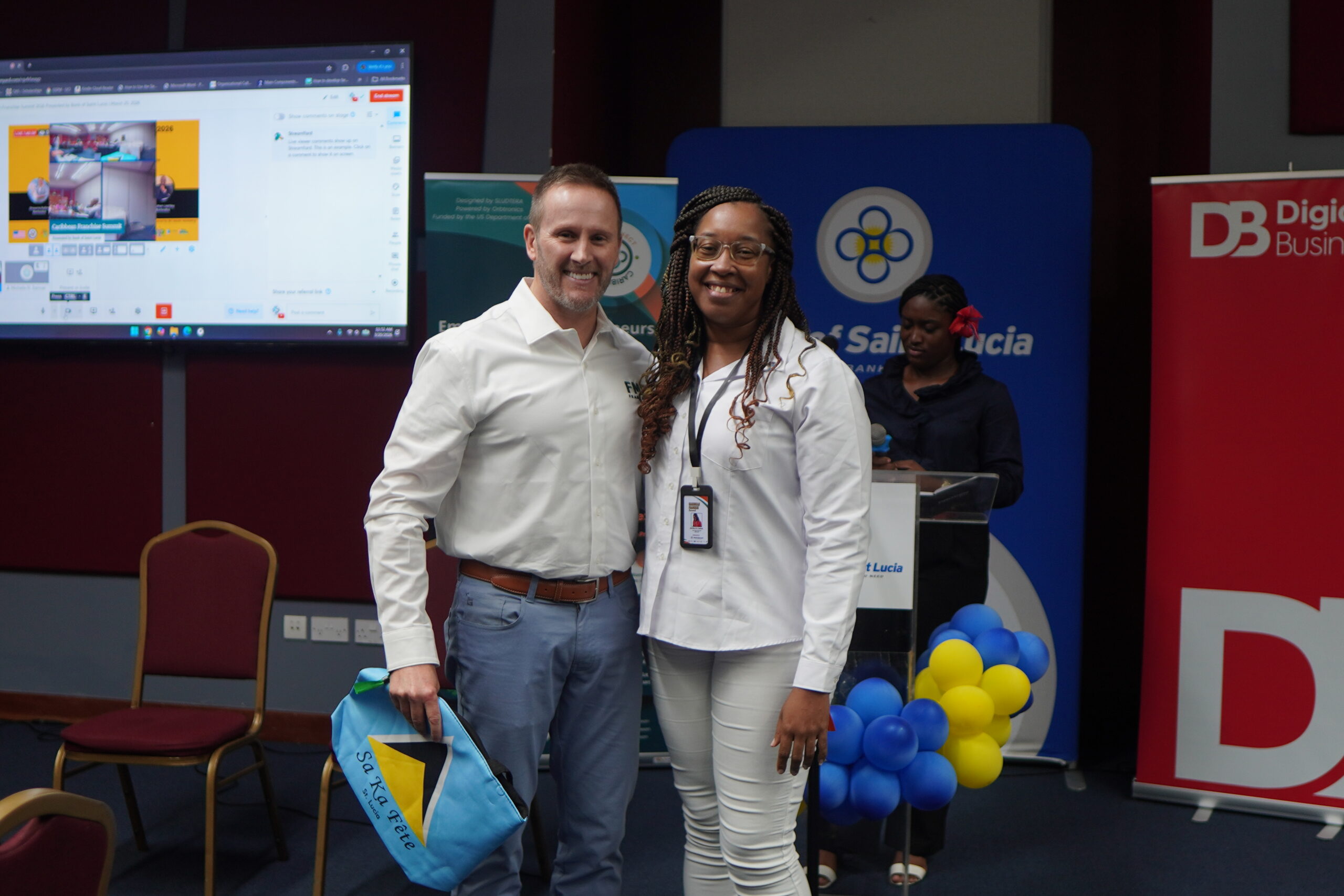
    Renowned franchise development specialist Chris Conner has identified the Caribbean region as a formidable opportunity for substantial business growth through franchising. The U.S.-based president of Franchise Marketing Systems, who has facilitated the successful expansion of major brands including Jimmy John’s, European Wax Centre, and Marco’s Pizza, recently attended the Caribbean Franchise Summit 2026 in Saint Lucia.

    Conner emphasized that the summit revealed exceptional talent and business acumen consistent with his observations throughout the region. “What I have seen consistently is a level of talent and extremely bright business minds excited about growth and positioning their businesses for scale,” Conner stated in discussions with St. Lucia Times.

    The franchise expert advocates for viewing the Caribbean not as fragmented island territories but as a unified economic force with collective potential. He highlighted the region’s substantial market size of over 44 million people and noted that the franchise sector remains largely undeveloped, presenting significant untapped opportunities.

    Conner pointed to the region’s abundant innovation, creativity, and entrepreneurial spirit as key factors driving its potential. “Anyone considering opportunities for growth needs to be looking at the Caribbean as one of those markets to pay attention to,” he asserted, characterizing the region as offering one of the world’s most significant development opportunities through franchising models.