作者: admin

  • Geen gastekort, nieuwe lading cilinders verwacht in mei

    Geen gastekort, nieuwe lading cilinders verwacht in mei

    Published on April 9 at 14:15, a recent update from Surinamese gas provider OGANE has clarified ongoing supply concerns that have sparked consumer complaints in recent weeks. The subsidiary of N.V. Energiebedrijven Suriname (EBS) confirmed Wednesday that the country currently faces no shortage of cooking gas, with production and distribution operations running at normal capacity.

    In response to rising consumer demand that has put mild pressure on supply chains in recent weeks, OGANE has already stepped up its daily production output to keep pace. The company also emphasized that all authorized gas sales points across the country receive daily restocks, ensuring that consumers are able to access the gas they need without disruption.

    The only ongoing challenge identified by the firm is a temporary shortage of new empty gas cylinders, a gap that has triggered widespread complaints from households that need to replace old or damaged units. OGANE moved to reassure the public that this bottleneck will be resolved next month, when a new bulk shipment of empty cylinders is scheduled to arrive in Suriname. Once the shipment comes in, stock levels will return to normal and the shortage will be eliminated.

    For consumers looking to locate their nearest authorized OGANE reseller, a full, updated directory of all sales points is available on the official EBS website.

  • Antigua Cruise Port Development Advances with Day Club Pool and Commercial Build-Out

    Antigua Cruise Port Development Advances with Day Club Pool and Commercial Build-Out

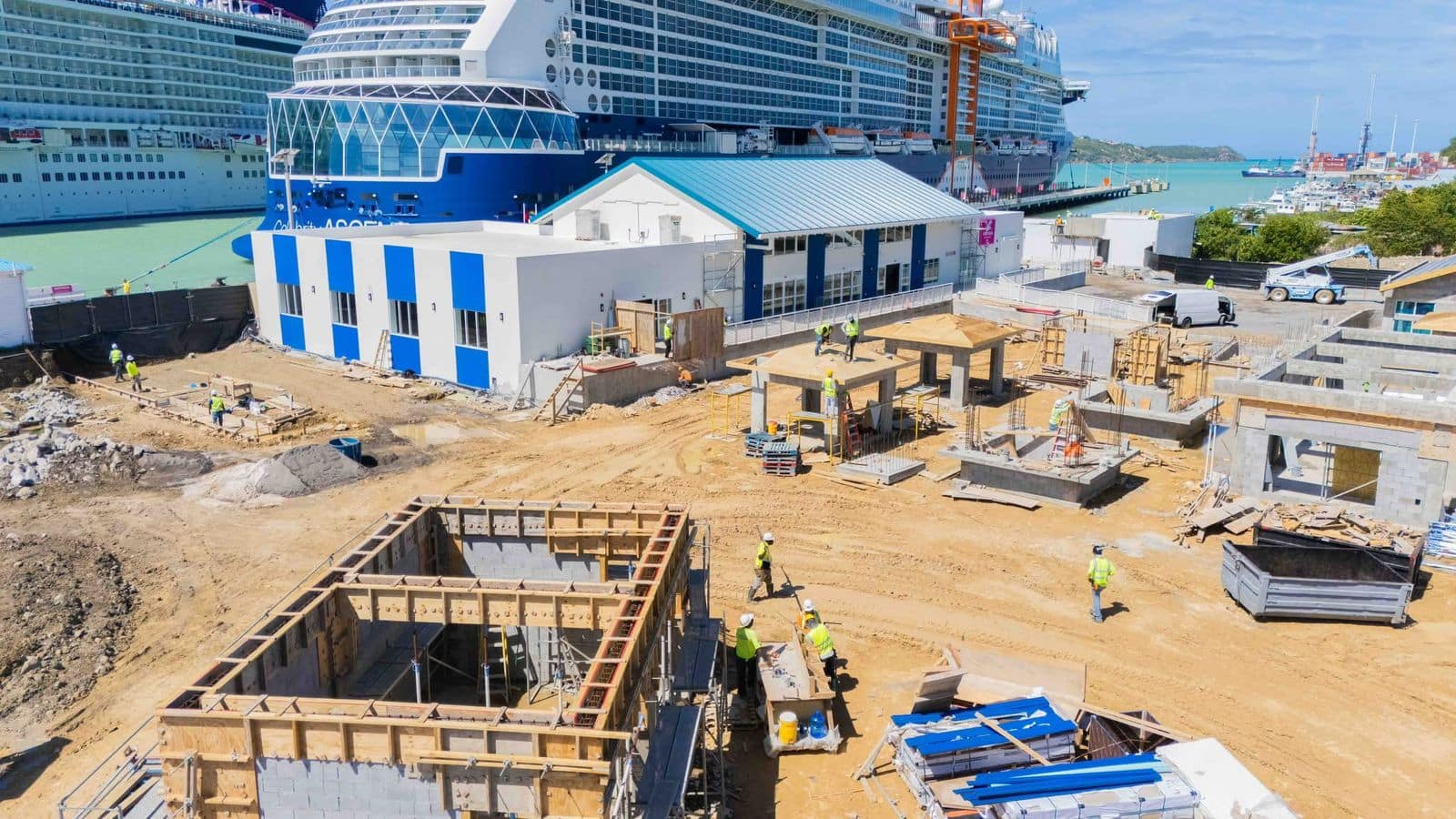
    The long-awaited expansion and upgrade project at Antigua’s cruise port has reached a key new phase, with construction now underway on two high-profile components: a luxurious beachside day club with an infinity-edge pool and a sprawling commercial district designed to cater to the growing number of cruise passengers visiting the island each year.

    Project leaders confirmed that the build-out, which is part of a broader $100 million redevelopment initiative to transform Antigua into a top-tier Caribbean cruise destination, is on track to meet its scheduled 2025 completion timeline. The day club, positioned along a scenic stretch of coastline adjacent to the main cruise berth, will offer day passes for disembarking passengers seeking relaxation, featuring private cabanas, food and beverage service, and direct beach access.

    The commercial build-out component, meanwhile, will span more than 20,000 square feet of mixed-use space, housing local craft retailers, duty-free shops, casual dining outlets, and tourist information centers. Developers note that the new facilities are designed to address longstanding gaps in visitor amenities, as the port has seen a steady 12% annual growth in passenger arrivals over the past three years, outpacing the capacity of existing on-site services.

    Local government officials emphasize that the project is expected to deliver widespread economic benefits beyond the port itself, creating more than 200 new construction jobs and an additional 350 permanent hospitality and retail positions once the facility opens. Antigua’s tourism sector, which accounts for nearly 60% of the island’s total GDP, has prioritized port upgrades to attract larger cruise vessels and extend the average length of visitor stays, boosting overall spending across local accommodation, transportation, and attraction businesses.

    Project stakeholders also highlighted that the development incorporates sustainable design features, including solar panel installations for common area energy needs, water conservation systems, and locally sourced building materials to minimize the environmental footprint of the expansion. Once completed, the upgraded port is projected to accommodate an extra 300,000 passengers annually, solidifying Antigua’s position as a leading stop on Eastern Caribbean cruise itineraries.

  • GBSS runner up in Regional Schools Investment Competition

    GBSS runner up in Regional Schools Investment Competition

    On March 26, 2026, St. Lucia hosted the official awards ceremony to honor top-performing teams from the 3rd Annual Regional Schools Investment Competition (RSIC), an innovative educational initiative designed to introduce secondary school students across the Eastern Caribbean to the world of securities investing. To ensure broad participation and recognition, the entire event was broadcast via live virtual stream, allowing standout competitors from Grenada and St. Vincent and the Grenadines to be celebrated in real time while giving students and community members across the region access to the celebration.

    Launched in October 2025 and concluding in November of the same year, the RSIC was spearheaded by the Eastern Caribbean Securities Exchange (ECSE), with collaboration from the Eastern Caribbean Securities Regulatory Commission (ECSRC) and licensed member broker-dealers. Unlike traditional academic competitions, the RSIC combines practical financial experience with academic reflection: participating student teams were evaluated on two core metrics: the final value of their simulated investment portfolios, and pre-recorded video submissions that detailed their strategic decision-making processes and key lessons learned throughout the competition.

    Four top teams walked away with major awards at the ceremony. Alite Investors, representing St. Lucia’s Choiseul Secondary School, claimed the title of Regional Champion, taking home the prestigious Sir K Dwight Venner Champion Trophy. The runner-up position went to Boys on the Hill Investment from Grenada Boys Secondary School (GBSS) in Grenada. Additional specialty awards went to N’Oct’urnal Invests of Vieux-Fort Comprehensive Secondary School (St. Lucia), which won the Most Creative Video Submission prize, and SMSS Prosperity Pioneers of St. Martin’s Secondary School (St. Vincent and the Grenadines), recognized for the Most Well-Presented Strategic Approach.

    Prizes for the winning teams and their supporting advisors reflected the initiative’s focus on encouraging long-term engagement with finance. Champion team members each received gold medals, personalized certificates of achievement, an investment gift voucher worth EC$540, and branded partner gift backpacks. The school itself took home a champion plaque and a cash prize of EC$6,500. Supporting teachers also earned recognition: each received a certificate of achievement, a gift certificate waiving broker fees for their first personal investment, a branded tote bag filled with partner gifts, and a special dedication award from the ECSRC for their commitment to student development.

    For the runner-up GBSS team, the school received a plaque and EC$3,000 cash prize. Individual student members earned silver medals, achievement certificates, EC$270 investment vouchers, and branded gift backpacks. Their teachers received comparable recognition to the champion team’s advisors, including the broker fee waiver voucher and partner gifts. Recipients of the specialty video award each took home a participation certificate and an EC$250 cash prize.

    Organizers extended congratulations to all winning teams and expressed sincere gratitude to every participating school across the region for their engagement. Launched as a developmental educational program, the RSIC continues to fulfill its core mission: giving young people across the Eastern Caribbean hands-on exposure to core investment principles and direct experience with how regional securities markets operate, building a foundation for future financial literacy and economic participation.

  • GNSC and Parish Councils undertake CPR, First Aid and AED Training

    GNSC and Parish Councils undertake CPR, First Aid and AED Training

    Grenada’s leading sports governing body is taking proactive steps to boost safety across the country’s sporting ecosystem, with a new specialized training initiative focused on life-saving emergency skills set to launch next spring.

    The Grenada National Sports Council (GNSC), working in coordination with its regional Parish Sports Councils and the Grenada Red Cross, has announced that it will host a comprehensive training program covering cardiopulmonary resuscitation (CPR), basic first aid, and automated external defibrillator (AED) operation on April 9, 2026. The full-day training session will be held at the Grenada Red Cross headquarters building.

    This new training program is the latest in a series of ongoing capacity-building efforts by GNSC, aimed at equipping sports administrators, council staff, and development personnel with the critical skills needed to handle unexpected medical crises. Recognizing that organized sports inherently involve intense physical exertion and regularly draw large crowds of spectators to venues and events, GNSC leaders note that the initiative is specifically designed to strengthen the organization’s ability to deliver fast, effective medical responses when emergencies occur at sporting facilities, competitions, and daily workplaces across the island.

    Unlike passive, lecture-only safety courses, the upcoming program will provide all participants with hands-on, practical instruction. Attendees will have the opportunity to practice CPR techniques under expert supervision, master core first aid protocols for common sports-related injuries, and learn to correctly and confidently operate AED devices, which are critical for responding to sudden cardiac arrest events.

    Alvin Clouden, Chief Executive Officer of the Grenada National Sports Council, emphasized that the training reflects the organization’s unwavering commitment to prioritizing safety and preparedness for everyone involved in local sports. “By ensuring our staff and council members are properly trained, we are taking proactive steps to safeguard athletes, officials, and the general public who gather for sporting activities across Grenada,” Clouden said in a statement announcing the program.

    GNSC has publicly expressed its sincere gratitude to the Grenada Red Cross for partnering on the initiative and contributing its specialized emergency response expertise to make the training possible. Both organizations share a core commitment to advancing public safety, expanding professional capacity in the sports sector, and raising awareness of the importance of emergency preparedness across all areas of community life.

    Looking forward, GNSC leaders confirmed the organization will remain dedicated to fostering a safer, more resilient sports environment for all Grenadians. The council says it will continue pursuing collaborative partnerships and expanding access to specialized training opportunities that strengthen national emergency preparedness for sporting events and public gatherings.

    This announcement was shared via NOW Grenada, which notes it is not responsible for opinions or content shared by contributing organizations. Users can report any abusive content through the platform’s official reporting channels.

  • 16 RSS Officers complete International Leadership and Management (Gold) Course

    16 RSS Officers complete International Leadership and Management (Gold) Course

    Sixteen senior law enforcement officers drawn from member countries of the Caribbean Regional Security System (RSS) have crossed the finish line of a rigorous elite International Leadership and Management (Gold) Course, a joint initiative between the RSS Training Institute and the United Kingdom’s Durham Constabulary.

    The three-week intensive training programme was tailored exclusively for top-tier policing leaders, including Senior Superintendents, Division Commanders and Assistant Commissioners, with a core mission to elevate strategic leadership capacity across the entire regional security network. For senior officers stepping into the highest executive ranks of their respective agencies, the course filled critical gaps in skills needed to navigate modern, complex security challenges.

    A formal closing ceremony to mark the milestone took place Thursday, April 2 at RSS headquarters, where graduating officers received their completion certificates and official commendations from senior RSS leadership. Addressing the cohort during the ceremony, RSS Deputy Executive Director Atlee Rodney urged the new graduates to carry forward the skills and values they gained to continue serving regional populations with unwavering commitment and dedication.

    Rodney stressed that the leadership capabilities these officers developed will be a cornerstone for both their individual agencies and the RSS collective as a whole, as the region works to tackle growing social challenges and advance the well-being of all citizens. He also reaffirmed the RSS Training Institute’s long-term commitment to rolling out programming that adapts to the changing security needs of member states, while deepening strategic partnerships like its ongoing collaboration with Durham Constabulary to continuously improve regional policing standards.

    The featured keynote address for the ceremony was delivered by Randy Connaught, Commissioner of the Royal Grenada Police Force, who centered his remarks on the intricate strategic and political landscape that senior police executives must navigate while carrying out their public duties.

    “My charge to you is to master what is perhaps the most delicate and critical skill of executive leadership — managing the expectations of the political directorate,” Connaught told the graduates. “This is not about being political. It is not about partisanship. It is about managing a relationship that is constitutionally vital, operationally impactful and perpetually challenging. As Gold leaders, you are no longer just guardians of public safety; you are also stewards of public trust and key advisors to the government of the day.”

    Connaught went on to outline three core pillars of ethical, effective senior policing leadership grounded in the curriculum the cohort completed during the course. The first pillar, he said, is “Educate, Don’t Just Execute.” As policing experts, senior leaders are not meant to blindly carry out politically motivated directives, but to act as expert guides. When a new minister calls for a rapid, high-visibility crackdown on complex issues such as gang violence or youth offending, officers must resist the impulse to simply comply. Instead, they should lean into the problem-solving ethos Durham Constabulary calls the “Durham Difference,” explaining the necessity of threat assessments, community impact evaluations, and ethical decision-making to deliver legitimate, long-lasting public safety outcomes.

    “You are not there to decide national policy that belongs to the government, but you are constitutionally bound to ensure that any such decision is made with the full understanding of the policing consequences. Your advice may be the difference between a politically expedient decision and a sustainable, safe outcome,” Connaught argued.

    The second pillar Connaught introduced is “Be the Corporate Memory, not the Political Actor,” which highlights the non-partisan nature of policing and the importance of institutional integrity and continuity. “Integrity is your shield. Politicians come and go. Elections are cyclical. But the police service is an enduring institution. Your loyalty is not to the individual in the ministerial office, but to the office itself, to the law, and to the people you serve,” he said.

    Finally, Connaught addressed the persistent challenge of balancing external expectations with limited operational resources in his third pillar: “Manage the Cycle of Expectations vs Capability.” “Perhaps the greatest source of tension lies in the mismatch between political expectation and operational capability. A political promise made during a campaign can create an expectation in the public that the police have a magic wand. Your job is to be an honest broker of capability… You must be able to demonstrate, with data and candour, the direct link between resources, funding, personnel, technology, well-being support and outcomes.”

    In closing, he encouraged graduates to bring a spirit of innovation and critical thinking to their leadership roles, noting that the “Durham Difference” centers on rethinking outdated approaches and using problem-solving to drive tangible, positive change. He urged the cohort to bring this approach to the critical relationship between police institutions and political leadership across the region.

    This report was originally published by NOW Grenada, which notes that it is not responsible for the opinions and statements shared by contributors to its platform.

  • Governments Are Starting to Ban Children from Social Media. Here is why.

    Governments Are Starting to Ban Children from Social Media. Here is why.

    A growing global movement to restrict underage access to social media is accelerating, driven by mounting public and policy concerns over the documented harms of excessive platform use on children’s mental health and development. The most recent policy action comes from Greece, where Prime Minister Kyriakos Mitsotakis has formally announced a nationwide ban on social media access for all children under the age of 15, set to take effect on January 1, 2027.

    Mitsotakis framed the policy as a targeted response to three growing crises linked to unregulated social media use among minors: rising youth anxiety rates, disordered sleep patterns, and the intentionally addictive design of most major online platforms. In a public video address addressing young people directly, the prime minister emphasized that extended screen time on social media prevents the developing brain from getting the adequate rest it needs to grow and function properly. Greek officials note that the policy emerged in response to widespread parental advocacy, with thousands of caregivers raising alarms about children staying up late scrolling through platforms, struggling with unmanaged anxiety, and prioritizing social media engagement over in-person activities and schoolwork.

    Public opinion in Greece strongly backs the new restriction, according to a recent poll conducted by ALCO. The survey found that nearly 80 percent of respondents support the under-15 ban, reflecting broad public agreement on the need for regulatory intervention. This is not Greece’s first step to curb childhood social media overuse: the country has already implemented full bans on mobile phone use in primary and secondary schools, and rolled out parental control tools to help families monitor and limit children’s platform time.

    Greece is far from the only nation advancing these restrictions, as policymakers around the world increasingly prioritize protecting minors from social media harms. Australia led the global movement in 2025, becoming the first country in the world to implement a total block on social media access for children under 16. Since then, a growing list of European nations have moved to draft similar rules, including the United Kingdom, Spain, Austria, and Slovenia.

    In the United Kingdom, policymakers have already launched an empirical trial to test the impact of targeted social media limits. Roughly 300 teenagers are participating in a six-week study that places capped time limits on participants’ social media use, with researchers tracking how the restrictions affect sleep quality, academic performance, and family dynamics. The data collected from this trial will inform the drafting of the UK’s future national regulations.

    The momentum for regulatory action has also been boosted by a landmark U.S. legal ruling from recent months. A U.S. court found Meta Platforms and YouTube legally liable in a high-profile case over social media addiction, ruling that the companies deliberately designed their platforms with algorithmic features intended to hook young users, resulting in proven harm to the plaintiff’s mental health. That ruling has set a legal precedent that strengthens the case for government regulation around the world, as policymakers point to the court’s finding that platforms are actively engineering products that harm children.

  • Michael Joseph targets St John’s Rural West seat with youth-focused agenda

    Michael Joseph targets St John’s Rural West seat with youth-focused agenda

    As Antigua and Barbuda prepares for its upcoming general election, Antigua and Barbuda Labour Party (ABLP) candidate Michael Joseph has expressed strong confidence in securing victory in the competitive St John’s Rural West constituency, anchoring his upcoming campaign around three core pillars: targeted youth development, improved educational outcomes, and expanded inclusive economic opportunity.

    In remarks outlining his campaign vision, Joseph framed the upcoming contest as a step toward what he calls a “new era” for the twin-island nation. He says he is eager to connect directly with registered constituents, hold open discussions about their unaddressed concerns, and lay out a clear roadmap for tangible progress in the region. His full policy manifesto, scheduled for official unveiling this Friday, will center disproportionately on strategic investment in the constituency’s young population, with a specific focus on reversing underperformance in foundational core subjects: mathematics and English.

    Joseph highlighted that while weak academic outcomes in these critical subjects are a widespread challenge across Antigua and Barbuda, the gap is far more pronounced in St John’s Rural West. To address this, he has proposed partnering closely with local schools to roll out targeted, additional support for students, including supplementary tutoring sessions for students working toward their Caribbean Secondary Education Certificate (CSEC) qualifications. The initiative is designed to boost exam results and strengthen young people’s long-term job prospects in an increasingly competitive regional labor market.

    Beyond education, Joseph’s policy platform includes a suite of additional proposals aimed at raising living standards across the constituency. These include expanded affordable housing projects, upgrades to core local infrastructure, and dedicated entrepreneurship programs that will help young aspiring business owners access startup capital and build long-lasting, sustainable local enterprises.

    The candidate also notes that his campaign has already seen a notable surge in grassroots support across the constituency, including public backing from a number of voters who have previously supported opposition parties. Drawing a contrast with the sitting incumbent for the seat, Joseph argues that he is not weighed down by an established, and in his view underdelivering, track record in office. Instead, he points to two years of community work that have already demonstrated his ability to deliver results for local residents.

    “I’m very confident,” Joseph stated, confirming his belief that voters across St John’s Rural West are ready to give him the opportunity to represent them in the upcoming election.

  • Economic Impact Assessment Survey for CARIFTA Track and Field Championships 2026

    Economic Impact Assessment Survey for CARIFTA Track and Field Championships 2026

    As Grenada vies to host the 53rd edition of the CARIFTA Track & Field Championships in 2026, local authorities have launched a comprehensive Economic Impact Assessment (EIA) Survey during ongoing preliminary championship activities to evaluate the potential full-range benefits of welcoming the premier regional sporting event.

    The collaborative survey initiative brings together three key national stakeholders: the Macroeconomic Policy Unit within Grenada’s Ministry of Finance, the Grenada National Sports Council (GNSC), and the 2026 CARIFTA National Organising Committee (NOC). This effort is a clear reflection of the Government of Grenada’s dedication to transparent, data-driven planning and public accountability, particularly as the nation works to meet the formal hosting requirements and commitments laid out for the 2026 championships.

    The core mission of the EIA Survey is to systematically quantify and examine both the direct and indirect economic ramifications of staging the 2026 CARIFTA event on Grenada’s economy. The scope of analysis spans multiple impact areas, including measuring total spending from inbound visitors, participating athletic teams, event officials, international media and on-site spectators, alongside assessing broader knock-on effects for local employment levels, cross-sector business activity and overall national revenue growth.

    Aaron Moses, chairperson of the 2026 CARIFTA NOC, explained that the data gathered through the assessment will act as a foundational resource for national and sector-level strategic planning across sport, tourism, transport and hospitality. Beyond immediate planning, Moses noted that the survey findings will also shape future policy development, guide critical fiscal decision-making, and strengthen Grenada’s prospects for bidding on other large-scale international sporting events in years to come. As the assessment remains ongoing, the final results will also establish key performance benchmarks that allow policymakers to compare the economic outcomes of major sporting events hosted in Grenada across different time periods.

    To guarantee a holistic and accurate evaluation, research teams have collected data from a diverse cross-section of stakeholders touched by the event. These groups include casual visitors and event spectators, local and international competing athletes, team officials and accredited event delegates, hotels and small guesthouse accommodation providers, local restaurants, street vendors and small business operators, ground and air transport service providers, as well as event volunteers and temporary event staff. By gathering input from across these varied groups, organisers aim to build a granular, accurate picture of spending trends, service utilisation rates, and how economic benefits circulate through multiple sectors of Grenada’s economy.

    In a public appeal, Moses has urged all selected participants to share open, complete responses throughout the survey process, stressing that broad public cooperation is the only way to capture an accurate, unfiltered picture of the full impact that hosting the 2026 CARIFTA Championships will deliver for the island nation.

  • COMMENTARY: We just imported more ICE vehicles, now let’s electrify Dominica faster—not slower

    COMMENTARY: We just imported more ICE vehicles, now let’s electrify Dominica faster—not slower

    As a small island nation with a licensed on-road vehicle fleet of roughly 40,000 units, Dominica faces a persistent, structural drain on its foreign exchange reserves that ties directly to its reliance on imported fossil fuels for transport and power generation. In 2023 alone, the country spent US$56.3 million on imported mineral fuels and oils, US$52.26 million of which went to refined non-crude petroleum. Half of that total import bill funded land transport, with the remainder covering diesel-powered electricity generation—a massive expenditure for a small national economy that has only grown since new fuel price hikes took effect on March 30, 2026.

  • 21-year-old charged in Conway homicide

    21-year-old charged in Conway homicide

    A weeks-long homicide investigation in Saint Lucia has resulted in a second murder charge being laid against a 21-year-old man in the killing of 29-year-old Michael Zacchaeus Charlery, who was fatally shot in the Conway neighborhood of Castries last March.

    According to an official announcement released by the Royal Saint Lucia Police Force (RSLPF) on April 9, 2026, Jeanclaude Regobert was formally processed on April 7 on charges of both murder and attempted murder connected to the shooting. He becomes the second individual to face criminal charges over the incident; 35-year-old Bertwin Eugene was first arrested and arraigned on the same pair of charges on March 31, 2026, shortly after the killing.

    Both Regobert and Eugene appeared for bail hearings at the First District Court following their arrests. Following the proceedings, both suspects were denied bail and remanded into custody at the Bordelais Correctional Facility to await further legal action.

    The timeline of the incident dates back to the evening of March 18, when first responders from the Saint Lucia Fire Service arrived at the Conway scene to find Charlery suffering from multiple gunshot wounds. Emergency personnel transported him to the Owen King European Union Hospital for urgent care, but he was pronounced dead by attending medical staff shortly after arrival.

    As the investigation into the circumstances of Charlery’s death remains ongoing, the RSLPF is calling on members of the public with any relevant information about the shooting to come forward to assist with the case. Tips can be submitted directly to the RSLPF Major Crimes Unit by calling 456-3754. Those who wish to remain anonymous can share information via the dedicated Crime Hotline at 555, or through the official RSLPF Crime Hotline mobile application, which is currently available for download on the Google Play Store.