作者: admin

  • Like Ah Boss, but human

    Like Ah Boss, but human

    For decades, public audiences have held celebrities to an unwritten, unspoken rule: that entertainers exist as larger-than-life figures untouched by the fragility that defines ordinary human life. Fans often lock their favorite performers into a permanent snapshot of their brightest moments, remembering them only for roaring crowds, dazzling stage lights, and the joy they bring to crowds around the world. But the reality of stardom is far more nuanced: even the most beloved, upbeat icons carry private battles no audience sees.

    Just days after headlining multiple stages at Jamaica Carnival 2024, soca music’s undisputed king Machel Montano stepped into a new kind of spotlight—one that asked him to set aside his stage persona and embrace radical vulnerability. On Tuesday afternoon, hundreds of diehard soca fans packed into Kingston’s Carib 5 Cinema for the world premiere of *Like Ah Boss: Journey of a Soca King*, a documentary that does far more than celebrate Montano’s decades-long career: it peels back the curtain to show the man behind the music.

    Unlike typical music documentaries that rely on curated highlight reels and career best moments, *Like Ah Boss* reads more like a raw, unfiltered confession. Audiences expecting the high-energy, effervescent performer who fills carnival grounds with joy got a far more intimate portrait: a man who, even after decades in the spotlight, has fought quiet, devastating battles with mental health that stayed hidden for years.

    Charting Montano’s trajectory from a child prodigy performing to crowds as a preteen, to a teen heartthrob, to the most decorated soca legend in history, the film pulls back the veil on the relentless pressure of building a global brand. It details the multiple times Montano had to rebuild his career from the ground up after burnout and collapse, and delves into struggles that almost never make entertainment headlines: open admissions of chronic depression, moments where he contemplated suicide, and a devastating financial collapse that left him reeling. These are not the struggles audiences expect from an artist whose name has been synonymous with celebration, whose tracks have served as the soundtrack for carnival and joy across six continents.

    That contrast is the core message of the film. It cuts seamlessly between footage of Montano commanding massive carnival stages, and quiet, intimate close-ups where he opens up about the irony of his career: while he spent decades teaching the world how to celebrate, he was fighting just to survive his own private darkness.

    “There were moments when I thought of doing harm to myself and I had to really dig deep,” Montano shares in one raw scene. “There have been moments in my apartment, by myself, in the dark, in the corner, crying to the point of no tears. There was a breaking point for me in 1996 where I felt like I just had to stop. I went away from music, stayed inside my room and it was a lot of dark times.”

    What makes the documentary resonate long after the closing credits is its unflinching honesty. It never minimizes the depth of Montano’s pain, nor does it frame his struggles as a simple, feel-good redemption arc. Instead, it lets him speak not as a global icon, but as a human being who had to confront his own darkness over and over, and choose every single day to keep moving forward.

    That drive to push through loneliness and depression ultimately led to one of the biggest career comebacks in soca history. “There was something about that loneliness and really wanting to come out of it and succeed that kind of pushed me…out of that depression,” Montano explains. “I had one of my biggest years in 1997. In 1997 I decided I was gonna win Road March.”

    And win he did. To date, Montano has claimed the coveted Road March title 12 times, with his most recent win coming just this year for his hit single *Encore*. With this latest victory, he officially surpassed the late soca legend Lord Kitchener to become the all-time record holder for the most Road March wins in history.

    By the end of the documentary, the title *Like Ah Boss* takes on a whole new meaning. It is no longer just a reference to Montano’s signature stage swagger and command of the crowd. Instead, it becomes a testament to quiet endurance: the kind of strength that does not brag or perform, but reveals itself only in survival.

    In an interview with the Jamaica Observer following the premiere, Montano said he would not change a single chapter of his life, even the darkest ones. “Right now my life is full of gratitude,” he shared. “It’s two things I have right now; gratitude and patience, meaning I’m very excited for the next big thing to happen, but I know I have to wait and look back at everything and give thanks.”

    *Like Ah Boss: Journey of a Soca King* will officially roll out in cinemas across the globe starting May 29. Organizers encourage all soca fans and anyone who has fought private battles to see the film: it invites audiences to look beyond the performance, understand the hidden cost of greatness, and recognize that even the most celebrated, joyful lives are woven through with unseen struggles. The premiere included a post-screening panel discussion hosted by Yendi Phillipps, featuring Montano, his manager and co-producer Che Kothari, and co-producer Bart Phillips.

  • 2,764 JPS customers still without electricity

    2,764 JPS customers still without electricity

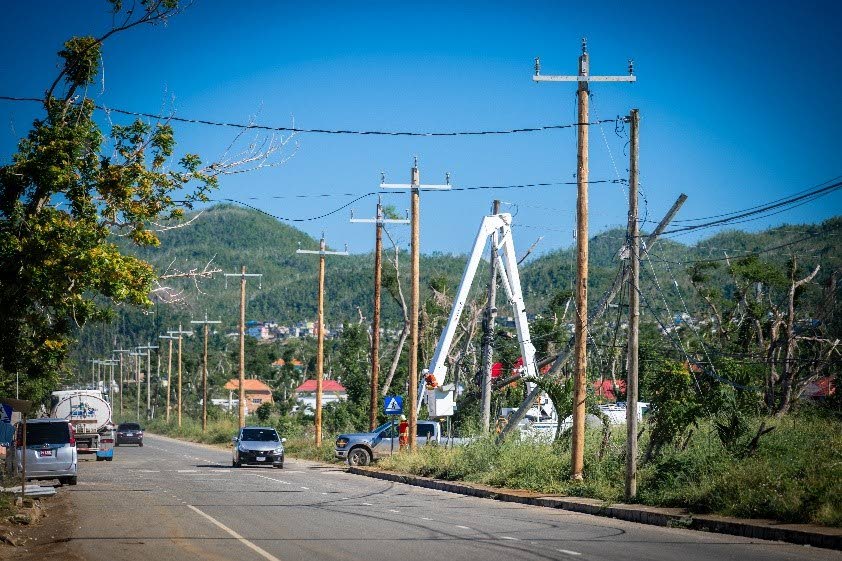
    Almost half a year has passed since Hurricane Melissa roared ashore on Jamaica’s western coast, packing maximum sustained winds of 185 miles per hour that left widespread destruction in its wake. Even after months of coordinated recovery work, more than 2,700 households and businesses across the hardest-hit regions remain cut off from the island’s electrical grid, according to official updates shared by Jamaican government leaders.

    Minister of Energy, Transport and Telecommunications Daryl Vaz revealed the latest figures during Wednesday’s weekly post-cabinet press briefing held at Jamaica House. Of the remaining customers without power, 2,561 are located in Westmoreland parish, while another 203 reside in neighboring St Elizabeth. These outages persist despite intensive restoration efforts carried out by Jamaica’s primary power provider, Jamaica Public Service (JPS) Limited.

    Vaz outlined the cascading set of challenges that have slowed progress for crews working to rebuild the damaged power network. Persistent torrential rainfall and widespread flooding across the two parishes have already forced 13 total days of work stoppages, putting the entire restoration timeline behind schedule. Even in areas where main power lines have been fully repaired, dozens of individual properties remain too damaged by the hurricane to safely connect to service, leaving their owners waiting in limbo.

    Difficult geography and damaged infrastructure have compounded weather-related delays, Vaz explained. Most of the remaining outages are concentrated in hilly, remote regions where narrow, winding roads have been partially destroyed by the storm, and frequent landslides block access for heavy, specialized service vehicles. A large share of the unfinished work requires digging through hard, rocky terrain to install new power poles, a labor-intensive process that moves far slower in sparsely populated areas with limited access routes.

    Despite these persistent setbacks, Vaz emphasized that overall recovery from the October 28 storm remains far along. Across Jamaica’s total customer base of nearly 700,000, 99.6 percent have now successfully regained electrical service, a milestone that reflects the scale of progress made in the past six months.

    Between April 1 and April 13 alone, restoration teams made measurable gains: 258 additional customers were reconnected, and power infrastructure work has been substantially completed across 26 separate communities split between Westmoreland and St Elizabeth. Of these communities, 11 are located in Westmoreland and 15 in St Elizabeth, including high-impact, hard-to-reach settlements that have been offline since the storm hit.

    This recent progress would not have been possible without rapid, targeted government action, Vaz stressed. Back in December, Jamaican lawmakers approved a $150 million U.S. loan specifically to fund hurricane power restoration, a move that came after early projections warned full recovery could drag on into late 2026 or even early 2027 – an outcome Vaz said the government deemed completely unacceptable. “This underscores that real commitment requires strong deliberate measures, not words alone,” he added.

    Looking ahead, the government’s official target is to substantially complete all feasible power restoration work by April 30. The only exceptions will be customers facing extreme, unresolved barriers such as ongoing lack of safe access to their properties. To date, more than 1 billion Jamaican dollars have already been spent on reconnecting affected households.

    Multiple government agencies are collaborating to speed up the final phase of work. The Jamaica Social Investment Fund is supporting local recovery efforts, while the Ministry of Labour and Social Security is advancing the Restoration of Owner or Occupant Family Shelters programme, which helps homeowners repair damaged properties to meet safety standards for power connection. Once these repairs are finished, JPS crews will be able to connect the remaining eligible customers as quickly as possible.

    Vaz also released the full list of communities that have substantially completed restoration work between April 1 and April 13. In St Elizabeth, the communities are: Beersheba, Brighton, Brompton, Cedar Valley, Cheviot Hill, Claremont, Cotterwood, Cottage Lane, Sandy Ground, Crawford, Dalintober, Hopewell, Flint River, Lower Works, Mulgrave and Retirement. In Westmoreland, the completed communities are: Asthon, Amity, Bethel Town, Barneyside, Burnt Ground, Ferris, Haddo, Hertford, Mearnsville, Ramble, Seaford Town, and St Leonards.

  • Pooran will come good for us: Moody

    Pooran will come good for us: Moody

    Amid a rocky start to the 2026 Indian Premier League, Lucknow Super Giants’ Director of Cricket Tom Moody has publicly reaffirmed his unwavering faith in star West Indian batsman Nicholas Pooran, predicting the explosive hitter will quickly shake off his current form slump and return to match-winning ways.

    The 30-year-old Trinidadian powerhouse, who turned heads across the T20 world with a career-best campaign in last year’s IPL, has struggled to find his rhythm through the first four matches of the 2026 season. To date, Pooran has notched just 41 runs across four innings, posting a strike rate of just 85 – the lowest mark of any IPL batsman who has faced at least 30 deliveries this term. This underperformance stands in stark contrast to his 2025 output, where he piled up 527 runs at a blistering strike rate of nearly 197, cementing his reputation as one of the most dangerous finishers in the league.

    Most recently, Pooran’s slump continued on Wednesday during LSG’s five-wicket loss to Royal Challengers Bengaluru at the iconic Chinnaswamy Stadium in Bengaluru. In a surprising turn, the power-hitter managed only a single run from seven deliveries on a ground where he has historically dominated – boasting a career average of 74 and a strike rate of 218 at this venue.

    Speaking after the defeat, Moody emphasized that Pooran is acutely aware of his slow start to the campaign, but that the entire LSG franchise remains fully confident in his ability to turn things around. The former Australian coach noted that the batting-friendly conditions at Chinnaswamy Stadium, from its generous outfield to its true batting surface, could be exactly the spark Pooran needs to regain his touch.

    Moody doubled down on his support, pointing out that even world-class players go through brief lean patches, and that a return to form is only a matter of time. Citing the old adage that “class is permanent”, Moody warned opposing sides to prepare for an immediate counterpunch from Pooran, who is expected to bounce back to his destructive best in the coming fixtures.

  • Craig Town Easter League

    Craig Town Easter League

    The annual Craig Town/MP Mark Golding Easter League football competition has concluded its latest edition, capping off weeks of competitive play with a dramatic final round and celebratory awards ceremony that honored the tournament’s top standout performers and teams.

    Three official photographs captured by local photojournalist Joseph Wellington document key moments from the closing events of the popular regional community tournament. The first image captures a ceremonial presentation moment: Peter Douglas, a representative from Woodcats International, one of the tournament’s supporting partners, formally addresses Raequan Stoney, a member of the Gaza team which secured a second-place overall finish in the tournament’s final standings. Looking on during the presentation is local Councillor Patrick Roberts, who attended the closing ceremony to show municipal support for the community sports initiative.

    A second photograph highlights the celebration of the tournament’s most valuable individual player. Oshane Samuels, who dominated the competition throughout the tournament, walked away with two of the event’s top individual honors: he was named the league’s Most Valuable Player (MVP) and also finished as the competition’s leading goalscorer. In the image, Samuels accepts his awards from Omar Marsh, the primary organizer of the Craig Town/MP Mark Golding Easter League, and Sharene McKenzie, who also assisted in coordinating the event’s closing activities.

    The third image released from the event captures on-pitch action from one of the tournament’s competitive matches, showcasing the fast-paced, physical play that defined this year’s iteration of the popular Easter holiday football competition. The community-focused tournament has become a staple seasonal sporting event in the region, drawing local amateur teams and drawing crowds of local sports fans each year during the Easter holiday period, while also providing opportunities for local athletes to showcase their skills and compete for regional recognition.

  • Brace for gas blow

    Brace for gas blow

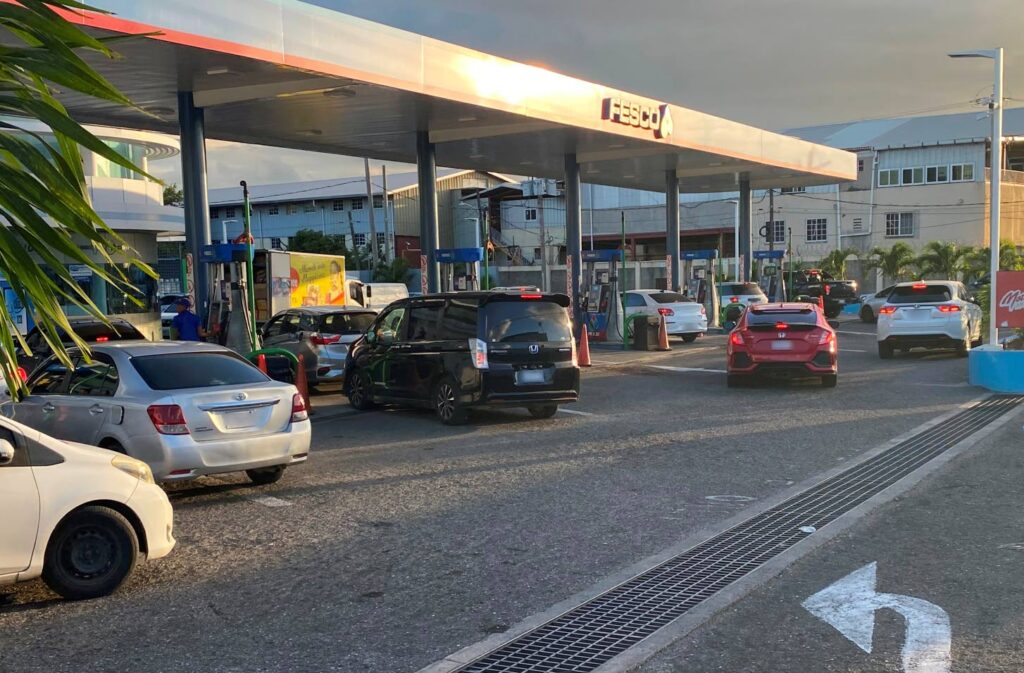
    Jamaica’s Energy Minister Daryl Vaz unveiled sweeping changes to state-owned refinery Petrojam Limited’s fuel pricing framework during a Wednesday post-Cabinet press briefing at Jamaica House in St. Andrew, announcing the end of the existing capped pricing system amid crippling financial losses driven by escalating geopolitical tensions in the Middle East. Starting next week, Jamaican consumers will face full, market-aligned fuel price increases, as the government can no longer sustain billions in subsidies that have shielded the public from skyrocketing global oil costs for the past month.

    Under the current policy, which capped weekly fuel price movements at $4.50 Jamaican dollars per litre in either direction, Petrojam absorbed more than 60 percent of global price increases between March 12 and April 8, 2026. Data shared by Vaz shows that global transport fuel prices rose an average of $49.20 per litre over that period, but only $18 per litre was passed to end consumers. The remaining cost, equal to approximately $1.3 to $1.4 billion Jamaican dollars (US$8.6 million), was covered by the state-owned refinery to protect household and business budgets.

    Vaz warned that continuing the current capped model through June 2026 would cost the Jamaican government a staggering $11.8 billion Jamaican dollars – nearly two-thirds of the current fiscal year’s total revenue – a burden he described as completely unaffordable and unsustainable given the government’s competing national priorities. “No Government in a situation like this can sustain that,” Vaz stated bluntly, adding that ongoing escalations in Middle East tensions have eliminated any near-term hope of a price drop, leaving policymakers with no other option than to restructure the pricing system.

    In place of the single $4.50 weekly cap, Vaz announced a new tiered pricing mechanism designed to align local fuel costs more closely with volatile global market movements. The system will introduce three separate price cap tiers that adjust based on international market conditions, giving Petrojam greater flexibility to respond rapidly to price swings. Vaz emphasized that the shift is unavoidable, and Jamaicans should prepare for sustained price increases as long as Middle East tensions remain elevated.

    To offset the impact of higher prices, Vaz called for immediate national fuel conservation, urging all Jamaicans to adjust personal and business habits to reduce consumption. He also floated potential policy interventions to cut unnecessary travel, including a possible return to hybrid work arrangements similar to those implemented during the COVID-19 pandemic, noting that persistent heavy road traffic suggests many Jamaicans have not yet grasped the severity of the global oil crisis. “It is 100 per cent the responsibility of every Jamaican to realise that we are in a major, major crisis as it relates to the price of oil internationally, and therefore you need to take responsibility for your household and your business to see what you can do,” Vaz said.

    The minister moved quickly to reassure the public that there is no risk of fuel shortages, stressing that Jamaica’s energy security remains fully intact thanks to long-term finished product supply contracts and Petrojam’s domestic refining capacity. He dismissed comparisons to panic buying and supply shortages seen recently in Guyana, noting “it’s not a matter of not being able to buy; it’s the price.” As a short-term reprieve, Vaz announced a 25-cent per litre price reduction at pumps effective Thursday, but warned the drop is temporary and significant increases are likely next week as Petrojam replenishes inventory at current elevated global market prices.

    Before the recent escalation of Middle East tensions, global oil prices traded relatively stable at an average of $70 per barrel with only moderate fluctuations. The breakdown in regional security has upended that stability, creating persistent upward pressure on both crude oil and refined petroleum product prices that has rippled through global energy markets. Without the government’s cap, Vaz confirmed, current prices would be far higher: gasoline would have risen by an additional $26.77 per litre, and diesel would jump between $65 and $75 per litre. As of April 9, ex-refinery prices stand at $176.88 per litre for E10-87 gasoline, $184.32 for E10-90 gasoline, $189.25 for automotive diesel, and $196.09 for ultra low sulphur diesel.

    Moving forward, Vaz said the government will continue closely monitoring global geopolitical and market developments, balancing consumer affordability with fiscal sustainability to make timely, measured decisions that prioritize the best interests of the Jamaican public. The Cabinet will hold additional deliberations in the coming days to finalize national fuel conservation plans to reduce overall demand.

  • Small hotel poised for major repairs after fire

    Small hotel poised for major repairs after fire

    GEORGETOWN, GUYANA – April 15, 2026 – An unexpected early-morning blaze tore through a residential property in downtown Georgetown on Wednesday, jumping to an adjacent popular budget hotel and leaving local business owners facing significant repair work, even as no casualties were reported in the incident.

    The fire broke out shortly before 6:30 a.m. on Cummings Street, a central thoroughfare in the capital. It first swept through a wooden dwelling owned by Hugh Ross, a prominent Guyanese bodybuilder. Flames quickly spread from the home to the nearby four-story, 23-room Julian’s Hotel, Restaurant and Bar, located at the intersection of Cummings and Sixth Streets.

    Julian McEwan, the hotel’s founder and owner, told reporters on the scene that he was not on site when the fire started, and received an urgent alert about the blaze from a neighboring resident. While the fire caused severe destruction to Ross’ entire home, damage to the hotel was largely contained to the building’s middle floor – one guest room was completely destroyed, and several adjacent rooms suffered only minor fire damage. The southern outer concrete wall of the hotel suffered surface damage where plaster flaked off from intense heat, and a portion of the building saw extensive water damage to bedding, ceiling infrastructure and electrical wiring from firefighting efforts.

    Despite the damage, McEwan says he is determined to restore his business as quickly as possible, noting the hotel has been his life’s work. “Yes, this is my life! This is all I know now so I’m hoping that the insurance company works out something and let me get started and rebuild,” he told reporters Wednesday. Assessors from Hand-in-Hand Insurance were already on site within hours of the blaze to evaluate damage and process the claim.

    Eight guests were staying in the hotel at the time the fire broke out, including one visiting Guyanese national. Miraculously, no injuries were reported among any guests, staff or first responders, though some personal guest belongings were damaged by water used to put out the blaze.

    McEwan has already suspended all upcoming reservations at the hotel, including bookings tied to Guyana’s upcoming 60th independence anniversary celebrations. He is working with online booking platforms to relocate all upcoming guests to nearby accommodation while the hotel undergoes repairs.

    Julian’s Hotel is a well-known budget lodging option in central Georgetown, popular with international travelers and overseas-based Guyanese returning to the country. McEwan was quick to praise the rapid, effective response from the Guyana Fire Service (GFS), which he credited with preventing far more catastrophic damage to his property. “Those guys did a fantastic job…The fire caught and was contained in one of my rooms when they got here. The response was great. They saved the building because if they didn’t contain that room, the entire internal structure would have been destroyed. They did a fantastic job in saving my property,” he said.

    GFS investigators remain on the scene Wednesday to probe the exact cause of the fire. No representatives from Ross’ property were available to speak with media Wednesday, though multiple family members were seen meeting with firefighters to discuss the loss. Photos from the scene show a visibly distressed dog standing among the charred rubble of Ross’ home near its damaged kennel, the only visible occupant remaining at the destroyed property.

    Investigators are expected to release a preliminary report on the fire’s cause in the coming days.

  • Overheid en traditionele leiders in gesprek over bosbeheer en klimaatgelden

    Overheid en traditionele leiders in gesprek over bosbeheer en klimaatgelden

    On April 15, the government of Suriname kicked off a landmark two-day dialogue with leaders of Indigenous and Tribal Peoples, centered on advancing sustainable forest management, inclusive community participation, and expanded access to global climate finance. The gathering, called the Gran Krutu, marks a defining milestone in integrating local Indigenous communities into national conservation and development policy shaping, a move that recognizes the critical role these communities play as stewards of Suriname’s globally significant forest ecosystems.

    Hosted jointly by Suriname’s Ministry of Oil, Gas and Environment (OGM) and the Ministry of Regional Development, the dialogue is structured around two core goals: first, to share clear, accessible information aligned with the lived realities of Indigenous and Tribal communities, and second, to co-develop foundational policy frameworks that are both fully participatory and respectful of Indigenous cultural traditions.

    Suriname holds a unique global position as a High Forest Low Deforestation nation, meaning it retains nearly all of its old-growth forest cover while maintaining extremely low rates of deforestation. This status positions the country to access significant international climate finance, including results-based payments for forest conservation — a key priority highlighted throughout the dialogue. The opening ceremony of the gathering was led by Suriname’s Vice President Gregory Rusland.

    Speaking at the event, Minister of Regional Development Miquella Huur emphasized the urgent need to support local communities, particularly smallholder farmers, in aligning three interconnected goals: strengthening national food security, advancing long-term environmental sustainability, and protecting Suriname’s forest landscapes. “Full participation and genuine ownership by Indigenous and Tribal Peoples is non-negotiable for sustainable development across their traditional territories,” Huur noted.

    For his part, OGM Minister Patrick Brunings reinforced the critical importance of responsible forest stewardship and the active inclusion of Indigenous communities at every stage of policy development. Brunings also confirmed that a portion of revenues generated from Suriname’s oil and gas sector will be allocated to advance sustainable development initiatives aligned with the national development roadmap, known as the Suriname 3.0 vision.

    The first day of the dialogue featured technical presentations on a range of key topics, including the structure of global climate finance, the UN-backed REDD+ (Reducing Emissions from Deforestation and Forest Degradation) framework, and the mechanics of results-based conservation payments. Organizers also set aside dedicated time for traditional Indigenous leaders to share their on-the-ground insights, traditional knowledge, and priority concerns directly with government representatives.

    The two-day gathering is backed by a coalition of international partners, including the Food and Agriculture Organization of the United Nations (FAO) and the Green Climate Fund, with additional technical and financial support from the Suriname Foundation for Forest Management and Forest Control. All participation by Indigenous and Tribal Peoples is being carried out in full adherence to the principle of free, prior and informed consent (FPIC), a global standard for ensuring Indigenous communities have full autonomy to engage with or decline government projects and policies affecting their lands.

  • ‘A battle of massive proportions,’ Gonsalves says of amendments

    ‘A battle of massive proportions,’ Gonsalves says of amendments

    A major political showdown has erupted in St. Vincent and the Grenadines, as opposition leader Ralph Gonsalves announced Wednesday that his Unity Labour Party (ULP) will mount both legal challenges and widespread political resistance against the ruling New Democratic Party (NDP)’s planned constitutional amendments, set for parliamentary debate next Tuesday.

    Gonsalves, speaking on ULP-owned Star Radio, framed the proposed changes as an unprecedented power grab, saying “Today is a day where we have to commence our resistance to this New Democratic Party (NDP) dictatorship.” The amendments, he explained, are directly tied to an ongoing election petition challenging the eligibility of Prime Minister Godwin Friday and Foreign Minister Dwight “Fitz” Bramble to hold parliamentary seats.

    The petition was filed by the two ULP candidates who ran against Friday and Bramble in the November 2024 general election, where the ULP—after 25 consecutive years in power—was ousted in a landslide result that left the party holding just one of parliament’s 15 seats. The ULP’s core argument rests on a longstanding constitutional provision that bars candidates who have voluntarily pledged allegiance to a foreign power. Friday and Bramble have openly acknowledged they hold Canadian citizenship acquired through voluntary naturalization, a status the opposition says violates the nation’s founding charter.

    The two incumbent NDP politicians represent Northern Grenadines and East Kingstown, constituencies the ULP has never won in electoral history. Friday has served as a Member of Parliament since 2001, while Bramble first won his seat in 2020.

    In response, the NDP argues that the constitution only requires parliamentary candidates to hold Commonwealth citizenship—a category that includes Canada—meaning Friday and Bramble’s election is fully legal. NDP Senator Jemalie John told local outlet Hot 97 FM Wednesday that the amendments are merely intended to clear up existing ambiguity in the constitution, not to interfere with the pending court case. “If there were no ambiguity, we would not have this case before the court right now,” John said, noting the central unresolved question is whether Commonwealth nations like Canada qualify as “foreign powers or states” under existing constitutional language.

    According to Gonsalves, the proposed changes target Section 26(5) of the 1979 constitution, which outlines candidacy disqualifications. The amendments would add a formal definition of what constitutes a foreign power, and explicitly remove any reference to allegiance, obedience, or adherence to a foreign state as a disqualifying factor. Most controversially, Gonsalves says the changes would be made retroactive to 1979, when the current constitution first took effect.

    The court has already held an initial case management hearing in March, and has scheduled full legal arguments for July 28 through 30. Gonsalves pointed out that on the same morning as the initial hearing, Friday dismissed the petition as frivolous and a waste of judicial resources—a claim that rings hollow, the opposition leader argues, given the NDP’s push to rewrite the constitution to resolve the politicians’ legal vulnerability.

    “Friday and Bramble, through their lawyers at the case management hearing, agreed that they are Canadian citizens and they have Canadian passports,” Gonsalves said. “The only questions that remain are legal ones, central among which is ‘Is Canada a foreign power or state?’ The second issue was that Friday and Bramble do have an allegiance, obedience and adherence to this foreign power state called Canada.”

    Gonsalves argued that Friday and Bramble’s legal team’s push for the constitutional amendments amounts to an “insurance policy” after their initial argument that Commonwealth nations do not qualify as foreign powers failed to fully resolve their legal risk. He also highlighted a key point of NDP hypocrisy in the fight: a 2009 constitutional reform proposal that included a provision to allow dual citizens to run for office was opposed and ultimately voted down by the public, with the NDP—including Friday himself—leading the campaign against the measure.

    “This is a political battle of massive proportions,” Gonsalves said, adding that the amendments are clearly intended to benefit the ruling party’s sitting leaders. In a dramatic appeal to end what he called the NDP’s “madness,” Gonsalves called on St. Vincent and the Grenadines’ Governor-General to intervene by refusing to grant royal assent to the bills if they pass parliament.

  • APUA Issues Continued Advisory on Phishing Attempts Targeting Customers

    APUA Issues Continued Advisory on Phishing Attempts Targeting Customers

    Cybersecurity threats targeting utility customers have prompted an official alert from the Antigua Public Utilities Authority (APUA), which is calling on all its clients and inet users to stay on high alert amid a wave of ongoing phishing attacks. In a public notice released Wednesday, the organization clarified that neither APUA nor its subsidiary inet will ever reach out to customers via call, text, or email to demand sensitive private information, including account passwords, one-time passcodes, banking credentials, or any other data that could grant access to personal accounts.

    The unsolicited communications currently circulating are outright fraudulent, carried out by unethical actors whose sole goal is to trick users into handing over access details, allowing them to break into accounts and commit financial or identity theft. To help the public avoid falling victim to these malicious schemes, APUA has outlined clear, actionable safety guidelines for all customers to follow.

    First and foremost, consumers are told to never share any personal, financial, or account-specific information with unsolicited contacts who claim to represent the utility or its internet service. Second, under no circumstances should anyone disclose a one-time password to any person reaching out unexpectedly, regardless of how official the contact may appear.

    Beyond individual precautions, APUA is encouraging communities and families to look out for one another, particularly vulnerable groups that are statistically more likely to fall prey to these scams. The authority specifically highlighted elderly family members and loved ones as a high-priority group, noting that this demographic is often more susceptible to manipulation by fraudulent callers. Customers are urged to proactively share this safety information with older relatives and support them in identifying and avoiding suspicious communications.

    As investigations into these ongoing phishing attempts continue, APUA has expressed gratitude to the Antiguan public for their ongoing vigilance and cooperation in helping mitigate the spread of these scams, emphasizing that collective awareness is the most effective defense against consumer fraud.

  • Cabinet waives birth certificate fees during voter confirmation process

    Cabinet waives birth certificate fees during voter confirmation process

    In a move aimed at removing barriers to democratic participation, Dominica’s Cabinet has greenlit a temporary elimination of fees for birth certificate issuance, timed to coincide with the island nation’s ongoing voter confirmation process. The policy was formally approved during a Cabinet gathering held on Tuesday, April 14, 2026, according to an official statement released by the Cabinet Secretariat.

    The fee waiver went into effect immediately following the announcement, and will stay in place through October 14, 2026 — matching the scheduled end date of the voter confirmation period. Officials explained that the policy was crafted to address one of the most common logistical barriers for citizens seeking to update or confirm their voting eligibility: access to required foundational identification documents.

    “The entire goal of this initiative is to ensure that every eligible citizen can secure the documentation they need without financial barriers, so they can participate fully in the democratic process,” the statement noted. The Dominican government is actively encouraging all qualifying residents to take advantage of the six-month waiver to secure or replace their birth certificates and solidify their standing on voter rolls.

    For convenience, the government has offered two accessible pathways for citizens to request their birth certificates. Eligible individuals can submit applications via the country’s official government online portal, for contactless processing from anywhere in the country. Alternatively, applicants can choose to visit the in-person Registry Division, housed on Dame Eugenia Charles Boulevard in the capital city of Roseau, to submit their request directly to staff.

    This policy comes as part of broader efforts by the Dominican administration to expand access to voting and streamline voter list maintenance ahead of upcoming electoral processes, removing unnecessary financial hurdles that have historically discouraged low-income and marginalized citizens from completing their voter confirmation.