
作者: admin

  • Bayern on cusp of title as Dortmund lose

    Bayern on cusp of title as Dortmund lose

    On a dramatic Saturday of Bundesliga action, Bayern Munich moved within touching distance of their 35th German league title after title-chasing Borussia Dortmund suffered a frustrating 2-1 defeat away to TSG Hoffenheim. The result opens up an unassailable 12-point gap between Bayern and second-placed Dortmund, meaning Bayern will secure the crown if they avoid defeat against Stuttgart at home on Sunday.

    Hoffenheim, which is still pushing hard for a coveted Champions League spot, controlled large portions of the first half against a flat Dortmund side. Just before halftime, Dortmund defender Niklas Suele was called for a handball inside the penalty area after an awkward fall, and Hoffenheim’s all-time top goalscorer Andrej Kramaric converted the spot kick. The play ended on a sour note for Dortmund, as Suele was carried off the pitch with a knee injury that club sporting director Lars Ricken confirmed appears to be serious.

    After the break, substitute Serhou Guirassy netted a reply for Dortmund to level the scores, but Hoffenheim was awarded a second penalty in stoppage time. Kramaric once again stepped up to convert, marking his 156th career goal for the club and sealing three vital points that pushed Hoffenheim past Bayer Leverkusen into fifth place in the table. “To lose because of two penalties is tough,” Dortmund defender Daniel Svensson told reporters post-match. “We need more intensity — we need to end the season well.” The defeat marked Dortmund’s second consecutive loss, after the side had dropped only two matches across the entire campaign up to that point.

    In the day’s late fixture, RB Leipzig’s young squad delivered a standout performance to secure a 3-1 away win over Eintracht Frankfurt, strengthening the club’s own push for Champions League qualification. It was Leipzig’s first ever win in Frankfurt across 11 previous attempts, lifting the side to third place and putting them five points clear of the newly fifth-placed Hoffenheim. Nineteen-year-old Yan Diomande opened the scoring for Leipzig with a brilliant individual effort: cutting in from the right flank before curling a precision finish into the bottom corner of the net. Frankfurt equalized just before the 30-minute mark with a header from Hugo Larsson, but Leipzig retook the lead with 20 minutes left to play through 21-year-old Antonio Nusa. Fellow 21-year-old Konrad Harder put the result beyond doubt late on with a third goal.

    The biggest story of the day off the pitch came at Union Berlin, where history-making head coach Marie-Louise Eta — the first woman to lead a men’s top-flight team in any of Europe’s five biggest leagues — suffered a 2-1 defeat to relegation-fighting Wolfsburg on her debut. Appointed on an interim basis for the remainder of the season, Eta received a thunderous welcome from home fans when her name was announced before kickoff, but her side got off to a difficult start, conceding to Patrick Wimmer after just 11 minutes. Dzenan Pejcinovic doubled Wolfsburg’s lead shortly after halftime, a result that moved Wolfsburg to within two points of the relegation play-off spot held by St Pauli and six points adrift of safety. Union Berlin’s Oliver Burke scored a late consolation goal, but the home side could not find an equalizer. Despite the defeat, Union Berlin still hold a six-point buffer over the relegation play-off position with just four matches remaining in the campaign. “We talked a lot about many things this week, ultimately, it was all about football, which I was looking forward to,” Eta told reporters after the match. “I was happy to be here today but in the end it was bitter and disappointing that we’re leaving without any points.”

    Elsewhere across the league, Bayer Leverkusen dropped to sixth place after a shock 2-1 home defeat to mid-table Augsburg. After Patrik Schick put Leverkusen ahead early, Augsburg’s Fabian Rieder equalized inside the opening 15 minutes, then scored a winning penalty in the seventh minute of stoppage time to deliver a major blow to Leverkusen’s hopes of finishing inside the top four. In a crucial northern derby relegation battle, Werder Bremen claimed a vital 3-1 win over Hamburger SV, which finished the match with just nine players on the pitch. Jens Stage scored a first-half brace for Bremen, separated by a Robert Glatzel strike for Hamburg, and Cameron Puertas added a late third to seal the win. The result moves Bremen five points clear of the relegation zone and level on points with Hamburg.

  • KFC Jamaica commits $14-million to Reggae Girlz in renewed push toward World Cup

    KFC Jamaica commits $14-million to Reggae Girlz in renewed push toward World Cup

    KINGSTON, Jamaica — Fast-food giant KFC Jamaica has locked in a fresh two-year sponsorship deal with Jamaica’s national women’s football team, the Reggae Girlz, committing a total package valued at $14 million — split between $12 million in cash and $2 million in in-kind meal products. The new agreement comes as the squad prepares to chase a groundbreaking milestone: qualification for a third straight FIFA Women’s World Cup.

    Andrei Roper, Marketing Manager at KFC Jamaica, emphasized the brand’s long-standing dedication to advancing sports development across all tiers of Jamaican competition, with a particular focus on nurturing young athletic talent. In an official press statement, Roper noted that over the previous two-year partnership, the brand has closely tracked the steady expansion of women’s football across the island, particularly highlighting the emerging talent and untapped potential emerging from the domestic Women’s Premier League. That growing talent pipeline, he added, signals exciting progress for the national program and Jamaica’s standing on the global football stage.

    “Our strategy centers on long-term growth, building accessible platforms and laying solid foundations for sustainable success,” Roper explained. “That is why we are proud to renew our commitment to a team that continues to carry Jamaica’s name with pride, as they edge closer to another historic World Cup berth. The Reggae Girlz are true ambassadors for both our nation and the sport of football, and we are grateful for everything they continue to achieve.”

    Roper stressed that the new sponsorship is more than just financial support for one team: it represents a public vote of confidence in the broader women’s football movement in Jamaica, one that continues to empower and inspire a new generation of young girls to play the game and pursue athletic dreams across the country.

    Leaders from the Jamaica Football Federation (JFF) welcomed the renewed partnership, noting that the investment comes at a critical juncture in the Reggae Girlz’s qualifying campaign. JFF President Michael Ricketts called the brand’s continued backing a major boost for the team’s ongoing preparations. “We are thrilled to have KFC back with this strong show of support and their unwavering belief in the Reggae Girlz,” Ricketts said. “This commitment arrives at exactly the right time as we look to build on our current momentum. Their investment allows us to strengthen our operational systems, provide better support for our players, and maintain our competitive edge at the highest levels of international football.”

    Under the terms of the deal, KFC will contribute $6 million in cash and $1 million in meal products to the team each year of the two-year agreement. The renewed partnership underscores the private sector’s growing confidence in Jamaica’s women’s football program, at a time when the Reggae Girlz are already raising the country’s global profile through consistent top-tier competition.

    This latest sponsorship builds on KFC Jamaica’s already deep roots in local women’s football. The brand is currently in its second year of support for the Jamaica Women’s Premier League (JWPL), and just last month it extended that commitment through the 2025/2026 season with an additional $3.5 million in combined cash and in-kind support. KFC also backed the Reggae Girlz during their 2023 FIFA Women’s World Cup campaign, and previously held a two-year personal sponsorship deal with national team captain and all-time leading goal scorer Khadija “Bunny” Shaw.

    The new deal not only strengthens the Reggae Girlz’s path through qualifying but also reinforces KFC’s ongoing mission to expand access to women’s football and increase its visibility across Jamaica. The Reggae Girlz are set to return to competitive action this weekend, kicking off their latest World Cup qualifying match against Guyana on Saturday at Kingston’s National Stadium.

  • Gov’t moves to support escallion farmers amid build-up of produce

    Gov’t moves to support escallion farmers amid build-up of produce

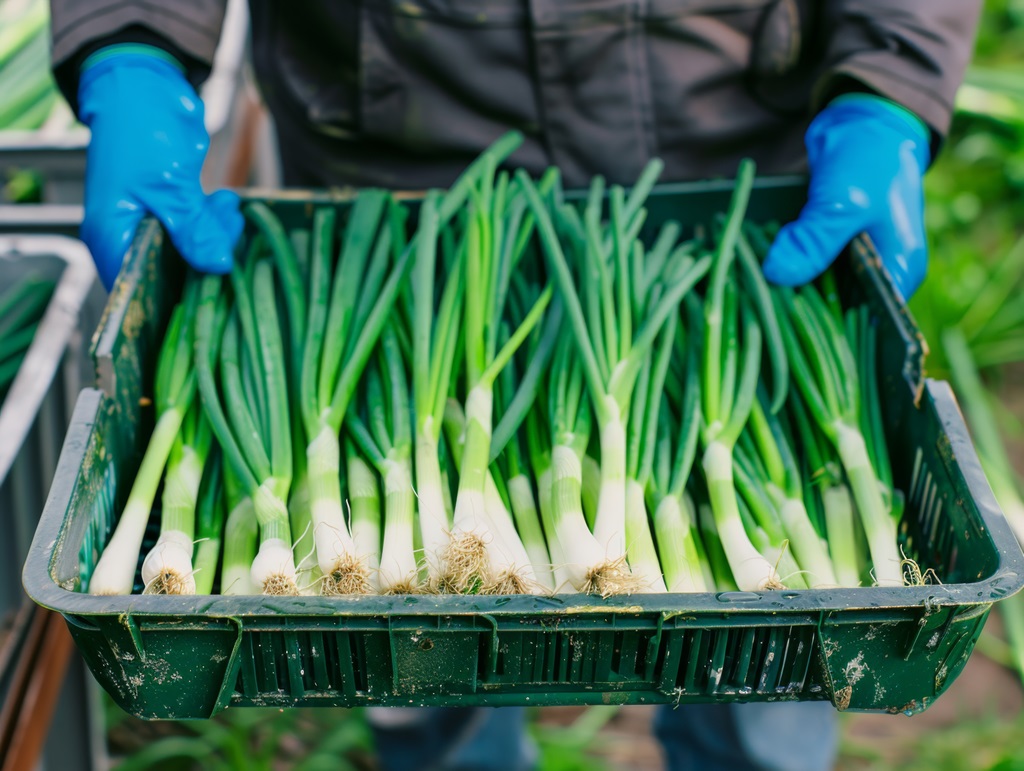
    Escallion producers across South Manchester and South St Elizabeth in Jamaica are set to receive targeted government intervention after a sudden glut of the popular crop left farmers grappling with plummeting market demand and unsold inventories. Jamaica’s Ministry of Agriculture, Fisheries and Mining has moved quickly to coordinate a whole-sector response after receiving formal reports of the growing crisis, which has left small-scale and commercial producers alike scrambling to secure stable outlets for their harvest.

    Officials from the ministry confirmed they are fully aware of the current oversupply situation, noting that major institutional buyers including Grace Agro Processors – a subsidiary of leading Jamaican food conglomerate GraceKennedy Foods and Services Limited – have slowed purchases due to the accumulated volume of unsold produce. The backlog has sparked growing anxiety among farming communities, whose livelihoods depend on consistent off-take for their perennial crop.

    In an official statement outlining the response, the ministry said it has already opened direct negotiations with two of Jamaica’s largest food processors, Grace Agro Processors and Walkerswood Caribbean Foods Limited. The talks center on restructuring purchasing agreements to absorb more existing inventory and secure the long-term place of local escallion producers in national supply chains. Beyond major processors, the government has also partnered with two leading industry bodies – the Jamaica Manufacturing and Exporters Association (JMEA) and the Jamaica Agro Processing Association (JAPA) – to mobilize their member networks to purchase surplus escallion immediately. Early feedback from these organizations has been overwhelmingly positive, with increased off-take scheduled to launch as early as next week.

    To ensure interventions are grounded in on-the-ground realities, the ministry’s chief technical director traveled to New Forest, Manchester on April 2, 2026, to hold face-to-face meetings with affected farmers. The visit allowed officials to directly assess the scale of the oversupply and walk producers through the full slate of support measures being rolled out.

    The government has expanded its collaboration to include a range of additional stakeholders to boost processing capacity and cut the risk of harvested escallion spoiling before it can be sold. New partners include regional food producer Spur Tree Spices, fresh produce supplier Southern Fruits & Food Processors, the national Scientific Research Council (SRC), and Ebony Park Heart Academy. A core focus of these partnerships is converting surplus fresh escallion into high-value value-added goods such as escallion mash and dehydrated powder, creating alternative market channels that take pressure off fresh produce markets.

    To remove logistical barriers to getting crop to processors, the ministry will cover transportation costs to move escallion from farmgate to processing facilities. This support eliminates one of the biggest bottlenecks farmers face in moving surplus harvest, ensuring that as much produce as possible is put to productive use rather than going to waste.

    The ongoing talks are also addressing longer-term solutions to prevent recurring oversupply crises. Proposals currently under discussion include upgrading national cold storage capacity to buffer excess production during peak harvest windows. Already, several established processors have announced plans to expand their own production capacity specifically to handle temporary periods of oversupply in the escallion market.

    Moving forward, the ministry said it will continue scouting new domestic and international market opportunities for Jamaican escallion, both through expanding existing distribution networks and opening up entirely new sales channels. Officials are also evaluating direct government purchasing programs that would provide immediate financial relief to producers affected by the current glut.

    The Jamaican government reaffirmed its commitment to continued close collaboration with producers, processors and major buyers to resolve the current oversupply challenges. The overarching goal of the intervention is to protect the livelihoods of escallion farmers and maintain long-term stability across the entire escallion industry, the statement added.

  • No room for racism on social media, says Premier League

    No room for racism on social media, says Premier League

    Against a rising backdrop of online vitriol targeting professional athletes, the English Premier League has drawn a firm line in the sand against racism, issuing a clear warning to social media users that discriminatory abuse of players will not be tolerated. The top-flight football league confirmed it has assembled a specialized team of analysts whose full-time mandate is to monitor digital platforms, track instances of racist harassment targeting league players, and launch formal investigations into every reported incident.

    In an official public post shared across its social media channels, the league delivered a stark message to would-be offenders: “If you commit abuse, we will work to identify you, locate you and may pursue legal action against you.”

    The warning is not an empty threat, the league emphasized, pointing to a recent high-profile conviction that underscores its commitment to holding abusers accountable. While the league declined to release the individual’s name to protect court protocols, it confirmed the offender received a 20-week suspended custodial sentence, was handed a permanent three-year ban from attending all English Football League matches, and was ordered by the court to pay full prosecution costs. The outcome marks one of the most prominent legal resolutions for online racial abuse in the sport’s recent history, sending a clear signal that the league will not hesitate to pursue criminal action against those who target its players.

  • At least 5 killed after gunman opens fire in Ukrainian capital

    At least 5 killed after gunman opens fire in Ukrainian capital

    On a tense Saturday in the Ukrainian capital Kyiv, a violent mass shooting left five people dead after a gunman opened fire on civilians, seized hostages inside a local supermarket, and was ultimately killed by security forces during an intervention, senior Ukrainian officials confirmed. The deadly incident unfolded in a densely populated residential neighborhood in southern Kyiv, leaving at least 10 additional people hospitalized with physical wounds and acute psychological trauma, according to Ukrainian President Volodymyr Zelenskyy.

    Unverified footage circulating via Ukrainian news outlet UNIAN, which AFP has not been able to independently authenticate, shows the armed suspect firing at an individual from point-blank range near a nearby apartment block moments before the siege began. Kyiv Mayor Vitali Klitschko confirmed that after the initial street shooting, the attacker fled into the neighborhood supermarket, where continuous gunshots were heard by witnesses inside the building. By the end of the operation, four hostages held inside the retail store had been safely extracted, Zelenskyy announced in an update posted to social media.

    “The attacker who opened fire on unarmed civilians in Kyiv has been eliminated,” the president stated, extending official condolences to the loved ones of those killed in the attack. An AFP correspondent on the scene observed the supermarket surrounded by a heavy cordon of security forces, with visible bloodstains on the store’s front window, bulletproof-vested officers securing the perimeter, and specialized crime investigation units processing evidence at the site.

    As of Saturday evening, authorities had not released any confirmed information about the gunman’s possible motives. Prosecutor General of Ukraine Ruslan Kravchenko identified the assailant as a 58-year-old man born in Moscow, adding that initial investigative findings indicate the suspect carried out the attack using an automatic weapon.

    One supermarket employee, Tetyana, who spoke to AFP from the scene, described the chaotic start of the incident, saying the initial gunshots sounded deceptively mundane at first. “I heard sounds in the store, like champagne being popped or balloons bursting several times. Then the customers started shouting, ‘Run!’” She recalled hiding with other staff behind large refrigeration units, where she could hear a wounded man moaning in pain, her voice shaking as she recounted the experience.

    Interior Minister Igor Klymenko told reporters that the standoff between the attacker and police negotiators dragged on for roughly 40 minutes, with law enforcement attempting to de-escalate the situation peacefully before making the decision to use lethal force. “We tried to persuade him. Realising that there was likely an injured person inside, we offered to bring in tourniquets to stop the bleeding… But he didn’t respond,” Klymenko explained. “That’s why the order was given to eliminate him,” he added, confirming that the gunman had killed one of the hostages he had taken before the intervention.

    It is worth noting that while Ukraine has been engaged in a full-scale war with Russia for more than four years, which has brought widespread violence from military conflict, the country maintains a relatively low rate of domestic violent crime, with mass shooting incidents remaining rare. The most recent comparable event occurred last year in a Kyiv suburb, where a man shot and killed two people during a dispute over the illegal sale of a firearm. Zelenskyy has called for a rapid, full investigation to uncover all details and circumstances surrounding Saturday’s attack.

  • Casino regulatory framework strikes the right balance, says Gov’t senator

    Casino regulatory framework strikes the right balance, says Gov’t senator

    During a Friday sitting of Jamaica’s Senate, government Senator Dr. Elon Thompson publicly defended the newly approved Casino Gaming (General) Regulations 2025, arguing that the Holness administration has struck a careful and effective balance between fostering economic growth through investment, commercial development and entertainment, and putting in place robust guardrails to enforce accountability and responsible industry operation. The upper legislative chamber approved the new regulatory framework shortly after Thompson’s remarks, bringing long-awaited formal implementing rules to the 15-year-old Casino Gaming Act, which was originally passed into law in 2010.

    Thompson laid out that the new regulations lay the foundational administrative structure for the Casino Gaming Commission, outlining clear protocols for the body’s procedural work, binding obligations for licensed operators, mandatory record-keeping and reporting requirements, regulatory fee structures, inspection and enforcement authority, and overarching operational standards designed to keep the industry running in an orderly, transparent fashion.

    Addressing widespread public concerns that expanded casino gaming could fuel addiction, widespread financial hardship and broader social disruption, Thompson acknowledged that these anxieties deserve full respect. But he pushed back against claims the regulatory regime ignores these risks, emphasizing that the new rules are explicitly designed to anticipate harm and put legislative safeguards in place to mitigate it directly. The regulations, he noted, require operators to implement formal systems to protect player well-being and proactively prevent and manage problematic gaming behavior.

    Thompson went on to detail the layers of protection built into the new framework. The rules prohibit participation by people who are intoxicated, mandate strict protocols to block access by minors, require detailed ongoing tracking of patron activity, establish formal dispute resolution processes, and set up mandatory reporting structures designed to catch patterns of harm before they escalate. When combined with the publicly available Responsible Gaming Framework hosted on the Casino Gaming Commission’s website, Thompson said the policy’s core priorities become even clearer. He stressed that the public framework is not an afterthought or peripheral add-on, but a central anchor of the entire regulatory regime.

    Thompson explained that the framework is built on a clear recognition that while most people can engage in casino gaming responsibly, a subset of the population is inherently vulnerable due to preexisting psychological, social or economic challenges that can make it difficult to maintain informed, controlled decision-making. This foundational understanding, he argued, is what shifts the entire approach from passive, after-the-fact regulation to proactive, active harm reduction.

    The senator highlighted that the full legal and regulatory regime establishes a three-tiered protection model that addresses risks across three overlapping levels: individual patrons, licensed operator organizations, and the wider Jamaican community. For individual patrons, the framework requires that they not only be allowed to participate voluntarily, but also be given clear, accessible information to fully understand the risks associated with gaming. For operators, the regime mandates that companies build internal monitoring systems capable of identifying early signs of problematic behavior and responding appropriately. Finally, the framework requires cross-institutional collaboration to turn abstract goals of prevention, detection and treatment of problem gambling into tangible, operational realities across the country.

  • Holness honoured with legacy award at UWI gala in New York

    Holness honoured with legacy award at UWI gala in New York

    On a star-studded Friday evening in Manhattan, New York, Jamaican Prime Minister Andrew Holness took center stage at the 29th Annual “The Legacy Continues” Black-Tie Awards Gala, where he was bestowed the Legacy Award — one of the highest honors granted by the American Foundation for the University of the West Indies (AFUWI). Hosted at 538 Park Avenue, the annual gathering brought together distinguished figures from across the realms of politics, business, academia, and philanthropy, all united by a shared mission to expand access to higher education for Caribbean students.

    Holness was not the only honoree of the night; he joined a cohort of outstanding leaders recognized for their exceptional contributions to regional advancement, educational access, and visionary leadership. The award was officially presented to him by a trio of senior academic and foundation leaders: AFUWI Chairman Dr. Cyrus McCalla, University of the West Indies (UWI) Chancellor Dr. Dodridge D. Miller, and UWI Vice Chancellor Professor Sir Hilary Beckles.

    In his introductory remarks ahead of the presentation, Sir Hilary Beckles emphasized Holness’ standing as a democratically elected leader with deep and sustained public trust, noting that the Jamaican people have granted him a governing mandate three times through national elections. In accepting the honor, Holness pushed back against widespread assumptions that a legacy-focused award signals the conclusion of an active political career. Rather than framing the recognition as a capstone to his service, he described it as a validation of ongoing work that continues to move Jamaica forward.

    “Legacy is not what you receive but what you build,” Holness told the assembled audience. He went on to note that Jamaica still holds vast untapped potential, and its national development journey is far from complete. The Prime Minister also highlighted UWI’s critical role as a regional educational anchor, stressing that the institution must continue adapting to a rapidly shifting global landscape. He called for a renewed institutional focus on driving growth, boosting operational efficiency, and embedding innovation across all levels of the university.

    AFUWI Executive Director Ann-Marie Grant explained the selection committee’s choice to honor Holness, pointing to his consistent leadership and unwavering commitment to advancing education, strengthening Jamaica’s economic resilience, and fostering collaborative development across the Caribbean region — all core pillars of the island nation’s ongoing progress. Grant added that the annual gala serves a dual purpose: it celebrates impactful leadership, and it brings together cross-sector leaders to raise funds for scholarship programs that support Caribbean students enrolled at UWI. All proceeds from the gala are directed toward these scholarship funds, which work to break down financial barriers to higher education across the Caribbean region.

    Dr. Cyrus McCalla expanded on the event’s mission, noting that the gala exists to celebrate visionary leaders whose service and forward-thinking have helped shape a brighter future for the Caribbean, while also creating life-changing educational opportunities for talented students from low-income backgrounds.

    Alongside Holness, a range of leaders from across sectors were honored for their distinct contributions. Anthony and Gregory Belinfanti took home the Pathfinder Award for Generational Impact in Education, while geographer and academic Dr. Kevon Rhiney received the Pelican Award. Trinidadian-born Dr. Wayne A. I. Frederick, president of Howard University, was awarded the Caribbean Luminary Award, and Dr. Wayne J. Riley, president of SUNY Downstate Health Sciences University, received the UWI Chancellor’s Award for Excellence in Institutional Impact. Camille Joseph-Goldman of Charter Communications earned the Vice Chancellor’s Award for Excellence in Public Service and Community Impact, and global technology executive Jacky Wright was presented with the Phoenix Award for Global Digital Leadership. Finally, Dr. A. Norman Sabga, executive chairman of the ANSA McAL Group, received both the Chancellor’s and Corporate Awards for Excellence in Global Business Leadership.

    In a statement summarizing the event’s mission, AFUWI emphasized that all awards presented during the gala recognize individuals whose achievements highlight the transformative power of education and visionary leadership, both across the Caribbean region and throughout its global diaspora.

  • NEPA signs MOU with SRC, Forestry to conserve endemic and threatened plant species

    NEPA signs MOU with SRC, Forestry to conserve endemic and threatened plant species

    KINGSTON, Jamaica — Three leading Jamaican environmental and scientific agencies have formalized a landmark collaborative partnership aimed at reversing the decline of the island nation’s unique native plant life, signing two landmark memoranda of understanding (MOUs) to unify their expertise, resources and conservation efforts. Jamaica’s National Environment and Planning Agency (NEPA) entered into the separate agreements with the Scientific Research Council (SRC) and the Forestry Department (FD), creating a coordinated framework for research, propagation, habitat restoration and public outreach centered on protecting the country’s endemic and at-risk plant species.

    Jamaica holds a globally significant distinction as the fifth-ranked island worldwide for rates of plant endemism, meaning a large share of its native flora is found nowhere else on Earth. But this unique biological heritage is increasingly under pressure: leading environmental officials warn that climate change, unregulated pollution, rapid landscape development, and unsustainable harvesting have pushed dozens of native species toward extinction, eroding the island’s biodiversity and threatening the ecological, cultural and economic benefits native plants provide.

    Addressing the urgency of the new partnership, NEPA Chief Executive Officer Leonard Francis noted that accelerating development has reshaped Jamaica’s natural landscapes in recent decades, putting unprecedented strain on native plant populations. Francis emphasized that every plant species is an irreplaceable piece of Jamaica’s natural heritage, which contributes an estimated billions of dollars to the national economy. Losing any endemic species, he argued, is a permanent loss for the country that can never be reversed.

    NEPA Deputy CEO Anthony McKenzie, who leads the agency’s environmental management and sustainability division, echoed that warning, stressing that the MOU signing comes at a critical moment for Jamaica’s biodiversity. McKenzie named climate change and widespread pollution as the two biggest drivers of biodiversity decline across the island, adding that urgent coordinated action is the only way to preserve the country’s standing as a global hotspot of unique plant life.

    Under the terms of the new partnership, the three agencies will work together to identify high-priority species for propagation and conservation, with selection based on national biodiversity goals, conservation urgency, and technical feasibility of recovery efforts. SRC Executive Director Dr. Charah Watson emphasized that cutting-edge scientific research will be central to the initiative, noting that innovative propagation methods including tissue culture will allow conservationists to scale up production of at-risk species for restoration. Watson framed the partnership as an investment in future generations, noting that Jamaica’s natural resources must be carefully protected and leveraged to ensure coming Jamaicans can benefit from the island’s unique natural heritage.

    Forestry Department CEO Ainsley Henry highlighted the untapped potential of Jamaica’s native flora for medical innovation, recalling childhood observations of how many common modern pharmaceuticals trace their origins to wild plant species. Henry underscored his agency’s full commitment to the partnership, noting that coordinated conservation and restoration work supports not only Jamaica’s national biodiversity targets but also global efforts to halt planetary biodiversity loss and build community resilience to climate change.

    The first high-priority target for the new partnership is the Lignum vitae, Jamaica’s iconic national flower, which is currently listed as endangered on the International Union for Conservation of Nature (IUCN) Red List of Threatened Species and protected under Appendix II of the Convention on International Trade in Endangered Species of Wild Fauna and Flora (CITES). Long-term population surveys conducted by NEPA between 2007 and 2024 confirm that Lignum vitae numbers have continued to decline steadily across the island, driven by land clearing for development, illegal harvesting, hurricane damage, drought and other climate-related impacts, making urgent intervention a critical priority.

    To build public support for Lignum vitae conservation, NEPA launched the Lignum vitae in Schools campaign in January 2024, an outreach initiative designed to raise awareness of the species’ ecological and cultural importance and encourage planting across school campuses and local communities. Three schools have already participated in the pilot phase of the program: Sheffield Primary and Negril Primary in Westmoreland, and St Hugh’s Preparatory in Kingston. NEPA is now calling on additional schools interested in joining the program to reach out to the agency via phone at (876) 754-7540 or email at pubed@nepa.gov.jm.

    NEPA’s CEO Francis stressed that biodiversity conservation is not a responsibility limited to government agencies, saying that every Jamaican has a role to play in protecting the country’s natural heritage. “We have a sacred duty to ensure that every single species, every single plant, survives in perpetuity,” Francis said, framing the new partnership as a critical step forward in fulfilling that obligation.

  • FINISH THE JOB!

    FINISH THE JOB!

    As kick-off approaches for their make-or-break Concacaf Women’s Qualifier group stage finale, Jamaica’s senior women’s national team — the Reggae Girlz — have arrived at the National Stadium in peak form, with head coach Hubert Busby bullish about his squad’s chances and calling for clinical execution when the match gets underway at 7:00 pm Saturday.

    Since the team’s previous victory over Antigua and Barbuda, Busby has observed a clear upward shift in energy and competitiveness within the squad. Training sessions have been sharp, high-intensity, and marked by fierce competition for starting spots, setting the stage for a critical showdown that will decide Group B’s top seed.

    Busby noted that the short break following the last qualifying match gave players a much-needed opportunity to recharge, which has translated to elevated focus and energy in recent training sessions. “The training sessions since our last win have been very good, very lively, and very competitive, which have been great to see,” the head coach said in a pre-match press briefing. “The players have gotten a little chance to take time off and recharge and I think that has done them wonders because they have been back in training and the energy has been high, the focus has been good, and so may that continue.”

    The stakes of the encounter could not be clearer. Entering the final group match, the Reggae Girlz hold an unblemished record: three wins from three matches, giving them nine points and the top spot in Group B. Guyana and Nicaragua trail three points behind on six points apiece, while Antigua and Barbuda and Dominica sit at the bottom of the table with one point each.

    For Jamaica, any result other than a loss will lock in their position as Group B winners. For Guyana, a major upset victory by a wide margin is the only path to securing first place, thanks to the Reggae Girlz’ dominant 23-goal goal difference, compared to Guyana’s five. Busby is under no illusions about the challenge his side will face Saturday. “Guyana is a strong, organised team,” he said. “Mathematically they’re not out, and so we are expecting a very challenging match from them. They are an organised group, they look to come here looking to impose their will on us, as well, and it is for us to really go about ensuring that we stick to our tactical plan.”

    A rare advantage for the Reggae Girlz heading into this qualifying window has been the extended time the coaching staff has gotten to work with the full squad on the training pitch. Unlike most previous windows, where the team only convenes three days before a match before dispersing immediately after, this camp has allowed days of focused preparation to refine tactics and align the team’s game plan. “Truth to be told, we have not had this amount of time to really work with the team at all,” Busby admitted. “It is usually we got in, match day minus three, play the game and then right after the game we are out. So we have had some time in there to work on our match plan, implement some of the things that are pertaining to our playing module which has been good.”

    The coaching and medical staff have also prioritized managing player workload to avoid fatigue ahead of the decisive match, carefully balancing focused training sessions with adequate recovery time. “I think what we also have to do is to be able to manage their playing and training loads, even though we have a lot of time with them making sure they get the adequate rest,” Busby said. “We were able to do that well and credit to our medical staff and our high-performing staff because that allows us to look at a few things, tweak a few things and make sure the players have all the information that they need.”

    With all preparation complete, the match will come down to 90 minutes of play in front of a home crowd. “We respect what they [Guyana] need to do but it’s really about us looking to go out there and executing the things we want to do on our home pitch. So it is a good leeway into this last game, for sure,” Busby said.

    Senior defender Deneisha Blackwood said the team plans to set a dominant tone from the moment they step onto the pitch for warm-ups, aiming to establish psychological advantage before kick-off. “I think going into this final one as players and senior players is just making sure we are setting the standard even from the warm-ups,” Blackwood said. “You know as always the other team’s coaches will be watching the warm-ups and so we want to make them fear us from then, make them see how we are warming up, see how we are approaching the warm-ups. And so the standard is set there and then I think going into the game is just quality and pride and dominating the game.”

    Only the six group winners across the qualifying stage will advance to the Concacaf Women’s Championship scheduled for later this year. The Reggae Girlz held their final training session at the National Stadium on Friday, with key players including Khadija Shaw and Allyson Swaby taking part in preparations.

  • New cannabis rules remove barriers for small farmers, says CLA head

    New cannabis rules remove barriers for small farmers, says CLA head

    Jamaica has rolled out landmark updates to its medicinal cannabis regulatory framework, designed to tear down long-standing barriers for small-scale producers and strengthen the nation’s competitiveness in the fast-growing global medical cannabis market, top industry regulators and government officials confirmed this week.

    The changes, formally launched Thursday at an event hosted at the AC Hotel in St Andrew, build on the foundation laid by the 2015 Dangerous Drugs Act amendment, which first established a formal licensing system for cannabis used in medical, therapeutic, and scientific research. Speaking at the launch, Cannabis Licensing Authority (CLA) CEO Farrah Blake explained that the revisions were developed after months of collaborative input from across the industry, to address shifting global demand and fix gaps in the previous interim regulatory system.

    “To keep pace with evolving global trends and build a more inclusive, efficient regulatory environment, updating our earlier interim rules was a critical step,” Blake noted. “Through open stakeholder discussions that included on-the-ground feedback, constructive criticism, and problem identification, we landed on changes that modernize our legislative structure, streamline administrative processes, and expand industry participation — all while keeping Jamaica aligned with its international obligations.”

    At the core of the reforms are two new no-fee special permit categories tailored specifically to lower the bar for small and traditional Jamaican farmers, who have long been locked out of the formal regulated market due to high costs and complex bureaucracy. The first, the Special Community Permit, allows farmers to operate as a collective rather than as individual producers, eliminating steep application fees and reducing financial barriers to entry. Unlike previous requirements, permit holders do not need to base all operations on a single contiguous plot of land, and participants gain full access to technical support from the CLA’s Cannabis Specialisation Unit, as well as the right to sell cannabis through licensed domestic market channels. Most notably, Blake emphasized, the permit carries zero application or administrative fees.

    The second new offering, the Traditional Cultivator Special Permit, provides a structured two-year transitional window for small farmers to integrate into the regulated system. During this period, producers have time to build the operational capacity required to upgrade to a full tier-one cultivation license, while still enjoying access to technical support, licensed domestic sales channels, and fee-free entry, mirroring the benefits of the community permit.

    Beyond the new permit programs, the regulatory overhaul includes a suite of additional administrative changes designed to make operating in the industry smoother for all participants. Industry employees will now receive official identification cards that let them move between different employers without requiring new authorization from the CLA, cutting down on red tape for both workers and businesses. All license tenures have been standardized to a uniform three-year term, and rules now allow operators to continue running their businesses uninterrupted during license renewal periods, eliminating gaps in operation that previously created uncertainty. Applicants also now have access to flexible payment plans for license fees, and operational requirements have been updated to include uniform national fencing standards, as well as formal authorization for licensed retailers to deliver cannabis directly to patients and approved caregivers.

    Delano Seiveright, State Minister in Jamaica’s Ministry of Industry, Investment and Commerce, who delivered the event’s keynote address, told the Jamaica Observer that the core goal of the amendments is to break down historic barriers and broaden participation across the sector. “Previously, bureaucracy was overly burdensome, costs were seen as too high, and there were far too many layers of administrative process that frustrated small producers looking to enter the legitimate market,” Seiveright explained. “Our top priority with these updates is to expand access. We want to see far more micro and small farmers take part in the legal industry.”

    The reforms, he added, are part of a broader national strategy to drive inclusive, sustainable growth across Jamaica’s emerging medicinal cannabis sector. “We have pushed through these amendments, which are now officially gazetted into law, that allow farmers to enter through community groups, transitional permits, and special access programs. They can organize as cooperatives, enter the regulated space, and pay no fees at all for that initial engagement,” Seiveright said. “At its core, this is about expanding access and ensuring micro and small players have a meaningful, significant role in the industry.”

    Seiveright also framed the regulatory updates as a key step in the government’s ongoing push to position Jamaica as a leading, trusted player in the global medicinal cannabis market. “We are actively engaging with international partners to build our country as a competitive, respected participant in the global market,” he said. “With the right standards, robust quality assurance, and targeted innovation, we can expand our reach beyond our borders and bring Jamaican cannabis products to the world stage.”