作者: admin

  • Twenty-six graduate from RSS Tactical Course, strengthening National Security in Saint Kitts and Nevis

    Twenty-six graduate from RSS Tactical Course, strengthening National Security in Saint Kitts and Nevis

    BASSETERRE, Saint Kitts – On April 17, 2026, 26 personnel from across Saint Kitts and Nevis’ key security and law enforcement agencies marked a major milestone for national and regional safety, graduating from the first Basic Tactical Training Course of the year hosted by the Regional Security System (RSS) Training Institute.

    The graduating class included officers from the Royal St. Christopher and Nevis Police Force, St. Kitts-Nevis Defence Force, His Majesty’s Prison Service, and St. Kitts and Nevis Customs and Excise Department. The commencement ceremony and celebratory parade took place at National Heroes Park in Conaree, where outstanding performers were recognized with specialized awards for their excellence across different training disciplines.

    The 12-week intensive training program ran from January 26 to April 17, designed to address the complex, interconnected nature of 21st-century security threats. Trainees completed both theoretical instruction and hands-on practical exercises across land and sea operational scenarios, covering core tactical skills including ambush operations, targeted raids, reconnaissance missions, casualty evacuation protocols, and border security drills. In a nod to evolving criminal trends, the curriculum also integrated critical specialized modules on financial investigations, asset recovery, anti-money laundering frameworks, and digital forensics.

    Awards were presented to top-performing participants to honor their standout work: Stefen Modeste, a police constable, took the prize for Best Map Reading; fellow constable Kyle Grant earned awards for Best Pistol Shot and Best Drills; Jerzelle Challenger claimed the title of Best Physical Performer (Female), and Kelly-Ann Francis was recognized as Best Turn Out Student. Sergeant Vallen Rogers of His Majesty’s Prison won Best Rifle Shot, while Kuame Rey of the Customs and Excise Department dominated multiple categories, taking home awards for Best First Aid, Best Physical Performer (Male), and overall Best Student.

    Commissioner of Police James Sutton praised the graduates in his remarks, emphasizing that their successful completion of the rigorous course reflects a collective commitment to reinforcing national security and improving operational readiness, efficiency, and cross-agency collaboration across Saint Kitts and Nevis’ security sector.

    “Across our region, and indeed globally, law enforcement agencies are confronted with increasingly diverse challenges including transnational organised crime, cyber-enabled offences, illicit trafficking, terrorism, environmental threats, and other emerging risks,” Sutton said. “These realities demand that we remain prepared, adaptable, and professionally equipped to respond effectively.”

    Atlee Rodney, Deputy Executive Director of the RSS, commended Saint Kitts and Nevis Prime Minister Dr. Terrance Drew – who also serves as Minister of National Security – for his proactive leadership in advancing the nation’s security capacity. Rodney explained that the customized training initiative grew directly out of a national security assessment Dr. Drew ordered in 2025, which identified critical skills gaps within local security forces.

    Unlike standard RSS tactical courses that bring together officers from across all RSS member states to foster regional integration, this session was specially tailored to meet Saint Kitts and Nevis’ specific needs, Rodney noted. “When the prime minister identifies critical priority gaps within the security forces and asked decisively to close them, the RSS stands ready. When a nation requires over 20 highly trained operators drawn from the police, defence force, prison service and the customs department in just twelve weeks, the RSS delivers,” he said, referencing the bloc’s core principle of “Strength through Unity.” Rodney added that the RSS will continue to partner with Saint Kitts and Nevis and other member states to strengthen collective regional security frameworks.

    For his part, Prime Minister Drew extended personal congratulations to all graduating officers, announcing a $1,000 bonus for every graduate to celebrate their achievement, with an increased $1,500 bonus for Best Student Kuamo Rey.

  • Doing Business in the Dominican Republic: What Every U.S. Investor Needs to Know About Dominican Corporate Law

    Doing Business in the Dominican Republic: What Every U.S. Investor Needs to Know About Dominican Corporate Law

    For foreign investors, the Dominican Republic has emerged as one of the most compelling high-growth markets in the Caribbean, drawing billions in annual foreign direct investment (FDI) thanks to its strategic location, pro-investment policies, and access to global trade agreements. Yet, even as the market matures beyond its outdated reputation as an untested frontier, success or failure for U.S. investors often hinges on a single critical factor: whether they have properly navigated the country’s distinct civil law legal framework before committing capital. Guillermo Estrella Ramia, Managing Partner of Dominican full-service corporate law firm Estrella & Tupete, Abogados, has spent more than 20 years guiding cross-border investors through this complex landscape, emphasizing that legal structure is not an afterthought—it is a core component of any viable investment strategy.

    The Dominican Republic’s investment story has transformed dramatically over the past decade. Consistently ranking as one of the top FDI recipients in the Caribbean, the country drew more than US$4.5 billion in inbound investment in 2025 alone, spread across key sectors including tourism, real estate, manufacturing in free trade zones, and financial services. According to the 2025 U.S. State Department Investment Climate Statement, the Dominican government actively courts foreign capital through generous tax incentives, a strategic geographic location close to North American markets, and its longstanding membership in the Dominican Republic-Central America Free Trade Agreement (CAFTA-DR). Even with these advantages, the report highlights that successful investment depends heavily on addressing core legal considerations: transparent regulatory enforcement, clear land tenure documentation, and consistent application of rules across sectors.

    A maturing investment market does not equate to a simpler one. Today, higher stakes and more complex cross-border transactions demand a deep understanding of the Dominican Republic’s civil law system, which is rooted in French legal tradition and differs fundamentally from the common law framework that U.S. investors are accustomed to. Rules governing corporate governance, contract enforcement, due diligence standards, and asset protection operate on fundamentally different principles, meaning preparation is not optional—it is a prerequisite for mitigating risk.

    The first and most consequential decision any foreign investor must make is selecting the right corporate structure, a step that is often underestimated in early-stage planning. The Dominican legal system offers several entity options, each with distinct implications for liability, tax obligations, governance flexibility, and capital movement.

    For most foreign investors bringing significant capital to the market, the Sociedad por Acciones Simplificada (S.A.S.) has become the go-to corporate vehicle. Introduced under the amended Companies Law 479-08, the S.A.S. offers unmatched governance flexibility: it requires only a single shareholder, allows capital to be denominated in any currency, and enables customized corporate charters tailored to nearly any operational model. Unlike the traditional Sociedad Anónima (S.A.), which mandates a minimum of seven shareholders and imposes rigid governance rules, the S.A.S. is designed for speed, adaptability, and compatibility with multi-jurisdictional investment structures.

    For investors that prefer to enter the market through an existing parent company, alternative structures are available. A branch office enables foreign firms to operate locally without establishing a separate legal entity, though it leaves the parent company fully liable for all local operations. For larger strategic investments such as joint ventures and mergers and acquisitions (M&A), far more robust legal engineering is required: shareholders’ agreements, tag-along and drag-along provisions, change-of-control clauses, and sector-specific regulatory approval processes that vary widely across industries. Each entry path carries a unique risk profile, tax treatment, and exit strategy, making the structural choice a core business decision rather than a routine administrative task.

    The Dominican Republic’s regulatory framework is layered, starting with a constitutional guarantee of equal treatment for foreign and domestic investors. On top of that foundational protection, sector-specific regulatory bodies oversee everything from real estate and tourism to telecommunications and financial services. Navigating this system successfully requires not just knowledge of the law, but institutional fluency: understanding which agency holds authority over a given project, what timelines are realistic for approvals, and where discretionary authority exists within the rules. This integrated approach sits at the core of Estrella Ramia’s practice, which structures investments by weaving together regulatory, contractual, tax, and institutional considerations into a single coherent legal strategy. “The practice is not defined by isolated legal areas,” Estrella Ramia explains, “but by the capacity to integrate legal disciplines in service of concrete economic objectives.”

    CAFTA-DR provides meaningful treaty-level protections for U.S. investors, including national treatment, most-favored-nation status, and access to international arbitration for investment disputes. These protections are enforceable, but they are a last resort, not a first line of defense. Operating at the intergovernmental treaty level, they cannot replace properly drafted contracts, well-structured corporate entities, and thorough transaction-level due diligence. The strongest protection any investor can have is the legal structure put in place before closing a deal.

    Due diligence in the Dominican Republic follows civil law methodology, which differs in key respects from U.S. common law practice. For real estate transactions, title verification requires formal searches through the national Registro de Títulos (Title Registry) and analysis of cadastral records, a system with its own procedural logic and occasional gaps. Corporate due diligence requires review of all mercantile registry filings, shareholder agreements, tax clearance documentation, and a full history of regulatory compliance. For M&A deals, due diligence must also cover outstanding labor obligations, environmental permits, and the transferability of sector-specific operating licenses.

    Dominican contract law is codified rather than precedent-based, a difference that has major implications for U.S. investors. In common law systems, judges can fill gaps in incomplete contracts by referencing prior judicial decisions. In the Dominican civil law system, contracts must be fully comprehensive, as judges have far less latitude to resolve ambiguities or incomplete clauses through judicial interpretation. Every undefined term, ambiguous provision, or unaddressed contingency creates the potential for costly future disputes.

    Key clauses that require specialized local legal expertise include governing law and dispute resolution mechanisms (whether local courts, local arbitration, or international arbitration through bodies like the ICC or AAA), currency and foreign exchange provisions that clarify liability for exchange rate fluctuations between U.S. dollars and Dominican pesos, regulatory condition precedents that outline outcomes if required approvals are delayed or denied, and exit and liquidation provisions that outline how capital will be recovered if the venture underperforms or a partner exits. These are not trivial formalities—they form the contractual architecture that defines an investor’s actual rights if a dispute arises, which is an almost inevitable possibility in any long-term investment.

    Most Dominican law firms specialize in a single narrow practice area, such as real estate, corporate law, immigration, or litigation. Estrella & Tupete, Abogados operates under a different model, with a transversal, integrated practice that combines corporate structuring, regulatory navigation, contract drafting, tax planning, and M&A advisory into a single end-to-end service for cross-border investors. This model addresses a core practical need for U.S. investors: cross-border transactions rarely fit into neat legal silos. For example, a single hotel acquisition simultaneously involves real estate law, tourism regulation, labor compliance, environmental rules, and corporate governance.

    The firm’s three-office footprint across the country is a deliberate strategic advantage, not a marketing choice. Its Santiago office serves the Cibao region, home to the country’s northern industrial and agricultural sectors. Its Santo Domingo office sits at the center of the country’s corporate and financial activity, handling regulatory filings and government relations. The Punta Cana office anchors the firm’s work in the eastern tourism and real estate corridor, which attracts the majority of U.S. investment in the country. This geographic coverage allows the firm to serve investors with projects spanning multiple regions, delivering on-the-ground support that translates to tangible operational advantages.

    “The legal structure of an investment is not an administrative task that follows the business decision. It is part of the business decision. When it is designed well, it enables the project. When it is designed poorly, it becomes the project’s biggest liability,” Estrella Ramia says.

    At its core, the Dominican Republic offers U.S. investors a genuine, high-potential opportunity: a fast-growing economy, a legally grounded FDI framework, treaty-level investment protections, and an increasingly sophisticated private sector eager to partner with international capital. But as with any emerging market, opportunity and risk are inseparable. Consistent success for investors follows a clear pattern: retaining experienced local legal counsel before a term sheet is signed, not after; finalizing the corporate structure before capital is transferred; negotiating contract terms before business relationships become complicated; and selecting attorneys who understand both the letter of the law and the business objectives that the legal structure is meant to serve.

    This standard has been the foundation of Estrella Ramia’s practice for more than two decades in the Dominican legal market. It is no longer a niche differentiator—at a time when the country draws billions in annual FDI, it is the minimum requirement for responsible, successful investment.

    ### Frequently Asked Questions
    **Can a U.S. citizen own 100% of a company in the Dominican Republic?**
    Yes. The Dominican Constitution and Foreign Investment Law guarantee equal treatment for foreign and domestic investors, with no broad sector-wide ownership restrictions for most industries. U.S. investors can hold 100% ownership in sectors including tourism, real estate, retail, and financial services, among others.

    **What is the most common corporate structure for foreign investors in the Dominican Republic?**
    The Sociedad por Acciones Simplificada (S.A.S.) is the preferred structure for most foreign investors, as it allows a single shareholder, offers maximum governance flexibility, and can be incorporated relatively quickly. The traditional Sociedad Anónima (S.A.) is more commonly used for larger ventures with multiple partners.

    **Does CAFTA-DR provide meaningful legal protection for U.S. investors in the Dominican Republic?**
    Yes, though with important caveats. CAFTA-DR provides national treatment, most-favored-nation status, and access to international arbitration for investment disputes. However, these treaty-level protections complement, rather than replace, solid transaction-level legal structuring, comprehensive contracts, and thorough due diligence.

    **How does due diligence work differently in the Dominican Republic compared to the U.S.?**
    The Dominican Republic operates under a civil law system, so due diligence follows different procedures than U.S. common law practice. Real estate due diligence requires formal searches through the Registro de Títulos and cadastral record analysis, while corporate due diligence centers on mercantile registry filings, shareholder agreements, and regulatory compliance history. Unlike common law, Dominican contracts must be fully comprehensive because judges cannot fill gaps in incomplete contracts using judicial precedent.

    **What should a U.S. investor do first when considering an investment in the Dominican Republic?**
    The single most effective step to protect an investment is to retain experienced local corporate counsel before beginning to structure the transaction. Entity selection, contract terms, regulatory pathways, and due diligence scope all require analysis specific to Dominican law and the relevant investment sector. Engaging counsel at the outset, rather than after a deal is substantially agreed upon, eliminates avoidable risk.

    *Disclaimer: This content is for informational and institutional purposes only. It does not constitute legal advice. Investors seeking specific guidance on Dominican Republic investment structuring should consult a licensed local attorney.*

  • Bay of Pigs is today: it is the struggle and the victory

    Bay of Pigs is today: it is the struggle and the victory

    On a cool Sunday morning, April 19, 2026, thousands of Cubans gathered in Playa Girón, Ciénaga de Zapata, Matanzas province — the very stretch of land where Cuba secured its first major defeat of U.S.-backed imperialism in the Americas 65 years earlier — to mark the historic anniversary of the Bay of Pigs Victory. The solemn, celebratory ceremony was led by Miguel Díaz-Canel Bermúdez, First Secretary of the Central Committee of the Communist Party of Cuba and President of the Republic, who laid the first wreath of white flowers at a memorial plaque engraved with the names of the battle’s fallen martyrs, just steps from the local Bay of Pigs Museum.

    The commemoration brought together a cross-section of Cuban leadership and public life: top members of the Political Bureau including Salvador Valdés Mesa, Vice President of the Republic; Roberto Morales Ojeda, Secretary of Organization of the Communist Party Central Committee; and Army Corps General Roberto Legrá Sotolongo, First Deputy Minister of the Revolutionary Armed Forces (FAR) and Chief of the General Staff. Also in attendance were representatives of the Communist Party, state institutions, the Union of Young Communists, mass popular organizations, the Association of Combatants of the Cuban Revolution, the FAR, the Ministry of the Interior, local Matanzas government officials, and key delegates who had just wrapped up the 5th International Patria Colloquium, a major global solidarity gathering for Cuba.

    The day opened with formal military honors: a command of attention, the playing of Cuba’s national anthem, and a sounding of the Last Post to honor the battle’s fallen heroes. It then blended solemn remembrance with vibrant cultural expression, featuring performances by a roster of Cuban artists including Silvio Alejandro Rodríguez performing iconic protest singer Silvio Rodríguez’s *Fusil contra fusil*, the Korimakao Community Artistic Ensemble, the Revolution Performance Company, students from the National Dance School, and actor Denys Ramos.

    Speakers across generations centered the event on the continued relevance of the 1961 victory, when then-Prime Minister Fidel Castro led a coalition of worker, peasant and student militias, the Rebel Army, police forces, medical personnel and ordinary civilians to defeat a U.S.-organized mercenary invasion in less than 72 hours. Speaking on behalf of Cuba’s younger generations, Major Yadian Daniel Medina of the FAR stressed that the 1961 invaders failed to account for one critical factor: the unwavering commitment of the Cuban people to defend their sovereign revolution. He called out the ongoing U.S. economic blockade, which currently targets critical fuel supplies to the island, and reaffirmed Fidel Castro’s core conviction: a people united as one to defend their freedom can never be defeated.

    A series of cultural tributes bridged the past and present: the Korimakao ensemble performed Jesús Orta Ruíz’s iconic poem *Elegía de los zapaticos blancos (Elegy of the Little White Shoes)*, which immortalizes a young girl killed during the invasion, followed by a performance of José Martí’s *Abdala* by the Havana University Theater Group. Elianis Martínez Pérez, a young first-grade teacher from a local elementary school, then reminded attendees that before the 1959 Cuban Revolution, the Zapata swamp region was a neglected, forgotten corner of the island. She denounced the ongoing U.S. blockade, which she said aims to break the Cuban people through hunger and exhaustion, and argued that diligent study and work are the most powerful thanks to the revolution for its decades of human-centered progress.

    Delivering the ceremony’s keynote address, Roberto Morales Ojeda framed the 1961 Battle of Bay of Pigs as far more than a single military conflict: it was an irreversible declaration of the Cuban people’s refusal to submit to imperial power. “Sixty-five years have passed since, on these very sands, mercenaries in the service of the most powerful nation in history believed they could crush the nascent Cuban Revolution in a matter of hours,” he said. “They came with the misguided and doomed idea that they would find a divided people ready to surrender. They were wrong; they ignored, just as they do today, our unequivocal conviction of independence or death. In less than 72 hours, the invaders were defeated.”

    Morales Ojeda emphasized that the Bay of Pigs victory was the product of two inseparable forces: a whole people mobilized as a militia, and a visionary leader who embodied their will to fight. Around 1,200 invading mercenaries were captured, nearly the entire combat-ready attacking force. The battle, he noted, marked the moment where defense of Cuban territory merged with the island’s new revolutionary social project and collective national identity, forging the unity that would later give birth to the Communist Party of Cuba.

    He recalled that in the months leading up to the 1961 invasion, the young revolutionary government had already delivered transformative change: the Agrarian Reform Law that transferred land to poor cultivators, universal healthcare as a fundamental right, and the launch of the national Literacy Campaign, the most sweeping cultural initiative in the country’s revolutionary history. These gains, he said, made Cuba a dangerous example for U.S. imperial interests, prompting decades of sustained aggression: cut credit lines, blocked oil imports, revoked sugar export quotas, a brutal economic blockade, sabotage, piracy, repeated assassination attempts against revolutionary leaders, all of which have failed to break the revolution.

    Addressing current challenges, Morales Ojeda acknowledged the harsh realities facing ordinary Cubans today: economic hardship, widespread supply shortages, and material constraints, almost all rooted in the ongoing U.S. blockade. But he stressed that the revolution will never collapse. He noted that just days earlier, more than 50,000 Cubans had gathered for a patriotic event marking the 65th anniversary of the Proclamation of the Socialist Character of the Revolution, issuing a call to spread the truth about Cuba across the globe.

    “The enemy does not abandon its sinister plans,” he said. “The economic, commercial, and financial blockade has intensified, now transformed into an inhumane energy siege that seeks to suffocate us. The media campaigns, disinformation, diplomatic pressure, threats, sanctions — this entire arsenal — is being used against us today with the same ferocity and the same frustration as more than six decades ago. Now, as then, unity and firmness are the pillars that cannot be weakened.”

    He called on all Cubans to join the new popular campaign *My Signature for the Homeland*, which launched at the Sunday ceremony, with attendees adding their signatures to a massive national registry in protest of the blockade, which Cuban officials describe as an act of economic genocide. He also reaffirmed Cuba’s commitment to peace, but warned that if the island faces new aggression, the Cuban people will once again mobilize as one to defeat any invader.

    Morales Ojeda tied the 1961 victory directly to the battles Cuba faces today: overcoming the island’s ongoing energy crisis by expanding renewable energy, boosting domestic food production, improving public service quality, cracking down on speculation, corruption and illegal activity, and restoring economic growth to strengthen Cuban socialism. “This battle, like that of Bay of Pigs, will win with unity, with awareness, with creativity, and with work,” he said. “Cuba wants peace and promotes peace, but it knows no fear.”

    The ceremony closed with a moving performance of Sara González’s *La Victoria* by young artist Annie Garcés, who performed while standing on a vintage tank holding the Cuban flag, moving the crowd with her powerful performance. A poignant connection to the 1961 battle came when Nemesia, the now-adult woman who as a child was killed during the invasion and immortalized in the *Elegy of the Little White Shoes*, joined the crowd to stand with the modern generation of Cuban activists. The gathering closed as the first step of a nationwide campaign to demand an end to the blockade and reaffirm the Cuban people’s right to sovereign self-determination.

  • FLASH : Sunrise Airways suspends its flights to and from Port-au-Prince

    FLASH : Sunrise Airways suspends its flights to and from Port-au-Prince

    On Monday, April 20, 2026, Haiti-based regional carrier Sunrise Airways announced an immediate suspension of all inbound and outbound air services connecting to Port-au-Prince, set to remain in effect for the rest of the day. The suspension comes in direct response to rapidly worsening security conditions in the immediate surrounding area of Port-au-Prince’s main air hub, Toussaint Louverture International Airport.

    In an official statement released to the public, partner organizations, and its customer base, the airline emphasized that the safety and well-being of passengers, flight crew, and all ground personnel are its non-negotiable top priority, justifying the sudden operational pause.

    Sunrise Airways has acknowledged that the unplanned disruption will create significant inconvenience for travelers with scheduled journeys, and it has apologized for the disruption. The airline is urging all passengers affected by the service suspension to reach out directly via phone or email to access support, arrange alternative flight bookings, or obtain the latest updates on their itineraries. Travelers who booked through third-party travel agencies are also advised to contact their service providers for additional assistance.

    As the situation around the capital’s airport remains unstable, Sunrise Airways confirmed it is maintaining constant communication and coordination with Haitian local authorities to track developments on the ground. The company says it will issue public updates as soon as security conditions improve enough to allow for a safe resumption of normal flight operations to and from Port-au-Prince.

    For customer inquiries, the airline has published multiple contact channels: a local hotline for callers within Haiti at +509 28 11 22 22, with a dedicated short code *606 for Digicel network users; a toll-free contact line for callers in the United States and other international locations at +1 877 652 0202; and a dedicated email address for reservation inquiries at reservations@sunriseairways.net.

  • Final Declaration of the 5th International Patria Colloquium

    Final Declaration of the 5th International Patria Colloquium

    Against the backdrop of escalating external pressure on Cuba, participants at the 5th International Patria Colloquium have issued a united condemnation of unilateral coercive measures and systemic exploitation of digital and economic power, while laying out a collective vision for a more just global information and political order. Held in Havana from April 16 to 18, 2026, the gathering brought together 154 international delegates and more than 3,000 Cuban participants, timed to honor two landmark milestones: the 100th birth anniversary of iconic Cuban revolutionary leader Fidel Castro, and the 65th anniversary of the Bay of Pigs Invasion, widely recognized as the first major defeat of U.S. imperialism in the Americas.

    Opening the official declaration, colloquium attendees emphasized the deep political, historical and strategic significance of their assembly, which reaffirms the ongoing relevance of the Cuban Revolution’s emancipatory ideals for communities across the globe.

    In an era defined by rapid digital transformation, the declaration frames digital communication as one of the central battlegrounds of modern political, cultural and geopolitical struggle. Contestation over this space, attendees argue, determines not just public narratives, but the future of global power dynamics, competing societal models, and divergent civilizational projects.

    A core point of criticism raised by the gathering is the extreme concentration of global informational and technological power in the hands of a tiny group of transnational corporations. These entities control nearly every critical layer of the digital ecosystem: from core infrastructure, global data flows, and advertising systems to cloud services, semiconductor supply chains, major digital platforms, recommendation algorithms, and an increasing share of cutting-edge artificial intelligence development and deployment.

    This monopolistic concentration poses grave risks to the global community, the declaration warns. It undermines national sovereignty, erodes global cultural diversity, weakens informational pluralism, and enables new forms of economic, cognitive and political subordination. The result is a cross-border architecture of digital domination that overrides the self-determination of nations, particularly those in the Global South.

    Attendees also expressed deep alarm over the weaponization of digital tools for political destabilization. Industrial-scale disinformation campaigns, targeted hate speech, covert foreign influence operations, and algorithmic manipulation have become systematic tools to fracture societies, disrupt domestic political processes, and undermine social cohesion in countries across the world, the declaration notes.

    Further, the gathering condemned the integration of digital technologies, AI, automated surveillance systems, and algorithmic frameworks into military aggression, occupation, economic blockades, and psychological warfare campaigns. Participants highlighted the particularly harmful combination of military operations and information domination strategies in ongoing conflicts affecting Palestine, Lebanon, and Iran as a dangerous violation of international norms.

    Against these threats, the colloquium affirmed the inalienable right of all peoples to build technological sovereignty, develop independent domestic communication capabilities, cultivate democratic digital ecosystems, and enact regulatory frameworks centered on public interest, social justice, and the protection of collective rights.

    To advance these goals, delegates agreed to strengthen the International Patria Colloquium as a permanent collaborative platform connecting journalists, independent media outlets, grassroots activists, social movements, researchers, technology developers, and public officials across the Global South. The platform will enable coordinated action and shared capacity building to counter systemic digital and economic coercion.

    Participants also committed to building out a global cooperation network focused on four key priorities: training for practitioners, applied research on digital coercion, coordinated production of independent content, and rapid response capabilities to counter disinformation, manipulation, and hate campaigns. The declaration emphasizes that the global battle for fair information requires organized collective intelligence and sustained, coordinated action.

    In line with its people-centered vision, the colloquium expressed support for the development of open, auditable, transparent, multilingual, and culturally adaptive technologies and AI systems. These tools should be oriented toward advancing public goods including education, health, scientific research, culture, and accessible public administration, and centered on empowering people-centered communication rather than private or geopolitical domination.

    The gathering closed with a formal call to action for all international organizations, academic networks, popular movements, and peace-aligned states to unite around a shared agenda for a new global information and communications order. This order, delegates argued, must center truth, justice, human dignity, and the fundamental right of peoples to self-determination.

    In a dedicated rebuke of long-standing external pressure on Cuba, the 5th International Patria Colloquium issued a firm, categorical condemnation of the United States’ sustained policy of aggression against the island nation. Specifically, delegates condemned the intensification of the decades-long economic, commercial and financial blockade, as well as the imposition of a targeted energy embargo crafted to stifle Cuba’s development and inflict harm on the daily lives of ordinary Cuban people.

    These actions are clear violations of international law and the foundational principles of national sovereignty and self-determination, the declaration confirms. Attendees also drew attention to the extraterritorial reach of these coercive measures, which intentionally obstruct Cuba’s access to global fuel supplies, critical technology, and international markets.

    In closing, the collective of participants reaffirmed the full legitimacy of the Cuban people’s right to defend their independent social project. They demanded the immediate removal of all unilateral coercive measures imposed on Cuba, and urged the global community to reject all forms of economic warfare that weaponize access to energy and communication as tools of collective punishment against sovereign nations.

  • Column: Onderwijs, de onmisbare bouwsteen voor mens en natie

    Column: Onderwijs, de onmisbare bouwsteen voor mens en natie

    Education is far more than the simple acquisition of literacy, numeracy, and rote facts. It is the foundational catalyst for individual self-development, collective societal advancement and long-term national growth. Through education, people uncover their innate talents, cultivate critical thinking capabilities, and learn to engage meaningfully and actively with their communities. For nations, investing in robust education systems is synonymous with investing in long-term prosperity: a skilled, knowledgeable population drives continuous innovation, fuels sustainable economic expansion, and preserves social cohesion.

    This inherent value of education is deeply understood by millions of parents and children across communities, who hold tight to the belief that education can break down systemic barriers and transform their life trajectories. Indra Toelsie, the author of this commentary, shares a personal reflection on this truth: her own parents, neither of whom completed primary education, sacrificed relentlessly to ensure their children could access secondary and higher education. Rain or shine, her father traveled with her across the region on his old Zundapp motorcycle to the education library, collecting reference materials for school assignments. He helped cut and paste materials for school projects, reached out to colleagues for hard-to-find information, and offered constant guidance. For Toelsie’s parents, education was the most valuable gift they could give their children, and no effort to support their schooling was too great.

    Yet, this clear understanding of education’s importance is alarmingly missing from many current policy making circles, Toelsie argues. Instead of committing to long-term, structural investments in school infrastructure, educator development, and accessible learning resources, a deeply concerning trend has emerged: policy making is increasingly driven by short-term populism. Politicians prioritize flashy, superficial policy measures that win quick public support over the durable, systematic reforms that would actually strengthen education systems from the ground up. As critics have repeatedly highlighted, modern education policy is trapped in a constant cycle of unplanned, half-baked experiments that leave the system adrift. This constant upheaval breeds widespread frustration among both educators and students, leaving the sector with no clear long-term vision or roadmap for where it aims to be decades from now.

    This populist-driven approach to education policy is not just unproductive—it is dangerous and short-sighted, Toelsie warns. By failing to give education the top policy priority it deserves, leaders are eroding the future prospects not only of today’s youth, but of the entire nation. Populist education measures may deliver quick electoral gains for politicians, but they fail to address the root structural challenges holding the sector back. In fact, they exacerbate existing gaps, leading to wider skills deficits and growing social inequality over time.

    The shifting priorities facing the education workforce also demand urgent attention. While countless educators remain deeply committed to their students and their craft, growing financial pressures are increasingly pushing passion for teaching and student development to the background. Many teachers report feeling demoralized and undervalued, leading them to invest less time and energy in their own professional growth and their students’ development than the system requires. The core mission of nurturing young people is increasingly being sidelined by competing priorities.

    Toelsie emphasizes that no child is inherently incapable; every person carries a unique set of talents and skills waiting to be nurtured. Unlocking that potential requires well-designed, functional systemic structures, and that responsibility falls squarely on policy makers. They must craft policies that make learning accessible, enjoyable, and motivating for all students. Meaningful innovation in education is also non-negotiable: learning should not be limited to theoretical instruction, but should expand opportunities for hands-on, practical experience, from structured company site visits to educational trips to cultural institutions like museums.

    Every parent wants the best possible opportunities for their children, greater or equal to what they themselves received. Not every student can afford to study abroad or secure a competitive scholarship; the vast majority of young people must rely on their domestic public education system to build their futures. When that system fails to deliver, leaving both students and teachers discouraged and disempowered, the long-term stability and prosperity of entire societies is put at risk.

    It is long past time for policy makers to step up and accept their core responsibility, Toelsie concludes. Education must be restored to its rightful place at the very top of the national policy agenda, recognized as the irreplaceable building block of both individual flourishing and national strength.

  • IDAC unveils flight simulator at Cibao 2026 Book and Culture Fair

    IDAC unveils flight simulator at Cibao 2026 Book and Culture Fair

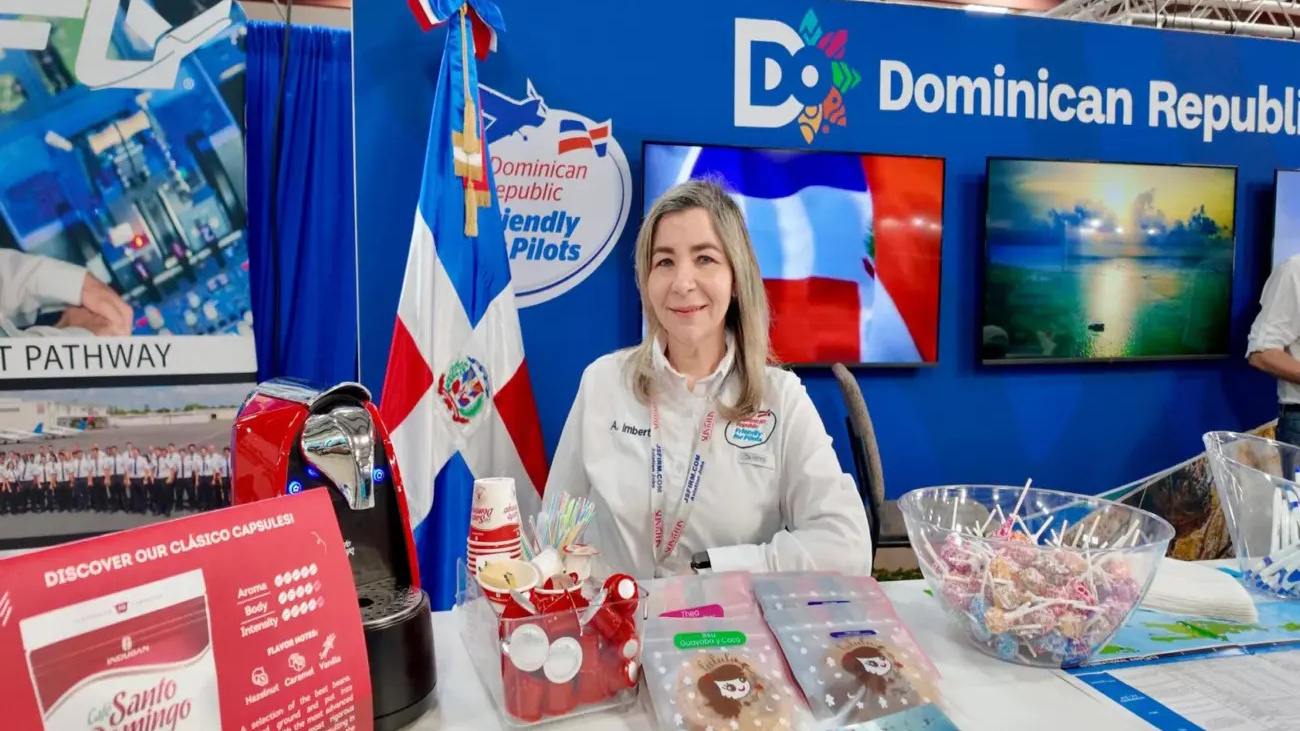
    SANTIAGO – The Dominican Republic’s Cibao 2026 Regional Book and Culture Fair, the annual cultural gathering running from April 19 to 26 at the Gran Teatro del Cibao, is blending literary celebration with hands-on STEM outreach this year, thanks to a new exhibit hosted by the Dominican Institute of Civil Aviation (IDAC). At the heart of IDAC’s display is a fully functional flight simulator, a piece of equipment rarely accessible to the general public, brought to the fair by the institute’s specialized training arm, the Higher Academy of Aeronautical Sciences (ASCA).

    Unlike the simulators reserved exclusively for aspiring commercial pilots in formal training programs, this setup is designed to welcome curious attendees of all ages and backgrounds. Visitors get the rare chance to step into a virtual cockpit, test out fundamental flight controls, and experience firsthand the day-to-day responsibilities that come with being a commercial or private pilot. Normally, the simulator supports core ASCA training objectives, from walking new students through basic flight procedures to helping seasoned learners get comfortable with aircraft instrument panels and emergency protocols. Now, it serves an entirely new purpose: demystifying aviation for people who have never had a connection to the industry.

    Beyond the interactive simulation experience, the ASCA team on-site is also sharing detailed information with guests about the academy’s full range of technical degree programs and professional continuing education courses. Organizers behind the initiative say their core goal is twofold: to make aeronautical knowledge more accessible to the general public during the week-long cultural event, and to ignite long-term interest in aviation careers, particularly among younger attendees and local students.

    For the fair, which traditionally centers literature, art, and cultural exchange, the addition of the aviation exhibit marks a unique expansion of its programming, bringing a technical, career-focused educational opportunity into a space that draws thousands of regional visitors annually.

  • My signature for the Homeland

    My signature for the Homeland

    Cuba’s top leader, Miguel Díaz-Canel Bermúdez — who holds the positions of First Secretary of the Central Committee of the Communist Party of Cuba and President of the Republic of Cuba — has formally launched the nationwide and global outreach campaign “My Signature for the Homeland”, marking the start of the movement with his own official signature.

    The new initiative grows directly out of a call Diaz-Canel issued during recent ceremonies marking the 65th anniversary of Cuba’s declaration of its revolution’s socialist character. At that event, the president urged both domestic Cuban organizations and global ally groups to work together to spread accurate, unfiltered information about Cuba to every region of the world, pushing back against widespread misinformation that has circulated about the island nation in international discourse.

    Beyond amplifying accurate narratives about Cuba, the campaign also formalizes the Declaration of the Revolutionary Government, which was released on the same 65th anniversary date. This document outlines the Cuban people’s longstanding commitment to building and maintaining peace, while also reaffirming their unwavering determination to protect the nation’s hard-won national sovereignty against external interference.

    The launch was shared publicly via President Díaz-Canel’s official X account, with accompanying screenshots documenting the historic moment of the campaign’s kickoff.

  • Crisis bij Canawaima: beschuldigingen van belangenverstrengeling en machtsstrijd

    Crisis bij Canawaima: beschuldigingen van belangenverstrengeling en machtsstrijd

    A simmering power struggle between executive leadership and the newly appointed supervisory board at state-owned Canawaima Management Company (CMC) is on the brink of a major escalation, with the firm’s terminal manager calling for urgent intervention from the national government. In a formal letter addressed to Raymond Landveld, Suriname’s Minister of Transport, Communication and Tourism, terminal manager Lesley Daniël has laid out detailed allegations against the company’s Raad van Commissarissen (RvC, Supervisory Board), accusing the body of systematically overstepping its mandated oversight role and encroaching on day-to-day operational management.

    Internal documents reviewed by local media outlet Starnieuws corroborate Daniël’s claims that the new RvC has been making executive decisions that fall outside the scope of its supervisory mandate. These unauthorized actions include signing off on major investment commitments, approving new staff hires, and signing off on day-to-day operational expenditures, according to the documentation.

    What has sharply intensified the conflict are emerging allegations of widespread conflicts of interest within the RvC, with particular focus falling on Richenel Vrieze, the board’s president commissioner. These claims have been independently confirmed by the trade union representing workers at the state-owned enterprise, led by Dayanand Dwarka. The union has confirmed it is aware of the problematic actions, but has not yet finalized a decision on what collective action it may take. The union’s governing body is scheduled to hold a deliberative vote on the matter this coming Monday.

    Per the reviewed documentation, multiple service contracts have been awarded to firms linked to Vrieze. The companies, which operate in procurement and repair services for CMC, are currently registered under Vrieze’s wife’s name, though public records show Vrieze was the direct owner of the businesses in prior years.

    Further financial irregularities have also been uncovered: procurement records show goods were originally purchased from a third-party firm at a lower cost, but inflated invoices were submitted for reimbursement through Vrieze-linked entities to secure higher payments. Additional documentation also reveals that apartments have been rented to one sitting RvC member from a building owned by the son of another RvC board member, creating another unreported conflict of interest.

    In response to the allegations, the RvC has pushed back against Daniël, pushing for his immediate removal from his position. Board members claim Daniël has failed to deliver sufficient performance for the state-owned firm, which has faced severe long-term financial shortfalls despite generating substantial annual revenue. The RvC accuses Daniël of drawing a high executive salary without meeting performance expectations for the role.

    The combination of toxic institutional power struggles and serious potential integrity violations has created extreme pressure on CMC’s operations and governance. In his formal request to the minister, Daniël is calling for immediate government intervention to address the perceived dysfunction and rule-breaking on the part of the current RvC, requesting targeted measures to correct the board’s overreach and resolve the alleged conflicts of interest.

  • Raquel Peña launches Cibao Regional Book Fair 2026 in Santiago

    Raquel Peña launches Cibao Regional Book Fair 2026 in Santiago

    SANTIAGO DE LOS CABALLEROS, DOMINICAN REPUBLIC – The Cibao 2026 Regional Book and Culture Fair, a landmark cultural initiative uniting 14 regional provinces under a celebration of literature, artistic expression, and local identity, officially opened its doors this week in an inauguration ceremony led by Vice President Raquel Peña.

    The opening event took place at the city’s iconic Gran Teatro del Cibao, drawing a roster of prominent cultural stakeholders including Dominican Republic Minister of Culture Roberto Ángel Salcedo and dozens of leading regional cultural leaders. Running through April 20 to 26, the 7-day celebration packs over 250 distinct public activities into its programming, ranging from new book launches and hands-on creative workshops to expert panel discussions and multi-disciplinary artistic performances.

    To maximize public access and showcase the cultural diversity of the region, event organizers have spread programming across multiple accessible, high-profile venues throughout Santiago de los Caballeros. These include the beloved Centro León cultural institution, the historic Ateneo Amantes de la Luz, and the landmark Monument to the Heroes of the Restoration, each providing a unique backdrop for different segments of the fair.

    A key structural feature of the 2026 fair is its 11 curated themed pavilions, alongside a daily spotlight schedule that dedicates each full day of the event to highlighting the unique cultural heritage of one of the 14 participating Cibao region provinces. This intentional design is intended to foster greater regional pride, strengthen cross-province connections, and advance cultural integration across the area.

    Organizing committees project that the fair will draw roughly 120,000 total attendees over its seven-day run, with the event expected to cement Santiago de los Caballeros’ reputation as one of the nation’s key dynamic cultural hubs for the duration of the celebration. The fair also marks a major step forward in expanding public access to literary and cultural programming across the Dominican Republic’s northern region.