作者: admin

  • Public Prosecutor’s Office arrests leader of gang involved in contract killings, kidnapping, and arms trafficking

    Public Prosecutor’s Office arrests leader of gang involved in contract killings, kidnapping, and arms trafficking

    In a major law enforcement breakthrough in the Dominican Republic’s National District, authorities captured one of the most-wanted alleged criminal kingpins Friday afternoon following a months-long investigation into a sprawling ring linked to brutal offences ranging from contract killings to extortion.

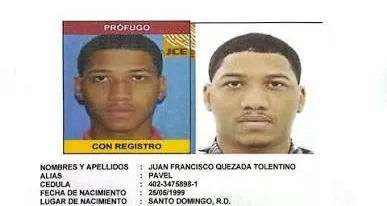
    Twenty-seven-year-old Juan Francisco Quezada Tolentino, known by his alias “Pavel”, was taken into custody without incident by law enforcement teams as he was present at a local shopping plaza in the National District. The operation was led by Andry De Los Santos, prosecutor and director of the Public Prosecutor’s Office Fugitive, Rebel and Convict Capture Unit (Ucaprec), with additional support from specialized personnel of the Public Ministry.

    Two pre-issued arrest warrants, numbered 2026-AJ0020297 and 2026-AJ0038079, were executed during the operation. The warrants were approved by Magistrate Rigoberto Sena Ferreras, head judge of the Eighth Court of Instruction of the National District, following a formal request from the Public Ministry, clearing the way for Quezada Tolentino’s apprehension.

    Investigative records compiled by the Public Prosecutor’s Office detail a pattern of extreme violence perpetrated by Quezada Tolentino and his still-at-large co-conspirators against victims of their criminal enterprise. Two high-profile fatal attacks tied to the ring have been a core focus of the ongoing probe.

    The first of these documented attacks took place on May 10, 2026 at roughly 12:16 p.m. in the La Esperanza sector of the National District’s Los Ríos neighborhood. According to witness accounts, a group of mostly hooded attackers intercepted a group of civilians before opening fire without warning, acting with clear intent to kill. The second attack left one man dead on March 5, 2026 around 7:00 p.m. The victim, Luis Alberto Méndez de la Cruz, also known as “Nano”, was shot dead at point-blank range by armed members of the network while visiting a friend at a residence on República de Colombia Avenue, located in the same La Esperanza neighborhood. Autopsy reports confirmed Méndez de la Cruz died from multiple gunshot wounds to the chest.

    All ongoing inquiries into the network are being overseen by the National District Public Prosecutor’s Office through its Department of Crimes and Offenses Against Persons. Quezada Tolentino and his co-defendants face a raft of criminal charges under Dominican law, including violations of articles 265, 266, 309, 295, 296, and 304 of the Dominican Penal Code, alongside breaches of articles 66, 67, and 70 of Law No. 631-16 regulating weapons, ammunition and related materials. The charges cover the full scope of the group’s alleged activity, from organized criminal conspiracy to illegal arms trafficking and murder.

    Following his arrest, Quezada Tolentino was transferred to the Ciudad Nueva Detention and Care Center (Caplip-2). In the coming hours, he is scheduled to appear before the Judicial Office of Permanent Attention Services of the National District for a formal court hearing, where a judge will consider the imposition of a coercive pretrial measure.


  • United will connect Houston with Santo Domingo during the winter season

    United will connect Houston with Santo Domingo during the winter season

    United Airlines has unveiled plans to expand its route footprint across Latin America and the Caribbean with the launch of a new seasonal air route linking Houston, Texas, to Santo Domingo, the capital of the Dominican Republic. The new service is scheduled to launch during the 2026/27 Northern Hemisphere winter season, a timeframe that consistently sees surges in travel demand driven by year-end holiday tourism, family visits and friend reunions.

    Operations will run from December 18, 2026, through January 3, 2027, with three weekly flights all operated using Boeing 737 MAX 8 aircraft. Under the published schedule, outbound flights will depart from George Bush Intercontinental Airport in Houston during the afternoon, arriving at the Santo Domingo destination after nightfall. For return trips, flights will take off from the Dominican capital in the early morning, a timing arrangement crafted to give passengers convenient access to fast connections through United’s Houston hub to dozens of domestic and international destinations across the carrier’s global network.

    This carefully tailored schedule is designed to deliver maximum travel flexibility for passengers during one of the busiest annual travel windows on the global aviation calendar. As a temporary seasonal addition to United’s route portfolio, the new link directly addresses the steadily rising travel demand between the United States and the Caribbean, a region that has steadily strengthened its standing as one of the top tourist markets across the Americas.

    Industry analysts note that Santo Domingo holds unique strategic value for major air carriers, drawing consistent passenger volumes across leisure tourism, family travel and business segments. For its part, Houston remains one of United Airlines’ most critical connecting hubs, enabling seamless travel connectivity to and from hundreds of cities across North America, Europe and Asia. The expansion marks the latest step in United’s ongoing push to beef up its presence in high-demand Latin American and Caribbean markets, aligning with broader industry trends of growing air travel between the U.S. and popular Caribbean holiday destinations.

  • The tourism boom is also driving up informal businesses in the Dominican Republic

    The tourism boom is also driving up informal businesses in the Dominican Republic

    The Dominican Republic’s booming tourism sector has emerged as a key catalyst for grassroots entrepreneurship, drawing thousands of micro, small, and medium-sized enterprises (MSMEs) eager to tap into the industry’s growing momentum and untapped economic potential. But a new national survey has uncovered a major structural barrier holding this vibrant ecosystem back: nearly half of all tourism-linked MSMEs operate outside formal regulatory frameworks, leaving them less competitive and disproportionately exposed to economic shocks.

    The 2025 Sectoral Survey of Tourism (Ensetur 2025), conducted by the Dominican Republic’s National Institute of Migration (INM RD), analyzed MSME operations across three of the country’s highest-profile tourist hubs: Punta Cana-Macao, Barahona-Pedernales, and Puerto Plata. Of the roughly 642 MSMEs included in the study, 42.2% are classified as informal, meaning they lack official registration and compliance with local business regulations.

    The data confirms a clear trend across the sector: informality is heavily concentrated among the smallest business operations. The survey finds that 71.6% of all informal tourism MSMEs are micro-enterprises employing five or fewer workers, a share that is 22.5 percentage points higher than the rate of micro-enterprises among formal, regulated businesses in the sector. This pattern aligns with a broader industry dynamic: larger tourism operations are far more likely to comply with national regulations, while smaller, newer ventures disproportionately remain in the informal economy.

    Most informal MSMEs in the sector operate in the food and beverage segment, accounting for 76.4% of all informal businesses. That is 17.6 percentage points higher than the share of formal, registered tourism MSMEs that work in food and beverage. Geographically, half of all surveyed informal MSMEs (52%) are located in the top tourist hub of Punta Cana-Macao, 41% are based in Puerto Plata, and just 7% operate across Barahona and Pedernales, according to reporting from local outlet Diario Libre.

    The INM RD study emphasizes that informal activity in tourism is not a new issue, but a deeply entrenched characteristic of the sector that is closely tied to migrant labor integration. Most informal tourism roles offer low social protection, high worker turnover, and little regulatory oversight, which amplifies the socioeconomic vulnerability of migrant workers who make up a large share of this labor force. At the same time, the research acknowledges that informal micro-enterprises fill a critical economic role for marginalized communities: they are a key source of household income for vulnerable groups and a primary pathway for migrant workers to enter the Dominican labor market, thanks to their small operating scale, flexible organizational structures, and reliance on labor-intensive work.

    Despite these benefits, the concentration of unregulated micro-enterprises in major tourist centers creates significant policy challenges for national authorities. The informal sector’s high demand for flexible, seasonal, low-skilled labor is overwhelmingly filled by migrant workers, which complicates efforts to formalize employment, enforce consistent labor standards, and manage migration flows effectively.

    A breakdown of employment data underscores the gap between formal and informal operations. Among properly registered MSMEs, companies with 20 or more employees account for 61.5% of all jobs generated by the sector. By contrast, more than 85% of all informal tourism employment is concentrated in businesses with fewer than 10 workers. When sorted by occupation, informality rates exceed formal employment rates across multiple key tourism roles: 19.7% of all kitchen staff work in informal positions, followed by 15.6% of cleaning staff, 13% of general service workers, and 12.2% of management roles, per the survey.

    INM RD officials noted that the study’s scope was limited to MSMEs, as the research team was unable to access operational data from the country’s large, multinational hotel chains.

  • The country has recorded 14 deaths from leptospirosis so far this year.

    The country has recorded 14 deaths from leptospirosis so far this year.

    In the latest epidemiological update from the Dominican Republic’s Ministry of Public Health, the country has recorded a steady uptick in leptospirosis cases through the first 23 weeks of 2026, alongside new data on a range of other infectious and chronic health conditions, and public outreach to mark World Vitiligo Day.

    As of the 23rd epidemiological week, the Caribbean nation has logged 14 total deaths from leptospirosis, a zoonotic bacterial disease spread through contact with urine from infected animals, and 179 confirmed cases across the country. The most recent reporting week alone added three new fatalities and four new confirmed infections, distributed across the National District (two cases), Monte Plata (one), and Santo Domingo (one). Broken down by region, the highest case counts are concentrated in Santo Domingo with 21 confirmed infections, followed by Espaillat with 13 and Puerto Plata with 4.

    Public health officials attribute the growing number of leptospirosis exposures to above-average rainfall and widespread flooding across the country this season. These wet conditions create ideal environments for the Leptospira bacteria carried by rodents, increasing public exposure risk through contact with stagnant floodwater or contaminated surfaces. The disease typically presents symptoms including high fever, intense headache, muscle pain, chills, redness of the eyes, and gastrointestinal distress such as vomiting or diarrhea, with symptoms emerging between five and 14 days after initial exposure to contaminated material.

    In response to the rising case load, the Ministry of Public Health confirmed it has ramped up epidemiological surveillance protocols, including active outreach to identify febrile cases early, timely collection of patient samples for testing, and consistent reporting to national public health monitoring systems.

    Beyond leptospirosis, the ministry’s latest epidemiological bulletin includes updates on several other communicable diseases monitored across the country. Between June 7 and June 13, three new confirmed cases of dengue were reported across La Altagracia, San Juan, and La Romana provinces, bringing the national total to 125 as of the end of last week. For malaria, the cumulative 2026 case count stands at 97, with no new infections confirmed in the most recent reporting week. One new case of tetanus was recorded in Dajabón Province this week, pushing the national total to 13 cases for the year across non-infant age groups. The bulletin also noted seven new detections of SARS-CoV-2, the virus that causes COVID-19, in week 23.

    Tracking respiratory virus circulation through the first 23 weeks of 2026, public health authorities identified a range of active pathogens including SARS-CoV-2, Influenza A(H3N2), Influenza A(H1N1)pdm09, Influenza B, adenovirus, human metapneumovirus, and parainfluenza virus. Early in the year, detections were dominated by unsubtyped Influenza A, Influenza A(H3N2), and Influenza B, but starting in week 19, the country has seen a gradual increase in SARS-CoV-2 detections. The report also shared mortality data, noting 57 maternal deaths and 697 infant deaths in the first six months of 2026.

    Alongside its infectious disease update, the ministry marked June 25 as World Vitiligo Day, launching public outreach to raise awareness of this chronic autoimmune skin condition. Vitiligo develops when the body’s immune system mistakenly destroys melanocytes, the cells that produce melanin, the pigment responsible for color in the skin, eyes, and hair.

    International health organizations estimate that between 0.5% and 2% of the global population lives with vitiligo. Dominican Public Health Minister Víctor Atallah emphasized that while there is no cure for the condition, there are effective treatment options available to slow the spread of depigmented patches on the body and encourage repigmentation in affected areas.

    Health experts explain that the pigment destruction caused by vitiligo can range from selective and partial to complete, and can impact both the skin and mucous membranes. While the exact root cause is still under investigation, it is widely classified as a systemic autoimmune process linked to genetic predisposition. The condition presents as progressive white patches on the skin, which can appear either suddenly or gradually. Critically, vitiligo does not change the underlying structure of the skin and is not contagious, meaning it cannot spread from person to person through contact.

    Vitiligo most commonly affects symmetrical areas of the body, including the face, elbows, knees, backs of the hands, feet, and genitals. The condition is particularly visible in people with darker skin tones, due to the sharp contrast between depigmented white patches and naturally darker surrounding skin.

  • Shock and solidarity in the eastern hotel sector after the Viva fire

    Shock and solidarity in the eastern hotel sector after the Viva fire

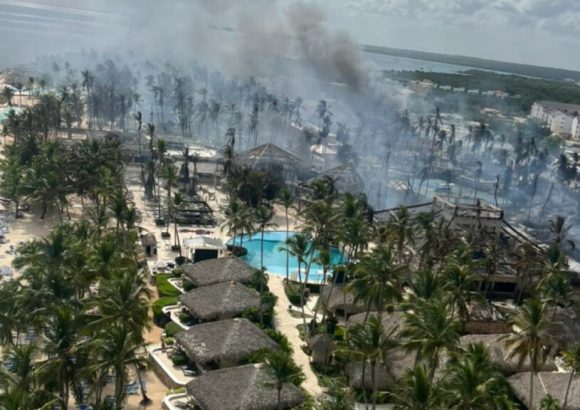
    A devastating fire that broke out last Friday, June 19, at the Viva Dominicus Beach by Wyndham hotel in Bayahibe, La Romana, has sent ripples of grief through the Dominican Republic’s key tourism industry, according to the leader of the region’s top hospitality trade group. Ernesto Veloz, president of the Association of Hotels and Tourism Projects of the Eastern Zone (Asoleste), described the incident as a major blow to the sector, saying the widespread images of the blaze and the disaster itself have left the local tourism community reeling.

    In the immediate aftermath of the emergency, coordinated cross-industry support swung into action to contain the fire and support affected visitors. Veloz confirmed that firefighting teams from the Puntacana Group were quickly deployed to the scene, with all stakeholders working to provide whatever aid possible while adhering strictly to instructions from official emergency authorities. Hospitality leaders have prioritized supporting the tourists caught up in the disaster, implementing every feasible measure to reduce the psychological trauma experienced by those who were staying at the hotel during the fire.

    While most guests escaped the incident without serious harm, Veloz confirmed the tragedy has claimed one life, a loss that the entire tourism community deeply regrets. Despite the pain and damage caused by the fire, Asoleste has expressed unwavering confidence in the leadership and team of Viva Wyndham Resorts. Veloz highlighted that Rafael “Papo” Blanco Canto, executive vice president of the resort brand, has remained hands-on and fully responsible throughout the response effort, consistent with his track record of crisis leadership.

    The entire eastern Dominican tourism sector has united behind the affected hotel and its team, Veloz noted. “We are very saddened in the eastern region and throughout the whole sector, but we are confident this hotel chain will emerge stronger from this difficult process, and they have our full backing,” he emphasized, adding that the industry-wide solidarity will support the recovery effort in the coming months.

  • An earthquake was recorded in the Dominican Republic.

    An earthquake was recorded in the Dominican Republic.

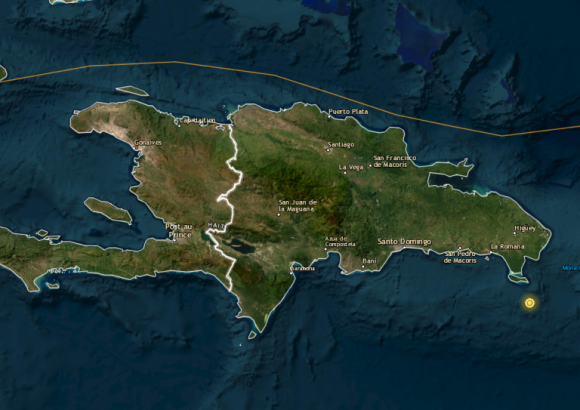
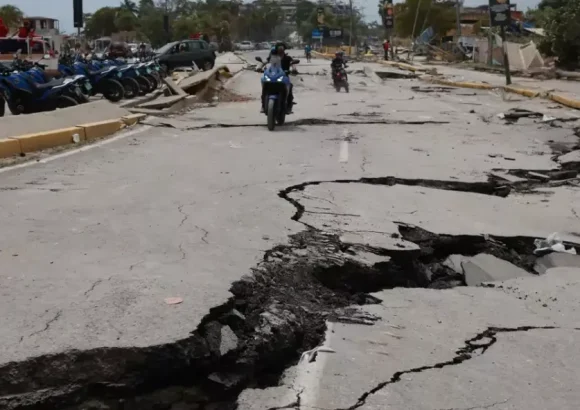
    On the afternoon of Friday, June 26, a moderate-strength earthquake hit off the southern coast of the Dominican Republic, triggering widespread public panic and mandatory evacuations across multiple regions of the Caribbean nation.

    Data published by multiple global earthquake monitoring platforms confirms the tremor registered a magnitude of 5 on the Richter scale. Its epicenter was located 52 kilometers south of Boca de Yuma, a municipal district situated in the eastern province of La Altagracia.

    Shaking from the quake was strong enough to be detected and felt by residents in several provinces across the country, sending people rushing for safety in public and private spaces alike. In the country’s National District, dozens of witnesses confirmed to local leading newspaper Listín Diario that a range of organizations had cleared their buildings as a preemptive safety measure.

    Precautionary evacuations were not limited to office facilities: public squares, government institutions and private residential buildings also emptied out as people followed emergency safety protocols. Notable sites that evacuated included the Dominican Ministry of Public Administration, the Council of Economic Advisors to the country’s executive branch, and the Acropolis commercial center, among other high-occupancy locations.

  • Task Force Authorities report the lowest cumulative homicide rate since 2023

    Task Force Authorities report the lowest cumulative homicide rate since 2023

    Citizen security efforts led by a national inter-agency Joint Task Force have delivered significant progress, with new official data showing the lowest cumulative homicide rate in three years recorded by mid-June 2026. As of June 19, the accumulated homicide rate across the country stands at 6.98 per 100,000 inhabitants — a figure that marks the lowest point since 2023, according to the task force’s official 153rd weekly crime statistics report. This milestone underscores the growing effectiveness of the national strategy that combines proactive crime prevention, targeted investigative work, and aggressive prosecution of criminal offenders.

    The monthly homicide rate for June 2026 is recorded at 4.73 per 100,000 inhabitants, extending a consistent downward trajectory that has held steady for multiple reporting periods. Homicide rate is widely recognized as one of the most critical benchmarks for measuring the overall safety of a community and the success of public security policy, making this sustained reduction a notable win for national security stakeholders.

    Breakdown data by administrative territory reveals just how widespread this progress has been. Out of the 34 territorial divisions that make up the country, 29 now register single-digit homicide rates per 100,000 inhabitants. Only five territories report double-digit rates, which translates to 85.3 percent of the entire national territory holding a homicide incidence of 9.99 or fewer per 100,000 people.

    Security officials attribute these positive results to close, ongoing coordination between all agencies participating in the Joint Task Force. The collaborative body brings together the National Police, the Armed Forces, the Public Prosecutor’s Office, and multiple other state-run security institutions to implement a layered approach to crime reduction. Tactics deployed include targeted enforcement operations against high-risk criminal networks, advanced intelligence gathering to disrupt planned criminal activity, regular preventive patrols in communities, and constant real-time monitoring of crime trends to adjust strategies as needed.

  • Can the tectonic plate near Venezuela cause earthquakes in the Dominican Republic?

    Can the tectonic plate near Venezuela cause earthquakes in the Dominican Republic?

    On the evening of March 24, Venezuela was hit by two powerful earthquakes within a short window, registering magnitudes 7.5 and 7.2 respectively on the Richter scale. As of the latest updates, the catastrophic seismic event has claimed more than 900 lives, left over 3,000 people injured, and left more than 50,000 residents unaccounted for across the affected regions.

    The tremors, which struck just after 6:00 p.m. local time, were not limited to Venezuelan territory—shaking was clearly felt as far away as the Dominican Republic, prompting urgent questions about why the seismic activity extended across such a wide distance in the Caribbean. The epicenters of the two quakes were located near Morón, a city in Venezuela’s Carabobo state, roughly 160 to 200 kilometers from the capital Caracas. Minutes after the ground stopped shaking, local Venezuelan newspaper Hoy reached out to prominent geologist Osiris de León to break down the science behind the cross-border tremors.

    De León explained that the Caribbean tectonic plate, a mostly oceanic tectonic boundary, sits between Venezuela and the Dominican Republic and extends across multiple neighboring nations in the Caribbean region. This shared geological framework means it is entirely expected for seismic activity originating in Venezuela to be felt on Dominican soil. “In terms of seismic dynamics, the 900-kilometer gap between the two countries is not nearly large enough to block seismic waves,” de León noted. Compression waves, one of the primary forms of seismic energy generated by earthquakes, can travel at speeds up to 6,000 meters per second, allowing them to propagate across most of the Caribbean basin and trigger noticeable shaking far from the earthquake’s epicenter. While de León stressed that cross-border shaking of this magnitude is “not normal, not frequent, it’s not common,” he confirmed that it remains a geologically possible outcome of large seismic events in the region.

    The root cause of Venezuela’s latest major earthquakes lies in the long-standing tectonic activity along the boundary where the Caribbean Plate and the South American Plate meet. Off the northern coast of Venezuela, these two massive tectonic structures constantly grind and slide past one another, building up and releasing stress that generates sustained seismic activity along a strip stretching from Venezuela’s border with Colombia all the way to its central Caribbean coastline.

    As rescue and response efforts get underway, the International Organization for Migration (IOM), a United Nations agency, has released an early impact assessment. The IOM estimates that as many as 6.76 million people across Venezuela could be affected by the destruction caused by the two quakes, with roughly two million of those people residing in the capital city of Caracas.

  • Government Meets Church Officials From Guatemala to Discuss Community Investment

    Government Meets Church Officials From Guatemala to Discuss Community Investment

    In a diplomatic and collaborative meeting held this week on Belizean soil, senior government representatives from Belize’s Ministry of Constitution and Religious Affairs convened with two humanitarian specialists from The Church of Jesus Christ of Latter-day Saints, based in Guatemala, to map out potential partnership opportunities for community-focused investment across the country.

    The visiting church specialists, who oversee regional humanitarian programming out of Guatemala, already have an established local footprint in Belize: the church currently operates multiple local congregations and ongoing small-scale community outreach initiatives across the nation. During their multi-day visit, the delegation traveled to Southern Regional Hospital, one of the main public healthcare facilities serving southern Belize, where they held in-depth discussions with hospital leadership to identify unmet needs and priority areas for upgrading local health services.

    Beyond healthcare, the two sides also held productive talks with Belize’s National Emergency Management Organisation (NEMO) to explore how faith-based organizations like the Latter-day Saints can contribute to reinforcing the country’s disaster preparedness infrastructure and boosting local community resilience to climate-related and natural hazards.

    While the round of discussions did not result in immediate announcements of finalized projects or binding financial commitments, Belize’s Ministry of Constitution and Religious Affairs emphasized that the exploratory talks represent a critical foundational step toward building long-term strategic cooperation. In an official press statement released following the meeting, the ministry reaffirmed its ongoing commitment to fostering mutually beneficial partnerships between the national government and mission-driven faith-based groups that are dedicated to advancing inclusive, sustainable development across Belize.

    Leading the government delegation were Dr. Louis Zabaneh, head of the Ministry of Constitution and Religious Affairs, and Ginéé Neal, the ministry’s director of Constitution and Religious Affairs, both of whom framed the meeting as an important opening for expanding collaborative social impact work in the country.

  • Cultuur en rechtsstaat: bescherming van kinderen staat voorop

    Cultuur en rechtsstaat: bescherming van kinderen staat voorop

    A high-profile criminal case involving an adult man and a 14-year-old pregnant girl has ignited fierce public debate across Suriname, shining a harsh spotlight on the long-unresolved tension between longstanding cultural customs and the country’s formal legal framework.

    According to local law enforcement reports, the romantic and sexual relationship between the man, who is over 30 years old, began when the girl was just 13. Both the man and the girl’s mother have been taken into custody in connection with the case, prompting urgent questions about how Suriname should balance cultural tradition with legal obligations to protect vulnerable minors.

    Poetini Mielando Atompai, a Surinamese parliamentarian and legal scholar, has laid out a clear legal perspective to guide the ongoing public discussion, arguing that existing national law must take precedence in all matters involving child safety. Atompai emphasized that Suriname’s Penal Code includes explicit, unambiguous provisions designed to shield minors from sexual exploitation and abuse.

    Under Surinamese law, any sexual activity with a child under the age of 14 is a criminal offense, regardless of whether the child or their guardians gave consent. Even for adolescents between 14 and 16, sexual relations can still be prosecuted, as the law recognizes that minors lack the full capacity to give informed, meaningful consent to such interactions.

    Atompai also addressed public confusion over why the 14-year-old’s mother was arrested, explaining that parental inaction or facilitation of an improper relationship can lead to charges as an accomplice. Under Surinamese law, all parents hold a legal duty of care to protect the well-being of their minor children, and failure to uphold that duty can carry criminal consequences.

    Beyond national legislation, Atompai noted that Suriname is bound by international human rights treaties, most notably the United Nations Convention on the Rights of the Child (UNCRC). This landmark agreement requires signatory states to take all necessary measures to protect children from sexual exploitation, abuse, and violence, and mandates that the best interests of the child must be the primary consideration in all actions affecting children.

    Suriname is a culturally diverse nation, with deeply rooted traditional governance structures within Indigenous and Maroon communities, but Atompai stressed that this diversity does not grant cultural practices precedence over national law. The Surinamese Constitution explicitly establishes the country as a democratic rule of law, where all citizens are equal before the law. While customary law is officially recognized in Suriname, it loses legal validity when it conflicts with national legislation or fundamental human rights, including the rights of children.

    Atompai was careful to note that the detention of the two suspects is only a preliminary step in the criminal justice process, and does not equate to a finding of guilt. That final determination rests exclusively with the courts, which will adjudicate the case based on Surinamese statutory law, not cultural tradition.

    Calling for respectful, substantive public dialogue, Atompai pushed back against framing the debate as a conflict between culture and the rule of law, arguing that the core issue at hand is the protection of children. “Protecting children is not a Western concept, nor is it an attack on any culture,” he concluded. “It is a universal principle enshrined in our Constitution, our international treaty obligations, and our Penal Code. When cultural practice clashes with the protection of a child, the law and the best interests of the child must be decisive.”