
For artist Kirkland Falconer, professionally known as Kirky D, philanthropy has long been woven into his identity – a habit of caring for community that has traveled with him across continents. Long before he relocated to the United States several years ago, Kirky D built a reputation for lifting up neighbors in his hometown of Waterhouse, Jamaica. Now, rooted in Connecticut, he has carried that legacy of giving forward by creating intentional platforms that nurture emerging local talent while supporting causes close to his home.
作者: admin
-

Peter Price launches Gregory Isaacs biography for lovers of the reggae icon
On April 13, at the Triple T restaurant located in Jamaica’s St Andrew parish, educator and first-time author Peter Price found himself at the center of warm attention from a crowd of fans who adored the legendary reggae artist Gregory Isaacs. The occasion marked the Jamaican launch of Price’s deeply researched biography of the iconic “Cool Ruler,” a project that grew out of a years-long dream to introduce Isaacs’ life and artistry to new generations of listeners.
Titled *The Cool Ruler: The Incredible Life Story of Gregory Isaacs*, the 388-page book marks Price’s debut as an author. It carries the official endorsement of the Gregory Isaacs Foundation, an organization run by the late Grammy-nominated singer’s wife, June Isaacs, who was in attendance at the launch event to support the project.
In an interview with Observer Online, Price outlined his core vision for the biography: to resonate with long-time reggae and lovers rock fans who have long admired Isaacs’ work, while opening the door for younger audiences to discover the depth of his talent, his vast discography of beloved tracks, and his unmatched skill as both a songwriter and performer. Price, a native of Bamboo in St Ann and a graduate of Kingston’s Mico Teachers College, currently teaches English Language and Literature at Kingston College. He invested two full years into researching and writing the comprehensive biography, which first held its official launch in the United Kingdom one year prior, in May 2023.
Reflecting on the journey to publication at the Jamaican launch, Price shared his excitement: “I feel elated and fulfilled; for the simple fact that it was a dream in the making for many years and now it has become a relevant reality. My research into this literary project was extensive, but quite enjoyable.” A year before the Jamaican launch, Price joined a delegation that traveled to the UK for the six-show run of *The Cool Ruler: The Musical*, a stage production that cast Terrence Wallen in the role of the iconic singer, who passed away in London in October 2010 at the age of 60.
Following the narrative structure of the stage production, Price’s biography pulls no punches in covering the full arc of Isaacs’ life. It celebrates his many career triumphs, including the creation of globally adored hit tracks such as *Night Nurse* and *Soon Forward*, while honestly documenting his well-documented, years-long struggle with cocaine addiction.
June Isaacs, who helped bring the project to fruition and attended the St Andrew launch, praised Price’s work for capturing the full complexity of her husband’s legacy. “It’s incredibly important that Gregory’s life is documented. Legacy matters, if we don’t tell our own stories, someone else will, or worse, they get forgotten. This book is a truthful account of his life: the victories, the struggles, and the lessons that shaped him,” she told reporters at the event.
-

Tommy Cowan celebrates 80th birthday
At 80 years old, one of Jamaica’s most iconic music industry figures, Tommy Cowan, has celebrated his milestone birthday surrounded by loved ones and fellow industry peers at a warm, intimate gathering in North Miami. The celebration unfolded on April 6 at Circle House, the United States headquarters of legendary reggae band Inner Circle — a group Cowan has guided for decades. Joining the entertainment veteran for the occasion was his wife, acclaimed Jamaican singer Carlene Davis, four of his children, two grandchildren, and extended family including nieces, nephews and cousins.
Reflecting on the event in an interview with Observer Online, Cowan described the gathering as a heartfelt, unplanned outpouring of affection. “It was just amazing, I had a wonderful time. It was spontaneous, it was natural, just pure love,” he said. “The Inner Circle family, the Lewis brothers, Ian and Roger, Abebe Lewis (Ian’s son), (keyboardist) Touter Harvey, it’s something that is personal.”
The guest list also included a mix of music industry legends and local and diplomatic dignitaries: former Third World drummer Willie Stewart, Jamaica’s consul general to Miami Oliver Mair, Miramar vice mayor Eddy Edwards, broadcaster and Lauderhill commissioner John “John T” Hodgson, and entertainment attorney Lloyd Stanbury all turned out to honor Cowan’s decades of contributions to global music.
Looking back on a life rich with personal and professional milestones, Cowan highlighted two high points of his personal journey: his 42-year marriage to Davis, and his conversion to Christianity roughly three decades ago. Professionally, two landmark events stand out as his defining achievements: organizing the historic 1978 One Love Peace Concert in Kingston, Jamaica, which brought together feuding political leaders on stage in a moment of unity, and producing Bob Marley’s iconic 1979 independence celebration concert in Harare, Zimbabwe, shortly after the African nation gained sovereignty.
Born in St Elizabeth, Jamaica, Cowan is the ninth of 11 children born to Pastor Thomas Cowan Senior and his wife. His entry into the music industry came in the 1960s as a member of The Jamaicans, the group that won Jamaica’s 1967 Festival Song Contest with the beloved hit *Ba Ba Boom*. Over the decades that followed, his career stretched across every corner of the reggae music industry, building a legacy that has shaped the genre’s global reach.
Among his many career credits are producing Eric Donaldson’s reggae classic *Cherry Oh Baby*, which took home the 1972 Festival Song Contest trophy. He also held key marketing executive roles at major Jamaican music labels Dynamic Sounds and Tuff Gong International, and guided the careers of some of reggae’s biggest names, including Inner Circle, Junior Tucker, Israel Vibration and the legendary Dennis Brown. Beyond his work as a manager and producer, Cowan founded two influential industry enterprises: Talent Corporation and the Christian music label Glory Music, cementing his status as one of the most foundational figures in modern Jamaican music.
-

Political rally in Antigua ends abruptly after gunfire during Masicka’s performance
A pre-general election political gathering hosted by Antigua and Barbuda’s ruling administration came to an unexpected and chaotic end Saturday night in St John’s, when multiple gunshots rang out across the venue, sending thousands of attendees scrambling for the exits.
The incident unfolded mid-performance from popular Jamaican dancehall recording artist Masicka, who was three songs into his set when the shots were heard, according to an anonymous on-site witness who spoke to media. Another well-known reggae performer, Sizzla, had already completed his performance earlier in the evening, and was not on stage when the disturbance broke out.
The rally was organized by the Antigua and Barbuda Labour Party (ABLP), the incumbent governing party led by sitting Prime Minister Gaston Browne. The witness estimated that roughly 5,000 supporters and guests had gathered for the event, making it one of the larger campaign gatherings ahead of the upcoming national vote.
User-posted videos circulating widely on social media platform Facebook capture the chaotic scene: as the sound of multiple gunshots rings out over the performance, attendees can be seen turning abruptly, abandoning their belongings and rushing toward the venue exits in a frantic mass evacuation. No official reports of injuries or casualties had been released as of Sunday morning.
The disruption comes less than two months out from Antigua and Barbuda’s scheduled April 30 general election, a contest that is widely expected to be a tight race between the ruling ABLP and its primary rival, the opposition United Progressive Party (UPP). Political analysts have framed the 2024 election as a critical test of the ABLP’s incumbent popularity, with both parties ramping up campaign events across the island nation to mobilize voters ahead of polling day.
-

Davina x JLUXLABEL
When fashion label JLUXLABEL set out to create its latest Guest of Honour campaign, the creative team never expected the partnership that would reaffirm their brand’s core mission. After Jamaican model Davina Bennett stole the spotlight as the face of the collection, fashion outlet Style Observer sat down exclusively with JLUXLABEL co-founder Teresa Jaide to unpack the story behind the match made in fashion heaven.
Jaide revealed that the collaboration began with a digital casting call, where Bennett immediately caught the brand’s eye. More than just her striking visual presence, Bennett’s personal journey and public persona aligned so perfectly with JLUXLABEL’s identity that the decision to reach out felt less like a business choice and more like an instinctive pull. Once the team connected with Bennett, every step of the partnership flowed naturally, with no friction or misalignment from the very first meeting.
Looking back on the campaign shoot, Jaide described the experience as one of the most memorable collaborations the brand has ever undertaken. From the moment Bennett stepped onto the Los Angeles set, she brought a warm, down-to-earth energy that put the entire team at ease — kind, fully present, and unapologetically genuine. Yet in front of the camera, she commanded attention with a powerful, effortless charisma that elevated every look she wore. She came eager to collaborate, excited to contribute creative input, and already a genuine fan of the brand, turning a routine shoot day into a deeply meaningful experience for the whole team.
What made the partnership even more special for JLUXLABEL is that this campaign marked Bennett’s return to professional photoshoots after an extended break, and she specifically chose to work with the label for her comeback. For her, she traveled across the Caribbean from Jamaica to Los Angeles to shoot the collection, a gesture that Jaide says the team will not forget. For the co-founder, the entire collaboration felt like a full-circle moment, and the whole brand remains grateful to have been part of this new chapter of Bennett’s career.
The campaign features Bennett in a range of the label’s latest satin designs, from the soft Peach Spotlight Draped Top paired with the elegant Champagne Tradition Satin Maxi Skirt to the showstopping Berry Moments Draped Mini dress. She also models the flowy Ivory Print Audrey Maxi and the bold Blue Olivia One Shoulder Maxi, with fellow model Wendel Müller joining her for select looks in complementary pieces from the collection. All campaign imagery is courtesy of Bennett.
When asked about the brand’s growing, passionate fanbase in Jamaica, Jaide said the support means more than the team could put into words. Seeing the brand resonate so deeply with consumers in Bennett’s home country is a uniquely special feeling, she explained, because it proves that JLUXLABEL’s designs are more than just clothing — they become a tool for people to express their unique identities. That cross-border connection is exactly what drives the brand every day, she added, building a global community of fashion lovers that transcends geographic distance.
-

Scorpions, Pride lock horns in decisive regional four-day match
The final and most decisive match of the three-match first-class bilateral series between Jamaica Scorpions and Barbados Pride kicked off at 10 a.m. local time on Wednesday at Kingston’s iconic Sabina Park, with everything still to play for a spot in the 2026 West Indies Championship final.
Heading into the do-or-die encounter, Jamaica Scorpions hold a narrow edge on the series points table, sitting at 29.6 points after claiming victory in the opening clash at Chedwin Park two weeks prior. Barbados Pride, currently fourth in the overall six-team standings with 19.8 points, clawed back momentum last round when they dominated a high-scoring drawn match at the same Sabina Park venue, keeping their knockout stage hopes alive.
The stakes could not be clearer for both sides. Fourth-placed Barbados Pride have no room for error: an outright victory, paired with maximum bonus points, is the only path that will guarantee their progression to the championship’s final stages. For third-placed Jamaica Scorpions, even avoiding defeat while accumulating as many bonus points as possible would lock in their spot, with an outright win securing their progression outright.
Two other simultaneous championship matches are also underway at separate venues in Antigua: the Leeward Islands Hurricanes host Trinidad and Tobago Red Force, while the Windward Islands Volcanoes go head-to-head with defending champions Guyana Harpy Eagles.
The current overall standings lay out the context for the race to the knockout rounds: Defending champions Guyana Harpy Eagles sit comfortably atop the table with 43.2 points, having notched two dominant wins over the Windward Islands Volcanoes, who prop up the six-team table on just 7.6 points. Trinidad and Tobago Red Force hold second place with 37 points, having secured one win and one draw against Leeward Islands Hurricanes – the second match was called off early due to an unsafe playing pitch, leaving the fifth-placed Hurricanes on 10.8 points.
Under the West Indies Championship’s knockout structure, the side that finishes top of the table after the conclusion of all bilateral series will advance directly to the grand final. Meanwhile, the second and third-ranked teams will compete in a play-off match for the remaining spot in the championship decider. To keep the table-topping side match-ready during the play-off period, the leading team will contest a warm-up first-class fixture against the West Indies Academy.
In the opening two matches of the Jamaica-Barbados series, batters have held a clear advantage on the slow, docile pitches prepared at both venues, with both sides posting massive first-innings totals. In the opening match at Chedwin Park, both teams crossed the 300-run mark in both of their respective innings. Batting conditions were even more batsman-friendly at Sabina Park for the second round: Jamaica Scorpions posted 457 all out, before Barbados Pride declared at 626 for 8. Rain cut short play, and the match ended in a draw with the hosts moving to 90 for 4 at the close.
Jamaica Scorpions head coach Robert Haynes acknowledged his side’s upper hand going into the decider, telling reporters from the Jamaica Observer: “We are still leading…so we have to just make sure we get more points than Barbados.” Haynes pointed out two key areas his side needs to improve on this round: his bowling attack lacked penetration in the last match, and the middle-order batting failed to deliver big scores despite having the talent to post centuries. Left-handed opening pair Kirk McKenzie – who has notched two centuries in the series so far – and John Campbell, who has one century and a 96 to his name, have been Scorpions’ standout batters through the first two encounters.
“The middle order hasn’t really got big runs and that’s something we have to look at because we have guys who can make big hundreds,” Haynes added.
Barbados Pride head coach Vasbert Drakes, for his part, laid out the clear challenge his side faces: to secure an outright win, his bowling unit will need to take all 20 of Jamaica’s wickets on a pitch that has heavily favored batters so far.
“Both teams are playing some good cricket and you can see the confidence, certainly from a batting perspective. The wickets seem to be ones we have to work really hard on [to get wickets], so we have to go back to the drawing board and [execute] the plans for the game,” Drakes said. “We have to look for cracks in the wall as it relates to getting those front-line batters out early so we can make more inroads in the Jamaican batting line-up.”
Barbados have had their own batting standouts who have troubled Jamaica throughout the series: Middle-order batter Kevin Wickham has scored a century in each of his three innings against Scorpions this season, including two in the Chedwin Park opener and one at Sabina Park last week. Sidelined West Indies Test opener and Pride captain Kraigg Brathwaite also showed excellent form, scoring a typically defiant 176 in the second round drawn match to keep his side’s hopes alive.
-

Fiercely competitive 2026 Actor Boy Awards field
Thirty-five years after its launch, Jamaica’s iconic Actor Boy Awards (ABAs) shows no signs of slowing down, entering its milestone anniversary year under the rallying theme: “35 Years Strong, The Next Act Has Begun”. This year’s nominations list showcases the nation’s thriving live theatre ecosystem, blending decades of established legacy with bold new creative vision, a theme echoed by Shantol Jackson, the internationally celebrated Jamaican actress who hosted the official nomination reveal event.
The nomination showcase premiered on the Public Broadcasting Corporation of Jamaica (PBCJ) on April 1 at 8 p.m., featuring special announcements from beloved Jamaican cultural icon Joan Andrea Hutchinson and the first public reveal of a redesigned ABA trophy created by renowned local sculptor Keith Cousins. Jackson, who is known globally for her role in BBC One’s *Death in Paradise*, even posed for photos with the brand-new statuette after its unveiling.
Originally, the 2026 awards gala was set to be held at the PBCJ Auditorium on Monday, April 27, 2026 at 6:30 p.m. However, organizers announced a postponement last week, pushing the ceremony to a new date: Monday, June 1, 2026. In an official statement from the awards committee, organizers explained the date change is intended “allows us to deliver the kind of experience that this milestone year deserves”, a decision that has only heightened public anticipation for the anniversary event.
This year’s race for top honors is shaping up to be one of the most competitive in the awards’ history, with two major musical productions pulling ahead to lead the nomination pack: *Alice*, produced by the Jamaica Musical Theatre Company (JMTC), and *Ded leff* from The ASHE Company. Both productions have racked up an impressive number of nods across categories, setting the stage for a tight contest.
*Alice* has earned acclaim as a standout technical and artistic triumph, earning nominations across every craft category, including costume design, set design, lighting, sound, and choreography, as well as multiple spots in major acting categories. *Ded leff*, by contrast, has made its mark with raw, powerful performances, dominating the acting categories with multiple nominations across lead and supporting roles, in addition to earning recognition for directing and design work. The production’s strong showing cements the enduring power of actor-centered storytelling on the Jamaican stage.
But the competition extends far beyond these two frontrunners. In a year defined by staggering depth of talent, a handful of other productions have also broken into double-digit nomination territory, meaning no award is a foregone conclusion. Dahlia Harris’ *Bloodlies* from DMH Productions has claimed nods across design, acting, and overall production categories, while the Edna Manley College of the Visual and Performing Arts (EMCVPA) School of Drama’s *Tick tock*, directed by Owen “Blakka” Ellis, has impressed voters with its technical precision, tight ensemble work, and overall production excellence.
Rounding out the stacked field are Father Ho Lung & Friends’ *Jesus 2025* and Dredz Productions’ *Redemption*, both of which earned strong recognition in design, writing, and performance categories, adding even more depth to this year’s lineup. Taken as a whole, the 2025 nominations paint a clear picture: Jamaica’s theatre community is not only thriving, it is evolving, with creators pushing boundaries unapologetically.
That evolution carries special weight for this 35th anniversary iteration of the ABAs. For the awards, three and a half decades of operation is not just a celebration of longevity, it is a marker of ongoing transformation. This year’s list balances recognition of decades of industry excellence with a deliberate spotlight on a new generation of creatives redefining what Jamaican theatre can be. Established industry leaders share nomination space with emerging new voices, creating a dynamic energy that elevates the entire 2025 theatre season.
-

From teen shadow to advocate
At 19 years old, Jezzell Reid leapt at a chance to serve as a one-on-one shadow for a 16-year-old boy living with autism — an experience that would shape her career, broaden her perspective, and push her to advocate for systemic change in Jamaica’s special education ecosystem. Now 26, Reid works as an academic coach at Kingston Online Learning Centre while completing a journalism degree at the University of the West Indies, and after six years working as a shadow, she is amplifying a long-unheard call: the dedicated classroom and care aides who support students with special needs are drastically undervalued and underpaid, even as demand for their services skyrockets.
Reid first encountered the shadow role through Youth Reaching Youth, an outreach program run by Swallowfield Gospel Chapel in Kingston. The initiative supports young people who left high school without earning official external certification, helping them prepare for the Caribbean Secondary Education Certificate (CSEC), Caribbean Advanced Proficiency Examination (CAPE), and trade credentials through the HEART/NSTA Trust. When the program shared that a local family was urgently searching for a shadow, Reid’s lifelong habit of community work with vulnerable youth made saying yes an easy decision.
“That’s the path the Lord led me on,” Reid shared in an interview with the Jamaica Observer. “I already work with troubled kids and teens in my community through my youth club, but I was guided to work with special needs children, and that journey changed everything.”
The experience gave Reid unprecedented insight into the daily experiences of neurodivergent people, challenging the stereotypes she had absorbed from popular media. “TV depicts them in such a narrow way, but when you actually get to build a relationship with them, you realize they’re some of the kindest, most genuine people you’ll ever meet,” she explained. “They just express love differently, and sometimes that feels overwhelming to people who don’t understand, but that’s just who they are.”
Because of their small age gap — Reid is just five years older than her first student — the pair built a bond like siblings, which made supporting him through the challenges of autism feel natural. Over the years, they shared laughter on field trips, captured memories in photos, debriefed daily activities, and navigated every obstacle that came their way. Reid pushed back against the common Jamaican stigma that frames neurodivergent behavior as simply unmotivated misbehavior, choosing instead to meet her student where he was, give him space to grow, and let his personality shine.
That approach delivered one of Reid’s proudest career moments: watching her student and his team take home a gold medal at the Jamaica Cultural Development Commission (JCDC) competition for a drumming performance. “He’s normally such a stoic kid, he rarely smiles openly, but there he was, grinning from ear to ear,” she recalled. “Knowing I got to be part of that journey, to play a small role in that success, that’s a feeling that will stay with me forever.”
While Reid’s own experience as a shadow was deeply rewarding, it also opened her eyes to the harsh realities many of her fellow aides face. Unlike her, many shadows rely on this work as their primary source of income, yet are paid far below a living wage, even as their responsibilities often extend far beyond the school classroom. Some shadows are required to stay with students after school until parents finish work, effectively acting as surrogate caregivers for hours beyond the standard school day — yet their efforts are rarely recognized or compensated fairly.
Reid’s call for reform aligns with a recent public petition that demands Jamaican government intervention to guarantee fair pay for school shadows. The petition outlines that despite increasing professional requirements for the role, many shadows currently earn less than the national minimum wage, which currently sits at $16,000 per 40-hour workweek and is set to rise to only $17,000 in July. Petitioners argue the current system is unjust, unsustainable, and violates both Jamaican labor laws and the government’s own commitment to educational equity.
Shadows are officially deployed through the Ministry of Education’s Special Education Unit, which provides specialized support for students aged 3 to 21 with a wide range of needs, including autism, hearing and visual impairments, learning and intellectual disabilities, emotional and behavioral disorders, and gifted learning needs. Data from past government statements confirms the depth of the gap: in 2024, then-Education Minister Fayval Williams noted there were roughly 500 shadows in the national education system, and improving compensation was a stated priority — but little progress has been delivered to date.
Past reporting highlights the disparities in shadow pay: a 2022 interview with then-Jamaica Independent Schools’ Association (JISA) President Dr. Andre Dyer found that parents who pay for shadows out of pocket spend between $30,000 and $90,000 per month, depending on the aide’s qualifications, while shadows at subsidized schools often earn as little as $15,000 per month, well below the living wage threshold.
For her final-year research project at the University of the West Indies, Reid conducted an original study on supply and demand for special education shadows in Jamaica, confirming a critical gap between the growing number of students who need one-on-one support and the number of people willing to take on the role. Reid argues that fair compensation is the most critical first step to closing this gap: it would not only ensure shadows can earn a reliable living wage, but also guarantee that more students who need support can actually access it.
“Every kid needs someone in their corner,” Reid emphasized. “A lot of the time, parents are working as hard as they can just to pay school fees, so the only consistent person a student has is their shadow, if they’re lucky enough to have one. There’s clear demand for this work, but demand alone doesn’t make people willing to take the job. Workers need to be paid a fair wage to show up and do this important work.”
Today, Reid continues her work supporting students as an academic coach at Kingston Online Learning Centre, which serves grades 1 to 12 through a U.S.-aligned curriculum, while carrying forward her advocacy to create a fairer, more inclusive education system for all Jamaican students and the workers who support them.
-
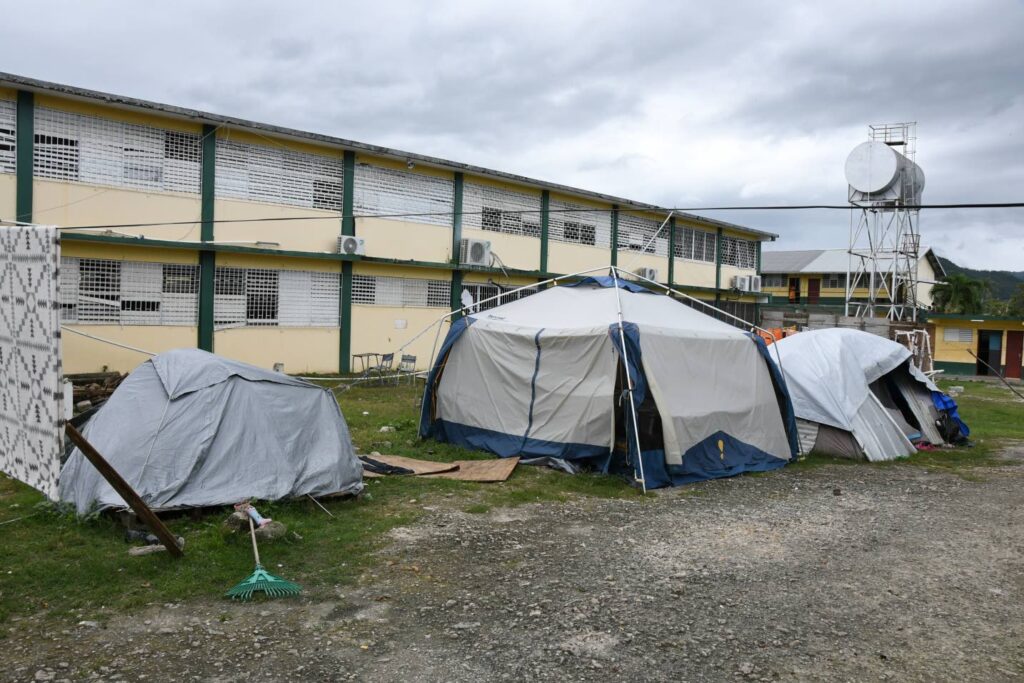
Deadline for dignity
For most Jamaicans, May 8 is nothing more than an ordinary date on the annual calendar. But for 41 displaced people hosted at the Petersfield High School shelter in the parish of Westmoreland, the upcoming date stands as a long-awaited turning point: the end of nearly six months of temporary housing after Hurricane Melissa destroyed their homes, and the chance to finally step back into a space they can call their own.
Since the Category 5 storm made landfall on October 28, 2025, these displaced Jamaicans have lived in converted classrooms at the school. For many, this experience was entirely uncharted, who never expected to lose their homes and spend half a year navigating the uncertainty of shelter life. Left jobless by the storm and with no relatives able to host them, repeated efforts to secure alternative housing have ended in disappointment, leaving them subject to growing friction with the school community, including students who have repeatedly called for them to leave the campus.
Now, a government commitment to relocate all remaining school-based shelter residents to appropriate accommodation by May 8, 2026 has given this group a renewed spark of hope. During a recent visit from the Jamaica Observer, shelter residents shared that they are counting down the days to regain their independence and dignity, and praying this long-promised transition will finally deliver on better living arrangements.
The pledge comes from Jamaica’s Ministry of Local Government and Community Development, which confirmed the relocation timeline as part of the country’s ongoing national post-hurricane recovery effort. The announcement followed unsubstantiated public reports of inappropriate sexual behavior by shelter residents occurring in front of enrolled students, putting pressure on officials to resolve the prolonged coexistence of displaced families and school operations. Ministry officials emphasized the final relocation phase is rooted in a commitment to restoring normalcy for two groups: the displaced families who have lost their homes, and the school communities that have accommodated them for months. The Petersfield High shelter has been prioritized for relocation, as it remains the largest active school-based shelter in the country, hosting roughly half of the 81 total displaced people still living in school shelters across Jamaica.
To support a smooth transition, the government is rolling out a range of tailored housing solutions to match the specific needs of each displaced family. These include prefabricated modular housing units purchased by the state, targeted rental assistance for eligible families, and custom accommodation arrangements for households with unique circumstances.
For 22-year-old Sherese Jones, who entered shelter life for the first time after the storm, having a private space of her own would be life-changing for her and her unemployed mother. Jones, who worked as a waitress at a local hotel before the storm, lost her job immediately after Melissa hit. Her mother had worked as a caregiver for an elderly woman who passed away just weeks before the hurricane, and neither woman has been able to secure new steady income despite repeated attempts to find work.
“It’s not the life I would have chosen, but we have to make do with what we have,” Jones told the Sunday Observer. As a woman who once prided herself on being independent, she said the hardest part of shelter life is losing the privacy and freedom that comes with having your own home. “I never want to stay in a shelter again. Shelter life isn’t easy, especially when you’ve never had to live like that before. I used to be able to take care of myself, but now I’m out of work and I have to rely on others for help.” She added that life before the storm allowed her small, simple joys: “Before, I could take a day off, treat myself, and buy the little things I wanted. Now I can’t do that, I just have to stay here.” Jones also shared that she has endured verbal harassment from students at the school, which compounds the hardship of her situation: “Sometimes the kids bother us, saying we need to get out of their school. They can be rude. We know this school is for the children, but it still hurts, and I just want to get my dignity back.” Even so, the government’s relocation promise has given her hope that normalcy is finally within reach.
Tishnae Haywood, a mother of six who currently lives with three of her children at the Petersfield shelter, said she tried to arrange her own alternative housing after the storm, but the makeshift plywood structure she built was deemed unsafe by officials because it lacked basic amenities like a bathroom and could not withstand future storms. Haywood arranged for her other three children to live with their father, but could not find space for herself and her three youngest children. Like Jones, she is currently unemployed, and prioritizes keeping her children safe over seeking work, leaving her with no ability to secure private housing on her own.
Haywood said she is optimistic that the upcoming relocation will bring a fresh start for her family, even if it is not a permanent solution immediately. “I’m looking forward to having my own place, even if it’s just enough space to put a mattress down. I just want my kids to be able to run around and make noise like kids should, that’s all I want,” she said. Haywood acknowledged that she has been let down by past unfulfilled promises of housing assistance, but she is choosing to give the government the benefit of the doubt this time: “It wasn’t the government that sent Hurricane Melissa here. They’re trying to help us any way they can, so I’m going to trust them for now.” Until the move, she made a public plea to Jamaicans to extend empathy to displaced shelter residents, many of whom are unable to work due to age, disability, or storm-related job loss. “We’re trying our best. A lot of us can’t work because of our situation. I’m begging people to stop criticizing us. Everyone carries their own burden. God didn’t build the world in one day, so we can’t rebuild our lives in a week or a month. It takes time, and we’re already doing everything we can,” she said.
J Anthony Clarke, shelter manager and dean of discipline at Petersfield High, said the school administration has deep sympathy for the displaced residents and has worked to make their stay as comfortable as possible over the past six months. Even so, he welcomed the upcoming relocation, noting that the classrooms used as shelter space require significant renovations that have been delayed by the ongoing occupation. He added that both shelter residents and government officials are aligned on the need for the move, and all residents are eager to leave for more stable housing. “We currently have 16 families, including children, totaling 41 people here. Getting back to normal won’t be completely smooth, but they’re all looking forward to moving into permanent homes,” Clarke said. He acknowledged that the road to relocation has been long, but noted that a Category 5 storm causes catastrophic damage that takes time to recover from: “I understand the government needed to take the time to make sure any new housing they provide can withstand another Category 5 storm. We’re not putting people back in flood-prone areas, and we’re making sure their new homes are stronger and more stable than the ones they lost. We want them to leave the shelter with their dignity and their pride intact.”
Bryan McGwyther, a local landscaper who lost his employer-provided accommodation when the storm hit, said he would be grateful for even a temporary rental home while he waits for permanent housing. McGwyther spent three days living amid the rubble of his destroyed home after the storm before agreeing to move to the shelter. “I have some savings, and I still work when I can, I just need a place to stay,” he said. He never expected to spend six months in shelter, and said he welcomes the upcoming relocation: “I hope that when I leave here, I get a place that I can call my own, where I can get back to building a good life for myself.”
Pauline Williams, an elderly domestic worker who has partially lost her sight to cataracts, lost her home in the storm along with her children’s homes, leaving her with no other option but shelter. She made a direct plea to the government for support, noting that she and many other elderly or disabled residents are not able to secure housing on their own. “Help us, even just with materials like steel and concrete to build. We can’t stay here forever,” she said. “We’re waiting patiently, because we have no other option. We’re looking forward to May 8.”
As the countdown to the relocation deadline begins, the entire community of Petersfield High shelter is holding onto hope that the government’s promise will finally deliver the fresh start they have waited half a year for.
-

Behaviour breakdownExpert warns of deeper social issues behind youth challenges
Jamaica is facing a deepening public health and social crisis marked by surging rates of harmful behavioural issues among children and young people, prompting leading mental health experts and education officials to push for coordinated, national-level intervention to address the growing emergency. International clinical behavioural psychology specialist Dr. Coretta Brown Johnson has sounded the alarm after reviewing recent registry data, warning that ongoing trends are deeply concerning and demand consistent, concentrated action across every sector of Jamaican society. While existing national policies targeting youth wellbeing are already in place, Dr. Brown Johnson argues that these frameworks have not been sufficiently evaluated or effectively implemented across the full spectrum of young people’s daily environments, from classrooms to household and community settings, requiring urgent review and targeted adjustment to boost impact.
Official data collected by Jamaica’s National Children’s Registry confirms the scale of the crisis: through the first three months of 2026, the total number of reported youth behavioural incidents has already reached 1,733, with cases climbing steadily month over month from 506 in January to 550 in February and 677 by March 26. This sustained upward trajectory is not a new development; over the past five years, incident counts have remained persistently high, fluctuating from 5,284 in 2020 to an all-time peak of 6,800 in 2023, before a small dip and a rebound to 6,649 in 2025. Bullying, a particularly harmful behavioural issue that often precedes more severe violence, is also growing at an alarming rate: 49 bullying cases were recorded through March 26 this year, with 22 incidents reported in January alone, and annual cases jumping from 130 in 2022 to 167 in 2025.
Recent high-profile violent incidents involving school-aged youth have amplified public and expert anxiety over the crisis. In one fatal case, a 17-year-old student from Ocho Rios High School has been charged with the murder of 16-year-old classmate Devonie Shearer, who was attacked on school grounds on March 4. Another fatal stabbing took the life of a Seaforth High School student in Morant Bay following a personal dispute, while a widely circulated video captured multiple Jamaica College students brutally assaulting a peer they accused of theft, leading to the arrest of a student at the campus.
Dr. Brown Johnson emphasizes that these visible behavioural crises stem from deeper, interconnected systemic failures rather than isolated individual misconduct, tracing root causes to breakdowns in core socialization institutions: the family, school systems, and broader community and cultural environments. “A child is impacted by all elements within his or her environment,” she explained in an interview with the Jamaica Observer. She detailed how economic instability in households creates cascading harm: when caregivers lack the resources to support a child’s basic needs and school participation, the outcome often includes poor academic focus, low self-esteem, lost educational opportunity, and eventually engagement in harmful or criminal behaviour. Adverse childhood experiences, she added, leave lasting damage to children’s psychological, emotional and social development, which frequently emerges as observable behavioural challenges later on. “If a child does not feel safe, they will eventually take matters into their own hands; if they are not intrinsically valued pre and postnatally, many issues can arise,” she said.
A key contributing factor that Dr. Brown Johnson highlights is the widespread lack of consistent, clear boundary-setting for children from early childhood. Behaviours eventually categorized as “beyond parental control” rarely develop overnight, she explains, instead growing gradually when discipline and expectations are inconsistent across caregivers and institutions. Adults bear the responsibility of acting as consistent “boundary creators” and “boundary holders” to help children learn self-regulation and understand that actions carry predictable consequences, she argues. For example, unpunished repeated truancy sets a harmful pattern that persists into adulthood, making swift, proportionate and consistent consequences critical for shifting long-term behaviour. “A child should be made to understand the impact of repeated action, whether positive or negative,” she stressed.
Schools, as core socialization institutions that interact with children daily, have a critical role to play in early identification and intervention, Dr. Brown Johnson adds. She calls for systematic behavioural tracking in schools that mirrors the existing rigorous tracking of academic progress, allowing staff to identify at-risk students early and deploy targeted support before minor issues escalate into chronic, harmful behaviours. This approach would require investment in evidence-based intervention programs and improved cross-stakeholder communication to drive sustainable resolutions.
Jamaica’s Minister of Education Dr. Dana Morris Dixon has echoed these concerns, describing recent student violence as both “concerning and disturbing.” She agrees that school-based behavioural challenges cannot be separated from broader social and economic conditions in households and communities, noting that schools cannot resolve the crisis alone, and require consistent, active support from families and Jamaican society as a whole.
Speaking during a sitting of the joint select committee reviewing the Child Diversion Act, Dr. Morris Dixon noted that while stronger intervention is needed for troubling student behaviour, not all incidents require processing through the formal criminal justice system. Her comments came as the committee debated proposals to use the existing Child Diversion Programme to address common school-related behavioural issues, including fights, bullying, and petty theft, which have been increasingly tied to broader student violence concerns. She added that welfare-focused interventions are already being rolled out under the Child Care and Protection Act, led by the Child Protection and Family Services Agency, which works directly with at-risk families and schools to provide targeted support.