作者: admin

  • PSV culture ‘damaging’ children, warns acting DPP

    PSV culture ‘damaging’ children, warns acting DPP

    Barbados’ Acting Director of Public Prosecutions Alliston Seale has issued a stark warning about the deteriorating moral environment within the nation’s public service vehicle (PSV) sector, asserting that the pervasive culture of violence and vulgarity is directly harming schoolchildren and eroding societal values. Speaking during sentencing submissions for convicted murderer Shakira Blackman, Seale delivered an impassioned critique of the PSV industry’s negative influence on youth development.

    The veteran prosecutor described how continuous exposure to violent content, abusive language, and inappropriate behavior on minibuses and ZRs creates psychological distress that impedes children’s educational progress. “They cannot listen to maths; they cannot understand Pythagoras’ theorem,” Seale stated, emphasizing that students arrive at school already overwhelmed by the “ignorance” they encounter during their commutes.

    Seale identified multiple concerning elements within the PSV environment, including drivers’ and conductors’ vulgar speech, explicit musical content, and inappropriate dress standards that children inevitably emulate. He expressed particular concern about the absence of positive role models in this sphere, noting that the lack of uniforms and professional standards undermines efforts to instill discipline in young people.

    The prosecutor connected these environmental factors to broader societal problems, including school violence and future criminal behavior. He questioned contemporary approaches to discipline in the context of reduced corporal punishment, noting that alternative solutions have proven insufficient against rising classroom violence.

    Seale’s comments emerged during legal proceedings concerning Shakira Blackman, who was convicted of murdering 27-year-old Shanice Miller in November 2021. The prosecutor recommended a 40-year starting sentence, citing aggravating circumstances and premeditation. He described how Blackman pursued her victim even after initial defensive actions, ultimately causing fatal injuries near Central Police Station.

    Despite Blackman’s claims of defending a friend, Seale emphasized personal accountability for violent actions. Justice Laurie-Ann Smith-Bovell will deliver sentencing on March 20, with King’s Counsel Andrew Pilgrim representing the convicted individual.

  • Government House hosts Investiture Ceremonies honouring 16 distinguished nation-builders

    Government House hosts Investiture Ceremonies honouring 16 distinguished nation-builders

    The Federation of Saint Kitts and Nevis has formally recognized sixteen exceptional citizens for their profound contributions to national development during two distinguished Investiture Ceremonies at Government House on January 28-29, 2026. Under the auspices of Her Excellency Governor-General Dame Marcella Liburd, the ceremonies celebrated individuals whose dedicated service has significantly advanced various sectors of Kittitian and Nevisian society.

    The inaugural ceremony on January 28th honored eight recipients with the Medal of Honour across diverse fields. Pastor Clive Saunders received recognition for Community Service and Religion, while Etsu Bradshaw-Caines was celebrated for Community Service. Joyah Walters was distinguished in Health and Medicine, Lennox Warner in Business and Entrepreneurship, and Meredith Charles in Security and Defence. The sporting community saw Trevor Huggins honored, alongside Washington J. Fraites in Business and Entrepreneurship, and Stedroy Douglas for his dual contributions to Sports and Community Service.

    January 29th witnessed the presentation of the Companion of the Star of Merit to eight additional exemplary citizens. The honorees included Dorothy Clarke, Lorozine E. Williams, and William V. A. Hodge in Education and Academia; Goldwin Caines, MBE, in Public and Civil Service; Dr. Jerome Thomas in Agriculture; Lydia Claxton in Sports; Pastor Leroy Benjamin in Religion and Spiritual Leadership; and Franklyn Dorset for his work in Law & Justice combined with Sports.

    Prime Minister Honourable Dr. Terrance Drew delivered heartfelt addresses at both ceremonies, emphasizing the significance of the awards. “Your service speaks volumes. Not through loud proclamations but through actions, sacrifice, and steadfast commitment to the common good,” he told recipients. The Prime Minister further reflected that “in a world that often celebrates visibility over value, your recognition today affirms something important. That quiet excellence matters, commitment over time counts, and nation-building is as much about perseverance as it is about vision.”

    The honors were conferred under the National Honours Act, which establishes three merit-based awards: the Medal of Honour, the Companion of the Star of Merit, and the Order of National Hero. These ceremonies represent the nation’s highest recognition of citizen service and contribution to societal advancement.

  • Pundits split on CARICOM election observers

    Pundits split on CARICOM election observers

    Barbados Prime Minister Mia Mottley’s invitation of international election observers has ignited a scholarly debate about electoral integrity and political accountability ahead of the February 11 general election. The move comes amid opposition claims of irregularities within the voter registry managed by the Electoral and Boundaries Commission (EBC).

    Opposition parties have characterized the early election announcement as a ‘snap poll’ and raised substantive concerns about discrepancies in the official voters’ list. Democratic Labour Party leader Ralph Thorne formally requested a postponement on Monday, citing the need to address these electoral list issues.

    Prime Minister Mottley responded by invoking Section 18 of the Representation of the People Act, stating she lacks legal authority to alter the election date. In a strategic countermeasure, she announced the invitation of independent observers from both CARICOM and Commonwealth organizations to monitor electoral proceedings.

    “Independent electoral observers will enable the public to objectively assess our election conduct,” Mottley stated. “This necessary measure protects both the integrity and international reputation of our democratic processes.”

    Political scientist Dr. Kristina Hinds endorsed the decision as a long-overdue safeguard for Barbados’ electoral system. “Observer missions will help identify procedural strengths and weaknesses while ensuring election transparency,” Dr. Hinds noted. She cautioned, however, that while observers might recommend future improvements, they cannot immediately address current voter disenfranchisement issues.

    In contrast, political analyst Dr. George Belle challenged the fundamental premise of inviting observers without concrete evidence of irregularities. “The burden of proof rests exclusively on those alleging electoral misconduct,” Dr. Belle argued. “Without substantiated evidence demonstrating material impact on voters, we risk damaging Barbados’ reputation based on unverified claims.”

    The divergent expert perspectives highlight the tension between proactive electoral transparency and the requirement for evidence-based policy interventions in democratic processes.

  • OP-ED: The Caribbean labour market paradox – What the 2026 ILO report reveals

    OP-ED: The Caribbean labour market paradox – What the 2026 ILO report reveals

    A new report from the International Labour Organization reveals a troubling dichotomy in Caribbean and Latin American labor markets. While unemployment rates continue their downward trajectory across the region, underlying structural weaknesses are creating what experts term a “hollow victory” in employment metrics.

    The ILO’s 2026 Employment and Social Trends report indicates that beneath surface-level improvements lies a more complex reality of stagnating work quality, declining productivity, and entrenched informality. This paradox presents particular challenges for Caribbean nations, where fewer unemployed persons masks the reality that many workers remain trapped in low-productivity, informal, and insecure employment arrangements that ultimately undermine long-term economic growth and social cohesion.

    Informality persists as the region’s most stubborn challenge, with over 51% of workers across Latin America and the Caribbean engaged in informal employment since 2015—showing virtually no improvement over the past decade. The Caribbean demonstrates striking disparities, with Haiti recording 91.0% informality rates, followed by Barbados at 62.0% and Jamaica at 54.6%.

    Youth employment presents particularly alarming trends. After years of gradual improvement, the percentage of young people not in employment, education, or training (NEET) reversed its downward trend in 2024 and is projected to worsen. This development carries dual consequences: diminished lifetime earnings and employment prospects for youth, and weakened productive capacity for regional economies.

    Compounding these challenges, critical sectors including healthcare, education, and agriculture face acute labor shortages despite persistent unemployment elsewhere. This paradox stems largely from outward migration, as highly educated and skilled workers seek better compensation and working conditions in OECD countries. While migration generates benefits through remittances and skills circulation, unmanaged outflows leave essential services understaffed and weaken domestic productive capacity.

    The region’s productivity crisis reveals alarming comparative data. Between 2015 and 2025, labor productivity in Latin America and the Caribbean fell by an average of 0.4% annually, with the Caribbean alone experiencing a 0.6% decline. This contrasts sharply with global productivity growth of 1.7% and high-income countries’ 1.1% average growth during the same period.

    Addressing these challenges requires moving beyond job creation to fundamentally transform job quality. Policy priorities must include revitalizing investment, accelerating technological adoption, supporting formalization within sectors, and expanding access to quality education and training. Regional cooperation on labor mobility and skills development has transitioned from optional to essential for sustainable development.

    The CARICOM Secretariat, alongside member states and social partners, is currently developing a regional labor migration policy and action plan—a promising step toward addressing these systemic challenges. The Caribbean labor market stands at a critical crossroads, where the central question is no longer whether people are working, but whether work itself can become a genuine engine for prosperity, inclusion, and resilience.

  • Amazon is laying off 16,000 employees as AI battle intensifies

    Amazon is laying off 16,000 employees as AI battle intensifies

    In a major corporate restructuring, Amazon has revealed plans to eliminate 16,000 positions, marking its second substantial workforce reduction within a three-month period. This strategic move positions the e-commerce giant to enhance operational agility and accelerate decision-making processes as it intensifies its artificial intelligence initiatives.

    Company executives detailed the rationale behind these cuts in an official blog post, emphasizing the need to streamline organizational hierarchy and eliminate bureaucratic obstacles. Beth Galetti, Amazon’s Senior Vice President of People, explained the company’s direction: “Our organizational strengthening efforts focus on reducing management layers, increasing ownership accountability, and removing procedural bottlenecks to foster innovation.”

    This latest workforce reduction follows October’s announcement of 14,000 job eliminations, both representing approximately 9% of Amazon’s corporate employees. The company maintains over 350,000 corporate staff members, remaining America’s second-largest private employer after Walmart.

    CEO Andy Jassy’s vision centers on maintaining startup-like nimbleness despite Amazon’s massive scale, particularly crucial as artificial intelligence transforms the technology landscape. The company faces fierce competition from Microsoft, Google, Meta, and OpenAI in developing advanced computing infrastructure and large language models that are expected to drive future economic growth.

    Galetti clarified that these workforce reductions do not signal a new operational pattern, despite Jassy’s previous predictions about AI-driven efficiency gains reducing employment needs. Instead, Amazon will continue strategic hiring in business areas critical to future success while evaluating organizational capacity for customer-focused innovation.

    The transition process for affected employees includes a 90-day internal job search period, with severance packages and additional benefits for those not rehired within the company. These layoffs coincide with Amazon’s separate announcement regarding the closure of its Amazon Fresh and Amazon Go grocery ventures, reflecting a renewed focus on Whole Foods branded stores.

    Jassy has been transparent about AI’s transformative impact, noting that generative AI implementation will fundamentally reshape job requirements. While certain roles will diminish, new positions will emerge to support advancing technology. He anticipates widespread adoption of AI agents across all industries, though current data suggests fears of broad-based job displacement may be exaggerated.

    Recent analysis from investment firm Vanguard indicates that occupations most exposed to AI automation are actually growing faster than pre-pandemic rates, outpacing overall job growth. While some companies report eliminating entry-level positions due to automation capabilities, evidence suggests AI has not yet caused widespread employment disruption across the technology sector.

  • Major road repairs completed, more on the way, says Bradshaw

    Major road repairs completed, more on the way, says Bradshaw

    The Barbados Ministry of Transport and Works has unveiled an ambitious infrastructure agenda, announcing plans to initiate up to 20 road repair projects between January and June 2024. The revelation came from Santia Bradshaw, Barbados Labour Party (BLP) candidate for St Michael South East, during a political rally in Oistins, Christ Church on Tuesday evening.

    Bradshaw highlighted the comprehensive scope of ongoing infrastructure development, citing the substantial $250 million Scotland District road project as a cornerstone initiative. She specifically addressed longstanding concerns in Christ Church constituency by confirming Lodge Road has been prioritized for repairs after being a persistent community grievance.

    Infrastructure progress reports indicate significant achievements already underway, with 15 road projects completed in the Scotland District region, another 15 currently in progress, and 30 additional projects in advanced design phases. The minister also confirmed completion of soil stabilization work in the White Hill area.

    The extensive road rehabilitation program receives substantial funding through a BDS $100 million (approximately US$50 million) financing arrangement with the Development Bank of Latin America (CAF – Corporación Andina de Fomento). This international funding has enabled infrastructure improvements spanning multiple parishes, including Yorkshire in St Philip, Prior Park in St James, and Gibbons Terrace in Christ Church, with additional works in Cane Garden and Shop Hill.

    Addressing inevitable inconveniences caused by construction activities, Bradshaw emphasized the necessity of temporary disruption for long-term progress. “There may have been disruption, and there continues to be disruption, but Barbados must understand there is no country in the world where you can get progress without disruption,” she stated, affirming the government’s commitment to essential utility upgrades and infrastructure modernization.

    The minister credited the BLP administration’s strategic financial management for enabling these infrastructure investments, noting that despite inheriting a challenging economic situation seven years ago, the government pursued debt restructuring while simultaneously securing global financing to revitalize the nation’s road infrastructure and neglected bridge projects.

  • Economy ‘to grow again’ in 2026 despite external risks, says Central Bank governor

    Economy ‘to grow again’ in 2026 despite external risks, says Central Bank governor

    The Central Bank of Barbados has forecasted sustained economic expansion for the nation through 2026, projecting growth between 2.5% and 3.0% despite emerging global challenges. Governor Dr. Kevin Greenidge announced these projections during a Wednesday briefing at the bank’s headquarters, indicating this would mark the country’s fifth consecutive year of economic improvement following a 2.7% expansion in 2025.

    The growth trajectory is primarily driven by robust performance across multiple sectors including tourism, business services, and construction activities in both private and public domains. Inflation is expected to remain moderate, with projections indicating a moving average rate closer to 1% for 2026, gradually settling around 2-2.5% in the medium term.

    Governor Greenidge highlighted several favorable factors including declining global commodity prices, particularly energy costs, which should help mitigate imported inflation pressures. However, he noted that strong domestic demand for certain services could exert upward pressure on prices.

    Fiscal indicators continue to show improvement with debt levels expected to maintain a downward trajectory through economic expansion and rising primary surpluses. The governor confirmed the country remains on track to achieve its debt-to-GDP target of 60% by fiscal year 2035-36, a key anchor of the Barbados Economic Recovery and Transformation (BERT) program initiated in 2018.

    Despite the positive outlook, Dr. Greenidge identified several risk factors including potential slowdowns in major markets like the United States that could reduce tourism demand. He also cited heightened global political tensions, particularly in oil-producing regions, which could trigger inflationary pressures through oil price spikes. Additional concerns include rising shipping costs due to global uncertainty and climate-related impacts on domestic food production.

    Conversely, the governor noted potential upside opportunities including stronger-than-expected tourism performance, accelerated infrastructure projects such as the imminent Bim Pay digital payments system, housing developments, and renewable energy initiatives that could further boost economic prospects.

  • PM Mottley: BLP has served Barbados well

    PM Mottley: BLP has served Barbados well

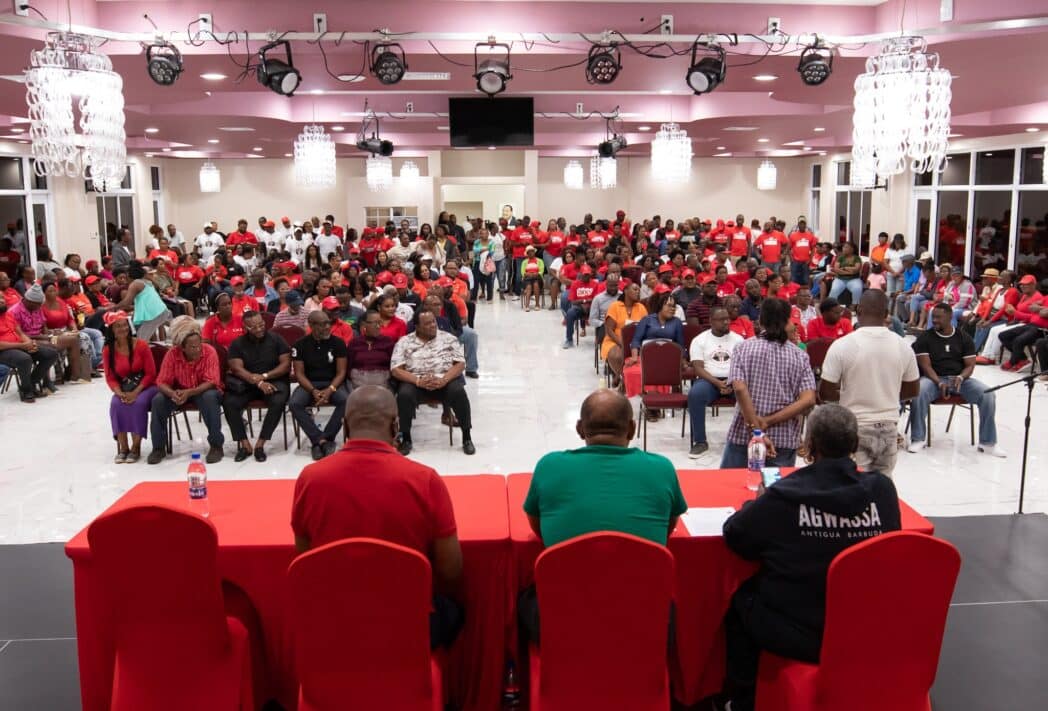
    Prime Minister Mia Mottley has formally initiated her Barbados Labour Party’s (BLP) general election campaign with a robust defense of her administration’s economic and social governance. Addressing a substantial rally in Oistins on Tuesday evening, the party leader presented what she characterized as an unprecedented track record of promise fulfillment amid global crises.

    The campaign launch, featuring all thirty BLP candidates, served as a platform for Mottley to showcase her government’s policy accomplishments. She unveiled a compact booklet titled ‘Red Record – A 2 Z Promises Kept’, specifically designed for portability and public distribution. “This document represents our accountability manifesto,” Mottley declared. “We want citizens to carry this evidence and make informed judgments based on documented performance rather than misinformation.”

    Economic revitalization formed the cornerstone of Mottley’s address, with emphasis on progressive fiscal measures benefiting low and middle-income earners. The administration has implemented expanded reverse tax credits reaching approximately $1,300 annually for qualified citizens and eliminated income tax for individuals earning between $2,100 and $3,000 monthly. These initiatives reflect what the Prime Minister described as a deliberate policy reorientation toward equitable economic participation.

    Mottley presented compelling macroeconomic indicators, revealing that foreign reserves have surged from three weeks of import coverage to thirty-two weeks, while the debt-to-GDP ratio has dramatically decreased from 176% to below 98%. “The fiscal stability that eluded us seven years ago now provides foundation for sustainable development,” she asserted.

    The Prime Minister acknowledged delayed implementation of integrity legislation, explaining that consultations revealed the necessity for tailored approaches rather than uniform solutions that might discourage public service participation. She emphasized that effective anti-corruption measures require “legislation with teeth” while ensuring fairness in application.

    Social protection mechanisms have been substantially enhanced under the BLP administration, including elevated minimum wage standards, increased non-contributory pensions, and expanded disability support systems. Welfare benefits saw a 40% augmentation during the COVID-19 pandemic, demonstrating the government’s responsive social policy framework.

    Infrastructure advancements include the deployment of a 121-vehicle electric bus fleet, establishment of an International Food Science Centre supporting small agro-processors, modernized fish markets, and reduced agricultural water rates. Institutional modernization efforts have encompassed the National Insurance and Social Security Service, alongside comprehensive judicial reforms including expanded prosecutorial capacity and criminal record expungement provisions.

    Addressing geopolitical concerns, Mottley highlighted the necessity of experienced leadership amid regional instability stemming from US-Venezuela tensions. She concurrently condemned alleged misogynistic remarks by opposition figure Dr. David Estwick, demanding formal apologies to both the BLP and Barbadian women collectively.

  • VIDS: erkenning in preambule Grondwet is slechts symbolisch en onvoldoende

    VIDS: erkenning in preambule Grondwet is slechts symbolisch en onvoldoende

    The Association of Indigenous Village Leaders in Suriname (VIDS) has issued a formal response to the proposed constitutional amendment that would recognize Indigenous peoples as the original inhabitants of Suriname in the preamble. While acknowledging this as a preliminary symbolic recognition of their historical presence and contributions, VIDS emphasizes that the amendment fails to establish concrete rights or address the structural legal challenges Indigenous communities have faced for decades.

    In its communication to the National Assembly, VIDS clarifies that constitutional preambles hold explanatory and symbolic significance but do not create enforceable rights. The proposed modification notably excludes recognition of collective rights to land, territory, and natural resources, alongside omitting the right to self-determination and the principle of Free, Prior, and Informed Consent (FPIC).

    The organization expresses profound concern that the initiative was developed without prior consultation or input from Indigenous peoples and their representative bodies. VIDS contends this approach violates international human rights standards that Suriname has committed to uphold, including rulings from the Inter-American Court of Human Rights.

    VIDS stresses that symbolic recognition must not be presented as a substitute for genuine legal security. “Indigenous peoples require not merely symbolic gestures but concrete, time-bound constitutional and legislative reforms that effectively recognize and protect our collective rights,” stated the document signed by Cylene France, Director of the VIDS Office.

    The association urges the National Assembly to view the proposal not as an endpoint but as an extremely limited initial step. VIDS advocates for a structured and inclusive consultation process with Indigenous peoples through their traditional governance structures rather than representatives selected by third parties. Additionally, the organization requests a clear timeline with specific objectives for constitutional and legal recognition of Indigenous rights aligned with international standards and judicial decisions.

    VIDS concludes by warning against presenting symbolic changes as adequate solutions to deeply rooted legal issues while reaffirming its commitment to constructive participation in a transparent and equitable process leading to full recognition of Indigenous rights in Suriname—both in principle and in practical legal application. The parliamentary debate on this initiative is scheduled for today’s legislative agenda.

  • Central Bank hails lower debt, falling inflation, stronger fiscal balance

    Central Bank hails lower debt, falling inflation, stronger fiscal balance

    The Central Bank of Barbados has announced a fourth consecutive year of robust economic expansion for the nation in 2025, with GDP growth reaching 2.7%. This sustained growth was primarily propelled by an unprecedented surge in tourism, which catalyzed widespread gains across multiple sectors of the economy.

    Central Bank Governor Dr. Kevin Greenidge, presenting the annual economic review at the bank’s Bridgetown headquarters, highlighted a simultaneous improvement in key macroeconomic indicators. Inflationary pressures continued to moderate throughout the year, with the average inflation rate declining by 0.7%. The labor market also showed significant strength, as the unemployment rate dropped to 6.6%, down from 7.1% recorded at the end of the previous September.

    On fiscal stability, the government achieved a primary surplus equivalent to 3.3% of GDP, while successfully reducing the national debt-to-GDP ratio to 94.6%. The financial sector demonstrated resilience with credit expansion growing from $9 billion to $9.4 billion. Commercial banks notably improved their asset quality, reducing non-performing loans to 3.6%—the lowest level witnessed since June 2009. International reserves remained robust at approximately $3 billion, despite a widening current account deficit driven by increased imports and softer export performance.

    The tourism sector emerged as the undeniable powerhouse behind the economic performance. Long-stay arrivals soared by 3.3% to exceed 727,000 visitors, setting an all-time annual record. This influx was dominated by the U.S. market, which expanded dramatically by 8.1% and accounted for roughly 80% of the additional visitors. Enhanced air connectivity from cities including Boston, New York, Philadelphia, and Atlanta was a critical driver. The CARICOM market also contributed significantly with a 6.1% growth, bolstered by increased flight capacity.

    Strategic marketing initiatives yielded positive results from Canada, which saw a 3.5% increase in arrivals, and also supported growth from European markets. A notable exception was the UK market, where arrivals declined by 5.9%, a dip attributed to reduced seating capacity.

    The hotel sector reaped substantial benefits from the tourism boom. Average occupancy rates climbed by 1.3 percentage points, while the average revenue per available room surged by approximately 15%. The shared accommodation sector (e.g., Airbnb) also saw occupancy rise by 0.7 percentage points, though revenue per room declined by about 10%, indicating a competitive pricing adjustment by hosts. The cruise segment performed marginally well, with visitor numbers edging up by nearly 1% to 546,000 despite 12 fewer ship calls, reflecting higher occupancy per vessel.

    This tourism-driven growth had a multiplier effect across the economy. The agricultural sector experienced a remarkable 13.3% expansion, while construction grew by 9.2%. The business and other services sector advanced by 3.7%, and wholesale and distribution trade saw a 1.1% increase. Manufacturing remained stable without significant growth.

    Governor Greenidge concluded that the 2025 economic performance was characterized by its ‘balanced and resilient’ nature, being supported by multiple sectors rather than dependence on a single industry, positioning Barbados on a stable path of continued economic development.