作者: admin

  • PM believes diplomacy has role to play in ending global tension

    PM believes diplomacy has role to play in ending global tension

    In a press briefing held Wednesday, Grenadian Prime Minister Dickon Mitchell emphasized his urgent call for global diplomatic engagement to de-escalate rising international tensions, including the ongoing violent conflict in the Middle East involving the United States, Israel and Iran. Reaffirming his administration’s unwavering commitment to dialogue over confrontation, Mitchell noted that a broad consensus among nations already favors diplomatic pathways to conflict resolution. He expressed hope that intensified diplomatic efforts will reverse the current trend of escalating hostilities and harsh rhetoric, reframing global conflict resolution around sustained dialogue rather than armed conflict.

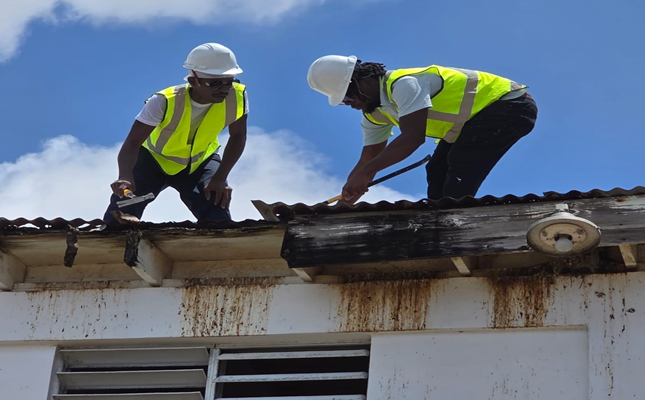
    Beyond his remarks on global affairs, Mitchell drew a clear connection between widespread international instability and Grenada’s domestic development priorities, highlighting that ongoing conflicts around the world have created tangible headwinds for the small island nation. For Grenada, advancing critical infrastructure upgrades remains a top national priority, Mitchell explained, noting that functional transportation networks—including safe roads and bridges—are foundational to protecting residents’ basic right to mobility and keeping the national economy from grinding to a standstill. In response to growing global uncertainty, his administration maintains constant surveillance of international risks that could threaten Grenada’s development, social cohesion, and long-term economic and social stability.

    Mitchell, who was sworn in as Grenada’s ninth Prime Minister in June 2022 after leading his National Democratic Congress to a 9-6 electoral victory over the incumbent New National Party, outlined the string of unprecedented challenges his government has navigated since taking office. “As an administration, you could probably say everything that could happen to an administration in the last three and a half years has happened,” Mitchell told reporters. In addition to mounting global conflicts, the government has overseen the nation’s post-Covid-19 pandemic recovery, responded to devastating hurricane seasons, and navigated shifting geopolitical tensions, trade tariffs, and international trade embargoes. Mitchell acknowledged that small island developing states like Grenada have no direct control over global systemic stability, and current trends suggest the world will face greater instability rather than calm in coming years. For that reason, continuous monitoring of global risks remains a core administrative priority.

    To build domestic resilience against external shocks, Mitchell outlined three core policy pillars his administration has already implemented. First, the government has enshrined strict fiscal prudence and responsibility in binding national legislation, requiring adherence to a structured fiscal framework that mandates emergency savings for unforeseen crises, ranging from natural disasters to sudden economic shocks. The government has also mitigated risk through comprehensive catastrophic risk insurance, a critical safeguard for a hurricane-prone small island nation.

    Second, the administration has prioritized improving tax collection efficiency through digital modernization. Simple upgrades, such as launching user-friendly online tax payment platforms, have already delivered significant gains in collection rates, Mitchell reported. The government will continue expanding these modernization efforts to broaden the national tax base and refine the country’s tax model to support long-term revenue stability.

    Third, Mitchell noted that Grenada’s long-running Citizenship by Investment (CBI) programme, which grants citizenship to foreign investors in exchange for large-scale investments in the country’s socio-economic development, remains a key pillar of the national revenue base.

    Addressing ongoing domestic cost challenges, Mitchell identified rising global fuel prices as a major immediate concern. The government currently provides targeted subsidies for consumer fuel and residential electricity costs, but Mitchell cautioned that imprudent broad-based subsidy expansion would divert limited resources from the country’s critical ongoing infrastructure projects. “We have to be very prudent in not jumping to subsidise things simply because there’s an increase in price, because in doing so it means there’s less revenue for the infrastructure work that we require and that is ongoing,” he explained. The administration will continue monitoring global energy market trends to adjust policy accordingly.

    Despite the array of global and domestic challenges, Mitchell closed his remarks on a measured optimistic note, reaffirming his confidence in Grenada’s ability to navigate ongoing volatility notwithstanding ongoing conflicts in the Middle East and Ukraine.

  • District Six claim Inter-District Champs

    District Six claim Inter-District Champs

    The Daren Sammy Cricket Ground played host to a thrilling day of youth competitive athletics on Wednesday, April 1, where underdog District Six pulled off a dramatic upset to claim the top prize at the 2026 Inter-District Primary School Athletics Championships, ending the multi-event winning streak of defending champion District Eight. What began as a gray, damp morning with steady rainfall shifted to bright, sunny conditions ideal for elite track-and-field competition, drawing hundreds of screaming spectators—including teachers, family members, and fellow students from across the region—to the venue for the penultimate major school sporting event of the academic term.

    The day’s opening events saw an early surge from District Five, representing the communities of Dennery and Micoud. Young runner Shandre Fontenelle delivered an immediate boost to his team’s standings, taking gold in the Under-13 boys’ 1200-meter race and silver in the Under-13 boys’ 600-meter. Those strong results pushed District Five into the early lead with 135 points, outpacing both District Six and the defending titleholders District Eight, who represents the Soufrière and Canaries regions. Despite standout individual performances across multiple disciplines from District Eight’s athletes, the tide of competition shifted dramatically once the sprint events got underway. By the conclusion of all sprint competitions, District Six had carved out a solid 17-point advantage over the rest of the field.

    That lead only grew through the final relay races, where District Six extended their gap to a commanding 41 points by the end of all competitions. When the final scores were tallied, District Six secured the overall championship title with 311 total points, beating out District Eight who finished as runners-up with 270 points. In the girls’ team rankings, District Six also claimed top honors with 180 points, ahead of District Eight’s 149. District Five held on to claim third place overall with 224 total points, with their boys’ team putting up a particularly strong fight to finish first in the boys’ rankings with 138 points, just edging out District Six’s 131 points. Rounding out the top five overall teams were District Two (representing North Castries) with 212 points, and District One (covering Gros Islet and Babonneau) with 173 points. The full final standings saw District Seven in sixth place with 126 points, District Three in seventh with 114 points, and District Four in eighth with 107 points.

    While District Six claimed the overall team crown, individual honors were spread across multiple districts, with District Eight earning three of the eight available individual event trophies. Shervel Gonzales turned in a dominant performance for District Eight, winning the Under-9 girls’ 60-meter sprint in 9.70 seconds and the 150-meter sprint in 23.52 seconds. Teammate Keyanni Gilbert claimed two titles as well, taking gold in the ball throw and the Under-11 girls’ 600-meter in a time of 2:07.03. District Eight’s third individual trophy went to Kayla Gills, who won both the Under-13 girls’ 80-meter (11.02 seconds) and 150-meter (20.10 seconds). In the over-13 girls’ division, Namika Bellas of District Two claimed top individual honors with an undefeated run of performances.

    On the boys’ side, multiple young athletes turned in breakout performances across age groups. Clevon McLawrence of District Three stood out in the Under-9 division, clocking 9.23 seconds to take gold in the 60-meter sprint and earn silver in the 150-meter. Avary Maryat of District One repeated as a double champion in the Under-11 division, defending his titles with winning runs in the 150-meter (20.63 seconds) and 300-meter (46.74 seconds). Individual honors in the two oldest boys’ divisions were split evenly across competing teams. Fontenelle, whose early performance pushed District Five into the lead, was one of three individual award winners in the Under-13 boys’ division. Vijay Blanchard earned District Six’s sole individual boys’ award, taking gold in the 80-meter and silver in the 150-meter, while District One’s Asa Emmanuel flipped that result to claim gold in the 150-meter and silver in the 80-meter. In the top division, Jeanquan JnPierre of District Three and Javan William of District Two each earned one gold and one silver medal to split top honors.

  • 10 injured after bus overturns on Samaná Highway

    10 injured after bus overturns on Samaná Highway

    A serious multi-vehicle collision on one of the Dominican Republic’s busiest intercity corridors left at least 10 people injured on Holy Thursday, after a passenger bus rolled over following a crash with a sport utility vehicle.

    The accident unfolded close to the third tollbooth along the Northeast Highway, which connects the capital city of Santo Domingo to the popular coastal destination of Samaná, near the access point to the El Aguacate de Arenoso community. At the time of the collision, the passenger bus was en route to Santa Bárbara de Samaná, carrying a full load of travelers ahead of the religious holiday weekend.

    Preliminary accounts from first responders confirm that the chain of events began when the SUV struck the passenger bus, robbing the bus operator of control of the vehicle and triggering the overturn. Local law enforcement and emergency management teams have confirmed that, as of the latest updates, no fatalities have been recorded from the incident. All injured people received initial on-site medical stabilization from first responders, while they waited for additional emergency crews to arrive and transport them to nearby care facilities.

    One lingering detail has added uncertainty to the developing account of the crash: the bus driver’s current location remains unaccounted for, and authorities have not yet released information about their whereabouts. A formal investigation is now active to piece together the full context of the collision and confirm the exact root causes that led to the accident.

  • Zero hunger fund must not just feed but ensure food security — PM

    Zero hunger fund must not just feed but ensure food security — PM

    During a 10th-anniversary commemoration for the Zero Hunger Trust Fund (ZHTF) held in Kingstown on Wednesday, St. Vincent and the Grenadines Prime Minister Godwin Friday laid out a transformative new roadmap for the organization, shifting its core mission from emergency food provision to long-term national food self-sufficiency. A decade into the fund’s operations, Friday argues that the next stage of its work must center on empowering Vincentians to produce their own food sustainably, rather than relying on ongoing charitable distribution.

  • No penalty for C’bean countries refusing US deportees — Leacock

    No penalty for C’bean countries refusing US deportees — Leacock

    A key regional security leader has delivered a landmark clarification for Caribbean nations navigating U.S. pressure to accept relocated third-country nationals (TCNs): nations that opt out of accepting these transfers will face no retaliatory action from Washington.

    St. Clair Leacock, St. Vincent and the Grenadines’ Deputy Prime Minister and Minister of National Security and Immigration, took up the annual rotating chairmanship of the eight-nation Regional Security System (RSS), a CARICOM-affiliated security alliance, just last week. Leacock shared details of U.S. responses to regional concerns during a media briefing in Kingstown on Wednesday, following a high-level RSS meeting held last week in St. Lucia.

    Since 2023, the U.S. has ramped up diplomatic outreach to Caribbean countries, pressing for them to accept TCNs — non-U.S. citizens who the U.S. is seeking to deport or relocate, who cannot be immediately returned to their home countries. The push sparked widespread anxiety across the Caribbean, with local leaders and communities voicing fears that relocated individuals could include criminals or people deemed undesirable, and that unmanaged arrivals would strain small national social and administrative systems.

    Leacock confirmed that the U.S. sent clear written responses to a list of pressing questions raised by RSS member states, addressing everything from penalty threats to documentation, legal status, support funding, and background screening. The most consequential clarification: Washington will not impose any punishments on nations that reject TCN transfers, and each Caribbean nation retains full authority to decide which individuals, if any, it will accept, regardless of whether another Caribbean nation has already rejected that person.

    On the question of valid travel documentation — a core concern, since nations without valid documents for TCNs cannot facilitate their onward return to their home countries — the U.S. acknowledged that some individuals may lack official paperwork from their country of origin. However, U.S. officials noted that barriers to return do not stem from formal entry bans or restrictions imposed by the TCN’s home country, and that the International Organization for Migration (IOM) is on hand to support the process of securing replacement documentation, with no major disruptions expected.

    The U.S. also confirmed that individual receiving nations retain full authority to set the legal immigration status for any TCNs they agree to accept, in line with their own domestic immigration laws. Washington noted that in past transfer programs, nearly all relocated TCNs prioritize moving onward from the third-country host as quickly as possible, rather than seeking permanent residency. If nations face funding needs beyond the support already offered by IOM, the U.S. has indicated it is open to reviewing additional funding requests on a case-by-case basis.

    For all transferred TCNs, the U.S. Department of Homeland Security has committed to sharing full available background and health information, including biometric data, date of birth, nationality, whether the individual is traveling with companions, any confirmed criminal history, and pre-travel medical screening records. All transfers include a pre-departure medical clearance check conducted by an in-flight medical professional, covering tuberculosis screening, existing medical conditions, ongoing treatments, and required medications during travel.

    The IOM’s global Assisted Voluntary Return (AVR) program will lead on facilitating onward movement for TCNs who choose to relocate again, and will cover immediate basic needs including food, shelter, and emergency medical care for up to one week after arrival, while helping TCNs explore options for voluntary return to their home country or relocation to another accepting nation. For any TCNs who choose to remain in the host Caribbean nation, the U.S. confirmed that the host nation may handle the individual in full compliance with its own domestic immigration laws.

    Summarizing the U.S. position for the public, Leacock emphasized that the outcome removes the core threat hanging over regional decision-making. “This question of deportees from the United States to Caribbean countries, who generally are not welcoming them with open arms, is that they will not force you. … If you don’t want them, they will not force you, and there will be no penalties for not accepting refugees,” he said. “I think that that came out to be very, very clear. If you do not want and you did not accept, there would be no penalty. So, in the end, it will be left up to the Caribbean countries to accept and or reject deportees coming from the United States of America.”

  • Man approaching cop with hand in waist found with illegal gun

    Man approaching cop with hand in waist found with illegal gun

    A tense confrontation at a St. Vincent gas station ended in the arrest of an armed local man last weekend, after an off-duty police sergeant’s quick reaction prevented what could have become a deadly incident, iWitness News has confirmed. The incident unfolded Sunday at the Richardson gas station in Arnos Vale, where Sergeant of Police Dwight James was waiting in his vehicle as part of a line of motorists refueling.

    Trouble began when a female driver cut the waiting line of vehicles, parking before stepping away to attend to personal errands. James, who was in plain clothes at the time, called out to the driver to address the line cutting, but received no response. Minutes later, an agitated man identified as 46-year-old Nicholas Huggins of Golden Vale approached James with his hand pressed firmly to his waistband, visibly angry and making aggressive comments toward the sergeant.

    James repeatedly asked Huggins to calm down and step back, but the man continued advancing, his hand never leaving his waist, creating an immediate, credible threat to the officer’s life. When Huggins closed to within feet of the sergeant’s vehicle, James drew his service weapon, stopping the advancing man in his tracks. A subsequent check confirmed what James had suspected: Huggins was carrying a loaded, unlicensed firearm at his waist.

    Alerts were immediately sent to the nearby Drug Squad Base, and officers from the Narcotics Unit arrived within minutes to assist their colleague. Law enforcement took Huggins into custody at the scene, and later charged him with two weapons-related offenses: unlawful possession of a Taurus revolver with serial number FR9291, and unlawful possession of two .38 caliber rounds of ammunition.

    Huggins appeared before the Serious Offences Court this Tuesday, where he entered a formal plea of not guilty to both charges. Prosecutor Inspector of Police Renrick Cato did not oppose a grant of bail, but requested the court impose strict conditions including a qualified surety, mandatory regular check-ins with police, and the surrender of all travel documents to prevent flight risk.

    Chief Magistrate Colin John granted bail set at EC$15,000 with one approved surety, matching the prosecution’s requested conditions. Huggins was ordered to report in person to the Calliaqua Police Station every Tuesday for the duration of the proceedings, and to surrender all valid travel documents to authorities. The court also issued a directive to place stop notices at every port of entry and exit across St. Vincent to prevent Huggins from leaving the country ahead of his next court date. The case has been adjourned until April 7, and will be transferred to the Calliaqua Magistrate’s Court for ongoing proceedings.

  • New champions in tighly-contested Shevern John netball tourney

    New champions in tighly-contested Shevern John netball tourney

    On a thrilling Sunday of competitive netball hosted in their home village of Fancy, Ball Blazers of Fancy pulled off a dramatic late comeback to secure the top title at the 2025 Shevern John North Windward Netball Tournament, finishing the tournament undefeated with a narrow 38-37 one-point win over final opponent Trail Blazers of Owia.

    The road to the final delivered its own major upset, shaking up the tournament’s established hierarchy. Overland Netball Team, which had claimed the championship title in every iteration of the competition since its launch in 2022, was unexpectedly eliminated in the semifinal round, clearing the way for Trail Blazers of Owia to advance to the championship match.

    Play unfolded with a clear advantage for Trail Blazers through the first three quarters of the final. The Owia-based squad held narrow leads through each stage: 8-7 after the first quarter, 17-16 after the second, and 29-26 heading into the final 15 minutes of play. But in a stunning fourth-quarter turnaround, the home team Ball Blazers rallied, outscoring their opponents to flip the scoreline and clinch the championship on their home turf.

    In addition to the open senior division, the tournament hosted two lower age and developmental competitive categories. In the junior division, the Sandy Bay Police Youth Club was awarded an automatic default victory after their opponent, Sandy Bay Secondary School, failed to appear for the scheduled championship match. The developmental division delivered another close match, with Sandy Bay Government School edging out Fancy Beamers by a single goal to take the category title, finishing the match 8-7.

    Following the conclusion of all matches, the tournament’s organizer and North Windward Parliamentary Representative Shevern John spoke at the official awards and presentation ceremony. During his address, John announced that the next major local sporting event organized under his framework, the Shevern John North Windward T10 softball cricket competition, is scheduled to kick off in May this year, building on the momentum of the successful netball tournament to support grassroots sports in the region.

  • Humanity scarred by war and violence, catholic church warns

    Humanity scarred by war and violence, catholic church warns

    In a solemn gathering at the Cathedral of the Americas in Santo Domingo, Archbishop Carlos Tomás Morel delivered a thoughtful reflection during the annual Chrism Mass, confronting the deep-seated wounds that continue to divide and weigh on modern humanity. Opening his address, the prelate drew attention to a broad spectrum of crises afflicting communities across the globe, from large-scale violence and active armed conflicts that displace millions to the pervasive spread of deep-seated hatred between groups. Beyond these collective tragedies, he also acknowledged the private, everyday hardships that many people bear in silence: intimate personal tragedies including pervasive domestic violence, sudden loss from preventable traffic accidents, and the unrelenting emotional and spiritual strain that comes with navigating basic daily life.

    Against this bleak landscape of widespread suffering, Archbishop Morel offered a countermessage of compassion and possibility, rejecting the idea that divine care is distant from human pain. He emphasized that God does not remain indifferent to the struggles of people navigating hardship, but instead abides close to every person who carries grief, injury, or burden. Framing Jesus Christ as a divine source of healing, he explained that this spiritual care extends far beyond superficial comfort: it reaches into the broken parts of the human heart, mending fractured lives and restoring what has been damaged in ways that are deep and enduring.

    Closing his homily to the gathered faithful, the archbishop anchored his address in a firm message of hopeful resilience. He urged all those in attendance to hold fast to and strengthen their spiritual faith even when faced with overwhelming personal or collective struggle. Reaffirming that renewal is always within reach, he stressed that no amount of suffering can block the path to spiritual transformation and inner healing, leaving the congregation with a call to lean into trust and persistence through uncertain times.

  • How will the new care options for children without family support work?

    How will the new care options for children without family support work?

    Following the recent enactment of Cuba’s landmark Code for Children, Adolescents, and Youth, which enshrines young people as full rights-holders at the center of national policy, the country has moved to clarify how these legal protections will translate into tangible support for vulnerable minors separated from their biological families. In a decisive step to operationalize the new legal framework, the Cuban Ministry of Education (MINED) has issued Resolution 62, a comprehensive regulatory roadmap that formalizes the state’s commitment to guaranteeing every child and adolescent the right to grow in a safe, family-centered environment through structured alternative care and adoption pathways.

    Central to the new regulation is the establishment of an updated, tiered classification of foster care facilities tailored to address the unique developmental and emotional needs of minors at different life stages. At the first tier are emergency and temporary care facilities, capped at a maximum of 12 residents with a maximum 30-day stay, designed to serve as an immediate safe haven for children removed from unsafe environments in crisis situations.

    Under the resolution, institutional foster care is explicitly framed as an exceptional, temporary protective intervention rather than a long-term placement. It is only ordered by authorized governing bodies when a minor has been separated from their birth family, or when a birth family cannot adequately meet the child’s basic needs for well-being. All institutional care is delivered through specialized social assistance centers, structured to maintain a nurturing, safe environment that meets age, gender, and individual-specific requirements for hygiene, nutrition, infrastructure, and specialized professional care.

    Beyond emergency placements, the regulation outlines two additional categories of institutional care: Early Childhood Care Facilities, which are limited to 10 children each, designed to mimic a family-style living environment, with stays ranging from three to six months based on the child’s age; and facilities for older minors aged 7 to 18, which are organized into small, home-like groups with a core focus on preparing youth for independent adult living and supporting family reunification wherever possible.

    Resolution 62 enshrines robust protections for the rights and well-being of all minors entering the alternative care system. All children and their biological families receive continuous psycho-emotional support and guidance from trained personnel, starting at admission and continuing through the entire placement period and post-discharge transition. To ensure this critical support is delivered effectively, care facility management coordinates closely with community mental health centers and other public health institutions under Cuba’s Ministry of Public Health to provide specialized clinical psychology services for children.

    Specific contingency protocols are also mandated for emergency situations and natural disasters, requiring facilities to activate procedures that prioritize the safety and emotional stability of children in care, while ensuring no interruption to their individualized care plans. The regulation also sets strict rules around sibling separation: it may only be ordered in exceptional circumstances, following a full multidisciplinary assessment that confirms cohabitation would harm the children’s rights and well-being, and when separation is required, the competent authority must implement formal measures to guarantee stable, accessible communication and visitation schedules, backed by professional support where needed, with ongoing monitoring from the Family Advocacy Office.

    In addition to regulating institutional care facilities, Resolution 62 strengthens community-based care networks by formalizing the role of foster families. These families volunteer to host children from institutional care facilities during weekends and holiday periods, providing children with valuable exposure to regular family life while offering temporary respite for institutional staff. MINED holds formal responsibility for collaborating with municipal commissions and the Ombudsman’s Office to identify prospective foster families, with the explicit goal of placing more children in family-based settings rather than institutional care wherever possible.

    For adoption processes, the regulation centers children’s emotional well-being by positioning foster homes as the core site of pre-adoption preparation. Before any adoption is finalized, a cross-disciplinary technical team of psychologists and social workers prepares a full administrative record of the child, delivers targeted psychological preparation to help the child adjust to the upcoming life change, and organizes gradual, paced introductory meetings with the prospective adoptive family. This child-centered approach is designed to ensure the entire process is respectful of the child’s needs and avoids inflicting additional trauma.

    To further guarantee the quality of care across all alternative care settings, MINED will oversee full standardized training, certification, regular review, and ongoing oversight for all personnel working in institutional care for children and adolescents, ensuring all staff meet consistent professional standards to support vulnerable youth.

  • Group of Cuban healthcare workers returns from Guatemala

    Group of Cuban healthcare workers returns from Guatemala

    Nearly three decades of life-saving international medical collaboration between Cuba and Guatemala is drawing to a close, as the first cohort of Cuban healthcare workers prepares to touch down on Cuban soil Tuesday, following the Guatemalan government’s official announcement of a phased wind-down of the bilateral medical aid agreement. The outbound contingent was honored at a heartfelt farewell ceremony held one day prior in Guatemala, where leaders from both nations celebrated the extraordinary public health legacy the Cuban brigade leaves behind.

    Nazario Fernández, the top Cuban diplomatic representative in Guatemala, opened the tributes by highlighting the transformative reach of the brigade’s work, which extended deep into Guatemala’s most isolated and underserved communities. Fernández commended the medical team’s decades of unwavering service, pushing back against bad-faith efforts to discredit their contributions. He emphasized that for 28 years, the brigade has embodied a radical, people-centered humanism that has been etched permanently into the hearts of the Guatemalan people, a legacy no criticism can erase. The ceremony also doubled as a tribute to Fidel Castro, the founding leader of the Cuban Revolution, coinciding with the centennial of his birth, before Fernández closed by wishing the departing workers a safe journey home.

    Sheila Pamela Leyla, program coordinator for collaboration at Guatemala’s Ministry of Health and Social Assistance Directorate of Integrated Networks, took the stage next to extend a formal public thank you on behalf of the Guatemalan people. She reflected that the Cuban medical team did not just treat patients – they made Guatemala’s rugged mountain highlands, impenetrable jungle regions, and poorest urban neighborhoods their own home. Unlike foreign interventions that come with political strings or military power, Leyla noted, the Cuban brigade arrived with nothing more than stethoscopes and an unshakable commitment to serve. For millions of Guatemalans who had never accessed quality, affordable medical care before the brigade’s arrival, these Cuban workers became the very face of hope.

    Leyla described the scale of the brigade’s work as a monument to cross-border fraternity that far transcends routine medical service. “They leave with their heads held high, with the heroic satisfaction of a duty fulfilled and with the certainty that their time in our country has left a mark of health and dignity that time can never erase,” she said, echoing Fidel Castro’s core precept that internationalism means repaying one’s shared debt to humanity. Leyla also highlighted the brigade’s broader ideological contribution: their work proved that healthcare is a moral calling, not a commercial commodity to be bought and sold.

    Back in Cuba, a parallel tribute unfolded at Havana’s José Martí Plaza on Las Américas Avenue, where returning brigade members joined representatives of Cuba’s other international medical missions to lay a floral arrangement at the bust of Cuba’s national hero. Standing before the monument, the group declared in unison that their mission had been successfully completed. Records of the collaboration show that the Cuban medical presence in Guatemala dates back to November 5, 1998. Over the following 28 years, thousands of Cuban healthcare workers served in 16 of Guatemala’s 22 departments, navigating challenging terrain, limited resources, and complex public health crises with extraordinary dedication, ethical conduct, and respect for local communities. As the phased withdrawal proceeds, the legacy of their work shaping access to care for millions of Guatemalans will remain.