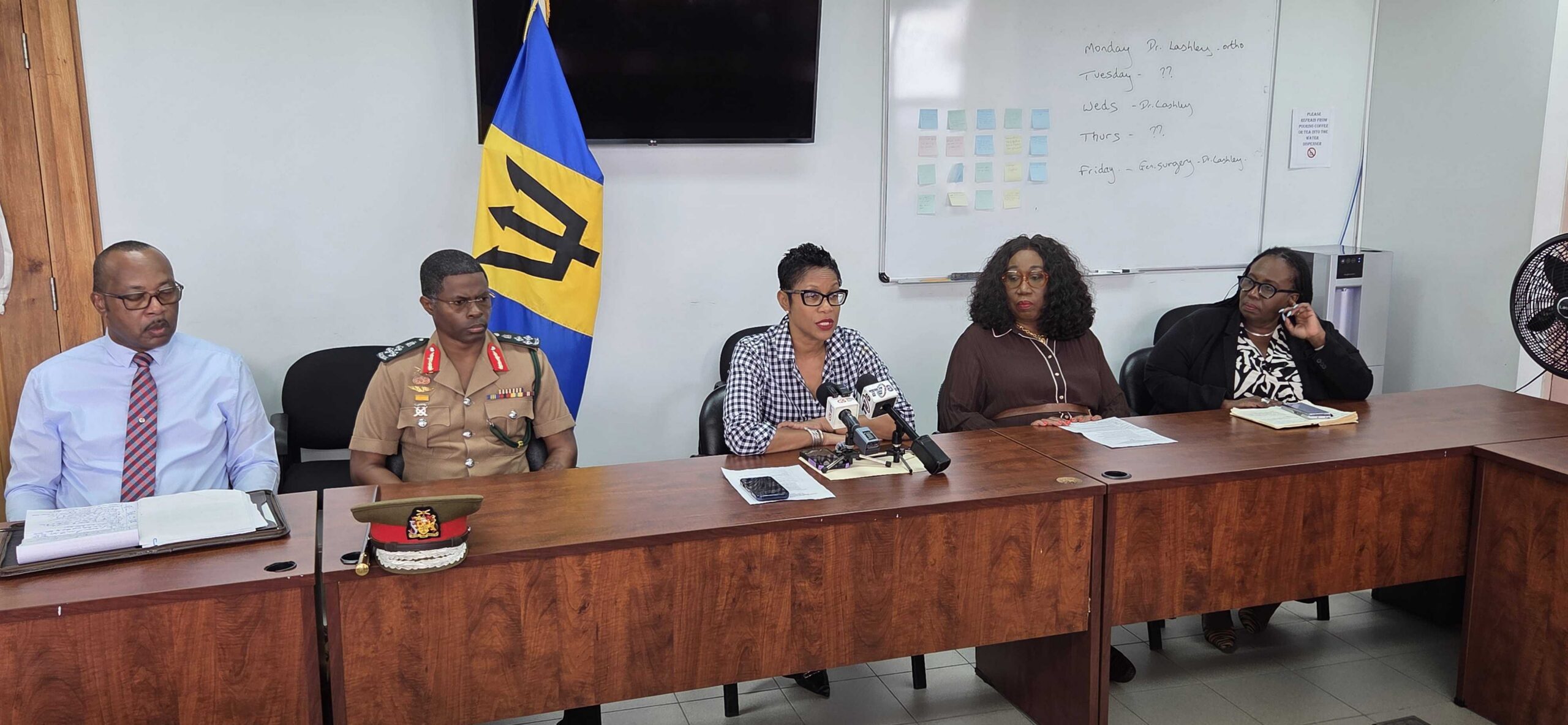
Barbados is preparing to bid a final, national farewell to its most iconic sporting son, Sir Garfield Sobers, with a full state funeral scheduled for July 29 – one week from Wednesday, and one day after what would have been the cricket legend’s 90th birthday. The beloved cricketer and national hero passed away at his home last Friday, and tributes have poured in from across the globe in the days since his death. Authorities expect thousands of mourners to line the procession route and pack Kensington Oval, widely known as cricket’s Mecca and Barbados’ most revered cricketing ground, for the historic occasion. Details of the national homegoing celebration, officially dubbed “Barbados’ Standing Ovation to Sir Garry,” were announced at a press conference held by the event’s core planning committee, which laid out a full schedule of public commemorations, military honours, and inclusive tributes designed to let both local citizens and the global Barbadian diaspora honour the legacy of the sporting icon. Opening remarks from Senator Lisa Cummins set a tone that balanced solemn respect with joyful celebration of Sobers’ life and impact, emphasizing the profound national and global meaning of the event. “Barbados has been very clear. We’ve seen that since the passing of Sir Garry, our own, that the world pretty much stopped for the first few days to pay him tribute,” Cummins said. “We have seen over the last few days, tributes pouring in from all around the globe, speaking about who he was as a batsman, who he was as a cricketer overall, what his legend was, but we also have to acknowledge that he is our own. He is a Barbadian first and foremost.” In the lead-up to the funeral, Sobers’ casket will lie in state for two days to allow public viewing: first on Monday in the House of Assembly chamber at Barbados’ Parliament Buildings, then at Kensington Oval on Tuesday. Cummins underscored that holding the final service at Kensington Oval holds deep historic meaning, noting “This is the Mecca. This is where Sir Garry is best known. This is Barbados’ iconic cricketing grounds, and so we will send him off in a Thanksgiving ceremony that will take the format of a state funeral on July 29.” She added that the “standing ovation” name was chosen because it reflects the national gratitude owed to Sobers, who was one of Barbados’ only two living national heroes before his death, and is the first national hero to be buried since the honor was first established. The ceremony will be open to all members of the public, a choice aligned with Sobers’ legacy as a man of the people who put Barbados on the global sporting map decades before many other local athletes gained international recognition. “I think every cricketer in this country and every sportsman in this country stands on the shoulders of a cricketing great in the person of Sir Garry,” Cummins said. “He put Barbados on the map long before many others were even thinking about playing world cricket.” The state funeral will include full state and military honours, starting with a ceremonial procession that will carry Sobers’ casket on a gun carriage from Parliament Yard in Bridgetown. The procession will travel along Broad Street, pass the Cricket Legends of Barbados monument, and end at Kensington Oval for the thanksgiving service. After the service concludes, the cortege will travel to Coral Ridge Memorial Gardens for a private interment, closed to the public. Deputy Commissioner Barry Hunte of the Barbados Police Service outlined comprehensive security and traffic management plans for the event, reassuring citizens that authorities have worked to minimize disruption to daily travel while ensuring a safe, dignified procession. Hunte confirmed that most roads along the early portion of the route, including the stretch from Lyndhurst Funeral Home along Passage Road, will not require full closure, though temporary closures will be in place for the segment from Parliament’s south gate through National Heroes Square to Kensington Oval. Timing for closures will be shared with the public in advance through local media outlets. Hunte appealed to the thousands of expected mourners planning to line the procession route to cooperate with uniformed police officers’ directions, and reminded onlookers that unauthorized vehicles will not be permitted to follow the cortege. “We are appealing to members of the public, including those who will come out in their numbers to line the route, to cooperate with the police in terms of the directions given by police officers in uniform to provide a safe, secure environment for all participants and the general public,” he said. “This is a dignified occasion. It’s an official state funeral. Therefore, we ask that no one be too eager to attempt to come up at the rear of the procession en route to Kensington Oval. That is an absolute.” Hunte also asked civilian drivers to pull over to the left side of the road when they encounter the police blue-light escort for the cortege traveling between Kensington Oval and Coral Ridge Memorial Gardens, noting he is confident responsible Barbadian citizens will cooperate to make the event a fitting tribute for the fallen hero. Beyond the funeral itself, the planning committee has rolled out a multi-day national engagement strategy to involve youth groups, sporting organizations, cultural bodies, and community members in honouring Sobers’ legacy. Carol Roberts, chief executive of the National Cultural Foundation, said organizers are collaborating with the Barbados Cricket Association and Barbados Cricket League to ensure as many current cricketers – from club players to school team members – can attend the funeral in uniform, alongside visiting international cricketing legends. Special arrangements are also being coordinated with the Ministry of Education Transformation to give school students access to the Kensington Oval service, framing the event as both a tribute and a living lesson in Barbadian national history. “We anticipate that it will be particularly special because it will be an opportunity for them also to learn about the life, history, and legacy and the amazing feats of Sir Garry, even before he became a national hero,” Roberts said. Musical tributes will be performed by the Band of the Barbados Police Service and a mass choir directed by local musician Julian Bowen. Cabinet Secretary Selma Green announced that formal physical condolence books will open this Wednesday at multiple locations across the island, including Parliament Buildings, Kensington Oval, Government Headquarters, Cricket Legends of Barbados, Bay Primary School, Weymouth Sports Club, the General Post Office, and multiple regional post offices and health facilities. Digital condolence books will also be available for members of the international Barbadian diaspora to leave tributes. To accommodate informal community gathering, several low-key remembrance evenings will be hosted at local clubs and community venues, designed to let citizens share personal memories of Sobers in the casual, conversational settings he enjoyed. “As part of our commemorative activities, but also in tribute to a man who just loved people and who enjoyed nothing more than having a conversation in an informal setting, it will be less formal than the state funeral, but no less commemorative in its intention and in its setting,” Green said. Diplomatic missions based overseas will also open condolence books and stream the funeral live to let Barbadians living abroad join in the national tribute to their most iconic compatriot.
作者: admin
-
New law allows gratuity for non-pensionable gov’t workers
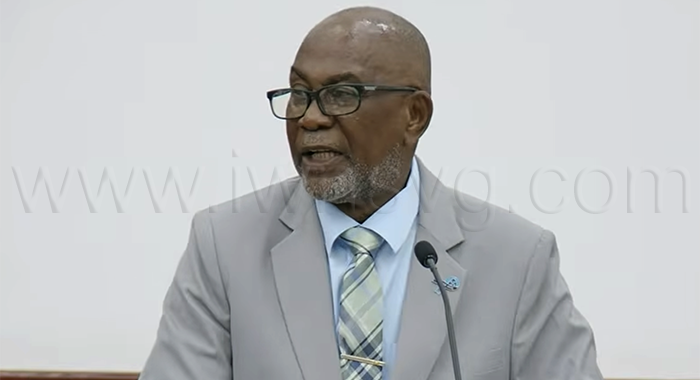
In a landmark legislative move on Tuesday, St. Vincent and the Grenadines’ Parliament passed the Daily Paid and Minor Salaried Officers (Compassionate Gratuity) Bill 2026, a piece of legislation that Deputy Prime Minister and Public Service Minister St. Clair Leacock has hailed as one of the most consequential public service bills ever considered by the legislative body. The bill marks a historic step toward advancing social justice for thousands of low-wage government workers who have long occupied the lowest rungs of the public employment ladder, who previously had no access to retirement or death benefits through existing pension schemes.
The core purpose of the new law is to enshrine a formal compassionate gratuity system into legislation for non-pensionable low-paid public workers, providing financial support when these workers retire from service or pass away while still employed. While both ruling government and opposition parliamentarians united in supporting the overarching goal of the legislation, much of the pre-passage debate centered on three key questions: the scope of the policy, the exact population of workers that would qualify for benefits, and the appropriate level of discretionary power that should be granted to cabinet ministers in administering the program.
Speaking to lawmakers ahead of the final vote, Leacock framed the bill as both a people-centered social justice reform and a principled policy decision enacted despite the significant fiscal challenges the nation currently faces. He emphasized that the legislation was not crafted behind closed doors by government officials alone, but was shaped through extensive collaborative input from a wide range of stakeholders, a process that strengthened the final version of the bill.
The legislation was reviewed and refined by a parliamentary select committee, a process Leacock said significantly improved the proposal. The committee included representatives from both government and opposition legislative members, multiple major labor organizations across the country: the Public Service Union, the St. Vincent and the Grenadines Teachers’ Union, the Commercial Technical and Allied Workers’ Union, the Police Welfare Association, and the National Labour Congress. Following deliberations, all committee members, including opposition representatives and union delegates, reached full consensus on the core policy principle: that no government worker should end their career without any form of financial compensation to support them or their families in retirement or after death.
The bill covers two distinct groups of non-pensionable government workers: daily paid officers, defined as workers in temporary non-pensionable government roles paid on a daily basis, and minor salaried officers, who hold non-pensionable permanent positions listed in the annual government estimates with modest monthly salaries. In practical terms, this eligibility includes workers in the lowest civil service grades M, L, 1 and 2, a group that encompasses a wide range of frontline and support roles: customs guards, office attendants, government vehicle drivers, handypeople, cooks and domestic staff, forest guards and park rangers, school bus drivers, security guards, traffic wardens, hospital attendants, laundresses, auxiliary support staff, apprentices, and entry-level junior technical workers.
Leacock estimates that nearly 4,000 workers across St. Vincent and the Grenadines will be eligible to benefit from the new program. The breakdown includes approximately 497 minor salaried officers in the eligible grades, around 2,831 daily paid workers, and roughly 536 lower-grade teaching staff. He reiterated that most of these workers have long been situated at the bottom of the public employment totem pole, with little to no financial safety net for their retirement years.
Several key interpretation clauses in the bill, shaped directly by stakeholder feedback, address practical barriers that workers and their families have previously faced. For example, the legislation explicitly allows workers to name a designated beneficiary to receive the gratuity in the event of their death, and permits workers to update their beneficiary designation at any time. This provision eliminates the need for bereaved families to go through costly and time-consuming probate court processes to access funds that rightfully belong to them, a change that emerged directly from real-world cases shared by union representatives during the select committee hearings.
The bill also addresses a widespread financial gap that disproportionately harms non-pensionable public workers: many of these workers are required to retire from their roles at age 60, but do not become eligible for their National Insurance Scheme (NIS) pension until they reach age 65, leaving them without a steady source of income for five critical years. Leacock outlined the harsh realities of this gap, noting that many workers are still paying off mortgages at 60, face rising health costs from age-related conditions such as hypertension, diabetes, cancer, and arthritis, and lack the financial resources to even afford basic travel or leisure after decades of work. In contrast to public sector rules, many private sector workers in St. Vincent and the Grenadines are permitted to continue working up to age 65, giving them more time to build their financial stability. The new law accommodates this reality, giving eligible workers the choice to either retire at 60 and claim their compassionate gratuity immediately, or stay in their role working up to age 65 to accrue additional earnings and strengthen their long-term financial position.
All compassionate gratuity payments will be drawn from the country’s Consolidated Fund. For retired workers, payments are required to be issued within three months of receiving and approving a complete application, with a hard maximum deadline of six months for disbursement. The same timeline applies to payments issued to designated beneficiaries or legal representatives when a worker dies while in service. Leacock framed these strict payment timelines as part of the government’s people-first commitment, even amid ongoing national fiscal pressures.
Leacock also included a note of caution for eligible workers, tying potential eligibility for benefits to workplace conduct and performance, as the bill grants limited ministerial discretion to approve claims. He reminded workers that while the new benefit is a major win for public employees, misconduct or persistent poor performance could put their ability to claim the gratuity at risk. He urged workers to uphold the principle of an honest day’s work for an honest day’s pay, and to maintain strong professional standing with their ministry leadership and permanent secretary. The bill also mandates that all government ministries maintain accurate, up-to-date employment records for all eligible workers, including documentation of tenure, wage and salary history, designated beneficiaries, and any gaps in employment.
-
McIntyre makes Team America for triathlon training
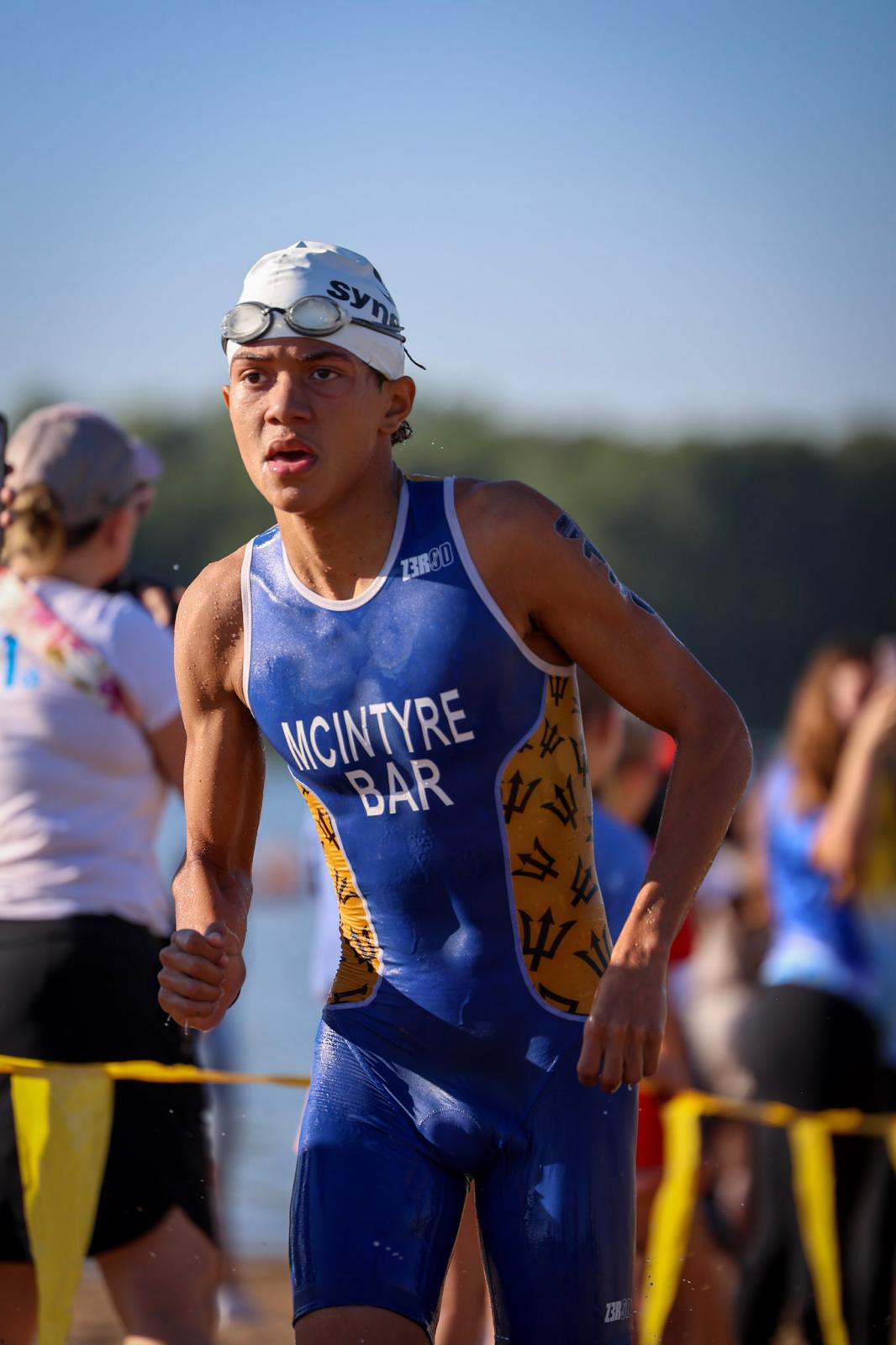
At just 17 years old, one of the Caribbean’s most promising young multi-sport talents is set to take a major leap forward in his competitive career, after earning a coveted spot in a top-tier continental development initiative that will send him training and racing across two South American nations this summer.
Luke McIntyre, a student at Barbados’ Harrison College and already a four-time regional gold medal winner, has been tapped by the Americas Triathlon Development Committee to join the exclusive Team Americas Training Camp, the Barbados Federation of Island Triathletes (BFIT) announced publicly this Tuesday. The two-part program will kick off on August 6 in Asunción, Paraguay, before moving to Lima, Peru, wrapping up on August 24, giving the rising teen a chance to test his skills against the most promising young endurance athletes from across the Western Hemisphere.
For McIntyre, the invitation is far more than just an international training opportunity. Alongside daily training sessions with elite coaching staff and top junior talent from the region, he will compete in two high-profile developmental races: the World Triathlon Development Cup hosted in Asunción, followed by the Americas Triathlon Junior Cup in Peru’s capital. The entire Team Americas initiative is structured as a core part of the long-term development pathway toward the 2027 Pan American Games, which will be hosted in Lima.
The program’s explicit mission is to identify and nurture high-potential young athletes from developing national triathlon federations, with the long-term goal of preparing them to compete at the continental level and eventually qualify for future Pan American Games and Olympic Games. McIntyre is one of only six young male athletes selected from the entire Americas region to join the cohort, a feat that BFIT says underscores just how far he has already come in his young career.
“McIntyre’s selection is a testament to his dedication, perseverance and consistent performances on the regional circuit,” BFIT said in its official announcement. “Being chosen to train and compete within this elite development environment is an important milestone in his athletic journey and reflects his potential to continue progressing on the international stage.”
The federation extended its formal congratulations to the teen, adding that it remains fully committed to nurturing homegrown athletic talent and is proud to see Barbadian triathletes earn international recognition through opportunities like the Team Americas camp. “We wished him every success at the training camp and competitions,” the statement added.
McIntyre’s resume, impressive even for an athlete twice his age, reflects the work that earned him this spot. He has represented Barbados in regional competition since he was just 11 years old, and currently holds two major regional titles: the CARIFTA Games Under-20 boys 5000m gold medal, and the Under-16 championship title from the Under-CARIFTA Triathlon Championships. In 2022, he claimed both the Under-14 Boys’ Triathlon and Aquathlon regional titles, and a year later, he joined his sister Laila McIntyre, Ali Banfield, and Fynn Armstrong to win mixed relay gold at the 2023 CARIFTA Triathlon Championships.
Last year also saw McIntyre compete as one of the youngest triathletes at the 2023 Commonwealth Youth Games, and he claimed a bronze medal in the 5000m at his very first appearance at the CARIFTA Games. As he prepares for his August trip to South America, the young Barbadian star is positioned to turn this elite development opportunity into a stepping stone toward future international competition.
-

Lucian Carnival parade ends smoothly without major incidents
The annual Lucian Carnival drew to a close on Tuesday in the capital city of Castries, capping off a vibrant two-day parade celebration that brought together thousands of masqueraders, spectators, and high-profile guests. The final day of festivities centered on the hotly contested “Mas on the Move” category, where all 10 competing marching bands traversed the route from the starting point in Choc to the downtown Castries finish line. The procession kicked off shortly before 11 a.m., and by 4:30 p.m., every band had completed the route into the city, marking the end of the competitive segment.
Monday marked the first official day of competitive parading, when bands showcased their elaborate full costume designs for judges. Adjudicators evaluated entries across a range of award categories, including the prestigious Band of the Year, Section of the Year, and Individual of the Year, among other honors. For the second day of celebrations on Tuesday, event organizers adopted a relatively new trend borrowed from neighboring Trinidad, where most revellers trade heavy, intricate full costumes for more casual “Tuesday wear” to stay comfortable amid tropical temperatures.
The closing parade was officially scheduled to conclude at 7 p.m., but the vast majority of bands had already made their way back to the starting point hours ahead of the official end time. Local law enforcement reported that the entire two-day celebration unfolded largely without major disruption, with no serious violent incidents or large-scale disturbances recorded across the event route. While the event stayed peaceful, local Fire and Emergency Services teams did respond to multiple calls for assistance each day, most involving common festival-related medical issues: dehydration, alcohol-related ailments, falls, and minor traffic collisions.
This year’s competition for the top Band of the Year title featured 10 local entries: Fuzion Mas, Xuvo Carnival Band, Tribe of Twel, Just 4 Fun, Local Foreigners, Royalites Xtreme, Xpressions Carnival Band, Island Tribe, Nexus Mas, and Legends Carnival Band. Two groups stood out for their size: Just 4 Fun and Xuvo Carnival Band each fielded more than 2,000 participants, making them the largest marching contingents in this year’s parade. Beyond the local competitive bands, the 2025 Lucian Carnival also welcomed visiting performance groups from the French Antilles, alongside featured displays from traditional Caribbean performers including steelpan musicians and stiltwalkers that added cultural depth to the celebrations.
A slew of celebrity guests joined in the festivities this year, with R&B artist Chloe Bailey, reality TV star and singer Kandi Burrus, and iconic soca musician Machel Montano all taking part in the parade, with all three seen openly enjoying the vibrant Caribbean celebration. High-energy local hit songs kept crowds and revellers dancing throughout the two-day event, standouts included Tallyboy and Sedale’s viral track “Whistle”, Ezra’s “Salute”, Hollywood HP’s “Waite”, and Andrew’s “Biscuit”. The Carnival Planning and Management Committee (CPMC), the governing body that organizes the annual Lucian Carnival, announced that official results for all competitive categories, including the coveted Road March title, will be revealed to the public on Wednesday.
-
Mottley warns against excessive profits at workers’ expense
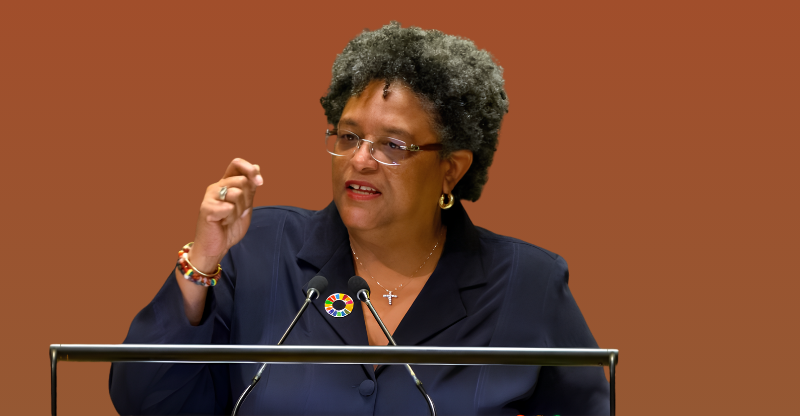
During Tuesday’s debate on the landmark Protection of Wages Bill in Barbados’ House of Assembly, Prime Minister Mia Mottley issued a stark warning to local business operators: companies that chase excessive short-term profits by cutting corners on worker compensation and working conditions are sabotaging their own long-term success.
Mottley, who addressed the chamber amid emerging allegations of workplace abuse against a major local construction and engineering firm, argued that the unsustainable pursuit of “fast money” can never be the foundation of a truly successful enterprise. When businesses squeeze every possible dollar out of their workforce, she explained, the outcome is almost always widespread employee dissatisfaction and what she termed “malicious compliance” — a disengageed approach to work that erodes operational performance from the inside out.
Her comments came in the wake of formal accusations levelled against the JADA Group by the Barbados Workers Union, which is led by government backbench MP Toni Moore. Following the union’s claims that the construction firm had forced its mostly migrant workforce to endure squalid living and working arrangements, Mottley conducted an unplanned on-site inspection of the JADA project to assess conditions firsthand.
In her address to parliament, the prime minister outlined specific, disturbing details that underscored the need for stronger worker protection frameworks. She pointed to reports that up to 80 workers were being housed in ramshackle temporary structures, with no access to basic facilities for cleaning or cooking. Additionally, she said, workers were routinely forced to log far more than the standard 40-hour work week without receiving legally required overtime pay.
While Mottley did not name the JADA Group explicitly in her parliamentary comments, the clear reference to the ongoing controversy highlighted the government’s commitment to cracking down on exploitative labor practices. She emphasized that employee experience is inextricably linked to every core metric of business success: from workplace productivity to customer service quality to long-term brand reputation.
“When an employee does not feel valued, they cannot bring that sense of care and respect to customer interactions,” Mottley explained. “That doesn’t just hurt tips or gratuities for the worker — it drives away future business for the company.” Employers that cut corners on safe, dignified working conditions do not just harm their staff, she added — they ultimately undermine their own day-to-day operations and future growth.
The prime minister pushed back against the pervasive business mindset that frames large profits as dependent on cutting labor costs. She argued that properly treated, well-compensated workers deliver higher productivity that directly boosts a company’s market competitiveness. “If treated properly, if fed properly, workers will give you a level of productivity in most instances that will make the difference between how competitive your business is or not,” she said.
Closing her remarks, Mottley called for a fundamental shift in how Barbadian businesses view their workforce. “We have to move away from this thing of believing that companies can only make egregious profits, excess profits, large profits on the backs of human beings,” she said, reaffirming that the Protection of Wages Bill is a critical step toward ensuring fair labor standards across the country. Companies that continue to prioritize maximum profit extraction over worker well-being, she warned, will only put their own long-term viability at risk.
-
Scott’s Head Committee equips students with back-to-school supplies
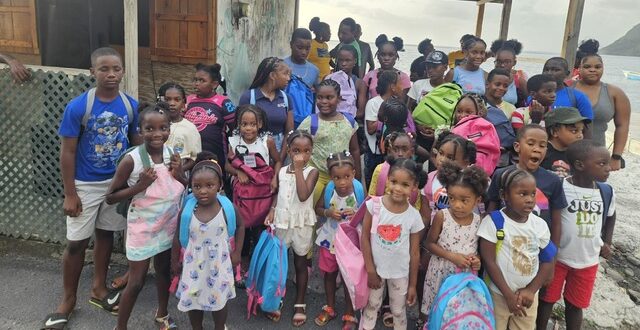
As the new academic year approaches, students across the coastal community of Scott’s Head in Dominica will head to class fully equipped with learning tools, thanks to a grassroots community initiative organized by the Scott’s Head Reunion and Enhancement Committee. The all-volunteer organization has completed distribution of stocked backpacks and core educational materials to every school-aged child in the area, covering students from early pre-primary education all the way through secondary school.
Each backpack distributed through the program is filled with grade-appropriate essentials, including exercise notebooks, rulers, pencil sharpeners, and a range of other basic learning supplies designed to remove financial barriers for local families ahead of the school year. What began as a community-focused effort for Scott’s Head quickly expanded its reach to support neighboring communities in the Parish of St. Mark. Extra supplies were delivered to Soufriere Primary School to support vulnerable students from the Gallion and Soufriere areas, while Soufriere Preschool received dedicated educational resources to assist both its teaching staff and enrolled children.
The committee’s commitment to supporting local education does not end with the back-to-school distribution. When classes officially begin, the organization will follow up with a food supply donation to bolster Soufriere Primary School’s school feeding program, an effort aimed at addressing food insecurity and supporting consistent student attendance.
A key detail that sets this initiative apart is its fully community-funded model. The committee confirmed that 100 percent of the funds for the Backpack Back-to-School Initiative came from voluntary donations from people connected to Scott’s Head, including both current local residents and members of the Scott’s Head diaspora living abroad. This collective giving model reflects a shared investment in the next generation of the community.
Deborah Detouche, Senior Secretary of the Scott’s Head Reunion and Enhancement Committee, emphasized that the group’s core mission centers on removing barriers to educational success. “Our goal is to make sure every child in Scott’s Head and across St. Mark Parish has both the encouragement and the tangible resources they need to thrive in school and reach their goals,” Detouche said, reaffirming the organization’s long-term commitment to lifting up local education and youth development.
Committee Chairman Stevenson “Jeff” Bellot echoed that sentiment, extending gratitude to all local and diaspora donors who made the initiative possible. Bellot noted that continued collaboration between residents at home and abroad will be key to building a stronger, more self-sufficient Scott’s Head for future generations. Beyond education advocacy, Bellot also used the platform to raise two key community development priorities: he appealed to national and local authorities to construct a much-needed public washroom in Scott’s Head’s downtown area, and called on decision-makers to implement mandatory community consultation before advancing any local development projects, arguing that residents deserve a meaningful voice in decisions that shape their village.
Looking ahead, the Scott’s Head Reunion and Enhancement Committee has a full slate of additional community-building initiatives planned for the coming months. Later this year, the group will host a community-wide football tournament to encourage local recreation and connection, followed by the Second Annual Christmas Village, which will be held at an expanded venue in Scott’s Head to accommodate greater community participation. These events are designed as part of a broader strategy to create new economic and social opportunities for residents, strengthen collective community spirit, and raise the overall quality of life for everyone in Scott’s Head.
-
Opposition MP Duncan arrested for flying drone- Walrond
On Tuesday, just days after the deadly MV Barima ferry disaster in Guyana, a sitting opposition parliamentarian from A Partnership for National Unity (APNU) was taken into police custody over allegations of operating an unlicensed drone in the disaster response zone.
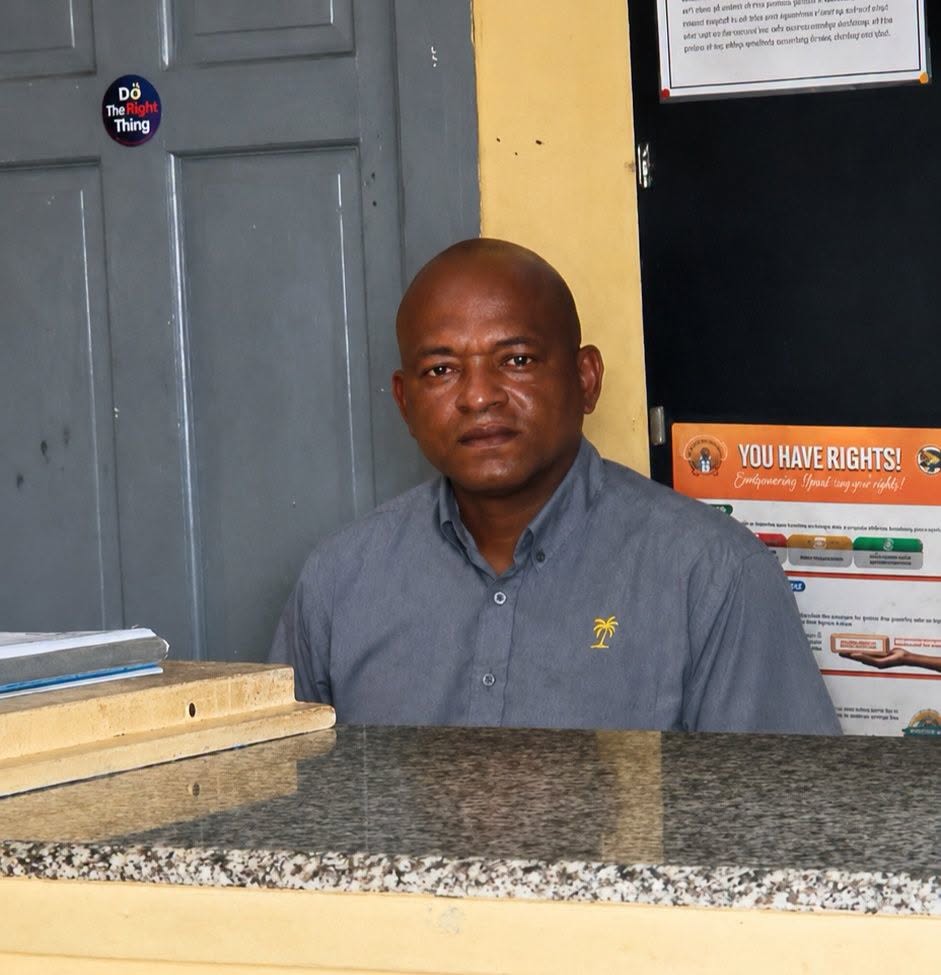
Sherod Duncan, the APNU lawmaker in question, was apprehended and transported to the Charity Police Station following the incident, Guyana’s Home Affairs Minister Oneidge Walrond confirmed to reporters on Wednesday. According to Walrold, national aviation regulations mandate that all drone operations require official government authorization, and Duncan did not hold a valid permit for the flight he conducted. The minister also noted that Duncan was released from police custody later the same day, though she could not confirm whether he secured his release through cash bail or personal recognizance.
The arrest comes against the backdrop of an ongoing large-scale search, rescue, and recovery operation launched after the MV Barima ferry capsized last Saturday, which has left multiple people missing and sent shockwaves through the coastal South American nation. Captain Learie Barclay, head of the Aviation Operators Association of Guyana, had previously issued a public warning calling on all drone pilots to avoid the disaster response area. He emphasized that low-flying manned aircraft are actively working in the airspace to support recovery efforts, and unauthorized unmanned flight poses a serious collision risk to these critical operations.
Duncan has pushed back on the narrative that he was deliberately violating emergency flight restrictions, though he could not be reached for immediate independent comment following his release. In a post shared to his official Facebook page, titled Credible Sources, Duncan claimed he was simply engaging with local Warrao children and demonstrating a small drone to the young group when plainclothes and uniformed police officers arrived on scene, ordering him and other accompanying parliamentarians to vacate the area immediately.
If prosecutors choose to move forward with formal charges and Duncan is ultimately convicted of violating Guyana’s drone regulations, he faces significant penalties: the court could order his drone seized for a fixed period of time, and the lawmaker could also be issued a substantial monetary fine. The incident has already sparked emerging tensions between Guyana’s ruling government and opposition bloc, with many political observers watching to see how the case develops in the coming days.
-
Malvinas: the strength of a just cause
Written by Pablo Quirno, Minister of Foreign Affairs, International Trade and Worship of the Argentine Republic
Weeks ago, the long-standing Malvinas Islands sovereignty dispute re-emerged as a key topic on the global diplomatic agenda. Three major multilateral bodies and blocs — the Organization of American States (OAS), the United Nations Special Committee on Decolonization (C24), and Mercosur member and associate states — have once again issued a joint call for Argentina and the United Kingdom to restart bilateral negotiations to resolve the dispute through peaceful means. This wave of renewed international backing creates a critical moment to reflect on what the Malvinas cause means for Argentina’s past, present and future as a nation.
Every new international statement on the issue confirms that the dispute remains unresolved and retains global relevance. For Argentina, the meaning of the Malvinas extends far beyond annual commemorations of key national moments marked on April 2 and June 10. Upholding the country’s sovereign rights over the territory is not a task limited to these anniversaries; it is a daily commitment that shapes every pillar of Argentina’s foreign policy.
The recent resolutions adopted at the OAS and UN hold substantial political and diplomatic weight. In both forums, the international community clearly reaffirmed a core truth: a formal sovereignty dispute exists between Argentina and the United Kingdom over the Malvinas, South Georgias, South Sandwich Islands, and the surrounding maritime areas. All participating bodies agreed that the only path to a just resolution lies in peaceful bilateral negotiations aligned with international law.
While resolutions alone cannot end the dispute, their enduring value lies in upholding the UN-mandated obligation for both parties to negotiate, while increasingly highlighting the United Kingdom’s ongoing refusal to comply with this international mandate. Maintaining Argentina’s position demands consistent, deliberate effort: every international consensus is built, defended, and advanced through active, persistent, technically rigorous diplomacy. At Argentina’s Ministry of Foreign Affairs, we advance our national position in every multilateral forum, hold dialogue with governments across every region, lay out the solid legal foundations of our claim, explain why the principle of self-determination does not apply to this specific dispute, and strengthen a global network of shared support that keeps the legitimacy of our cause alive. The Malvinas claim is not Argentina’s fight alone: history, international law, and the global community of nations all converge to uphold the legitimacy of our position.
### A Cause Rooted in Justice and National Identity
The Malvinas hold a deep, unshakable place in Argentina’s national consciousness because their significance goes far beyond territorial cartography. They embody our core national principles: territorial integrity, our maritime claims, our bicontinental identity, our natural wealth, and our strategic standing in the South Atlantic. Argentina cannot be defined without these core dimensions. The South Atlantic is our nation’s strategic heartland, where Patagonia, our maritime territory, Antarctica, our continental shelf, and a critical portion of our national future converge.
Guided by this long-held national conviction, President Javier Milei has reaffirmed that Argentina’s claim is legitimate and can never be renounced. As foreign minister, I am honored to carry the mandate to uphold this cause with unwavering firmness and perseverance. This is not just another item on our foreign policy agenda. It is an institutional responsibility that binds us to our National Constitution, our national history, and every Argentine citizen who understands that sovereignty must be defended through consistent action. This responsibility also requires us to repeatedly demonstrate why international law unequivocally supports Argentina’s position.
Our claim is built on solid historical and legal foundations that Argentina has defended consistently since gaining independence. As the legal successor to Spain’s territorial rights under the principle of state succession, Argentina exercised formal governing authority over the islands, officially took possession in 1820, and established a local Political and Military Commandancy in 1829. In 1833, the United Kingdom seized the islands through an act of force that Argentina never consented to. This act violated Argentina’s territorial integrity, expelled our legitimate national authorities and the Argentine population that had lawfully settled the territory, resettled the area with British settlers, and barred Argentine citizens from returning to live on the islands.
This 19th-century act of force created a colonial situation that persists to this day. Argentina has never accepted the occupation, and has maintained a consistent, peaceful, law-based protest against it for nearly two centuries. In 1965, United Nations General Assembly Resolution 2065 marked a key turning point: it formally recognized the existence of the sovereignty dispute and established bilateral negotiations as the only legitimate path to resolution, while noting the need to take into account the interests of the islands’ inhabitants. Since that resolution, the international community has consistently recognized an unignorable legal fact: the sovereignty dispute remains unresolved.
A common misconception claims that the 1982 South Atlantic conflict brought an end to the dispute. The historical and diplomatic record proves otherwise. Just five months after hostilities ended, the UN General Assembly adopted Resolution 37/9, which once again called on Argentina and the United Kingdom to resume negotiations. The conflict did not change the legal status of the dispute, nor did it resolve it. Then, as now, the international community has reaffirmed that a peaceful negotiated solution is the only acceptable path forward.
The Malvinas dispute is not an ordinary decolonization case, and the principle of self-determination does not apply to it. It is a unique colonial situation that originated from the violation of Argentina’s territorial integrity. The passage of time cannot turn an illegal occupation into a legitimate claim to sovereignty, and it will never break Argentina’s territorial unity. The UN upholds both the self-determination of peoples and the territorial integrity of states, and the UN itself determines which principle applies based on the specific circumstances of each case. More than 60 years ago, Ambassador José María Ruda summarized this point with a clarity that still holds today: the Malvinas question centers on the principle of Argentina’s territorial integrity.
This is exactly the interpretation the UN General Assembly adopted. It recognized that the dispute arose from the 1833 forceful occupation of part of Argentine territory, so it never ruled that self-determination applies to the case. Instead, it has consistently held that a solution must be negotiated between the two parties, with consideration for the interests of the islands’ inhabitants.
### Avoiding the Unilateral Referendum Trap
This same legal reasoning explains why the UN distinguishes between the interests of the islands’ inhabitants and any claims they might make about sovereignty. Argentina’s National Constitution explicitly states that the full recovery of sovereignty must be achieved while respecting the existing way of life of the islanders and complying with international law — this is a permanent commitment from Argentina. However, there is no legal basis for the claim that a population artificially placed on the territory by the occupying power can unilaterally determine the sovereignty of the disputed territory. For this reason, no referendum organized unilaterally by the United Kingdom can carry any legal weight for a dispute that must be resolved exclusively through negotiations between Argentina and the United Kingdom. We will not fall into the referendum trap.
### The Strength of Argentina’s Legal and Diplomatic Position
The latest round of international support demonstrates the broad global backing for Argentina’s position. At the OAS, the region unanimously adopted a declaration reaffirming that the Malvinas question is an enduring issue of hemispheric concern. At C24, all Latin American member states co-sponsored the resolution supporting negotiations, which was adopted by full consensus. This broad backing is further reinforced by consistent support from Mercosur, CELAC, Ibero-American Summits, the Brasilia Consensus, the Zone of Peace and Cooperation of the South Atlantic, the Group of 77 and China, SICA, and many other multilateral frameworks.
To all the countries that stand with us, the Argentine Republic extends its sincere gratitude. Their commitment to upholding international law strengthens the diplomatic capital that allows us to keep our claim alive and raises the political cost of the United Kingdom’s ongoing refusal to negotiate. Another key point to highlight is that the UN has not only called for negotiations: since Resolution 31/49, it has explicitly required both parties to avoid making any unilateral changes to the status quo while the dispute remains unresolved. The meaning of this mandate is unambiguous: neither side can exploit the ongoing dispute to consolidate new facts on the ground or make decisions about natural resources whose ownership remains contested.
Despite this clear international mandate, the United Kingdom has ignored this call for decades. It has continued to explore and exploit natural resources in the disputed area, issued unauthorized exploration licenses, and maintained a disproportionate military presence on the islands. Argentina has consistently responded to these violations in line with our long-standing diplomatic position. Argentine law prohibits hydrocarbon exploration and exploitation on our continental shelf without prior authorization from Argentine authorities, and any actor that engages in these activities faces legal penalties. This policy protects natural resources that belong to all Argentine citizens, whose use can only be fully decided once the dispute is resolved through legal means. Protecting our resources is protecting a core part of Argentina’s national wealth.
The scale of the British military deployment on the islands speaks for itself. The islands are home to only around 3,000 civilian residents, yet the United Kingdom deploys approximately 1,200 military personnel there. This disproportionate ratio clearly reflects the tactical nature of the British occupation. For the United Kingdom, the Malvinas are not a core part of national identity; they are a strategic enclave used to protect British military, economic, and geopolitical interests in a critical region of the Southern Hemisphere.
The Sea Lion oil development project is one of the clearest examples of the United Kingdom’s violation of the UN mandate. In December 2025, Rockhopper Exploration Plc and Navitas Petroleum Development and Production Limited announced a final investment decision to develop this field in the Northern Malvinas Basin, relying on invalid licenses issued by illegitimate local authorities appointed by the United Kingdom. Every unilateral action taken by the United Kingdom only confirms that the dispute remains unresolved, and every international resolution reminds the global community that there is only one legitimate path to resolution.
Argentina has formally rejected this unilateral action, reserved all our legal rights, and made clear that any actor that engages in or facilitates illegal activities in the disputed area will face administrative and criminal penalties, as well as legal action in both domestic and international courts. Defending our territorial integrity is also defending Argentina’s sovereign maritime domain.
### An Intergenerational National Commitment
The Malvinas also live forever in the memory of our war veterans, the families of those who lost their lives in the 1982 conflict, and every Argentine household that speaks the name Malvinas with respect. They have given this cause a moral weight that no public official can ever forget. Every diplomatic win we achieve also honors this legacy, and their sacrifice demands that our public policy and foreign policy live up to their example.
For this reason, we will continue our work. We will remain active at the UN, OAS, and every multilateral forum and bilateral dialogue where our rights need to be defended. We will respond unequivocally to every unilateral action, no matter what form it takes. We will stand firm, guided by the conviction that just causes demand strategic patience, national unity, and unwavering perseverance.
Argentina’s commitment to a negotiated solution remains unchanged. I am convinced that the final solution will be peaceful, diplomatic, and aligned with international law. This willingness to negotiate goes hand in hand with an unchangeable certainty: Argentina’s claim is not weakened by the passage of time, and it will never be renounced or abandoned.
The Malvinas are part of our history, our territory, our seas, our national memory, and our national destiny. Their cause is an intergenerational promise, the voice of a nation that knows how to wait without surrendering, and how to assert its rights without giving in. Every day, I renew my commitment to this mandate, knowing that there is no greater honor for a Argentine foreign minister than to bring the voice of this legitimate cause to the world, and champion it with the same passion that millions of my fellow Argentines hold for it. This is the greatest honor and commitment any Argentine citizen can carry, and it is my personal promise.
By history, by right, and by conviction, the Malvinas are Argentine.
Disclaimer: The opinions expressed in this article are those of the author alone, and do not necessarily reflect the editorial stance of iWitness News.
-
Promising 16-member team to represent Barbados at World Athletics Under 20 Championships
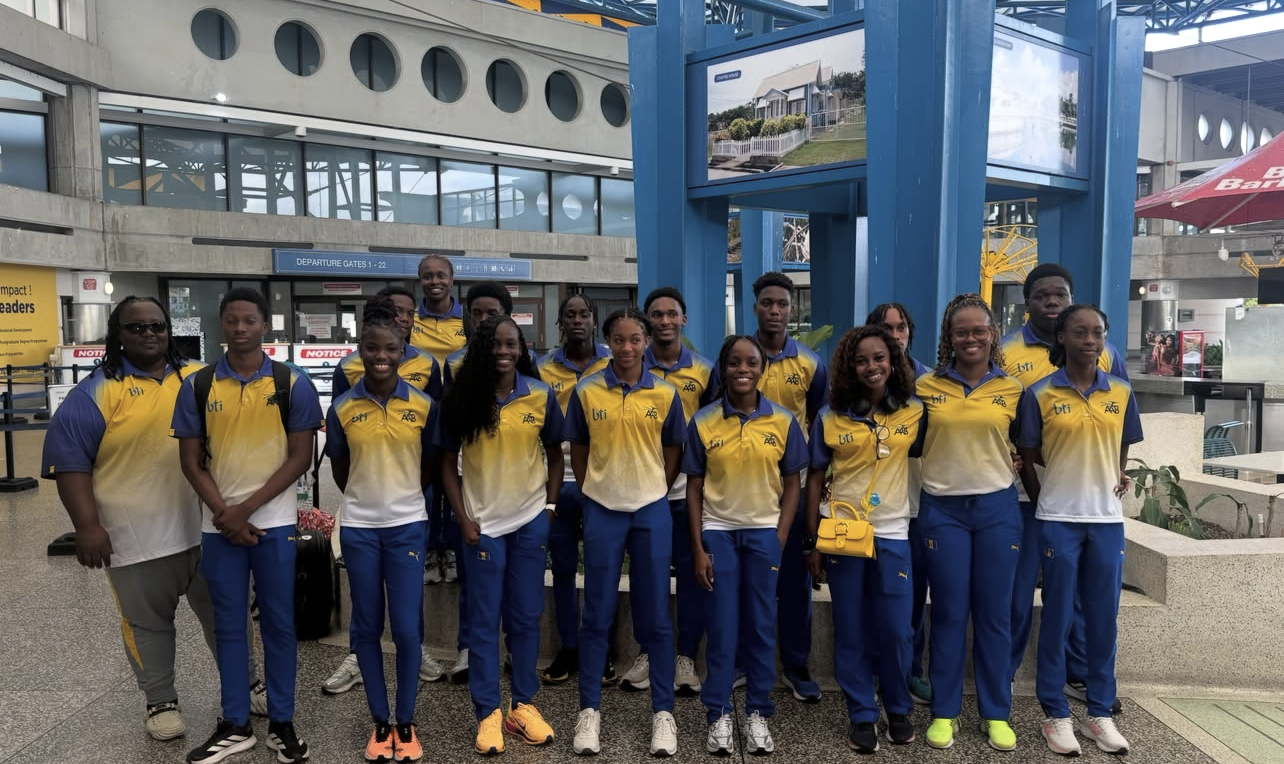
As the global athletics community prepares for the 2024 World Athletics Under-20 Championships, set to unfold from August 5 to 9 in Eugene, Oregon, Barbados is set to compete with what the head of its national governing body calls the most talented youth track and field delegation the island nation has ever sent to an international competition. The 16-member team departed Barbados earlier this week, and Amateur Athletics Association of Barbados (AAAB) president Noel Lynch has expressed high confidence that this cohort of young athletes has the skill and experience to compete for medals against the best junior competitors from around the globe. “Each athlete on this squad has already proven they can compete at the highest junior level, and they have already earned their place as world-class competitors,” Lynch said in remarks following the team’s sendoff. Lynch highlighted four standouts he believes are most likely to reach the podium, starting with shot putter Jayden Walcott. “Any young thrower who can put the shot over 20 meters is a lock for the final and a serious contender for a medal at any global junior championship, and that’s exactly what Jayden has done,” he explained. 400-meter runner Kadia Rock is another athlete Lynch expects to perform well. Rock enters the championships on a hot streak, capturing silver medals at both the 2024 CARIFTA Games and the NACAC Championships held earlier this year in Mexico. At the NACAC event, she ran a personal best 51.04 seconds in the 400m – a time that while achieved at high altitude, still puts her in medal contention in Oregon. Sprinter Jayden Green, who competes in the 200-meter, has also earned high praise from Lynch, after clocking back-to-back personal best times at the Barbados Grand Prix and the NACAC Championships. The AAAB president also singled out Shamari Greenidge-Lewis, who anchored the Barbados under-20 4x400m relay team to a new meet record and gold medal at this year’s CARIFTA Games in Grenada. Greenidge-Lewis ran 46.35 seconds for the open 400m at Mexico’s high-altitude NACAC event, and his personal best sits at 46.2 seconds. Lynch notes that the young runner has the potential to break the 46-second barrier under the right conditions in Oregon. One of the most high-profile additions to this year’s squad is Amir Thompson, a promising young sprinter based in the United States and the son of two Olympic medalists: Barbados’ own Obadele Thompson and American sprint legend Marion Jones. Lynch called Thompson’s decision to represent his father’s home country a major win for Barbados athletics. “He’s run a wind-assisted 9.95 seconds in the 100m, and his personal best for 200m is 20.37 seconds. Having someone of his caliber choose to compete for Barbados is a huge deal for our program,” Lynch said. Thompson is not the only US-born athlete on the squad; he will be joined by Taylor Foster, a young female hurdler who ranks first among junior hurdlers in New York State and among the top five in the entire United States for the 100m hurdles. Distance runner Ashlyn Simmons, who has won multiple CARIFTA Games medals in middle distance events, is another young competitor Lynch expects to turn heads in Eugene, noting that she still has massive untapped potential. After reviewing the form of every athlete on the squad and analyzing the global competition field, Lynch says he is confident Barbados will leave Oregon with no fewer than five medals. Beyond the World Under-20 Championships, Lynch also previewed upcoming performances for Barbadian athletes at the upcoming CAC Games and Commonwealth Games, highlighting defending Commonwealth 400m champion and national record holder Sada Williams. “I think she is going to do incredibly well in Birmingham,” Lynch said, noting that while Williams recently lost her long-time coach Stephen Francis, she has maintained excellent form and is on track to defend her title. Lynch went so far as to call Williams the greatest female athlete to ever come out of Barbados’ athletics program. Lynch also used the interview as an opportunity to pay tribute to Barbadian sports icon The Right Excellent Sir Garfield Sobers, who passed away on July 17. Sobers, widely considered one of the greatest cricket players of all time, left a legacy that extends far beyond the pitch to inspire all Barbadian athletes across every sport, Lynch said. “Sir Garfield set a standard of excellence that every young Barbadian athlete, no matter what sport they play, can aspire to. He proved that even from our small 166-square-mile island, you can reach the very top of global sports,” Lynch added. Full Roster of the 2024 Barbados World Under-20 Athletics Team: Female athletes: Alika Harewood, Aniya Nurse, Ariel Archer, Ashlyn Simmons, Kadia Rock, Nyah Clarke, Taylor Foster Male athletes: Aidan Moore, Amir Thompson, Jahkye Brewster, Jayden Green, Jayden Walcott, Nadal Seale, Rashad Gibson, Shamari Greenidge-Lewis, Zachary Wall Management team: Rene Layne (Team Manager), Ramon Armstrong (Head Coach), Alywn Babb (Coach), Shonelle Trotman (Sports Therapist)
-
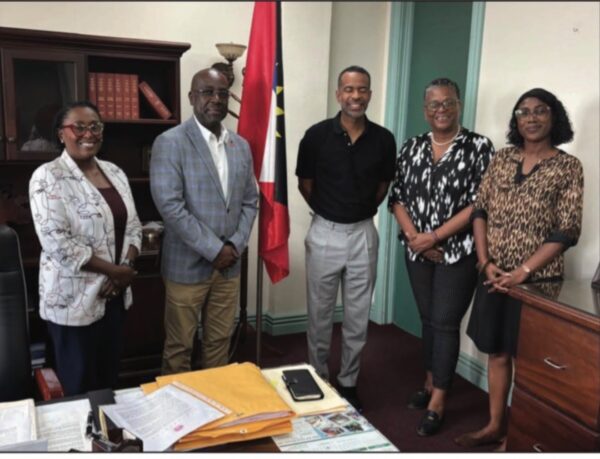
André Hill Appointed Antigua and Barbuda’s Honorary Consul to The Bahamas
In a move set to deepen diplomatic and people-to-people connections between two neighboring Caribbean nations, Antiguan attorney André Hill has taken up the post of Honorary Consul to The Bahamas, with his appointment taking immediate effect.
Shortly after the announcement, Hill held a formal meeting with Antigua and Barbuda’s Minister of Foreign Affairs E.P. Chet Greene and senior leadership from the Ministry of Foreign Affairs. The gathering centered on clarifying Hill’s new scope of duties, and exploring how his on-the-ground work in The Bahamas will advance both the current and long-term policy goals of the Antiguan foreign ministry.
Ann Marie Layne, Director General of Foreign Affairs for Antigua and Barbuda, outlined a core function of Hill’s new role: he will act as the primary point of contact for all Antigua and Barbuda nationals residing in or visiting The Bahamas who need consular support or official government services.
Hill’s deep personal connections to The Bahamas position him well for the role: he has resided in the country for a number of years and is married to a Bahamian citizen. He also comes from a prominent public service family: his father Radford Hill previously served as Antigua and Barbuda’s Attorney General, and his mother Cecile Hill currently holds the position of High Court Registrar.
As a practicing legal professional with established roots in The Bahamas, Hill’s appointment is widely expected to significantly strengthen Antigua and Barbuda’s diplomatic footprint in the region, while improving access to critical support for its citizens living across the border in The Bahamas.