作者: admin

  • PCA probes police shooting death

    PCA probes police shooting death

    An independent oversight body has launched a official investigation into the fatal shooting of 43-year-old Shakeel Smart by law enforcement officers that took place late Sunday night in the Cascade community of Trinidad. David West, director of the Police Complaints Authority (PCA), confirmed the ongoing enquiry to reporters this week, noting that Smart’s death marks the ninth fatal shooting involving police personnel in the country since the start of the calendar year.

    According to initial accounts from the Trinidad and Tobago Police Service, the incident unfolded just after 10 p.m. Sunday, when officers assigned to the Guard and Emergency Branch were conducting routine patrols along Cascade Main Road. During their patrol, the officers spotted a white Nissan AD Wagon carrying three male occupants that drew their attention. When the vehicle’s occupants noticed the police presence, the driver immediately accelerated away from the scene, triggering a high-speed pursuit that wound through local roads all the way to Hololo Mountain Road.

    Police officials stated that during the cross-community chase, individuals inside the fleeing vehicle fired gunshots at the pursuing officers, prompting the officers to return fire in response. The pursuit came to a halt close to a private villa along Hololo Mountain Road, when the driver lost control of the vehicle and crashed off the paved roadway. All three men exited the damaged vehicle immediately after the crash; two of the suspects managed to escape into the surrounding wooded terrain on foot, while Smart remained at the scene, having collapsed from his gunshot injuries.

    Emergency medical responders transported the wounded Smart to Port of Spain General Hospital, but medical staff pronounced him dead upon his arrival at the facility. Law enforcement teams launched an immediate manhunt for the two remaining at-large suspects, but as of the latest update, no arrests have been made and the two men remain at large. A forensic post-mortem examination, scheduled to determine the exact cause and manner of Smart’s death, is set to be conducted this week at the Forensic Science Centre located in Federation Park. The PCA’s independent investigation will examine whether the officers’ use of deadly force complied with official police protocols and national law.

  • Weather update: COE maintains 18 provinces on yellow alert

    Weather update: COE maintains 18 provinces on yellow alert

    Residents of the Dominican Republic are navigating heightened weather risk this week, after national emergency officials rolled out multi-level alerts across nearly the entire country in response to sustained downpours and rapidly worsening soil saturation.

    The Emergency Operations Center (COE), relying on real-time data and forecasts from two leading national agencies—the Dominican Institute of Meteorology and the National Institute of Hydraulic Resources—implemented the alert system, placing 18 provinces and the country’s National District under yellow alert, with an additional nine provinces classified under green alert.

    Weather officials have cautioned that current atmospheric conditions remain primed for continued precipitation across much of the nation, which in turn amplifies a range of dangerous threats for communities in affected zones. These risks include flash urban flooding, overflowing riverbanks, landslides on saturated hillsides, and other weather-related emergencies that can threaten both life and property.

    In a series of public advisories released alongside the alert declaration, COE has pushed clear safety guidance to help residents mitigate harm. The agency strongly urges the public to avoid attempting to cross swollen rivers, streams, and ravines, even if the water appears shallow enough to traverse. It also asks people living in alert zones to steer clear of recreational bodies of water, where hidden hazards from shifting currents and debris can create unexpected danger.

    Maritime safety guidance has also been issued for coastal operators. Small and medium-sized watercraft working along the Dominican Republic’s Atlantic coast, stretching from Cabo San Rafael in the east to Punta de Manzanillo in the west, are told to exercise extreme caution while navigating, and to refrain from traveling far offshore due to dangerous rough sea conditions. By contrast, COE confirmed that sea conditions along the country’s Caribbean coastline remain stable and normal for commercial and recreational activity.

  • Raquel Peña assesses flood damage in Bahoruco communities

    Raquel Peña assesses flood damage in Bahoruco communities

    Recent heavy rainfall has triggered destructive flooding in the southern Dominican province of Bahoruco, after the El Manguito River overflowed its banks, leaving widespread damage to residential areas, infrastructure, and farmland across local communities. In response to the disaster, Vice President Raquel Peña launched an official on-site visit to the hard-hit neighborhoods of El Estero and Jaragua, carrying out a presidential mandate from head of state Luis Abinader to evaluate the scope of the crisis and meet directly with affected populations.

    During her tour of flood-impacted zones, Peña walked through waterlogged neighborhoods to inspect collapsed home foundations, washed-out road segments, and saturated agricultural plots, holding face-to-face talks with local residents, small-scale farmers, and community organizers to catalog their most pressing unmet needs. The vice president’s visit prioritized centering community voices, allowing local stakeholders to outline how the flood has disrupted their daily lives, destroyed livelihoods, and left hundreds of families without basic resources.

    To deliver immediate relief to impacted communities, the national government rolled out emergency support within days of the disaster: 800 pre-packaged food rations were distributed to vulnerable households through the country’s Directorate of Social Assistance and Community Food. Beyond this initial aid, officials announced that a team of technical specialists will conduct a systematic, full-scale assessment to calculate the total economic and structural damage caused by the flooding. This assessment will inform the distribution of additional long-term support, including replacement household goods and targeted funding for roof repairs for damaged homes.

    Top government officials have reaffirmed that the national administration will maintain a sustained presence in Bahoruco, continuing to monitor evolving flood conditions, coordinate closely with local government teams and community organizations, and address both the immediate aftermath of the disaster and long-term resilience needs. The commitment extends to preparing for potential future rainfall events, with plans to implement mitigation measures that reduce the risk of similar damage for local communities going forward.

  • Wetenschappelijk personeel AdeKUS in actie ondanks eerder overleg met vicepresident

    Wetenschappelijk personeel AdeKUS in actie ondanks eerder overleg met vicepresident

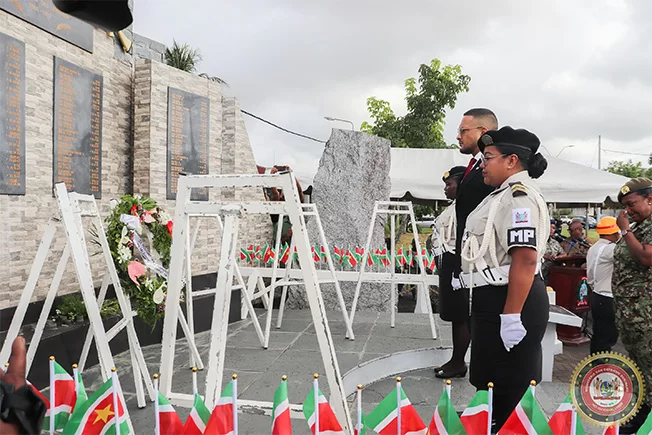
    A long-running labor dispute at Suriname’s leading higher education institution has escalated, after academic staff voted overwhelmingly to reject a revised employment proposal from university management and continue their industrial action indefinitely. The decision was announced Monday following a general assembly meeting of the Vakvereniging Wetenschappelijk Personeel Universiteit (VWPU), the trade union representing scientific and academic employees at Anton de Kom Universiteit van Suriname (AdeKUS).

    The rejection marks a breakdown in the tentative progress made just last week, when union representatives held mediated talks with Suriname’s Vice President Gregory Rusland. Both sides described that meeting as constructive, and the union agreed to a temporary pause of work stoppages to allow space for negotiations on long-standing grievances. The core issues at the center of the dispute center on inadequate working conditions and subpar institutional facilities for academic staff, which both parties committed to addressing during the April talks.

    Despite weeks of back-and-forth negotiation, the revised proposal submitted in writing by the AdeKUS university board on April 11 failed to win the union’s approval. Union members have reaffirmed their commitment to the original set of demands the organization first submitted on January 30, 2026, stating that the revised plan did not go far enough to resolve their core concerns.

    VWPU representatives acknowledge that widespread dissatisfaction persists among their membership even amid ongoing dialogue, though the union has confirmed it remains open to further negotiation. The organization has stated its intent to hold a new round of talks with university leadership this week in an effort to reach a mutually acceptable resolution.

    Until an agreement is reached, all formal academic activities at AdeKUS will remain suspended. Under the current work stoppage, no in-person or virtual lectures are being held, and academic staff are not providing supervision for student research projects, thesis work or graduation requirements, leaving thousands of undergraduate and graduate students in academic limbo.

  • Chamber of Deputies transfers property for INFOTEP tourism school

    Chamber of Deputies transfers property for INFOTEP tourism school

    SANTO DOMINGO — The Dominican Chamber of Deputies has greenlit a strategic transfer of state-owned property, greenlighting a major project aimed at boosting youth employment in the country’s critical tourism sector. The sprawling Legislator’s Club, an approximately 9,000-square-meter facility located in the eastern district of the capital Santo Domingo, will be handed over first to the General Directorate of National Assets, which will subsequently reassign the site to the National Institute of Technical and Professional Training (INFOTEP), according to an official announcement from the lower legislative chamber.

    Alfredo Pacheco, president of the Chamber of Deputies, laid out the goals of the property repurposing in a public briefing. He noted that the location was selected for its accessibility and size, which makes it ideal for hosting hands-on training facilities, lecture halls, and simulated work environments tailored to the needs of the tourism industry. Once the facility is redeveloped, INFOTEP will roll out a suite of specialized technical training programs designed to equip new entrants to the workforce with industry-relevant skills, opening up accessible career pathways for thousands of young Dominicans interested in building long-term careers in hospitality, travel management, culinary arts, eco-tourism, and other fast-growing sub-sectors of the national tourism industry.

    The transfer process already has full legal backing, with executive decrees already issued that formally classify the property as a public utility asset designated for educational use. This project is not an isolated policy adjustment, but rather a core component of a wider national initiative to reallocate underused state assets toward public education and workforce development. Government officials say the initiative prioritizes investments that align with the country’s long-term economic growth goals, given that tourism consistently ranks as one of the Dominican Republic’s largest sources of foreign exchange and job creation for working-age people.

  • Sudden temperature drop caused rare hailstorm in Bayahíbe

    Sudden temperature drop caused rare hailstorm in Bayahíbe

    On a Monday in Bayahíbe, an unexpected hailstorm caught local residents off guard, and new analysis from researchers at the Pontifical Catholic University Madre y Maestra (PUCMM) has pinpointed the rare atmospheric conditions that drove the extreme weather event. The research team confirms that unusual atmospheric behavior was at the core of the storm, which brought an unprecedented 12°C temperature plunge over just 45 minutes.

    According to the study’s peer-reviewed findings, the hailstorm formed when a mass of cold air collided directly with a warm, moisture-saturated air mass sitting over the coastal region. Between 3:00 p.m. and 3:45 p.m. local time, this clash dragged temperatures down from a balmy 32°C to a cool 20°C. The stark temperature contrast between the two air masses generated powerful upward air currents within the developing storm clouds. These strong updrafts lifted tiny water droplets high into the freezing upper layers of the cloud, where the droplets froze into ice pellets that grew into hailstones before falling to the ground.

    The data behind these conclusions was collected from a network of environmental sensors and a dedicated local weather station, placed in Bayahíbe as part of a broader national climate adaptation research initiative. Beyond explaining the hailstorm, the monitoring network has also detected shifting rainfall patterns across the region that deviate from historical norms. As of the current point in 2026, total accumulated rainfall in Bayahíbe has already hit 1,392.9 millimeters – far exceeding the full historical annual average of 970 millimeters. The month of April alone recorded 113.8 millimeters of rain, signaling a significant departure from long-term trends.

    This local research effort is designed specifically to boost climate resilience for at-risk coastal communities like Bayahíbe, which are disproportionately vulnerable to the impacts of shifting weather patterns and increasing extreme weather events. By generating granular, hyper-local climate data, the initiative aims to provide policymakers and community leaders with evidence-based insights to support more effective planning, disaster preparedness, and adaptation decision-making. The hailstorm analysis underscores a key takeaway: targeted local climate research is an essential tool to help communities anticipate, prepare for, and respond to the growing frequency of extreme weather events driven by changing global climate conditions.

  • A Party forged in struggle

    A Party forged in struggle

    As April 16 approaches, the Communist Party of Cuba (PCC), the legitimate heir to the Cuban people’s century-long revolutionary legacy, is gearing up to mark its founding date with reinvigorated commitment to safeguarding national unity, the landmark achievements of the Cuban Revolution, and a history of struggle stretching back more than 100 years. This iconic date is tied directly to the 1961 Battle of Playa Girón—better known internationally as the Bay of Pigs invasion—when the entire Cuban population mobilized to defend their sovereign socialist project, a moment that has been formally recognized as the birth of the modern Cuban Communist Party.

    The victory at Playa Girón also marked the first military defeat of U.S. imperialism on American soil. Reflecting on that turning point 15 years after the victory, then-Commander-in-Chief Fidel Castro Ruz emphasized that the PCC was truly forged on the shores of Girón. “It was truly at Bay of Pigs that our Marxist-Leninist Party was born; it is from that date that membership in our Party is counted; from that date on, socialism was forever cemented with the blood of our workers, peasants, and students,” Castro stated in 1976. He added that the victory reshaped the destiny of all peoples across the continent: “Because, whatever anyone may say, from Girón onward, all the peoples of the Americas were a little freer.”

    Historical experience has taught Cuba that the core strategy of its external adversaries has long rested on the old doctrine of “divide and conquer.” Cuban national hero José Martí first highlighted this threat centuries ago, identifying internal division as the key factor behind the failure of the Ten Years’ War, noting that “no one took our sword from our hands; rather, we let it fall ourselves.” To build a cohesive, organized struggle for independence, Martí founded the Cuban Revolutionary Party, a blueprint that has remained a foundational source of inspiration for every generation of Cuban revolutionaries that followed.

    Today’s PCC carries forward this lineage: it is a unified, Marti-inspired, Fidelist, Marxist-Leninist organization that serves as the organized vanguard of the Cuban nation. Rooted in its deep democratic roots and permanent, close ties to the Cuban people, the PCC holds its position as the supreme political leadership of Cuban society and the Cuban state, a role enshrined in the country’s 2019 constitution, approved by popular national referendum.

    The 2019 constitution formalizes the PCC’s core mandate: it “organizes and guides the common efforts in the construction of socialism and the advance toward a communist society,” while working “to preserve and strengthen the patriotic unity of Cubans and to develop ethical, moral, and civic values.” As the ideological soul of the Cuban nation, the PCC is tasked with nurturing collective consciousness, advancing solidarity, humanism, and internationalism, and upholding the value of dedicated work for the common good.

    Across decades of revolutionary leadership, Fidel Castro repeatedly outlined the PCC’s defining character and purpose. Beyond confirming the Party’s origins at the Bay of Pigs, he stressed that membership in the PCC is not a path to privilege, but a commitment to sacrifice: “Serving in it is not a source of privileges but of sacrifices and total dedication to the revolutionary cause. That is why the best sons and daughters of the working class and the people join it, always ensuring quality over quantity.” Castro repeatedly emphasized the Party’s irreplaceable role in sustaining the revolution, stating plainly: “Without the Party, the Revolution could not exist.” He framed the organization as the enduring heartbeat of the people’s revolution: “Men pass away—as we once said—but the Party is immortal. The Party is the revolutionary soul of the people.”

    Former President Raúl Castro Ruz further expanded on the Party’s operating principles and role. Echoing Fidel’s core guidance, he noted that Party organizations have a duty to cultivate the practice of constructive criticism rooted in the ethos of “combat defects, not men.” Raúl Castro reaffirmed the PCC as the “sure guarantee of the nation’s unity,” noting that its status as the supreme leading force of society and state is enshrined in Article 5 of the Cuban constitution, a provision approved by 97.7 percent of voting Cubans in the 2019 referendum. He emphasized that the Party’s power does not stem from coercive authority, but from moral standing and popular trust: “The Party’s power rests fundamentally on its moral authority, on the influence it exerts over the masses, and on the trust the people place in it. The Party’s actions are based, above all, on the conviction that emanates from its deeds and the correctness of its political line.” Even after decades of navigating crisis, including the harsh economic difficulties of the Special Period, he urged Party cadres to continue working to strengthen their connections and standing among the general public.

    Current Cuban President Miguel Díaz-Canel Bermúdez has carried forward this legacy, outlining the Party’s contemporary mission. He has called on Cubans to view Party membership as an act of intentional commitment to the organization’s core ideals: “We must take pride in joining the ranks of the Party and understand Party membership as an act of dedication to the ideals that the organization defends with passion, joy, and responsibility.” Díaz-Canel summed up the Party’s century-long history as a story of people and unity, noting the PCC was never born of division, unlike traditional electoral parties: “It was born of the unity of all political forces with deeply humanistic ideals that had been forged in the struggle to transform an unequal and unjust country.”

    Under current leadership, the PCC operates according to the core principle of “Unity, Continuity, and Creative Resistance”: unity around the Party, the revolution, and the shared ideology of Martí, Marx, and Fidel; continuity of the nation’s revolutionary legacy and ongoing developmental work; and creative resistance to build and innovate even amid persistent economic shortages and external pressure. Reaffirming the Party’s popular roots, Díaz-Canel emphasized that the PCC is not an elite organization, but a mass party: “We cannot lead based on reports; we must and have to lead with the people, looking at problems head-on and in depth, and confronting them with the greatest possible degree of popular participation.”

  • The Philosophy of Excellence

    The Philosophy of Excellence

    On a Monday morning in mid-April 2026, Cuba’s highest leader, Miguel Díaz-Canel Bermúdez — who holds dual roles as First Secretary of the Central Committee of the Communist Party of Cuba and President of the Republic — undertook an official visit to the Granma Military-Industrial Company, a key industrial facility based in Regla municipality, Havana. He was accompanied by two senior Political Bureau members: Army Corps General Álvaro López Miera, Minister of the Revolutionary Armed Forces (FAR), and Army Corps General Lázaro Alberto Álvarez Casas, Minister of the Interior.

    During the facility tour, the country’s top leadership received a comprehensive briefing from Lázaro Raúl Hernández Gómez, the company’s director and a Fleet Captain. Hernández outlined the company’s operational structure: it comprises 19 distinct production units that employ 686 skilled workers, and it successfully achieved its full annual sales target in 2025, even amid the challenging economic conditions the island nation currently navigates.

    As Hernández explained to the press following the visit, the Granma Military-Industrial Company’s core mandate centers on maintaining, restoring, and guaranteeing the combat readiness of the Revolutionary Armed Forces and the Cuban Navy. In line with a long-running strategy to leverage industrial capacity for national development, the facility has expanded its scope to meet critical demands across the civilian national economy.

    The company is currently pursuing a number of new civilian-focused initiatives, including the manufacturing of floating docks, the modernization of commercial fishing vessels, and production to support the transportation and water resource management sectors. It has also pioneered domestic industrial capability that previously relied on foreign providers: the facility now handles repairs for electric motors ranging from 5 to 500 kW, including electric motors for Chinese-manufactured locomotives that were once sent abroad for maintenance.

    To address the basic needs of Cuban households, the company produces a range of kitchen wares and has ramped up manufacturing of alternative biomass stoves that run on coal, sawdust, or firewood, which are distributed across the country to meet energy access needs. Beyond household goods, it manufactures water tankers and fuel storage tanks, produces custom supplies for the tourism sector (including restaurant equipment and refrigeration services), and has successfully salvaged dozens of idle vessels that are now back in full commercial use.

    The visit reflects a longstanding tradition of Cuban national leadership engaging directly with military-industrial enterprises, a practice rooted in the unique role these facilities play in the country’s development. Military-industrial hubs like Granma stand out as core centers of research and adaptive innovation, upholding a philosophy of proactive resilience that rejects inaction and prioritizes problem-solving to meet pressing national needs. At a time when Cuba faces sustained economic pressure, this model of leveraging industrial capacity for dual military-civilian use has grown increasingly important to advancing public welfare and keeping national development moving forward.

  • Aerodom awards US$20M AILA runway contract to Ingeniería Estrella

    Aerodom awards US$20M AILA runway contract to Ingeniería Estrella

    Santo Domingo, Dominican Republic – A major infrastructure upgrade is underway at one of the Caribbean’s busiest air transit hubs, as Aeropuertos Dominicanos Siglo XXI (Aerodom), a member of the global Vinci Airports network, has formally contracted local firm Ingeniería Estrella to head up the comprehensive rehabilitation of Runway 17-35 at Las Américas International Airport (AILA). The transformative infrastructure project carries a total budget of more than US$20 million, with core goals centered on elevating aviation safety standards and boosting the airport’s daily operational efficiency.

  • Magyar’s overwinning markeert mogelijk einde van EU-Hongarije spanningen

    Magyar’s overwinning markeert mogelijk einde van EU-Hongarije spanningen

    After more than 16 years of populist rule marked by constant confrontation with Brussels, Hungary’s political landscape has shifted dramatically following a landslide parliamentary election win for opposition leader Peter Magyar and his Tisza Party. The April vote ousted long-serving prime minister Viktor Orbán, whose tenure was defined by repeated clashes with the European Union over rule of law, democratic norms, and policy toward Russia and Ukraine, opening a new chapter of potential rapprochement between Budapest and the bloc.

    For years, Orbán’s adversarial relationship with Brussels brought Hungary repeated threats, EU sanctions, and frozen development funds. His open support for Moscow, repeated vetoes of EU sanctions on Russia, and steadfast opposition to financial aid for Kyiv left the country diplomatically isolated, with billions in critical EU funding held up over Budapest’s failure to meet anti-corruption and judicial independence benchmarks. Voters, frustrated by three years of stagnant economic growth, the highest inflation rate in the EU through 2023, and soaring living costs, delivered a decisive mandate for change, backing Magyar’s campaign pledge to unlock frozen EU funds and reboot Hungary’s struggling economy.

    Political analysts across Europe now see a new cooperative partner for EU institutions in Budapest. “Magyar does not want Hungary to become a pariah state; he views the country as an integral part of the EU and aims to have a meaningful seat at the table in Brussels policy debates,” explained Orsolya Raczova, a senior analyst at Eurasia Group. She added that unlocking the more than €16 billion in post-pandemic EU recovery funds held by Brussels is Magyar’s top policy priority – a goal that will push the new government to meet Brussels’ conditions by the August deadline for judicial reform, anti-corruption overhauls, and rule of law improvements.

    The pressure to unlock these funds is also expected to push Magyar into a less confrontational stance on Ukraine policy, despite the new prime minister’s existing positions. A conservative former ally of Orbán who broke with the ex-prime minister in 2024, Magyar still opposes accelerated EU accession for Ukraine and outright military support for Kyiv. But experts widely predict he will drop Orbán’s veto on a multi-billion euro EU loan for Ukraine, paving the way for a grand bargain between Budapest and Brussels.

    “There will be a straightforward trade: progress on aid to Ukraine in exchange for unlocking funding for Hungary,” said Pawel Zerka, a policy fellow at the European Council on Foreign Relations.

    On Russia policy, Magyar has signaled he will draw Hungary closer to the Western alliance while maintaining limited energy ties to Moscow, a pragmatic compromise that aligns with domestic voter priorities. Hungary remains heavily dependent on Russian energy, with few viable alternatives amid global supply disruptions tied to ongoing regional conflicts. “Magyar will continue purchasing Russian oil to guarantee domestic energy security while gradually shifting political alignment away from Moscow,” Zerka noted, echoing Magyar’s own comment that reducing dependence does not require an immediate full cut-off of trade.

    The departure of Orbán, who was the EU’s most vocal and consistent blocker of collective policy on Russia and Ukraine, does not mean full consensus within the bloc on these issues, however. For years, other member states skeptical of Ukrainian accession or harsh sanctions on Moscow were able to hide behind Orbán’s high-profile opposition. Now, Zerka said, “Those governments will be forced to state their own positions openly.”

    On migration policy, analysts expect a softening of Orbán’s harsh, culture war-driven rhetoric, though the Tisza Party will maintain a relatively hardline approach to border control. Orbán’s government was fined €200 million by the EU for violating asylum seeker rights, and Magyar is expected to open negotiations to resolve that penalty. However, Tisza will retain the controversial border fence along Hungary’s southern border and continue to oppose EU-mandated refugee relocation quotas.

    “We won’t see Orbán-style aggressive anti-immigration campaigns and civilizational rhetoric, but we also won’t see a rush to tear down the border fence,” said Gabor Scheiring, a former Hungarian parliament member and political scientist. “While Magyar governs from the right, he will have to balance a range of competing interests. Symbolic issues like culture and migration will take a backseat to economic priorities, but major liberal overhauls are extremely unlikely.”