作者: admin

  • WINDOW OF OPPORTUNITY

    WINDOW OF OPPORTUNITY

    Veteran Jamaican international Michail Antonio is on the verge of reigniting his professional career with a potential move to English Championship side Leicester City. The 35-year-old striker, currently training with the Foxes as a free agent, could sign a short-term contract that would bolster both club and country ambitions.

    Antonio’s journey back to competitive football follows a harrowing car accident in December that resulted in a broken leg, compounded by a calf injury that disrupted his national team participation. After a decade-long tenure with West Ham United that yielded 83 goals and 43 assists in 323 appearances, the powerful forward has been without a club since June.

    The potential signing comes at a critical juncture for both player and club. Leicester, relegated from the Premier League last season, sits 13th in the Championship and seeks offensive reinforcement with their current strike force managing just five combined goals in 22 matches. Manager Marti Cifuentes expressed optimism about Antonio’s trial, noting: ‘He’s been looking good in training and possesses experience that could benefit the team. While match fitness requires time, his strengths align with our needs.’

    For Antonio, club football represents the pathway to international redemption. The Reggae Boyz face crucial inter-confederation play-offs in March 2026 after failing to secure automatic World Cup qualification. Antonio has openly declared his ambition to help Jamaica reach their first World Cup since 1998, stating: ‘We’re now six games away from being qualified, and these matches are very doable for us.’

    Interim Jamaica head coach Rudolph Speid has emphasized selecting active players, making Antonio’s potential signing with Leicester particularly significant. The striker would join international teammate Bobby Reid at the club, potentially creating valuable synergy for the national team.

    Both parties indicate mutual interest in finalizing a deal before the new year, which would mark Antonio’s return to competitive football exactly one year after his last Premier League appearance—ironically, against Leicester in West Ham’s 1-3 defeat on December 3, 2024.

  • West Indies players fall in ICC Test rankings

    West Indies players fall in ICC Test rankings

    DUBAI, United Arab Emirates — The International Cricket Council’s latest Test batting rankings reveal a concerning development for West Indies cricket, with no regional batsman currently positioned within the top 50 globally. This represents a significant setback for the Caribbean team following their recent Test series against New Zealand.

    Shai Hope, previously the sole West Indian representative in the elite batting tier, has experienced a substantial decline, dropping 11 positions to 60th place. This demotion occurred despite Hope compiling 255 runs at a respectable average of 42.50 during the series, while battling health complications including an eye infection during the second Test and food poisoning in the final match.

    The rankings scenario appears particularly puzzling for Justin Greaves, the series’ top scorer with 283 runs at an average of 56.60, including an unbeaten double-century in the second Test. Despite these performances, Greaves fell one place to 62nd position. Former captain Kraigg Brathwaite, who last represented the West Indies in July against Australia, now occupies the 65th spot.

    Several players did achieve notable rankings progressions. Kavem Hodge surged 11 places to 66th following his unbeaten 123 in the third Test’s first innings, while Brandon King made the most dramatic ascent, jumping 27 positions to 73rd after replacing injured opener Tagenarine Chanderpaul and recording half-centuries in both innings of the final Test.

    The bowling rankings presented a similarly challenging picture. Veteran pace bowler Kemar Roach, who had climbed to 18th after an impressive opening Test performance, dropped two places to 20th. He remains one position ahead of injured sensation Shamar Joseph, who missed the series. Jayden Seales slipped one spot to 25th, while Alzarri Joseph and spinner Jomel Warrican maintained their positions at 31st and 32nd respectively. Gudakesh Motie remained stationary at 65th, and Roston Chase declined nine places to 67th. Justin Greaves provided the sole positive movement among bowlers, advancing 12 places to 80th position.

  • Another example of insensitivity to women

    Another example of insensitivity to women

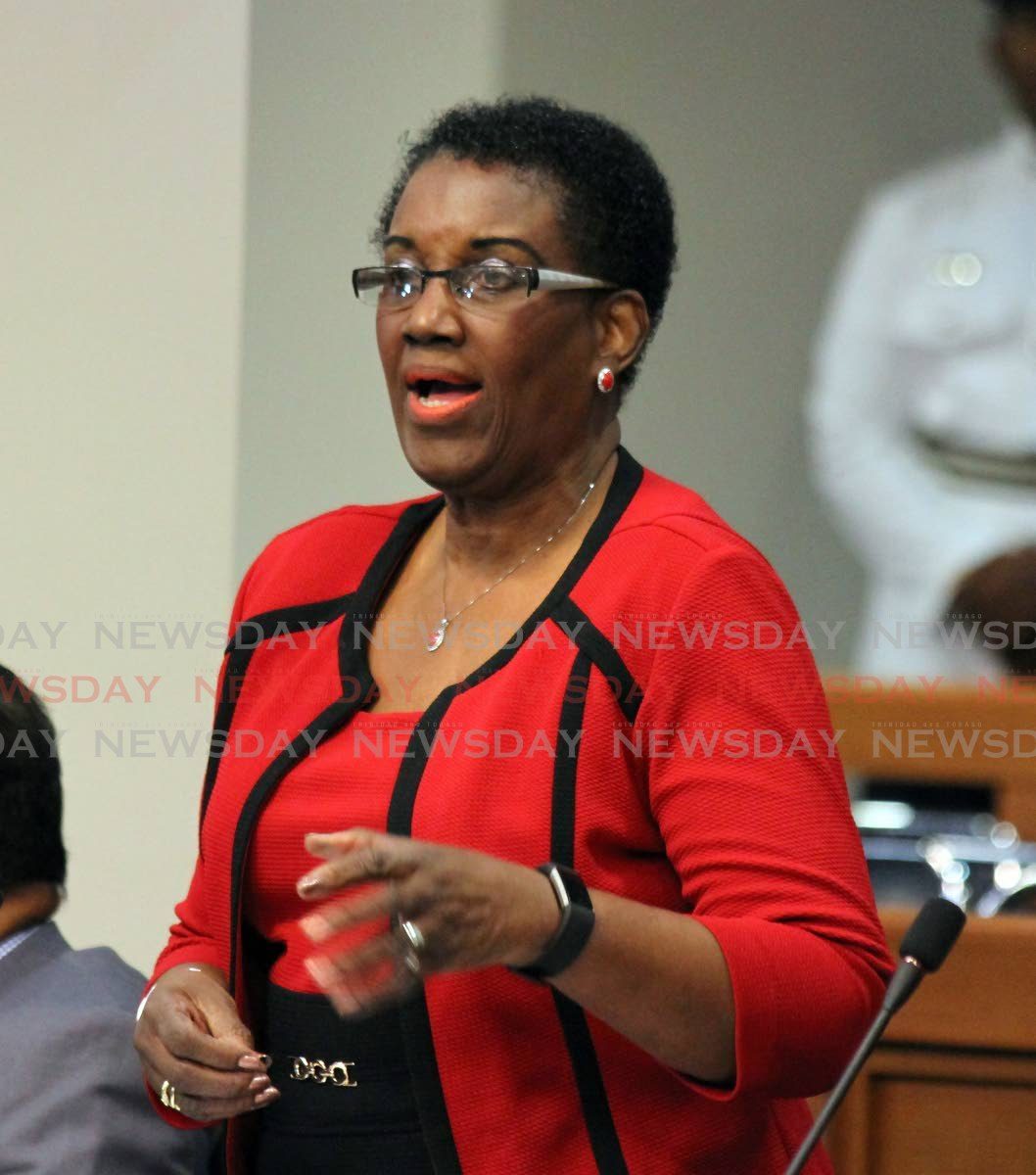
    A prominent women’s rights advocate has expressed profound dismay over PriceSmart’s female cashiers being compelled to seek Industrial Court intervention regarding their employers’ refusal to provide seating accommodations. Hazel Thompson-Ahye, in a compelling editorial letter, revealed that the hearing for this workplace dispute has been scheduled for March 2026—a timeline she considers unacceptably delayed for addressing what she characterizes as a fundamental dignity issue.

    The controversy underscores deeper societal insensitivities toward women’s needs in the workplace, according to Thompson-Ahye. She draws parallels to a previous successful advocacy effort where she and other women secured seating for cashiers at Massy Group during an annual general meeting. This earlier victory demonstrated corporate responsiveness to humane working conditions when properly confronted.

    Thompson-Ahye’s personal history with Massy Group informs her perspective. She recounts how the company supported her family after her father’s blindness at age 47, continuing his salary until all children completed their education and found employment—a testament to corporate compassion she believes should extend to all workers.

    The letter further details her persistent advocacy for gender representation, including challenging the absence of women on Neal and Massy’s board. While eventually successful, the process revealed entrenched resistance masked as opposition to ‘tokenism.’

    Thompson-Ahye concludes with an urgent appeal to PriceSmart management, particularly during this season of goodwill, to provide seating immediately rather than awaiting court proceedings. She calls upon fellow advocates to join her in demanding dignified working conditions for female cashiers, emphasizing that physiological differences require accommodation without compromising equality.

  • Maleisië: Voormalige premier Razak schuldig aan miljardenschandaal

    Maleisië: Voormalige premier Razak schuldig aan miljardenschandaal

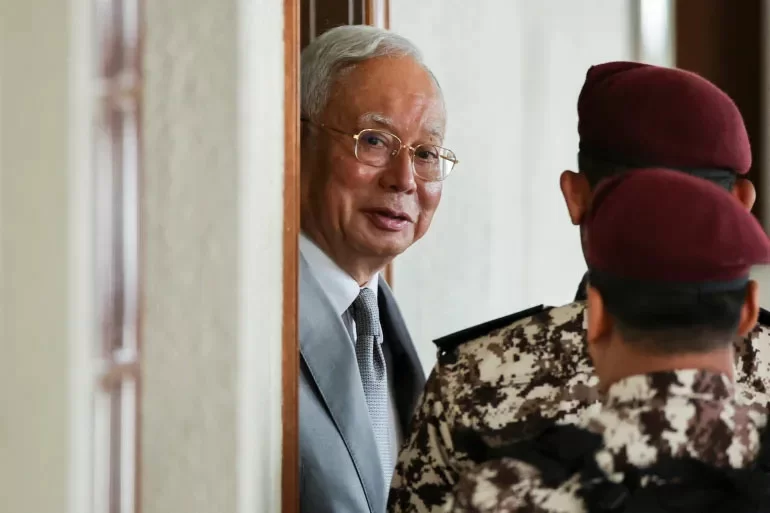
    In a historic ruling that marks a significant milestone for Malaysia’s judicial system, former Prime Minister Najib Razak has been found guilty on all charges in his second major corruption trial related to the multi-billion dollar 1MDB scandal. The High Court of Kuala Lumpur delivered the verdict on Friday, convicting the 72-year-old politician on 21 counts of money laundering and 4 counts of power abuse involving the illicit transfer of 2.2 billion Malaysian ringgit ($543 million) from the state investment fund to his personal accounts.

    Presiding Judge Collin Lawrence Sequerah dismissed Najib’s claims of political persecution, stating that “the defendant’s assertion that the charges against him were a witch hunt and politically motivated was refuted by cold, hard, and irrefutable evidence indicating the defendant had abused his powerful position within 1MDB, combined with the extensive powers granted to him.”

    The conviction carries potential prison sentences of 15-20 years for each charge, though final sentencing remains pending. Prosecutors demonstrated how Najib exploited his roles as Prime Minister, Finance Minister, and chairman of 1MDB’s advisory board to orchestrate massive fund diversions over a decade ago.

    This verdict represents Najib’s second conviction, following a 2020 ruling that sentenced him to 12 years imprisonment for misappropriating $9.9 million in 1MDB funds, later reduced to six years. The current case has been widely regarded as the most significant to date due to its direct connection to 1MDB entities and substantially larger financial amounts.

    The marathon legal proceedings spanned seven years with 76 witnesses testifying, including Najib himself. Bridget Welsh, honorary research associate at the University of Nottingham’s Asia Research Institute Malaysia, noted the complexity of the case: “The trial has experienced many delays and it’s very complex to understand. These financial crimes are complex and it has been a long and extensive process.”

    Despite maintaining his innocence and blaming fugitive financier Jho Low—wanted by Interpol since 2016—for misleading him, Judge Sequerah established Najib’s “undeniable connection” with Low, who served as the prime minister’s “intermediary.” The court also rejected Najib’s defense that he mistakenly believed some illicit funds were “donations” from the Saudi royal family.

    The 1MDB scandal, first exposed in 2015, proved transformational for Malaysian politics, leading to the downfall of the United Malays National Organisation (UMNO) after six decades in power. Political analyst James Chai from Kuala Lumpur noted that despite the serious charges, Najib retains popularity among certain Malaysians, and his case remains a “red line” for UMNO, which currently participates in Prime Minister Anwar Ibrahim’s unity government.

    Chai warned that the conviction could threaten governmental stability, potentially accelerating calls for UMNO’s withdrawal from the coalition. “While the verdict was fair and appropriate without clear shortcomings, conviction on all charges might be interpreted as ‘harsh’ by Najib supporters amid shifting political sentiments in Malaysia,” Chai observed, adding that “the anti-corruption reputation that helped bring this government to power may now become a burden.”

    As the sentencing and appeal process awaits, experts emphasize that the outcome will demonstrate the strength of political accountability in Malaysia. Welsh concluded: “This is a test for the Malaysian judiciary, and it’s a test of the political will to let this continue, especially given that the involved party is also part of the government.”

  • In Antigua and Barbuda, 1 in 3 residents born abroad

    In Antigua and Barbuda, 1 in 3 residents born abroad

    A comprehensive analysis of migration patterns within the Caribbean Community (CARICOM) reveals a region profoundly shaped by disparate levels of international movement. According to the International Organization for Migration’s (IOM) 2024 report, utilizing United Nations Department of Economic and Social Affairs (UNDESA) mid-year estimates, the proportion of foreign-born residents varies dramatically from one nation to another, painting a complex picture of demographic diversity.

    Antigua and Barbuda emerges as the standout, with a staggering 33% of its population born abroad, establishing it as the Caribbean’s foremost migrant destination. This is in stark contrast to St. Lucia and St. Vincent and the Grenadines, where migrants constitute a mere 5% of the populace. Montserrat follows closely behind with a significant migrant presence of 32%.

    A middle tier of nations includes Belize, The Bahamas, and St. Kitts and Nevis, each reporting that 17% of their residents are migrants. Barbados and Dominica show similar figures, each with a migrant population of 13%. Meanwhile, Suriname and Trinidad and Tobago document identical rates of 8%.

    At the lower end of the spectrum, Guyana records a 7% migrant population, followed by Grenada and Jamaica at 6% each. Experts attribute this striking variation to a confluence of factors, including geographic location, divergent economic opportunities, and deep-seated historical ties that continue to influence migration routes. For economies like those of Antigua and Barbuda and The Bahamas, migration is an integral thread in the national social and economic fabric, whereas it assumes a more peripheral role in other member states.

    This demographic data provides a crucial snapshot of the forces that have continually molded the Caribbean’s identity, underscoring that human mobility remains a central, defining characteristic of the region as 2024 draws to a close.

  • LETTER TO THE EDITOR: Can Dominica help Trump secure America borders?

    LETTER TO THE EDITOR: Can Dominica help Trump secure America borders?

    In a sharp rebuttal to U.S. border security pressures, Caribbean nation Dominica has characterized American demands as unreasonable and bordering on mockery. The response comes amid heightened tensions over Citizenship by Investment (CBI) programs and their perceived impact on U.S. national security.

    President Trump’s administration has asserted that CBI passport holders represent a security threat, but Dominican officials present a contrasting perspective. They argue that background checks can only identify officially recorded criminal history, and that individuals without existing records cannot be flagged through standard vetting processes.

    The core dispute centers on information sharing limitations. According to the Dominican position, the United States maintains inadequate data transparency regarding visa denials. Currently, neither international due diligence firms nor vetting agencies can access U.S. visa denial databases, creating what Dominica describes as a structural flaw in American information policy.

    Rather than pressuring small nations, Dominican authorities suggest the United States should leverage its advanced technological capabilities to create and maintain a comprehensive database of security risks. Such a system would include criminals, fraudsters, and suspected terrorists, while improving international information-sharing mechanisms.

    The article emphasizes that national security represents a shared global responsibility, but contends that accountability must begin with domestic policy reforms. This perspective challenges the current approach of imposing external pressure on smaller nations while maintaining internal data limitations.

  • The Alfred Prospere dilemma

    The Alfred Prospere dilemma

    The appointment of Alfred Prospere as Deputy Speaker of Saint Lucia’s Parliament has reignited constitutional debates and exposed systemic challenges within Westminster governance models. Prime Minister Philip J. Pierre’s cabinet selection process drew intense scrutiny as observers questioned whether his administration would replicate predecessor Allen Chastanet’s controversial approach of leaving the Deputy Speaker position vacant.

    Constitutional mandates under Section 37 require the House to elect a Deputy Speaker from members not holding Cabinet or Parliamentary Secretary positions before commencing post-election proceedings. This provision became contentious during Chastanet’s administration when Sarah Flood Beaubrun vacated the Deputy Speaker role for ministerial appointment, creating an unfilled vacancy that disrupted parliamentary operations.

    Chastanet’s interpretation that the Constitution’s shift from “shall” to “may” made subsequent appointments discretionary sparked legal challenges. Public interest lawyer Martinus Francois argued for mandatory interpretation, though the court deemed the matter academic after governmental rectification, leaving constitutional jurisprudence underdeveloped.

    The current administration pursued constitutional amendment to allow Deputy Speaker appointments from outside Parliament, mirroring Speaker selection processes. This move, criticized as circumventing deeper democratic reforms, required supermajority and referendum approval—a challenging threshold in Caribbean political contexts where referenda frequently fail due to adversarial politics and underinformed electorates.

    Dr. Kenny D. Anthony’s interim appointment as Deputy Speaker temporarily resolved the impasse, but his retirement reactivated the constitutional requirement for parliamentary selection. Prime Minister Pierre’s nomination of former Agriculture Minister Alfred Prospere acknowledged the difficulty of assigning backbenchers to perceived secondary roles, highlighting how ministerial positions overshadow parliamentary representation in public perception.

    This preference reflects concerning governance dynamics where constituents equate ministerial access with resource allocation, potentially distorting national priorities through politically motivated project distribution. The psychological significance of ministerial appointments in rural communities further complicates this hierarchy, creating tension between local representation and national governance.

    Moving forward, Prospere’s tenure presents opportunity for substantive parliamentary strengthening through technological integration, committee system enhancement, and public engagement expansion. Rather than merely deputizing for the Speaker, the role could champion transparency initiatives including website modernization, accessible legislative documents, and improved accountability mechanisms.

    The ongoing situation underscores the need for developed backbench political culture that empowers non-ministerial MPs and educates constituents about representation beyond executive roles. Constitutional clarity through either judicial resolution or successful referendum remains essential for stabilizing Saint Lucia’s parliamentary procedures and reinforcing democratic foundations.

  • Opposition Calls for Public Mobilisation After Police Summon Party Leader

    Opposition Calls for Public Mobilisation After Police Summon Party Leader

    Antigua’s political landscape has ignited with controversy as the United Progressive Party rallies its base for public demonstrations following police interrogation of Opposition Leader Jamale Pringle. The escalating confrontation stems from an official summons issued to Pringle concerning the mysterious incineration of Antigua Public Utilities Authority materials at Old Road.

    The opposition faction has launched vehement accusations against the Royal Police Force of Antigua and Barbuda, asserting that Commissioner Atlee Rodney has succumbed to executive pressure from Prime Minister Gaston Browne’s administration. In an emotionally charged communiqué distributed to supporters, the party framed the police action as a blatant instrument of political victimization rather than legitimate law enforcement procedure.

    Central to the brewing storm is the party’s firm declaration that Pringle maintains zero connection to the Old Road incident, citing absence of incriminating evidence. The summons has been characterized as systematic persecution targeting government critics, prompting the opposition to designate their planned mass mobilization as ‘Freedom Day’—a dramatic demonstration against alleged politicization of law enforcement institutions.

    While opposition supporters prepare for organized protests demanding cessation of what they term intimidation tactics, law enforcement authorities maintain procedural silence regarding the allegations. Official sources previously emphasized that investigative summonses represent standard practice rather than criminal accusations, though this clarification has failed to mollify political tensions.

    The underlying incident—the destructive fire consuming APUA materials related to ongoing infrastructure projects—remains under active investigation with no charges filed. This development occurs against a backdrop of heightened political sensitivities, highlighting the delicate balance between law enforcement autonomy and political influence in the Caribbean nation’s democracy.

  • Russia urges Japan to abandon hostile policy toward Moscow

    Russia urges Japan to abandon hostile policy toward Moscow

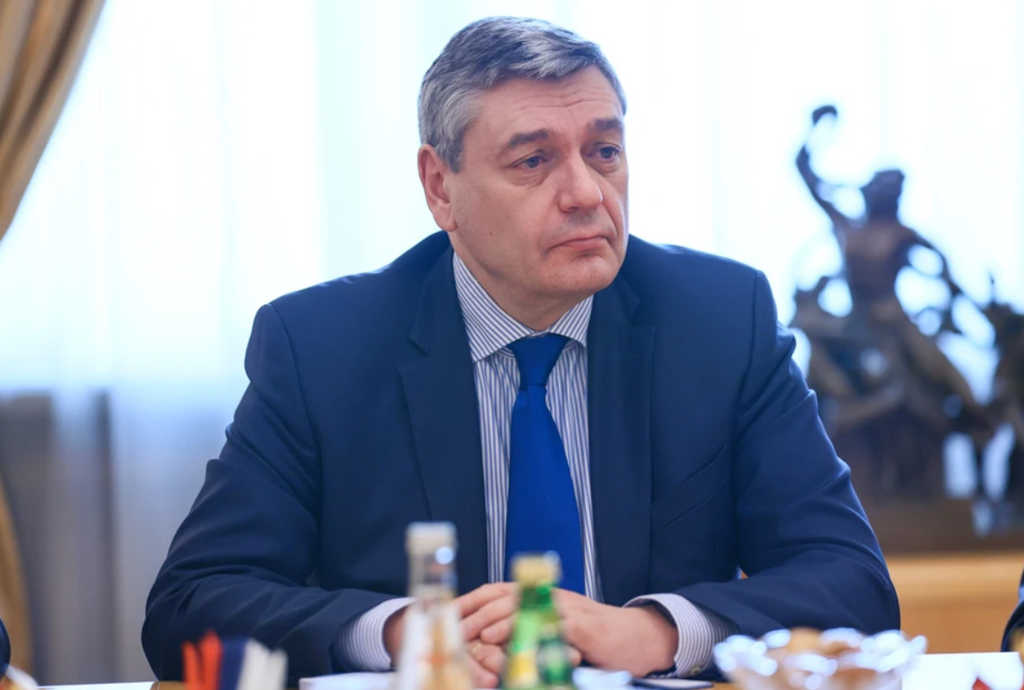
    The Russian Foreign Ministry has issued a formal declaration establishing concrete conditions for the restoration of diplomatic relations with Japan, emphasizing that Tokyo must demonstrate tangible steps away from its current hostile posture. Russian officials contend that Japan’s present foreign policy direction contradicts its national interests and undermines regional stability.

    Moscow’s statement specifically underscores the necessity for Japanese authorities to preserve what it describes as “the positive legacy of bilateral ties” developed over previous decades. The diplomatic communique suggests that current tensions stem directly from Japan’s adoption of what Russia characterizes as an antagonistic position toward Russian interests.

    This development follows high-level briefings where Russian officials conveyed their strategic approach to regional and international matters, including specific practical considerations regarding engagement with Japan. The diplomatic rift intensified significantly when Japan aligned with Western-imposed sanctions against Russia following the commencement of military operations in Ukraine in February 2022.

    The deterioration culminated on March 21, 2022, when Moscow formally suspended peace treaty negotiations and halted discussions concerning joint economic initiatives in the Southern Kuril Islands. Russian authorities attributed these decisions to Japan’s “unfriendly position” regarding the Ukraine conflict, marking a significant setback in Russo-Japanese relations that continues to impact Northeast Asian geopolitics.

  • Pringle says he will not be intimidated

    Pringle says he will not be intimidated

    In a resolute statement addressing recent pressures, a prominent individual has publicly affirmed their unwavering stance against attempts at coercion. The declaration, made amidst circumstances suggesting external challenges, underscores a firm commitment to principle over concession. While the specific nature of the intimidatory tactics remains undisclosed, the individual’s response signals a robust defense of personal or professional integrity. This act of defiance highlights a growing discourse on resilience and the ethical boundaries of influence in contemporary society. The statement has resonated with observers, drawing attention to the power dynamics often faced by figures in the public eye and setting a precedent for standing firm against undue pressure.