作者: admin

  • Belize City’s Electric Bus Revolution Gains Momentum

    Belize City’s Electric Bus Revolution Gains Momentum

    On July 22, 2026, Belize City celebrates the second anniversary of its pioneering e-Ride electric bus program, a initiative that launched amid widespread public doubt to become one of the municipal government’s most successful public transit projects in modern history.

    When the program debuted on July 22, 2024, it operated with just two pilot electric buses. Two years on, official data from the Belize City Council shows the service has delivered nearly 384,000 passenger trips, with more than 100,000 of those rides taken by senior citizens who access the service through a heavily subsidized $1 fare. Ridership has continued a steady upward climb, hitting record daily volumes as more residents embrace the clean transit option, while the program has already cut hundreds of tons of carbon emissions and slashed long-term operating costs compared to traditional fossil fuel-powered buses.

    Mayor Bernard Wagner shared that the program has outperformed every initial projection, delivering tangible benefits to both daily commuters and the local environment. “When we launched this, many people questioned if it would work for our city. Today, it’s clear this project has been a total game-changer,” Wagner said in an interview, updating earlier published figures that undercounted total ridership through the end of June.

    The program’s tiered fare structure – $3 for general adult riders, $2 for students, and $1 for seniors – is designed to cross-subsidize discounted rates for vulnerable groups, with full-fare payments covering the reduced costs for students and elderly residents. A independent feasibility study conducted by Dr. Curtis Voodoo, an e-mobility expert contracted by the United Nations Development Programme (UNDP), compared the performance of electric buses against traditional internal combustion engine (ICE) vehicles. The analysis confirmed that electric bus operations cut overall costs by 41% compared to running fossil fuel-powered transit. The study also found that the two electric buses currently in service deliver carbon savings equivalent to removing 90 gas-powered passenger vehicles from Belize City’s roads every year.

    Public reception to the e-Ride program has been overwhelmingly positive, with particularly strong support from students, women, and senior residents. The program has even captured the imagination of local young people: 11-year-old student Emory loved the e-buses so much that he wrote a full children’s book about the service, a testament to its widespread cultural impact.

    Buoyed by the program’s early success and consistent profitability, the Belize City Council has already begun moving forward with plans to expand the e-bus network. The municipal government is currently in the process of acquiring three additional electric buses, which will be used to extend service to underserved neighborhoods including Central American Boulevard, Jane Ussher, Yabra, Pen Road, Fabers Road, and Belama Phases 4 and 5.

    Wagner noted that sourcing and delivering electric buses can take extended lead times, but expressed hope that the new vehicles will enter service before the end of his current mayoral term. The original two pilot buses were provided through a grant-funded program supported by the European Union, and the expansion will be fully funded by revenue generated from the e-Ride service itself, demonstrating the program’s long-term financial sustainability.

    This report is adapted from a transcript of a televised evening news broadcast.

  • Aviation Comes Alive for Twenty-Five Belizean Students

    Aviation Comes Alive for Twenty-Five Belizean Students

    On July 22, 2026, Belize made a landmark move to bridge the gap between classroom STEM learning and real-world industry careers, launching its first-ever STEM Aviation Camp hosted at Tropic Air’s Belize City hangar. Twenty-five students from across the country – coming from Belmopan, Corozal, and Orange Walk – gathered to get an exclusive, hands-on look at the diverse range of careers that keep the civil aviation industry operational, far beyond the well-known role of pilots.

    The week-long initiative is a collaborative effort between the STEMU Foundation and Deep Blue Avionics, designed to turn abstract STEM (science, technology, engineering, and mathematics) concepts into tangible, engaging experiences for young learners. Jamie Usher, Vice-Principal of Student Affairs at Saint Catherine Academy, noted that the camp has already shifted students’ perspectives on aviation as a career field. “One of the best comments so far has been, ‘Wow, so I don’t only have to be a pilot,’” Usher shared. To date, the program has introduced participants to at least eight distinct aviation career pathways, including aircraft engineering, aviation maintenance, air traffic control, aviation firefighting, and even aviation-focused welding, a hands-on module facilitated by STEMU.

    The camp structure balances foundational classroom learning with immersive on-site experience. The program opened with two days of classroom instruction, where students mastered core aviation concepts, from the four fundamental forces of flight to the industry-standard phonetic alphabet used in all air communications. Now, students are applying that knowledge in real-world settings: they have already toured the municipal airport, with upcoming visits scheduled to the Belize Defence Force Air Wing and the national Civil Aviation Department to deepen their exposure.

    For many participants, the camp has already broken down long-held stereotypes about aviation careers. Damariel Aguilar, one of the student attendees, highlighted the impact of representation at the camp: “I learned that there are boys and girls who are pilots, and Ms. Terry from Deep Blue Avionics taught me that not only boys, but also women, can be pilots and engineers like her.” Other students shared key takeaways that reflect the camp’s broad curriculum: Skye Williams learned the core physics of flight, Abigail Rivero emphasized how the camp helps students make informed career choices, and Yuvaan Lalwani walked away with mastery of aviation’s phonetic communication system.

    Jarrus Mitchell, founder of STEMU, explained that the organization’s mission centers on expanding access to vocational and professional exploration in high-demand fields, including engineering, agriculture, healthcare, and information technology. “For the STEM aviation, the curriculum is really around the basic principles of aviation and what a career in aviation would look like, whether it’s an aviation firefighter, whether it’s a pilot, whether it’s an air traffic controller. Showing the kids these jobs and giving them something to aspire to,” Mitchell said. He added that while Belizean students are eager to explore these growing fields, hands-on learning opportunities have historically been limited. Many of STEMU’s programs in Belize are adapted from successful models in the United States, but adapted to address the unique gap in accessible industry exposure for young Belizeans.

    Organizers report that the inaugural camp has already exceeded early expectations, with strong cross-sector support from local aviation partners making the one-of-a-kind initiative possible. The camp’s leadership plans to build on this year’s success, expanding the program annually to reach more young learners across Belize and cultivate a new generation of talent for the country’s growing aviation industry.

  • Team Belize Gets $50,000 Boost Ahead of Regional Games

    Team Belize Gets $50,000 Boost Ahead of Regional Games

    As the countdown to the 2026 Central American and Caribbean Games (CAC Games) in Santo Domingo, Dominican Republic enters its final stretch, Team Belize has secured critical financial backing from the national government to support its athletes’ journey to the regional competition.

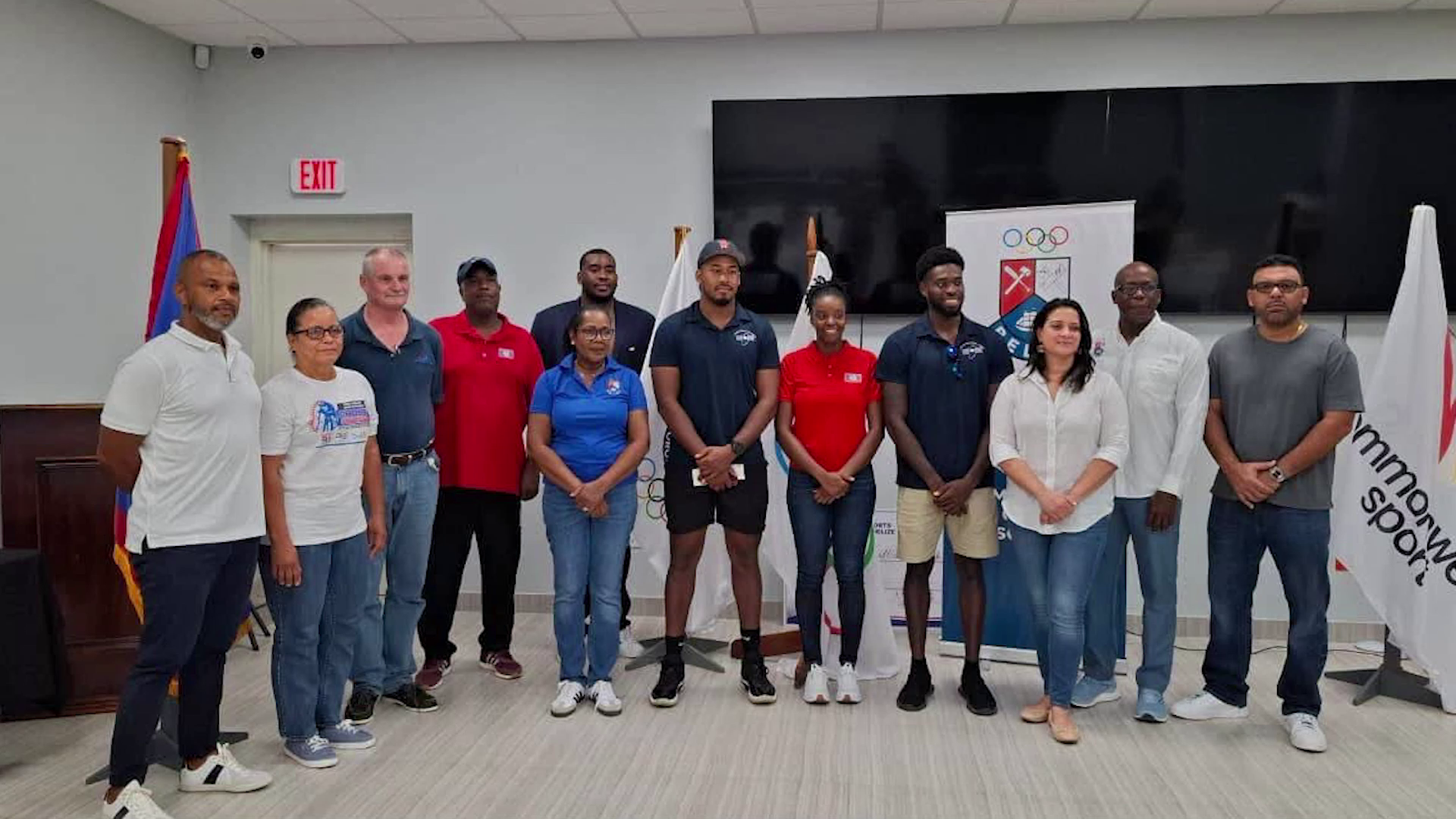
    On Sunday, Belize’s Minister of Sports Anthony Mahler formally transferred a $50,000 contribution to the Belize Olympic and Commonwealth Games Association, the governing body that oversees the country’s participation in international multi-sport tournaments. The government funding is earmarked explicitly to cover travel, accommodation, equipment and competition-related costs that have been a growing burden for Belize’s small athletic program as it prepares to send competitors to one of the Caribbean and Central America’s most high-profile sporting events.

    Over the weekend, athletes and team officials gathered for a final pre-departure briefing to review logistics, competition schedules and safety protocols ahead of their trip to Santo Domingo. This summer marks a busy season of international competition for Belizean athletes, who will compete in two top-tier global and regional multi-sport events over the coming months. Following the CAC Games, five Belizean athletes will travel onward to Glasgow, Scotland to compete at the 2026 Commonwealth Games.

    For the 2026 CAC Games, Belize will field competitors across four key disciplines: cycling, basketball, beach volleyball and sailing. The funding injection comes at a critical time for the small Central American nation, which has been working to expand access to international competition opportunities for its emerging athletic talent and raise the profile of sport across the country. Team officials noted that the government’s support eliminates a significant financial barrier that would have otherwise threatened athletes’ ability to compete at full preparation at the regional games.

  • GST-Free School Shopping Returns in August

    GST-Free School Shopping Returns in August

    As the 2026 back-to-school season approaches, the Government of Belize has confirmed the return of its popular GST-free school supply shopping initiative, a targeted tax relief program designed to ease financial pressure on households preparing for the new academic year. Now entering its second consecutive year of implementation, the program brings cost-saving opportunities for families, though it comes with a notable adjustment to its schedule that will change how shoppers plan their purchases.

    In the 2025 iteration of the policy, tax-free shopping spanned two full three-day weekends, running from Friday through Sunday each weekend to give parents a total of six full days to stock up on qualifying goods without paying the standard 12.5% General Sales Tax. This extended window allowed families to shop around for the best prices and fit purchases around their work and personal schedules, but for 2026, the government has reduced the tax exemption period to just two standalone Saturdays: August 15 and August 29.

    The core eligibility rules for the program remain consistent with last year’s framework. The GST exemption only applies to pre-approved school-related products, including basic stationery, textbooks, workbooks, and other essential educational materials. Retailers participating in the initiative are required to clearly mark all qualifying items to help shoppers easily identify which products qualify for the tax break, preventing confusion at checkout.

    For many low- and middle-income families across Belize, the annual program offers meaningful financial relief at a time of year that often puts unexpected strain on household budgets. Even with the reduced number of shopping days, government officials note the initiative still delivers tangible savings that can help families redirect limited funds to other back-to-school needs, such as uniforms, textbooks, or extracurricular fees. This announcement comes as households across the country begin planning for the start of the new academic year, which kicks off shortly after the second GST-free shopping date in late August.

  • Hatramij vraagt opheldering over inbeslagname container met insecticiden

    Hatramij vraagt opheldering over inbeslagname container met insecticiden

    A Surinamese consumer goods importer Hatramij N.V. is calling on national regulatory authorities to deliver urgent clarity on the seizure of a shipping container filled with household insecticide aerosol cans, which has been held by customs for nearly a month without a formal ruling. The shipment, which arrived at the country’s ports in late June, was detained by Surinamese Customs over alleged non-compliance with a newly implemented state decree governing the import of pesticide-containing aerosol products. However, more than three weeks after the seizure took place on June 27, the company has yet to receive an official, formal decision on the case.

    In a public statement released this week, Hatramij N.V. explained that immediately following the seizure, it submitted a formal request to authorities to allow the company to take custody of the detained container. The goal of this request, the firm noted, was to mitigate the rapidly accumulating extra costs including port storage fees, vessel demurrage charges and third-party holding expenses that continue to rise as the impasse drags on. As of the company’s latest update, that request has not been answered, and no formal ruling on the seizure has been issued.

    The ongoing lack of resolution is creating mounting financial pressure for the firm, Hatramij emphasized, warning that the prolonged uncertainty could disrupt core business operations, compromise the company’s ability to maintain consistent supply chains, and leave retail and consumer customers facing shortages of the popular household product.

    Notably, the company stressed that it does not oppose the new regulatory framework governing pesticide imports. In its statement, Hatramij acknowledged that targeted rules to protect public health and consumer safety are a necessary and legitimate requirement for any import market. The firm’s objection centers not on the regulation itself, but on the opaque and unstructured rollout of the new rules.

    Hatramij called for new trade regulations to be implemented through a transparent, predictable and equitable process that treats all market participants equally. The company also pushed for timely, proactive information sharing with importers and the implementation of reasonable transition periods to give businesses time to adjust their supply chains and import procedures to align with new requirements.

    In closing, the company reiterated its urgent appeal to competent authorities to prioritize the processing of its case and bring clear resolution to the seizure dispute, adding that Hatramij remains fully committed to working constructively with regulators to reach a solution that aligns with both regulatory requirements and the company’s operational needs.

  • A Second Chance for Buddy After Viral Abuse Video

    A Second Chance for Buddy After Viral Abuse Video

    It has been one of the most viral and distressing animal welfare stories to emerge from Belize in recent months: a graphic video showing a small dog named Buddy being brutally abused spread rapidly across social media, triggering a wave of public anger, heartbreak, and widespread demands for accountability for his attackers. Now, nearly two weeks after the footage first circulated online, Buddy has been pulled out of harm’s way and given a new chance at life in the care of a local animal rescuer.

    Jessica Schreiber, the foster caregiver who stepped forward to take Buddy in, recalled how the video first captured her attention in an interview. She saw the original Facebook post within hours of it going live, and the horrific details of the abuse – which included pouring gasoline into the dog’s eyes and beating him with a wooden stick – left her distraught and unable to sleep that night. “I could not stop thinking about how the dog felt, how much fear he must have been in,” Schreiber explained. By sunrise, she had made her decision: she would bring Buddy to her home, and talked the plan over with her husband before finalizing the arrangement.

    Weeks into his foster placement, Schreiber says Buddy is making steady, encouraging progress as he adjusts to a life of consistent kindness and care that he never received before. While the abuse left deep emotional scars – he still flinches at sudden loud noises, fast movements, and when doors open unexpectedly, and pulls back when people first reach to pet him – he has quickly begun to trust his new caregivers. “I can tell he feels safe now,” Schreiber shared. “In all the photos my daughter and I have taken of him, he smiles now – even his eyes look happy. He still has his whole wonderful personality, it just needed space to come back out as he learns to trust us.”

    Buddy received a full veterinary examination shortly after arriving at his foster home, and while he carries lasting physical reminders of his abuse, vets say his overall condition is stable enough for rehabilitation. Schreiber added that Buddy has already surprised his care team with how quickly he is adapting to kindness: he is not aggressive at all, and his willingness to accept care suggests he will heal far faster than initial predictions.

    In the wake of Buddy’s abuse, the viral attention surrounding his case has spurred local animal activists into action to push for long-term systemic change. Activists have launched a public online petition calling on Belize’s government to overhaul the country’s animal protection laws, calling for harsher criminal penalties for animal abusers and stricter enforcement of existing animal welfare regulations to prevent similar cases of abuse in the future.

    This report is adapted from a transcript of an evening television newscast; any comments originally delivered in Kriol were transcribed using a standardized spelling system for clarity.

  • KTV The Remix Brings Disco Night to Life at the Bliss Center

    KTV The Remix Brings Disco Night to Life at the Bliss Center

    On a nostalgic Tuesday night dated July 22, 2026, the Bliss Center transformed into a 1970s disco wonderland, as the eighth season of popular singing competition KTV The Remix centered its third live episode around a retro Disco Night theme. From the moment the first dazzling disco ball light spun across the venue, attendees were immersed in a bygone musical era, surrounded by the signature sight of platform shoes on contestants and nonstop chart-topping hits that defined disco’s golden age.

    Unlike ordinary competition rounds, this themed night pushed participating singers to lean into the larger-than-life energy that made disco a global cultural phenomenon. Each competitor pulled out their most dynamic performances to date, channeling the charisma and stage presence of disco’s most legendary artists to win over both judges and the live audience. The stage crackled with unfiltered energy, distinct personal style, and infectious rhythm that had crowd members dancing in their seats throughout the night.

    The evening delivered no shortage of standout moments: from contestants earning perfect score ratings from the judging panel to crowd-pleasing collaborations and unforgettable solo sets that left audiences cheering for encores. As the competition progresses through its seasonal run, the stakes continue to climb, with every remaining vocalist fighting aggressively to secure a top placement and advance closer to the season’s grand finale.

    This report is adapted from a transcribed evening television broadcast, with Kriol-language dialogue reproduced using a standardized spelling system for accuracy. Readers can access the full unedited broadcast via the link included in the original publication.

  • Parris powers Barbados to back-to-back U-19 titles

    Parris powers Barbados to back-to-back U-19 titles

    The CWI Rising Stars Under-19 Men’s 50-over Championship concluded on Wednesday with a historic display of all-round cricket that saw Barbados retain their title, led by a match-winning performance from Justin Parris that capped an undefeated run through the tournament. In the tournament-deciding final held at Liberta Sports Club, Parris turned in a once-in-a-generation double performance: a brilliant, pace-setting century with the bat followed by a devastating five-wicket haul with his off-spin, steering Barbados to a dominant 116-run victory over Jamaica.

    Barbados’ batting got off to a rocky start after Jamaica won the toss and put the defending champions in to bat. Jamaica seamer Jahdae Moore removed opening batter Gadson Bowens for just eight early on, but a 74-run second-wicket stand between Kelani Clarke (49 off 44 balls) and Jordan Graham (21) steadied the innings, moving Barbados to 95 for one by the 16th over. A quick flurry of wickets from Jamaican bowler Alixandre Elliot turned the tide back in Jamaica’s favor: Elliot removed Clarke, snared Graham for 21, and Demarco Scott bowled Seth Smith for three to drop Barbados to 101 for four midway through their innings.

    It was here that Parris stepped up to rescue his side. Partnering with Kemar Dixon, the all-rounder steered Barbados back into control with a 108-run fifth-wicket stand. After Elliot dismissed Dixon for 48 and Jahidi Hinds for one, Parris combined with R’Jai Gittens (37 off 19 balls) for an aggressive 80-run eighth-wicket partnership off just eight overs, pushing Barbados to 291 for seven after 48 overs. Parris brought up his century in the penultimate over of the innings, finishing with 100 runs off 98 balls, including 12 fours and one six, before being dismissed shortly after. Rajeev Parsooram closed out the innings with a quick 14 off five balls, leaving Barbados on a competitive total of 320 for nine after 50 overs. Elliot finished as Jamaica’s leading bowler with 4 for 40, while Moore took 3 for 58.

    Chasing 321 for the title, Jamaica never recovered from a disastrous start. Barbados pace bowler Asher Branford trapped opener Odane Binns lbw for seven, had Joel Williams caught for a duck and removed Demarco Scott also via lbw, leaving Jamaica reeling at 46 for three. After Tyson Gordon Jr was dismissed for 28 by Hinds, Demario Hall and captain Pajay Nelson put on a 58-run fifth-wicket stand to bring Jamaica back into the contest at 131 for four. But Parris, who had already won the game with his bat, closed out the contest with his spin: he removed Hall for 47 to break the partnership, and went on to take the wickets of Ryan Lyttleton, Geovanni Grey, Elliot and Moore to finish with five wickets for just 35 runs. Parsooram took the key wicket of Nelson for 36, leaving Jamaica all out for 204 in 43.5 overs. Branford finished with 3 for 19 to support Parris’ match-winning spell.

    The victory marked Barbados’ sixth consecutive win of the tournament, securing their second straight title and cementing their place as one of the most dominant teams in the recent history of the competition.

    In the third-place playoff at Bethesda Sports Ground, Trinidad and Tobago cruised to a comfortable seven-wicket win over the Leeward Islands to claim third place in the tournament. The Leeward Islands, who chose to bat first, produced their poorest batting performance of the entire tournament, bowled out for just 88 runs in 26.5 overs. Renaldo Fournillier led the collapse, taking three of the first four wickets to fall, and finished with 4 for 26, while Daron Dhanraj took 2 for 14. Only Tanez Francis (22), Eirette Richards (19) and Lyhte Brown (13) reached double figures for the Leewards, who lost their last six wickets for just 40 runs. In response, Trinidad and Tobago lost three early wickets for just 20 runs, but captain Brendan Boodoo remained unbeaten on 49 off 46 balls, combining with Tariq Richards for an unbroken 41-run fourth-wicket stand to see the side home at 89 for three in just 15.1 overs.

    At the fifth-place playoff held at Pigotts Sports Ground, Guyana earned revenge over the Windward Islands, beating them by 53 runs just days after losing to the side in the final round of group matches. Guyana’s batters struggled for the second match running, with only Dhanesh Persaud (53 off 73 balls) and Emmanuel Lewis (43) offering significant resistance. The pair put on a 92-run partnership after Guyana slumped to 72 for five in the 22nd over, but after Lewis was dismissed, Guyana lost their last five wickets for just 20 runs, all out for 184 in 49.2 overs. Theo Edwards was the Windward Islands’ leading bowler with 3 for 12.

    In their chase, the Windward Islands lost captain and opener Theodore Edward to the second ball of the innings, but Derwin Lewis and Earshino Fontaine put on 46 runs to keep the contest alive. After Lewis was trapped lbw by Adrian Hetmyer, wickets fell at regular intervals, leaving the Windwards at 76 for five. A 37-run stand between Tyler Venner (24) and Khavaughn Bartholomew (27) briefly revived their hopes, but Gilbert Griffith dismissed both to end the comeback. Griffith finished with 4 for 19, while Romario Ramdehol took 2 for 13 and Hetmyer took 2 for 38, bowling the Windward Islands out for 131 to secure a 53-run win for Guyana.

  • OPINION: Why Caribbean Hospitals Should Embrace Clinical Ethicists in Healthcare Teams

    OPINION: Why Caribbean Hospitals Should Embrace Clinical Ethicists in Healthcare Teams

    Across the English-speaking Caribbean, regional healthcare systems are confronting mounting complex challenges that go far beyond the delivery of routine clinical treatment. Rapid evolution of medical technology, rapidly aging local populations, rising unmet mental health needs, and persistent systemic resource shortages have combined to create a landscape where frontline healthcare professionals regularly encounter high-stakes ethical dilemmas that demand structured, thoughtful deliberation and specialized guidance. As these pressures continue to intensify, bioethics experts argue that Caribbean hospitals must prioritize integrating formally trained clinical ethicists into their core care teams to address these growing gaps.

    A clinical ethicist is a specialized professional trained to support care teams, patients, and their families in navigating the tangled ethical questions that arise in modern medical settings. Contrary to common misconception, their role is not to override the decisions of treating clinicians or family members, but rather to facilitate constructive, respectful dialogue, clarify conflicting ethical priorities, break down communication barriers, and foster inclusive, fair decision-making processes that center all stakeholders’ needs. While integrated clinical ethics services have become a standard component of healthcare delivery across much of North America, Europe, and other developed regions, access to these specialized roles remains extremely limited across most of the Caribbean, even as demand for ethical guidance grows steadily.

    One of the most pervasive ethical flashpoints in Caribbean healthcare centers on the role of family in medical decision-making, a dynamic shaped by the region’s deeply rooted collectivist cultural norms. In most Caribbean communities, family members play an outsized role in participating in care planning for loved ones. While this strong social support system often improves patient outcomes, it also creates regular points of tension between care providers and family groups when disagreements emerge around treatment choices. Common points of conflict include debates over whether to continue or withdraw life-sustaining care, questions about a patient’s capacity to understand their diagnosis and prognosis, and disputes over decision-making authority when a patient loses the ability to advocate for themselves. A trained clinical ethicist brings the cultural competence and facilitation skills needed to guide these sensitive discussions in a way that honors local traditions while upholding ethical standards.

    End-of-life care represents a second major domain where ethical uncertainty frequently arises for Caribbean care institutions. Hospitals across the region care for large numbers of patients living with advanced serious illnesses, catastrophic traumatic injuries, and progressive chronic conditions that force difficult conversations about treatment goals and quality of life. Clinicians often grapple with the moral weight of continuing aggressive, resource-intensive intervention when meaningful recovery is highly unlikely, while families frequently struggle with overwhelming emotional distress when confronting choices around life support and palliative care. Without formal ethics support to structure these conversations, these high-stakes situations often lead to confusion, open conflict between care teams and families, and profound moral distress for clinicians that contributes to widespread burnout. Clinical ethicists provide a structured, neutral framework to guide these conversations more calmly and productively for all parties.

    Systemic limited healthcare resources create a separate set of persistent ethical challenges for Caribbean public hospitals, which commonly face crippling shortages of clinical staff, essential medical equipment, specialized care services, and acute care beds. These shortages force frontline clinicians to make unenviable triage decisions around which patients will receive priority access to scarce care. These high-pressure choices not only place extreme emotional strain on care teams, but also can fuel perceptions of unfairness among patients and their families, eroding trust in the healthcare system. Clinical ethicists can partner with hospital leadership to develop transparent, ethically grounded frameworks for resource allocation that promote equity and reduce moral strain for frontline staff.

    Additional unique ethical challenges have emerged in Caribbean mental health services and correctional healthcare settings, two domains that have historically received limited policy and resource attention. In psychiatric and custodial care environments, difficult ethical questions around involuntary treatment, patient confidentiality, preservation of human dignity, patient autonomy, and institutional safety arise on a regular basis. Frontline clinicians managing these complex cases consistently report that specialized ethics guidance and structured support would drastically improve their ability to navigate these challenges responsibly.

    Integrating clinical ethicists into care teams also delivers broader institutional benefits beyond supporting individual difficult cases, including ongoing staff education and systemic improvements to communication practices. A large share of formal patient complaints and medical disputes originate from simple misunderstandings or unclear communication around high-stakes treatment decisions. By creating space for open dialogue and addressing ethical concerns at the earliest possible stage, hospitals can reduce preventable conflict while building stronger, more trusting relationships between providers, patients, and families.

    The Caribbean healthcare tradition has long centered core values of compassion, community, and patient-centered care. Clinical ethics services directly reinforce these values by helping institutions navigate difficult challenges with thoughtfulness and respect for all stakeholders. As regional healthcare systems continue to evolve to meet shifting population needs, ethical dilemmas are no longer rare edge cases—they have become a routine part of daily clinical practice.

    Importantly, adding clinical ethicists to care teams does not replace the unique expertise of treating clinicians, nurses, or hospital administrators. Instead, it complements their work and strengthens hospitals’ ability to respond to high-stakes situations in a fair, organized, and compassionate manner. By proactively embracing clinical ethics services, Caribbean hospitals can improve the quality of patient care, provide critical support to overstretched frontline clinicians, and better serve the communities that rely on their care.

  • Minister begins weekly school inspections ahead of September reopening

    Minister begins weekly school inspections ahead of September reopening

    As the September start of the new academic year approaches, Barbados’ Ministry of Education Transformation has intensified on-the-ground oversight of ongoing school renovation and new construction projects across the island, with Education Minister Chad Blackman launching a schedule of weekly site inspections to track progress at dozens of campuses.

    These inspections form part of the broader government education transformation agenda, backed by a nearly $290 million budget allocation for the 2026-27 financial year that targets infrastructure upgrades for 35 public schools across Barbados.

    On Wednesday, Minister Blackman led a cross-departmental inspection team, including senior leaders from the ministry’s Technical Management Unit and education sector officials, through five education facilities located within a two-mile radius. The tour included the newly developed Barbados Climate School at Chelston Park, Grantley Prescod Memorial Primary, St Giles Nursery, Wilkie Cumberbatch School, and Maria Holder Nursery at Government Hill. The team assessed construction progress and checked preparedness for the arrival of students and teaching staff next month.

    Blackman explained that 35 schools are currently undergoing major refurbishment work during the summer break, with 13 campuses closing immediately after final exams this year to extend the construction window and minimize disruptions once the new term begins. The inclusion of two nursery schools on the inspection itinerary ties to a key policy milestone launching in September: the rollout of universal access to early childhood education across Barbados. Blackman noted that an early childhood education specialist joined the tour to evaluate preparations at the early learning facilities.

    The minister confirmed that regular site inspections will continue over the coming weeks as work advances at projects across the island, adding that residents can expect to see sustained construction activity as the government works to deliver a fully modernized national education infrastructure.

    “Work is continuing in earnest, and as Barbadians traverse across the country, you will continue to see significant work ongoing as we build out modern infrastructure,” Blackman said during the tour.

    Reaffirming the ministry’s long-term commitment to infrastructure upkeep, Blackman announced that school facility upgrades will no longer be limited to the traditional summer construction window. Going forward, upgrade and maintenance work will be scheduled year-round, taking advantage of weekends, mid-term breaks, and other school holidays to complete necessary improvements without disrupting classes.

    Blackman closed by extending gratitude to teachers, students, and families across Barbados for their patience and ongoing support as the ministry delivers on this large-scale infrastructure improvement program.