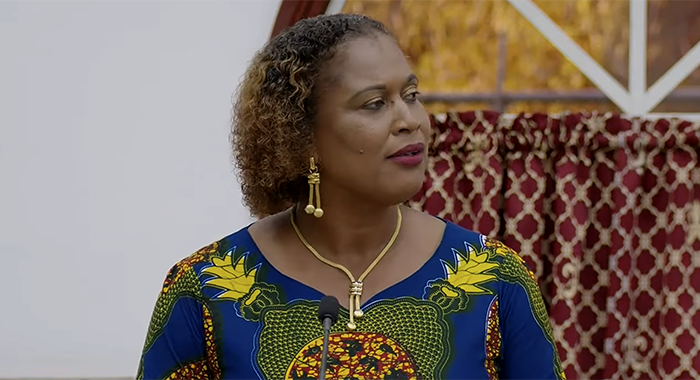
During a parliamentary address on Tuesday, Shevern John, Minister of Social Welfare, Community Empowerment, Ecclesiastical Affairs and National Heritage for St. Vincent and the Grenadines, laid out a comprehensive progress report marking the New Democratic Party administration’s first full year in office, framing the government’s track record as one of fulfilled campaign pledges and targeted support for the nation’s most vulnerable residents.
The flagship policy highlighted in her ministerial statement was the February 2026 increase to the monthly public assistance grant, raised from EC$360 to EC$500 for low-income, elderly, and disabled Vincentians. John emphasized that the adjustment was not a trivial budget line tweak, but a deliberate intervention to offset steeply rising cost of living pressures that had rendered the old payment insufficient to cover basic household needs. “A promise made and a promise delivered,” she told legislators, pushing back against opposition criticism that has sought to downplay the policy’s impact. “Beneficiaries do not need anyone to tell them the increase is real. They experience it every month, when that extra support lets them put food on the table, cover medicine costs, or pay their utility bills without choosing between essentials.”
The minister noted that the existing emergency assistance programme continues to deliver targeted aid for households facing unplanned crises, covering medical co-pays, funeral expenses, back-to-school supplies, and outstanding utility arrears, while the core vulnerability grant programme supports roughly 667 recipients, with an additional 100 low-income residents receiving free daily hot meals.
Moving beyond direct cash transfers, John detailed the rollout of the multi-track “We Can” empowerment initiative, co-funded by the World Food Programme, which combines family life education, agricultural skills internships, and small business development training to help recipients build long-term economic independence. A new UNICEF-funded job readiness stream under the programme currently serves nearly 200 participants across the country, with training set to conclude next month before a planned national expansion in the coming fiscal year. “This government has no interest in trapping people in cycles of state dependency,” John stated. “Our goal is to give people the tools to take control of their own livelihoods, build self-reliance, and contribute fully to their communities.”
John also addressed longstanding gaps in the national community development framework, noting that the department had been “practically dormant” when the new administration took office. Despite persistent staffing and administrative bottlenecks, the team hosted nine community consultation sessions under the “Five Cs” engagement series, centering local resident input to select 37 community-led projects approved under the Greater Youth Volunteerism Engagement (GYVE) Fund. The slate of projects ranges from bus shed reconstruction and public space upgrades to heritage site restoration, waterfall tourism development, and critical infrastructure repairs like the Biabou bridge, all designed to foster local volunteerism and collective ownership of public spaces.
She acknowledged that the ministry faced unexpected pushback during its retrofitting programme for community centres, as a small number of residents had seized exclusive, unauthorized control of seven public facilities across Orange Hill, Lauders, Biabou, Redemption Sharpes, Rose Hall, Rose Bank, and Layou, hoarding keys and refusing to vacate spaces they had treated as private residential property for years. Even with that resistance, the programme exceeded its initial target of five renovated centres, with all seven sites now under active renovation to reopen as inclusive, shared spaces for all local residents.
Other key milestones outlined included the launch of the faith-focused “Restore” campaign through the Ecclesiastical Affairs Division, a cross-church initiative centered on collective prayer, community service, and national reflection that has already drawn widespread positive feedback from congregations across the island. As a proud Garifuna woman, John also highlighted recent efforts to advance national cultural heritage preservation, including her trip alongside Prime Minister Godwin Friday to Belize for Garifuna Settlement Day, where the two leaders signed a partnership with Belize’s National Garifuna Council and Prime Minister John Briceño to launch a cultural exchange programme that will teach the endangered Garifuna language to children in St. Vincent and the Grenadines. The ministry has also hosted three popular heritage markets in 2026, and will formally transfer stewardship of the culturally significant Argyle petroglyph park to the National Trust that Friday, alongside ongoing management upgrades and infrastructure repairs for the Peace Memorial Hall. The newly completed Diamond Multipurpose Centre in South Windward will also be officially inaugurated and handed over to the local community the following Tuesday, to serve as a hub for training, public meetings, and local events.
John closed her address with a call to all parliamentary colleagues to prioritize regular, direct engagement with their constituents, citing her own Christian faith and quoting Psalm 121 to frame the administration’s work as rooted in service to the people. “We inherited a set of significant, long-unaddressed challenges, but this has been a year of hard work, determination, and tangible action,” she said. “We still have far more to accomplish, but the progress we have made so far proves that when we show up for Vincentians, we deliver.”