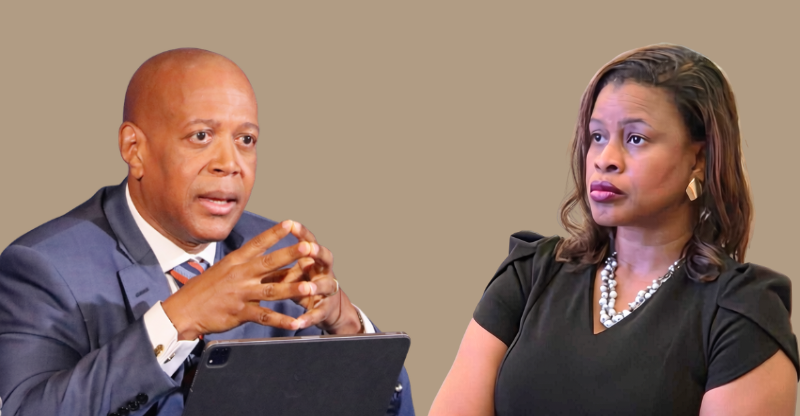
Barbados’ last sweeping adjustment to its contributory old-age pension system dates back two decades, spanning 2003 to 2004, when authorities raised the mandatory contribution rate from 14% to 18% and lifted the threshold for receiving a full state pension from age 65 to 67. For nearly 20 years, no major structural changes were rolled out, until the 17th official actuarial audit of the National Insurance Fund sounded a stark warning: without targeted corrective action, the fund risked total insolvency as early as 2034, with the worst-case scenario projecting depletion by 2041. That urgent forecast paved the way for a full reform package unveiled in July 2023 by then Labour Minister Colin Jordan during an official parliamentary ministerial statement. The 2023 reform package intentionally avoided raising contribution burdens for both employers and rank-and-file workers, but implemented a phased schedule of rising pensionable ages: the full pension eligibility age will hold steady at 67 through the end of 2027, rise to 67.5 starting January 2028, and finally climb to 68 in January 2034. The minimum age to claim a reduced, early pension is also being incrementally raised, moving from the previous 60 to 61 in 2025, 62 in 2028, and 63 by 2031. The new rules also extended the total required contribution period to qualify for any state pension from 500 weeks (roughly 10 years of formal employment) to 750 weeks (equivalent to 15 years of consistent contributions), a change that does not apply to any individual aged 60 or older as of January 1, 2024. A recalculated benefit formula for all new pension claimants will also gradually reduce average new state pension payouts by roughly 7% over a five-year implementation window. The reform package has faced fierce pushback from organized labor, with Barbados’ umbrella Congress of Trade Unions and Staff Associations dismissing the higher pensionable age adjustments as entirely unwarranted and unfair to working people. Now, as the new state pension rules enter implementation, industry experts and top financial regulators are calling on employers, pension plan trustees, and national financial policymakers to reimagine long-standing local retirement norms to mitigate the impact of reduced future state pension benefits. The call was issued at a recent national pension investment conference, where two leading speakers — Lisa Wade, principal and consulting actuary at Eckler Limited, and Dr. Kevin Greenidge, Governor of the Central Bank of Barbados — emphasized that all formal pension arrangements represent a binding, solemn commitment to working citizens across the island. Both experts noted that defined contribution plans have become the dominant retirement savings model in Barbados and across the globe, a shift that transfers investment risk directly to individual plan members rather than employers, making proactive plan oversight, regular benefit adequacy reviews, and transparent, ongoing communication with savers non-negotiable priorities. Wade highlighted that the 2023 National Insurance reforms will deliver a noticeable reduction in state pension payouts for all future generations of retirees, while leaving current retirees’ existing benefit levels completely untouched. She added that steep financial penalties applied to anyone claiming benefits before reaching age 68 will make the long-traditional workplace retirement age of 65 financially unfeasible for the vast majority of working people. “This will represent a fundamental sea change for our entire retirement system, but it is a shift that demands serious, immediate consideration given the new National Insurance rules that are now in place,” Wade told conference attendees. She urged employers and pension trustees to conduct full audits of their existing workplace retirement policies, with an eye to gradually raising formal workplace retirement ages closer to 68, a shift that would allow workers to qualify for far higher full state pension payouts, and give them three extra years to grow their defined contribution plan savings. Wade also criticized the pervasive, careless “set it and forget it” culture that plagues many occupational pension plans across Barbados, noting that the vast majority of schemes are established with no scheduled recurring reviews to assess whether benefit levels, contribution rates, or investment returns are sufficient to meet members’ retirement needs. She also flagged a critical gap in current local regulation: since the Occupational Pension Benefits Act made workplace pension plan participation voluntary, many young workers, including 25-year-old new entrants to the workforce, are opting out of these schemes with no full understanding of the severe, long-term financial harm that choice will inflict on their retirement security. Wade shared that her firm Eckler is actively advocating for amendments to the existing act that would allow employers to make pension plan membership a formal term of employment, while retaining a voluntary opt-out option for workers who prefer alternative savings paths. On tax policy, Wade praised the government’s recent move to raise the annual personal income tax threshold to $70,000, a change that makes pension income almost entirely tax-free for most Barbadian workers, but argued further targeted reforms are needed to incentivize greater retirement saving. She called for full tax neutrality for all voluntary pension contributions, to ensure that saving through a formal workplace pension plan is not penalized relative to other, non-retirement-focused savings vehicles, and pushed for the elimination of double taxation applied to voluntary pension contributions. For his part, Central Bank Governor Dr. Greenidge framed the island’s collective pension funds as an irreplaceable pool of long-term capital that must be deployed strategically to both safeguard members’ retirement security and strengthen the country’s broader national economic resilience. Citing latest data from the Financial Services Commission, he noted there were 238 registered occupational pension plans operating on the island at the end of October, including 138 defined contribution plans, 75 traditional defined benefit plans, and 25 hybrid structures. He added that Barbados’ rapidly ageing population, paired with a growing gap between falling birth rates and rising mortality rates, makes securing adequate retirement income for all workers a more urgent public priority than ever before. Dr. Greenidge acknowledged that macroeconomic conditions across the island have improved dramatically since 2018, with international reserves rebuilt to roughly $2.8 billion, enough to cover 23 weeks of imports, and national credit ratings upgraded significantly. However, he noted that national economic growth cooled to just 1.4% in the first half of the current year, dragged down by shorter average tourist stays and persistently elevated global energy costs. He also openly acknowledged that Barbados’ domestic capital market remains underdeveloped and shallow, with very limited secondary market liquidity, and investment opportunities heavily concentrated in sovereign debt products and a small handful of large funds. “We have to be honest with ourselves: our domestic market is simply too small and underdeveloped right now,” Dr. Greenidge told delegates. “There is roughly $16 billion in total savings sitting in our domestic financial system, but the market has not yet produced enough investment instruments that offer the full range of returns, maturity timelines, liquidity, and risk profiles that pension fund managers need to grow their members’ savings.” He identified high-priority, high-potential investment areas including renewable energy deployment, energy storage infrastructure, public water system upgrades, affordable housing development, and cross-border regional capital market initiatives, but stressed that all these projects must be carefully structured with verifiable, predictable cash flows, independent third-party valuations, and clear risk allocation frameworks to qualify as appropriate, low-risk investments for pension funds, rather than being automatically treated as bankable opportunities. On the topic of overseas investment diversification, Dr. Greenidge confirmed that the Central Bank of Barbados permits prudent, well-researched foreign investments for pension funds within established reserve limits, and encouraged plan trustees to map out their full annual foreign exchange needs well in advance, and submit consolidated full-year funding requests rather than piecemeal, ad-hoc applications. “At the end of the day, every dollar in these pension funds belongs to the working people who contributed to them,” Dr. Greenidge reminded trustees. “Your core legal and ethical duty is to protect their best interests at all times.”