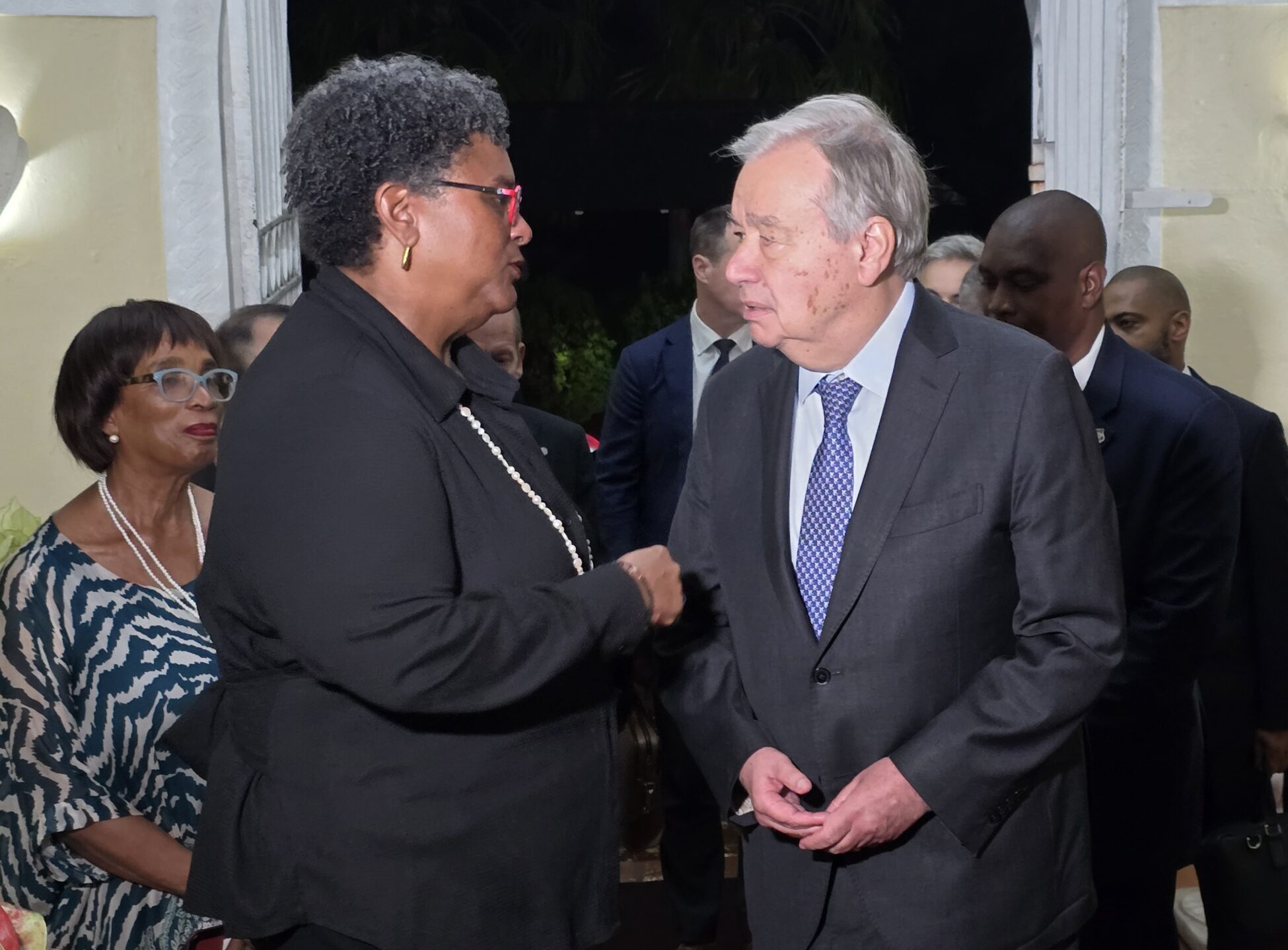
During a high-profile official visit by United Nations Secretary-General António Guterres to Barbados, two landmark binding agreements were formally signed at Ilaro Court on a recent Sunday, cementing decades of continued collaboration between the Caribbean island nation and the global intergovernmental body. The first deal is a five-year Multi-Country Sustainable Development Cooperation Framework covering 2027 through 2031, while the second is a 25-year long-term lease for UN House, the regional headquarters of the UN Multi-Country Office for Barbados and the Eastern Caribbean located in Marine Gardens, Christ Church. This facility hosts 18 distinct UN agencies that deliver coordinated support to seven independent Caribbean nations and three British Overseas Territories across the English- and Dutch-speaking Caribbean, serving a total of 22 countries and territories. In a joint press briefing held alongside Barbadian Prime Minister Mia Mottley, Secretary-General Guterres emphasized that the new lease sends an unambiguous public signal of the UN’s unwavering long-term commitment to the Caribbean region, noting that the organization is not just a temporary partner but a permanent stakeholder in local progress. Designed to supersede the 2022-2026 cooperation framework that was drafted in the midst of the global COVID-19 pandemic with a primary focus on post-crisis resilience and recovery, the 2027-2031 framework prioritizes structural economic transformation and durable, systemic solutions to interconnected regional challenges. These overlapping hurdles include overconcentration of local economies, extreme climate vulnerability, widening social inequality, shifting demographic patterns, and rising rates of transnational crime and community violence. For Barbados specifically, the framework outlines four targeted priority action areas: building a diversified, inclusive national economy; bolstering adaptive capacity to withstand climate disasters and other external shocks; expanding equitable access to high-quality social services with targeted support for marginalized and vulnerable populations; and fostering safer, more cohesive communities that leave no demographic group behind. Cross-cutting enablers including expanded digital public infrastructure, improved national data collection systems, strengthened public institutional governance, and innovative sustainable financing mechanisms will underpin all workstreams outlined in the agreement, which is fully aligned with the Antigua and Barbuda Agenda for Small Island Developing States, with a tailored Barbados Country Implementation Plan set to be released in the coming months. Guterres went on to praise Barbados as a leading global advocate for multilateralism, noting that the small island nation consistently “punches above its weight” in global diplomatic forums, introducing transformative new policy ideas that shape the international development agenda. He underscored that the world urgently needs Barbados’ moral leadership at a moment when Caribbean nations are facing cascading overlapping crises: accelerating climate breakdown, widening geopolitical rifts, soaring public debt burdens, skyrocketing cost of living, and growing transnational security threats including weapons and drug trafficking that are exacerbated by ongoing conflicts in the Middle East disrupting global fuel costs and maritime trade routes. The Secretary-General, whose 10-year tenure leading the UN will conclude on December 31 of this year, also commended Prime Minister Mottley’s global advocacy for solutions rooted in justice, inclusion, and cross-national solidarity, reaffirming his personal commitment to stand with the people of Barbados and the broader Caribbean in their pursuit of equitable peace and a global governance system where every nation, regardless of size, has an equal voice in shaping shared global futures. For her part, Prime Minister Mottley laid out three existential threats facing all small island developing states: escalating climate change and catastrophic biodiversity loss, the unregulated proliferation of artificial intelligence, and the erosion of national sovereignty in a fracturing global landscape. She warned that small states cannot survive the collapse of the international rules-based order, reaffirming Barbados’ longstanding cross-party foreign policy principle first articulated by the nation’s first Prime Minister Errol Barrow when Barbados joined the UN as its 122nd member on December 9, 1966 — just one week after gaining national independence — that the country will always be “friends of all and satellites of none”. Mottley added that the COVID-19 pandemic served as a stark reminder that the actions of even the smallest nations and individual citizens can ripple across the entire global community, and that ignoring the needs of small and marginalized populations puts the entire world at shared risk. Officially opened by then UN Secretary-General Kofi Annan on January 2, 2002, the Barbados UN House also serves as a critical collaborative hub for regional partner institutions including the Caribbean Disaster Emergency Management Agency (CDEMA) and the Organisation of Eastern Caribbean States (OECS) Commission, ensuring coordinated, region-wide responses to shared crises.