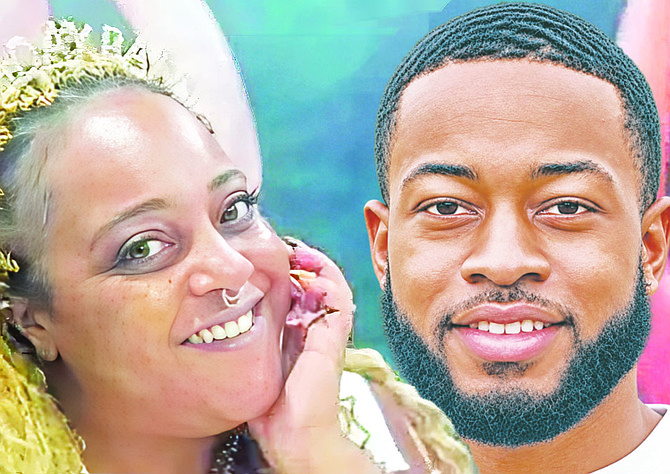
Two American relatives vacationing in the Bahamas to mark a milestone birthday lost their lives to unpredictable, powerful ocean currents off North Bimini earlier this month, sparking urgent calls from grieving family members and local community advocates for sweeping safety overhauls at the high-risk coastal stretch known locally as The Point.
Jasmine Carrington, a 40-year-old Tulsa, Oklahoma resident, and her cousin John Martin, also a Tulsa native, were part of a five-person travel group that arrived on the island to celebrate Carrington’s 40th birthday on November 13. For 30-year-old Martin, the trip marked his first major independent vacation as an adult, and he was weeks away from a scheduled February wedding to his fiancée. The group had gathered on rocky outcroppings in shallow, ankle-deep water to socialize when a rapidly rising tide swept all of them into unforgiving deep water, defying even the swimming abilities of Carrington’s husband, a former U.S. Marine who attempted to rescue the pair against the force of the current. Martin’s fiancée dove under the surface to retrieve him and held him afloat while waiting for emergency responders, but the two cousins were ultimately unable to be revived.
The aftermath of the tragedy has left two families shattered: Carrington, who shared 13 years of marriage with her husband, leaves behind three young children aged 12, 9, and 3, who had been staying with their grandparents in Texas while their parents traveled. Martin’s mother, Marsha Gunn, described the day she learned of her son’s death as the worst experience of her life, and noted that Martin had no active insurance coverage to offset the costs of repatriating his remains back to the United States and arranging his funeral. Grieving relatives have launched separate crowdfunding campaigns to cover unmet expenses: the Martin family is seeking $35,000 for repatriation, transport, and funeral costs, and had raised more than $4,000 at press time, while a separate fund for Carrington’s surviving loved ones is targeting $60,000, with over $5,600 donated to date. Gunn shared that one of the most searing moments of grief came when Carrington’s husband returned home carrying all of his wife’s signature bright orange suitcases, but without her by his side.
The family is now publicly questioning whether the existing generic “swim at your own risk” signage posted in the area provides sufficient warning to unsuspecting tourists. Gunn told local U.S. outlet News On 6 that she is demanding transparent answers from Bahamian authorities about why fatal drownings targeting visitors have become a recurring pattern on the island. Their calls for accountability are being echoed by local Bimini community leadership: Paul Rolle, president of the Bimini United Organization, confirmed that the currents at The Point have grown exponentially stronger in recent years, to the point that even experienced professional divers cannot swim against the surge. Rolle attributed the shift in local ocean dynamics to unregulated past drilling and dredging activity that altered the natural seabed and coastal flow patterns, though he did not name specific corporations or resort operators linked to the work.
Rolle is formally petitioning both local island administrators and the Bahamas’ central national government to deploy full-time lifeguards to the high-risk stretch, install explicit “no swimming” signage banning all entry into the water rather than the vague current warnings, and assign dedicated staff to patrol the area and turn visitors away when large cruise ships dock on the island and bring surges of unsupervised day trippers. While the private land leading to The Point has a gated entry marked with no-trespassing notices, Rolle explained that tourists can easily bypass the barrier by wading through shallow tidal water around the rocky perimeter, as the beach itself falls under public government jurisdiction up to the high-tide line. Local police noted after the November 13 incident that the group had ventured past the existing marked warning zone for strong currents.
The two cousins’ deaths are far from isolated fatalities this year on North Bimini’s shorelines: just weeks before the November incident, 36-year-old British tourist Leanne Gregory from Nottinghamshire drowned after rushing into the water to save her two young sons, who had been swept away by a current while the family snorkeled near the island’s southern tip. A water taxi crew pulled all three family members from the sea, but Gregory could not be revived at the local clinic, though her two sons survived the ordeal. Earlier in May, a 69-year-old American man lost consciousness and died while on a guided snorkeling marine excursion off Bimini. At press time, Bahamas Minister of Tourism Glenys Hanna Martin had not responded to repeated media requests for comment on the rising death toll and proposed safety reforms.
Family questions Bimini beach warnings