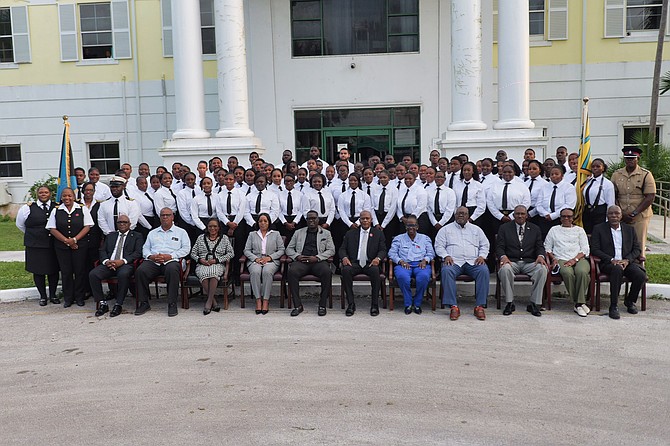
Ninety-eight newly graduated Bahamas Customs recruits have secured a rare place in the department’s 112-plus year institutional history, becoming only the second trainee cohort ever to complete formal drill and deportment training, as officials laid out strict, people-first professional expectations for the new officers at a recent official inspection ceremony.
Presiding over the event, Customs Comptroller Ralph Munroe highlighted the unprecedented nature of the training milestone, noting that for more than a century of the agency’s operation, almost no incoming recruits had access to the structured drill programming the new cohort just completed. Designed to embed rigorous discipline, boost baseline physical fitness, and codify the non-negotiable professional standards required of frontline customs staff, the training is framed as a foundational pillar to protect the core operational value of integrity across all new officers’ careers. Munroe stressed that unwavering integrity, the bedrock of every customs officer’s mandate, cannot be sustained without consistent, intentional discipline that translates to daily workplace habits: punctuality, ongoing professional upskilling, mutual respect for colleagues, and unwavering politeness and professionalism when interacting with members of the public, even during tense, high-conflict encounters that might provoke unprofessional responses.
The multi-month training program was led by Assistant Superintendent of Police Rico Thompson of the Royal Bahamas Police Force, with additional support from Sergeant Bryson Anderson and a team of certified police training staff, a partnership Munroe formally recognized and praised during the ceremony. He explained that while the Bahamas Customs Department is not a military entity, the structured drill curriculum creates space for new officers to demonstrate national pride, build physical stamina, and master clear, compliant adherence to official directives. From his office positioned directly overlooking the training grounds, Munroe noted he had closely monitored the cohort’s progress over the final two weeks of programming, and singled out their sharp responsiveness to commands and strong, collaborative camaraderie across grueling exercises as particularly impressive.
Multiple recruits who addressed attendees at the ceremony spoke to the rigorous demands of the training regimen, which included repeated sprint drills, hours of coordinated marching, and extended outdoor exercises completed under harsh, sweltering local weather conditions. Trainees shared that the program pushed both their physical limits and mental resilience, while giving them a tangible, grounded understanding of the heavy public service responsibilities they would carry as customs officers. Several noted that the experience reinforced core values of teamwork, perseverance, and hierarchical respect, adding that the true success of the training would be measured not by their performance on the parade ground, but by how consistently they uphold those values in their day-to-day public-facing duties.
The ceremony concluded with the distribution of special recognition certificates to top-performing recruits, as well as formal appreciation awards for the police instructional team. Munroe also extended public thanks to Assistant Comptroller of Customs Larry Bodie and the department’s entire internal Training Division for designing and delivering the robust program, stating he had full confidence the new cohort would deliver meaningful, long-overdue improvements to the agency’s public service capacity. He closed by encouraging the new officers to prioritize continuous skill development throughout their careers, confirming the department is fully prepared to leverage their unique talents to advance national customs operations.
98 Customs recruits complete rare drill training programme