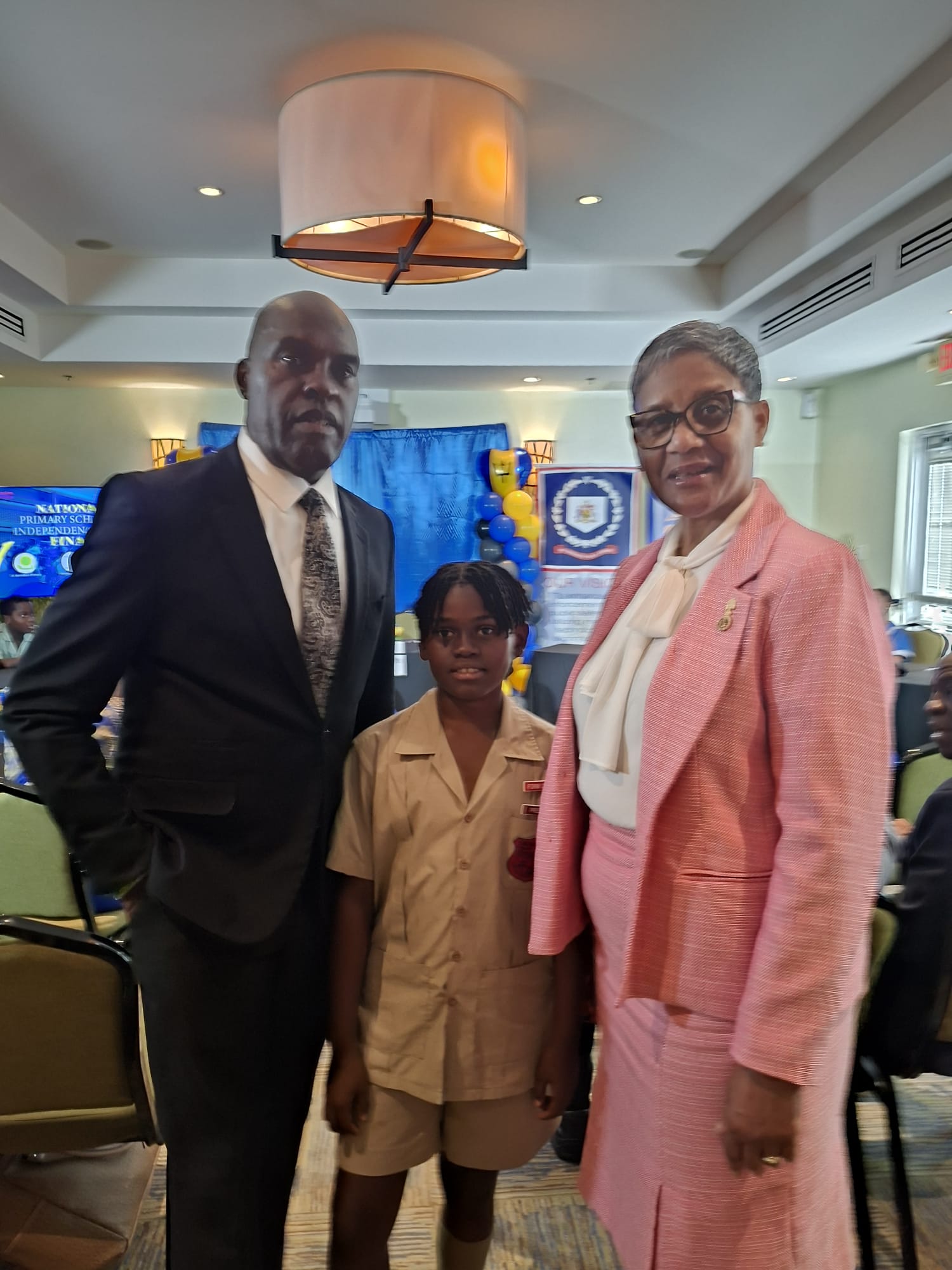
Against the backdrop of Barbados’ upcoming dual milestones of 60 years of national independence and five years as a sovereign republic, Minister of Legal Affairs and Criminal Justice Michael Lashley took the stage at the 2026 National Police Independence Quiz grand final, hosted at Courtyard by Marriott in Hastings, Christ Church, to announce the early conceptualization of a groundbreaking community-centered crime prevention framework dubbed Project Live.
The student-focused quiz event, jointly organized by the Barbados Police Service’s Community Relations Department and the Criminal Justice Research and Planning Unit, brought together top youth competitors from secondary schools across the island after weeks of regional elimination rounds. Addressing the packed room of finalists, educators, police personnel and family members, Lashley first lauded every participant for their relentless dedication, noting that their rigorous preparation for the quiz had already positioned them as champions regardless of the final score tally. “Looking out at this audience, I see the next generation of prime ministers, doctors, lawyers, business leaders, and even dedicated defence attorneys who will uphold justice in our nation,” he remarked, praising the Criminal Justice Research and Planning Unit’s director and her team for their ongoing efforts to design the new public safety programme.
Lashley explained that Project Live was commissioned as a targeted response to emerging social challenges facing the Caribbean island, with a phased public rollout scheduled to kick off in December and extend through the start of the new year. The core design of the initiative is rooted in two interconnected priorities: first, delivering targeted educational outreach to young Barbadians to clarify their civic duties and personal responsibilities, and second, creating structured reintegration pathways for people with prior interactions with the criminal justice system, leveraging their lived experiences to steer at-risk youth away from harmful choices.
Rejecting the notion that top-down government action alone can drive meaningful social transformation, Lashley emphasized that Project Live will operate as a collaborative open platform, extending outreach to every school, community centre and residential neighborhood across the island. Local residents will be invited to submit grassroots programme proposals, and submissions that align with the initiative’s public safety goals will receive full government financial and logistical support. “Some of the most effective solutions to our community’s challenges never come from behind a minister’s desk — they come from the people who live and work in these neighborhoods every day,” Lashley noted.
Barbados Police Commissioner Sonia Boyce, who also addressed the gathering, tied the quiz competition directly to the legacy of the nation’s Father of Independence Errol Walton Barrow and the upcoming November 30 national independence celebrations. “Barbados turns 60 this year, but its future is still very young — and that future is sitting right here in this room, in all of you,” Boyce told the student attendees. She outlined that a safe, cohesive society is built not through grand policy alone, but through small, consistent daily acts of good citizenship: practicing kindness even when unobserved, speaking truthfully, respecting elders, rejecting bullying, and standing up for peers who face unfair treatment. She also reassured young people experiencing fear or witnessing troubling situations that they can always turn to trusted adults, parents, teachers, or uniformed police officers for support, no matter the circumstance.
The event, captured in a series of photographs by journalist Ricardo Roberts, marked a dual milestone: a celebration of Barbadian youth civic engagement, and the official public launch of a new collaborative public safety model designed to unify government, law enforcement and local communities in reducing crime across the island.