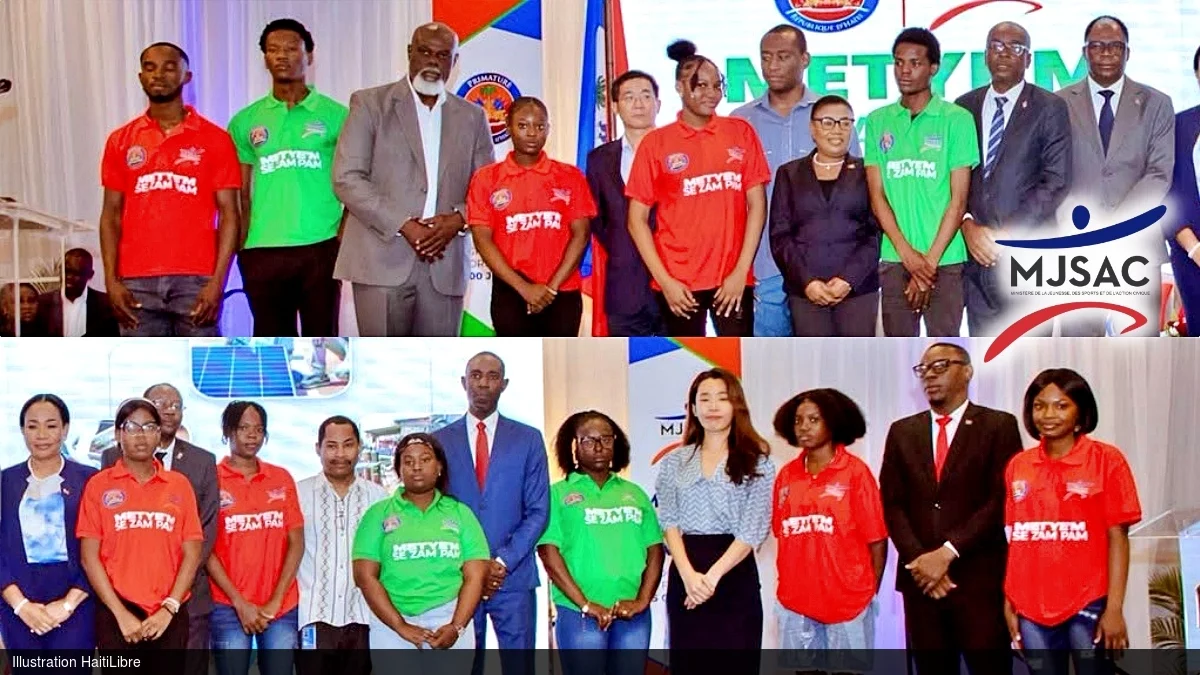
On November 20, 2026, Haiti’s Ministry of Youth, Sports and Civic Action (MJSAC) officially kicked off its landmark “Metye m se zam pam” (My Trade Is My Weapon) initiative at Port-au-Prince’s Karibe Convention Center, marking a pivotal step to address widespread youth unemployment and systemic social unrest across the crisis-hit nation. The launch ceremony drew a high-profile contingent of public sector leaders, including MJSAC Minister Pythagore Dumas, Ministry Director General Wilfince Mombrun, Minister for the Status of Women Pédrica Saint-Jean, dozens of ministry staff, and hundreds of prospective young program participants.
The inaugural cohort of 5,000 enrollees will receive free, structured hands-on training across four high-demand, community-focused vocational tracks: metalworking, welding, mobile device repair, and motorcycle mechanics. Trainees who meet strict attendance thresholds and demonstrate satisfactory skill mastery during the program will be eligible for targeted government support to launch neighborhood-based collective workshops: small local enterprises that employ 10 peers from the same trade to deliver affordable services to surrounding communities. The Ministry of Commerce and Industry will administer the accompanying seed grant funding, which is disbursed exclusively based on verified trainee performance to ensure accountability and long-term business viability.
Speaking on behalf of all selected beneficiaries, 22-year-old participant Jean Rebecca Lorynn extended collective gratitude to Minister Dumas and the administration of Prime Minister Alix Didier Fils-Aimé, framing the program as a once-in-a-generation lifeline for Haitian youth who have long been excluded from formal economic opportunities. The cohort collectively voiced their shared conviction that the initiative would replace pervasive youth despair with marketable, life-sustaining competencies, and redirect widespread vulnerability to gang recruitment and violent activity toward the dignity of formal, productive work.
During her address, Minister Pédrica Saint-Jean emphasized the program’s intentional gender-inclusive design, rejecting long-standing cultural norms that relegate skilled manual trades exclusively to men. She noted that targeted outreach to adolescent girls and young women would break intergenerational cycles of gendered economic marginalization, closing persistent gaps in labor force participation that have widened Haiti’s national gender inequality gap for decades.
Minister Dumas, for his part, positioned the vocational training scheme as far more than a short-term employment intervention: he framed widespread investment in skilled manual trades as a core national strategy to resolve unmet local service gaps, create thousands of sustainable, community-rooted jobs, and unlock a new wave of grassroots micro-entrepreneurship across the country. Officials confirmed that after the first cohort completes its training cycle, the “Metye m se zam pam” program will be expanded to additional regional departments to reach tens of thousands more marginalized young people. The MJSAC has positioned the initiative as the foundational pillar of a long-term national mass skills-building policy, centered on local economic self-sufficiency and full, equitable inclusion of young Haitian women in the country’s economic recovery.