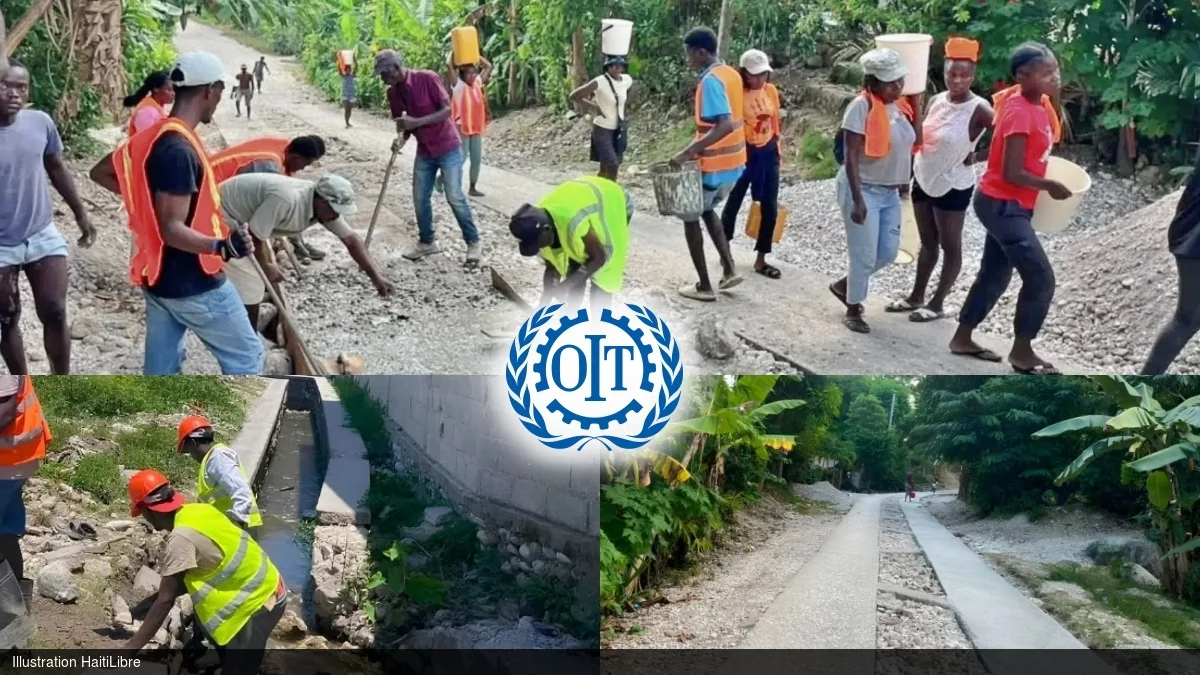
Port-Salut, Haiti – November 20, 2026: A targeted rural development initiative rolled out by the International Labour Organization (ILO) across three southern Haitian communes has delivered dual transformative impacts: over 8,600 paid workdays for local residents, plus critical upgrades to long-neglected agricultural and community infrastructure. Funded with a $505,000 allocation from the ILO’s Regular Budget Supplementary Account, the program centers a labor-intensive implementation model that prioritizes local hiring while delivering tangible public good.
Youth emerged as the core beneficiary cohort of the 12-month intervention, with young women securing more than 50% of all generated workdays and young men accounting for an additional 25%. The steady, formal paid roles delivered immediate, reliable household income for participants, many of whom reported using earnings to cover back-to-school costs for their children, medical co-pays, and other urgent family expenses amid widespread economic precarity across southern Haiti.
Beyond temporary employment, the program delivered structured, hands-on vocational training for participants across high-demand construction trades, including masonry, carpentry, metal fabrication, formwork assembly, land surveying, and well drilling. The initiative also invested in long-term institutional capacity building for local branches of Haiti’s Ministry of Agriculture, equipping staff with the tools and technical expertise to independently plan, manage, and maintain rural infrastructure projects long after the ILO program concludes.
The program targeted longstanding systemic barriers to livelihoods in Les Cayes, Torbeck, and Camp-Perrin, where residents had for decades grappled with crippling dry-season irrigation water shortages, catastrophic flooding during heavy rain events, and unpaved rural roads that turned impassable for days after storms, blocking access to markets, clinics, and emergency services. Over the course of the project, work crews cleared nearly 10 kilometers of clogged irrigation and drainage canals, excavated 1.6 kilometers of new water channels, laid 121 meters of reinforced masonry-lined canals, and repaired an additional 50 meters of damaged existing canal infrastructure. In the neighborhoods of Gracette and Ti Bannan, these upgrades have already stabilized dry-season water flow for smallholder farms and cut local flood risk by an estimated 60% by redirecting excess stormwater away from residential zones and cropland.
In Ti Guinin and Milor, crews completed full rehabilitation of 7 kilometers of rural feeder roads, built four reinforced water crossings to eliminate seasonal flood-related road closures, and installed terraced erosion control barriers along steep hillsides. Local agricultural cooperative leaders report that transport times for harvests to regional markets have been cut by 40%, drastically reducing post-harvest food loss for small farmers. Crews also planted 700 native, drought-resistant trees across the Milor watershed to reduce soil erosion and support local biodiversity.
Complementing infrastructure and employment outcomes, the program hosted 14 targeted workshops that drew over 100 participants, covering occupational health and safety protocols, gender equity in the workplace, ILO decent work standards, community peacebuilding frameworks, and local grassroots project design. These sessions have raised widespread awareness of formal labor rights across the three communes, and spurred the formation of a local community infrastructure maintenance committee that will oversee upkeep of the new canals and roads moving forward.
ILO Haiti country representatives noted that the program’s labor-intensive design model delivers far more layered benefits than traditional capital-heavy infrastructure projects, as it circulates program funds directly into local household economies rather than outsourcing work to external contractors, while building local skills that create a pipeline of qualified construction workers for future regional development initiatives.