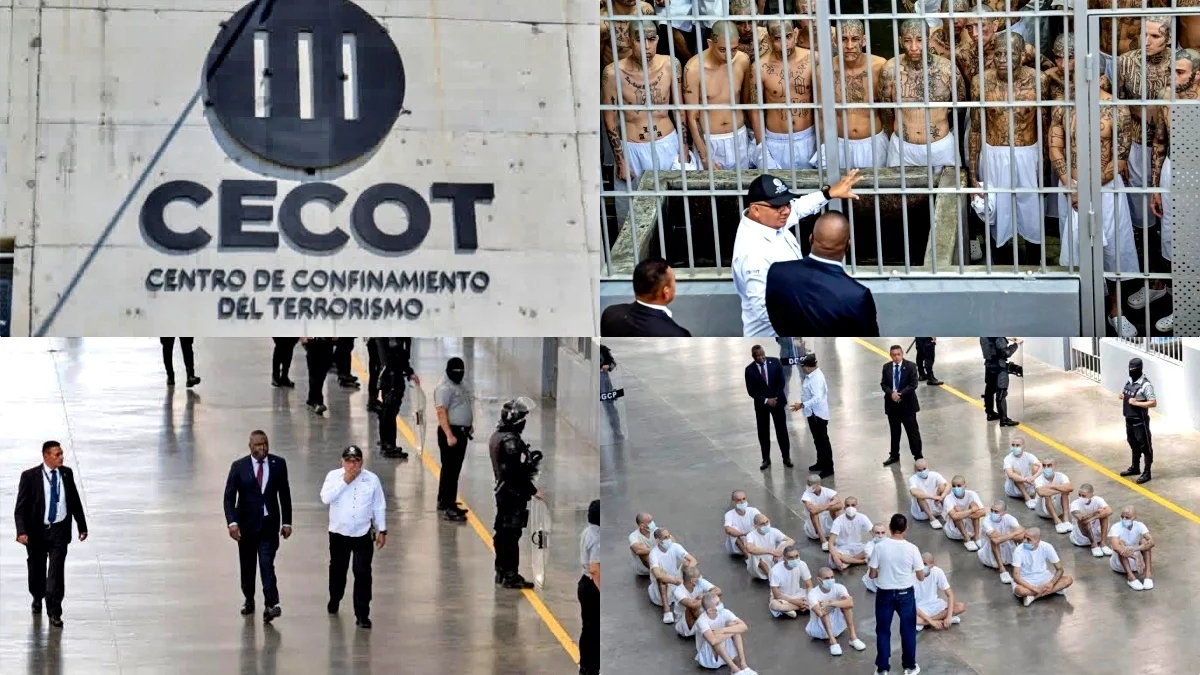
On November 18, 2026, official updates confirmed that Patrick Pélissier, Haiti’s Minister of Justice and Public Security, completed an official working visit to El Salvador tied to the 2nd International Conference on the State and Democracy, hosted in the Central American nation on November 16 and 17. The high-level summit convened governance and security representatives from more than 50 countries to deliberate cross-cutting challenges related to institutional governance, public safety frameworks, and inclusive national development. For Haitian authorities, the overseas mission was explicitly structured to benchmark proven international best practices that could inform ongoing domestic efforts to reinforce state institutional capacity, reassert legitimate public authority across Haiti’s territory, and lay the groundwork for long-term, sustainable national security restoration. On the margins of the two-day global conference, Minister Pélissier joined his Salvadoran counterpart, Justice and Public Security Minister Gustavo Villatoro, for a guided tour of the Terrorism Confinement Center, widely known by its Spanish acronym CECOT. The site visit was framed as a knowledge-sharing exercise to explore potential bilateral cooperation on anti-gang and counter-organized crime strategies, at a moment when Haiti remains in the grip of pervasive armed gang violence that has displaced tens of thousands of civilians. During his formal remarks at the international conference, Pélissier extended public gratitude to Salvadoran President Nayib Bukele for ongoing Salvadoran operational support to Haitian counter-gang initiatives targeting armed groups that have carried out widespread attacks against vulnerable Haitian communities. He also acknowledged measurable recent improvements in Haiti’s local security landscape, directly attributing part of that progress to the on-the-ground deployment of Salvadoran security personnel supporting local stabilization efforts. Launched in early 2023 under President Bukele’s administration, CECOT is a purpose-built maximum-security detention complex situated in the remote Tecoluca region of El Salvador. Constructed in a breakneck seven-month timeline at a reported total cost of $135 million, the 23-hectare purpose-built facility is engineered to hold up to 40,000 detainees. The sprawling complex is encircled by towering reinforced perimeter walls, electrified security fencing, and continuously staffed watchtowers, with 24/7 patrols by hundreds of combined military and law enforcement personnel, strict layered access controls, and deliberate signal blocking that eliminates all mobile telephone network coverage across the surrounding exclusion zone. Its current population includes alleged members of transnational criminal gangs such as MS-13 and Barrio 18, alongside dozens of individuals deported to El Salvador under cross-border security agreements with partner nations. Detainees are housed in large shared collective cells, with no formal rehabilitation programming permitted and no in-person family visit privileges allowed. The facility has sparked fierce global debate since its opening: independent human rights monitoring groups and major international media outlets have published scathing critiques of CECOT’s operations, flagging systemic due process violations, prolonged arbitrary isolation of detainees, and widespread reports of inhumane treatment of incarcerated people. Supporters of the Bukele administration’s aggressive anti-crime framework point to a dramatic, sustained drop in national homicide and violent crime rates across El Salvador as direct proof of the model’s effectiveness. Meanwhile, independent human rights observers and criminal justice experts have repeatedly warned that the CECOT model carries inherent, unaddressed risks of systemic state abuse and long-term erosion of rule of law norms.