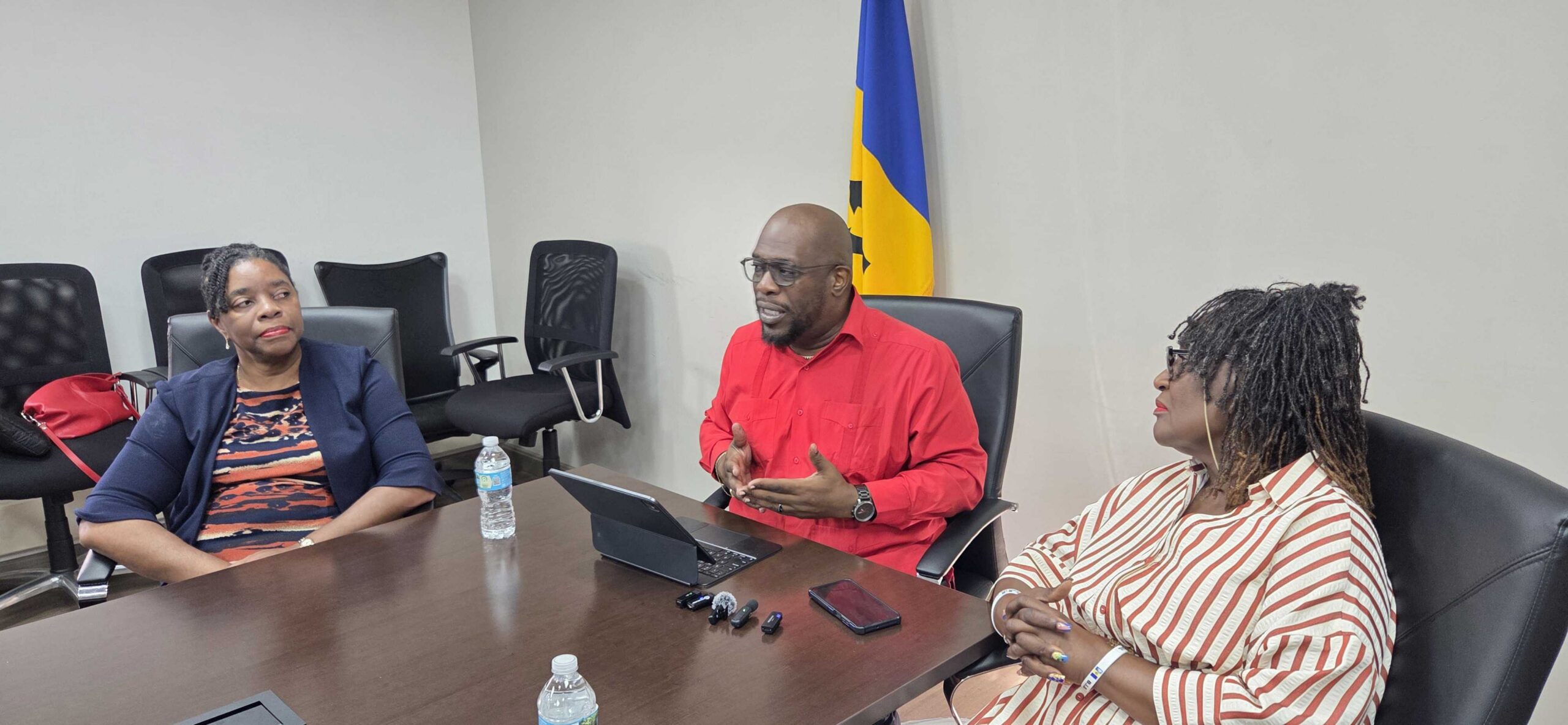
In an unusual show of solidarity between a senior government official and frontline public service staff, Barbados’ Minister of Home Affairs Gregory Nicholls has formally endorsed a work stoppage launched by Immigration Department employees at their Princess Alice Highway headquarters, pledging to relocate all affected personnel no later than December 1. The industrial action, which commenced at 8 a.m. on Monday, was triggered by years of unaddressed occupational health and safety hazards that staff say have left them facing persistent respiratory distress, frequent voice loss by the end of workdays, and extended periods of medically certified sick leave. Union representatives confirmed the issues include pervasive mould growth and unsafe carbon monoxide readings that have been flagged for months without a permanent fix. Even Nicholls acknowledged during a press briefing at his Wildey office, flanked by Permanent Secretary Sharon Drayton and Chief Immigration Officer Margaret Inniss, that he himself has developed recurring sinus complications after spending time in the six-year-old facility, making clear the grievances are not exaggerated or isolated. The Barbados Workers’ Union (BWU) emphasized the action is not a formal strike, but a legally protected work stoppage under Section 104 of the Safety and Health at Work Act, which permits employees to withhold labour when they reasonably believe their health faces imminent harm. BWU Deputy Director of Industrial Relations Senator Kamisha Benjamin noted the union had held months of protracted negotiations with department leadership, and even submitted a formal letter to the Chief Labour Officer just one week prior, but all temporary mitigation measures – including reduced operating hours to allow for partial cleaning and remedial works – had failed to resolve the core hazards. “No worker should ever be forced to choose between earning a wage and protecting their physical wellbeing, which is the impossible position these immigration staff have been trapped in for far too long,” Benjamin stated. To resolve the impasse, the government has fast-tracked two parallel relocation pathways: the immediate partial transfer of some staff to the Sir Roy Trotman Building on Harbour Road, which currently houses the Customs Department, with an inter-agency meeting scheduled to finalize occupancy logistics, and expedited Cabinet approval to lease commercial office space on High Street for the remaining team. Nicholls cautioned that the relocation process requires meticulous planning, given the department’s handling of highly sensitive personal border data, secure immigration processing equipment, and confidential residency and work permit records that cannot be haphazardly transported. Concurrent to relocation efforts, the Ministry of Health and Wellness and the Environmental Protection Department are conducting rigorous, science-led air quality testing and deep decontamination works to eliminate all traces of mould and air contaminants, with a formal empirical verification of compliance with strict occupational health standards required before any staff are permitted to re-enter the Princess Alice Highway facility. Nicholls issued a public apology for the years of delays in addressing the building’s hazardous conditions, and praised staff for their resilience and commitment to maintaining critical border services even as they navigated unsafe working environments. Revised operational arrangements will ensure all emergency immigration cases and pre-scheduled public appointments continue to be processed without disruption during the transition period, while the government also advances long-term plans to secure a purpose-built permanent headquarters for the department in central Bridgetown. The Princess Alice Highway site, previously known as the BTI Corporate Centre, was completed and opened for occupancy in March 2018 at the very end of the Freundel Stuart administration, after a multi-year redevelopment of a former car park that broke ground in late 2013. Prior to that 2018 move, the Immigration Department operated for decades out of Careenage House on Wharf Road, following its formal separation from the Royal Barbados Police Force under the 1976 Immigration Act, with its civilian administrative mandate fully standardized three years later via the Immigration (Forms and Fees) Regulations that formalized civilian processing for work permits, residency applications, and national border control operations.
BWU demands lasting solution after prolonged talks fail to resolve health concerns