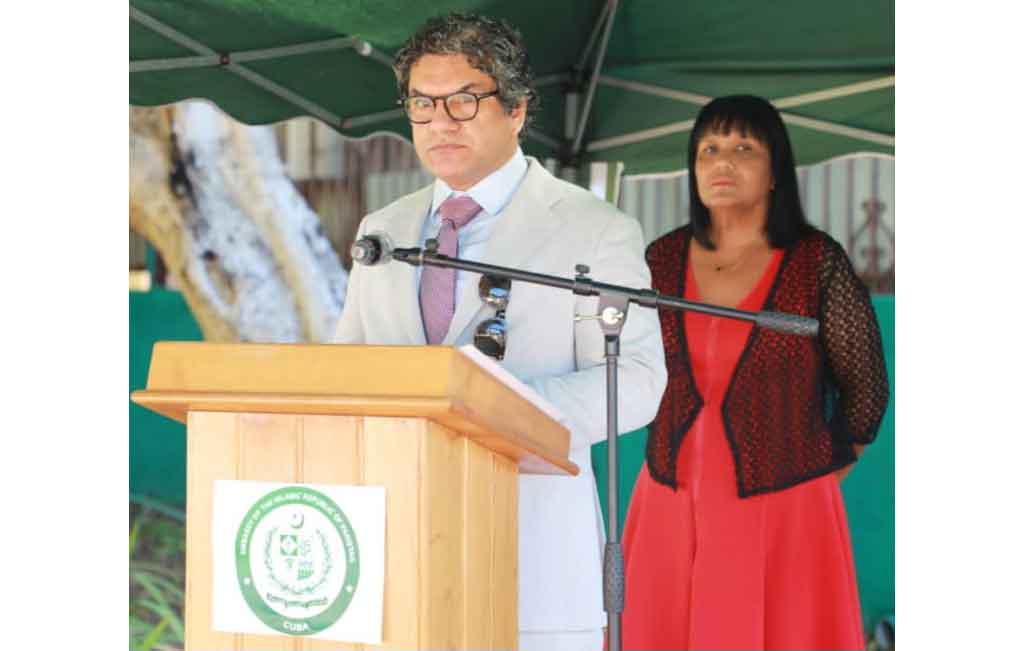
A landmark cultural and diplomatic ceremony unfolded in Havana, Cuba, marking the official inauguration of a public statue dedicated to Muhammad Ali Jinnah, the revered founding father of Pakistan. The high-profile event drew a distinguished guest list including Pakistan’s Ambassador to Havana Shahbaz Mansoor Malik, Cuba’s Minister of Culture Alpidio Alonso, Cuban Ministry of Foreign Affairs Vice-Minister Anayansi Rodriguez, and representatives from nearly all foreign diplomatic missions accredited across the Caribbean island nation.
During his address at the unveiling, Ambassador Shahbaz Mansoor Malik underscored the enduring historical weight of Jinnah’s legacy for the Pakistani nation, noting that the iconic leader spearheaded the successful movement to establish the first independent sovereign state for Muslims in the South Asian subcontinent. The diplomat went on to emphasize the profound symbolic meaning of placing this memorial sculpture in Cuba, the largest island in the Greater Antilles archipelago. “Cuba and Pakistan are tied together by unshakable bonds of solidarity and fraternal brotherhood that have stood the test of decades,” he stated to attendees.
Ariel Lorenzo, Director of the Asia and Oceania Division at Cuba’s Ministry of Foreign Affairs, took the stage to walk the audience through the long, rich history of collaborative bilateral relations that have linked Islamabad and Havana for generations. Later, in an exclusive interview with Cuba’s state-run international news agency Prensa Latina, Ambassador Malik reaffirmed Pakistan’s unwavering, public support for the Cuban people in their long-running campaign to push back against the harsh unilateral coercive economic and trade measures imposed on the country by the United States government.
The honoree of the new statue, Muhammad Ali Jinnah, is universally known across Pakistan by the honorific title “Quaid-e-Azam” or “the Great Leader”. Born in Karachi on December 25, 1876, Jinnah trained as a barrister in London before launching his political career as a prominent figure in the Indian National Congress, where he initially built a reputation as a fierce, unyielding advocate for communal harmony and equal rights for both Hindu and Muslim populations across colonial India.