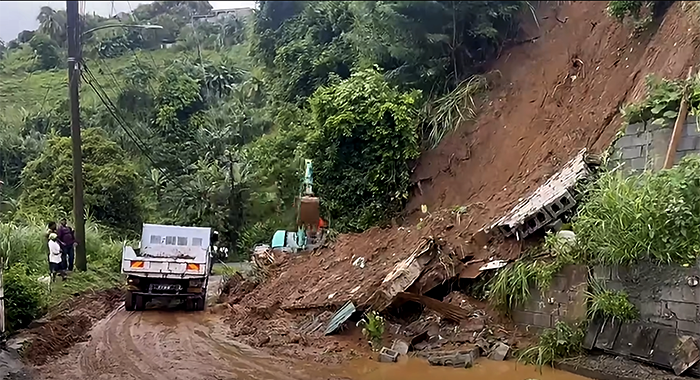
Three weeks after catastrophic 24-hour downpours dumped 5.1 inches of rain across St. Vincent on October 6, triggering widespread destructive flooding, Prime Minister Godwin Friday officially unveiled the final verified damage total of EC$7.7 million during his nationally televised Independence Day address on October 27, 2026, delivered from the Independence Parade grounds in Arnos Vale. Friday had repeatedly declined to release preliminary cost estimates in the immediate aftermath of the disaster, emphasizing on October 9 during a Kingstown press briefing that rushing out unverified figures would undermine efforts to target relief to the most vulnerable households and deliver a fully credible accounting of losses. At that early post-storm briefing, acting National Emergency Management Organisation (NEMO) director Kenson Stoddard shared that the agency had already logged 154 verified incident reports across the island, including 74 separate flooding events, 37 dangerous landslides, and 18 structural failures of retaining walls. Initial on-the-ground surveys at that time recorded 6 homes as completely destroyed, dozens more severely compromised, and as many as 20 residences in the Buccament region deemed at high risk of collapse. Stoddard deployed three cross-agency assessment teams, composed of staff from the Ministry of Transport, Ministry of Housing, Ministry of Social Welfare and NEMO personnel, to conduct granular, door-to-door evaluations of hard-hit zones including Lower Questelles, Mesopotamia, and Buccament, with additional follow-up surveys planned for damaged business districts between Heritage Square and Edmond Street, as well as critical public infrastructure including health clinics and water supply networks. The final verified assessment, completed weeks later, confirmed a total of 11 homes fully destroyed, alongside extensive damage to public roadways, private property, and community assets, with the worst destruction concentrated in the communities of Buccament, Pembroke, Questelles, Rillan Hill, Clare Valley, and Marriaqua. Friday lauded the coordinated rapid response led by NEMO, alongside the Royal St. Vincent and the Grenadines Police Force, Deputy Prime Minister and National Security Minister St. Clair Leacock, and staff across multiple government ministries, for delivering immediate emergency support and continuing ongoing assistance to displaced and affected residents. Framing the flood as a stark reminder of the island’s acute exposure to accelerating climate disruption, Friday announced that his administration will pursue an aggressively expanded renewable energy rollout, with a formal target to generate the vast majority of the nation’s domestic energy supply from clean, local renewable sources within the next 10 years. He noted that ongoing global oil price spikes driven by the ongoing Iran war further reinforced the urgency of decoupling the island’s energy system from volatile fossil fuel markets, even as the small island nation works to cut its already modest national carbon footprint and build long-term adaptive resilience to increasingly frequent extreme weather events.