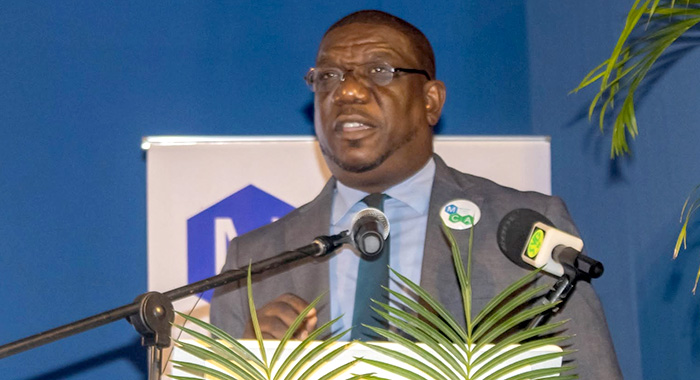
Delivering a keynote address at the 2026 CannaBiz SVG Festival hosted by the country’s Medicinal Cannabis Authority in Kingstown, Israel Bruce — who serves dual roles as Minister of Agriculture and Minister of Forestry and Rural Transformation — laid out a vision for the nation’s burgeoning medicinal cannabis sector that centers the legacy of longstanding local marijuana cultivators rather than sidelining them as the regulated industry scales. Held over three days from Thursday to Saturday, the festival operated under the theme “Cultivating Strategic Partnerships for Cooperation and Trade”, and featured a full lineup of activities including a medicinal cannabis industry conference, a cross-sector trade exhibition, and a National Youth Symposium dedicated to addressing substance misuse prevention, mental health support, youth resilience, and evidence-based healthy decision-making.
Bruce stressed that the decades-long contributions of traditional cultivators, who sustained local cannabis growing through years of unregulated, high-risk operation, must not be erased as the sector moves into formal, legal commercial status. “We must not allow the people who carried the industry through its difficult years to become spectators in its successful years,” he told assembled industry stakeholders, government officials, and community members. For the sector to deliver on its promise of broad-based economic growth, he argued, success metrics cannot be limited to foreign direct investment figures or corporate expansion milestones. Instead, progress must be measured by the tangible opportunities extended to local Vincentian producers, new skill development for rural communities, local job creation, and the share of industry revenue that stays within the national economy rather than flowing out to external corporate actors.
To deliver on this inclusive vision, Bruce outlined five clear, actionable priorities for coordinated stakeholder action across the public and private sectors. First, he called on traditional cultivators to formalize their collective voice by forming a unified national representative association, which would empower them to negotiate on equal footing with government regulators, financial service providers, and large licensed cannabis enterprises. Second, he highlighted the soon-to-launch National Development Bank as a critical mechanism to break down longstanding barriers to affordable financing for small-scale local growers looking to enter the regulated space, noting that targeted support for agricultural insurance products would also reduce the risk of crop loss that often pushes small operators out of viable commercial activity. “If we want our farmers to enter the formal economy, we must make the formal economy more accessible to our farmers,” Bruce emphasized.
Third, the minister laid out plans to expand targeted, practical technical training for traditional growers to ensure they can meet rigorous international standards for product quality, traceability, and regulatory compliance required for medicinal cannabis markets. Fourth, he urged all licensed industry operators — including CANA SVG, Medicinal and other registered enterprises — to build transparent, mutually beneficial commercial partnerships that connect local cultivators directly to formal supply chains, local processing facilities, global distribution networks, and specialized technical expertise. Finally, Bruce noted that all stakeholders must collaborate to build integrated local ecosystems that link smallholder production, domestic value-added processing, academic research and development, and access to legitimate international medicinal cannabis markets, rather than relying on a model that imports processed products or exports raw unprocessed cannabis at low margins.
Throughout his address, Bruce repeatedly underlined that public health safeguards, strict regulatory adherence, and full product traceability are non-negotiable foundations of the sector’s long-term credibility, as St. Vincent and the Grenadines positions itself as a responsible, competitive player in the fast-growing global medicinal cannabis market. Closing his remarks, he framed the collective mission as far broader than agricultural production alone: “We must not simply cultivate cannabis. We must cultivate opportunity.”