Santo Domingo, Dominican Republic — In local baseball circles across the Dominican Republic, the colloquial phrase “a stalked stick” traditionally refers to a surprise, unanticipated home run that catches fans and opposing teams off guard. But in recent days, that once lighthearted sports idiom has taken on a sharply bitter meaning for tens of thousands of drivers, chauffeurs, and private vehicle owners in the Greater Santo Domingo metropolitan area, who are using the term to voice their fury over a sudden, newly announced increase to the country’s Vehicle Circulation Tax (widely known locally as the “sticker tax”) unveiled by the General Directorate of Internal Taxes (DGII) on October 29, 2026.
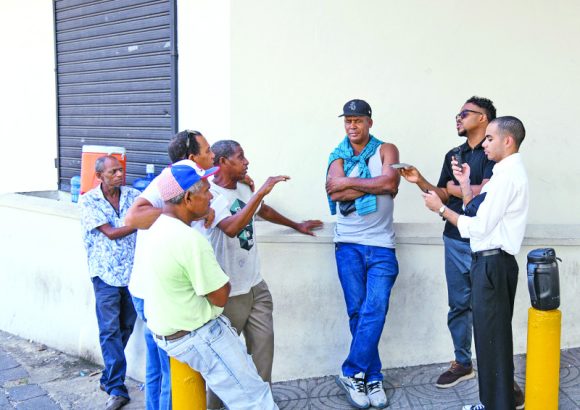
At a peaceful gathering of route drivers at the busy intersection of José Reyes Street and Mexico Avenue serving the 25 de Febrero transit route, long-time industry veterans shared stories of financial ruin that have left many barely able to cover basic household expenses. Ángel Antonio Ferreiras, a route controller with more than 30 years of experience in the local transport sector, did not mince words about the precarity facing his peers. “Right now, drivers are navigating Niagara Falls on a bicycle — they can’t even bring home enough money to put food on their family’s tables,” he said with visible frustration. “We feel completely abandoned by the authorities. Gas prices have already skyrocketed, a single tire now costs RD$3,000, and motor oil that once sold for RD$150 now retails for RD$400. Every single new cost adjustment is targeted directly at working drivers who have no way to absorb these hits.”
The official DGII resolution DDG-AR1-2026-00009 lays out the tiered new tax structure: all vehicles manufactured in 2021 or earlier will now pay an annual sticker tax of RD$2,000, a RD$500 increase from prior rates, while vehicles produced in 2022 or later will face a RD$1,000 hike, bringing their total annual tax bill to RD$4,000. The policy sets a hard payment deadline of January 31, 2027, with escalating late penalties for non-compliance: a RD$2,000 fine for missing the 2027 deadline, RD$2,100 for drivers who failed to pay the 2025-2026 sticker tax, and a RD$3,100 penalty for unpaid taxes dating back to the 2024-2025 period or earlier.
The backlash has extended far beyond professional transport workers, as private vehicle owners across the National District have also spoken out against the unanticipated levy. César Morillo, a local resident running errands along Mexico Avenue, told reporters the new tax comes at a time when household incomes have remained completely stagnant even as every basic cost of living rises. “That increase is absurdly high, it’s a total mess,” he said. “I already pay for constant fuel top-ups, regular oil changes, and routine maintenance for my car, and now the government is piling this new registration fee on top of all those existing costs.” Job Batista Ramírez, a father of two residing in Santo Domingo Este, added that the tiered structure still carries fundamental unfairness, noting that owners of 1990s vintage work vehicles — most of whom are low-income families relying on their cars for basic commuting and side income — are forced to pay the exact same RD$2,000 tax as owners of far newer, higher-value 2021 model vehicles. “Not everyone has the financial means to own a well-maintained late-model car,” he explained. “It makes no sense to charge someone driving a 30-year-old work truck the exact same fee as someone with a nearly new luxury SUV.”
Williams Pérez Figuereo, president of the National Central of Unified Transporters (CNTU), emerged as a leading voice representing the sector’s concerns, noting that the tax hike was announced with zero advance consultation and caught the entire transport industry completely off guard at a time when fuel costs and general living expenses are already soaring for Dominican households. He has formally submitted a formal request to the national government to adjust the policy to exempt all vehicles 20 years or older from the new higher tax rates, noting that the vast majority of those older vehicles are owned by low-wage transport workers who have no capacity to absorb additional fiscal burdens. He has also proposed a phased rollout of the tax increase for newer vehicles, and expanding the exemption scope to all cars manufactured in 2006 or earlier to reduce harm to the most vulnerable drivers.
Not all transport sector representatives have condemned the policy entirely, however. Mario Díaz, general secretary of the National Federation of Christian Social Transport Workers (Fenattransc), argued the measure is not unreasonably burdensome, noting that the maximum RD$1,000 increase is minimal compared to the far larger operational costs most drivers face on a monthly basis. He added that the government’s need for additional revenue to navigate ongoing national economic challenges makes the adjustment a reasonable, unavoidable step.
As tensions simmer across the sector, route officials have openly warned that they may have no choice but to raise public transit fares to offset the new tax costs. Ángel Ferreiras proposed a targeted alternative solution: calling on the National Institute of Transit and Ground Transportation (Intrant) to conduct a full, updated census of all local transit routes and roll out targeted gas subsidies for drivers to help them cover rising operational costs without passing price hikes on to commuters. Juan Carlos, elected president of the 25 de Febrero route, clarified that no fare increases will be implemented unilaterally: any adjustment to ticket prices will only move forward if formally authorized by the National Central Movement of Transport Drivers (Mochotran). “Given how dire the current financial situation is, a fare increase is fully justified,” he noted. “But until our national transport association gives us formal approval, we cannot make any changes on our own.”
Pérez Figuereo, for his part, has pushed back against calls for immediate fare hikes, arguing that any union leader advocating for higher transit fares is completely out of touch with the economic struggles facing ordinary Dominican citizens. “The general population is already dealing with enough cost of living pressure as it is,” he emphasized, calling on all transport sector representatives to pursue responsible, collaborative solutions that do not add new financial harm to commuters. He also outlined a policy to integrate informal, unregistered transport workers who currently operate outside formal union structures, rejecting any use of violence against independent drivers and inviting all unorganized transport staff to join official unions and registered transport companies to access formal protections and collective bargaining support. He noted that the CNTU will keep its offices open to welcome any independent driver seeking to join the formal sector, and reiterated that the entire transport industry is calling for open, constructive dialogue with government officials to negotiate fair adjustments to the new sticker tax policy that protect both drivers and ordinary citizens from unsustainable new financial burdens.
Complaints over vehicle registration fee increase and transport leader makes proposal