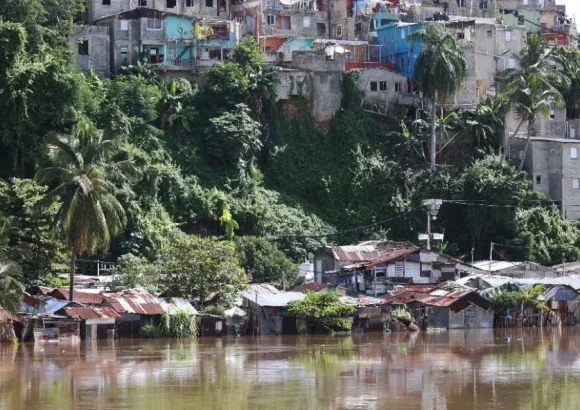
Across a cluster of underserved, high-need neighborhoods in Greater Santo Domingo, daily life is defined by persistent, unaddressed shortages of core public goods and services that push low-income families to stretch limited resources to their breaking point. On-the-ground reporting from Los Guandules, Guachupita, La Ciénaga, Gualey, and Los Tres Brazos captures firsthand accounts from long-term residents navigating unreliable water access, crumbling road infrastructure, extended power outages, scarce formal employment opportunities, and skyrocketing food costs that erode already meager household budgets.
For 55-year-old Edward Bautista Mueses, a 24-year resident of La Ciénaga, running water only arrives two days a week at most, on Thursdays and occasionally Sundays, requiring households to invest in costly pumps and large storage tanks to secure enough potable water for daily use. Worsening road conditions damage private vehicles, scheduled blackouts can stretch up to eight hours at a time, and substandard housing stock leaves families exposed to additional hardship. Bautista Mueses notes that the combination of vanishing formal work prospects and chronically underfunded public services creates a self-reinforcing cycle of intergenerational poverty, and he joins many neighbors in criticizing elected officials who only appear in the communities during election cycles to solicit votes, vanishing entirely once polling closes to ignore longstanding resident demands.
In Los Guandules, 70-year-old Dolores Arias, who scrapes by selling chopped chicken and stewed beans, says volatile, rapidly rising food prices make it nearly impossible to cover household expenses, even with the RD$1,600 monthly stipend she receives from the government’s Aliméntate food assistance program. While she describes the cash transfer as a critical lifeline for her limited resources, she adds that the neighborhood’s water supply only runs on Tuesdays and Saturdays until 3 p.m., and she has long pushed for paved, safe local streets and structurally sound housing to lift her quality of life.
Atilano de la Cruz, the neighborhood council president for the Los Cocos de La Lira section of Los Tres Brazos, says local residents are regularly forced to organize public demonstrations just to compel municipal authorities to respond to unmet needs, including nonexistent formal garbage collection, spotty electrical service, and chronically high local unemployment. Even so, de la Cruz notes that free weekly physical therapy sessions she receives for a chronic spinal condition through her public health insurance represent a rare, high-impact public service that directly supports her well-being.
Not all neighborhoods face identical gaps: 20-year Guachupita resident José Antonio Meléndez, who runs a local carpentry workshop, says water delivery and garbage pickup in his area follow consistent, published schedules. Even so, he points out that the local public hospital remains drastically overcrowded and undercapacity, and argues that the RD$1,600 monthly Aliméntate stipend is far too small to meaningfully offset current food costs, barely covering one to one and a half days of groceries for a typical household. In Los Guandules, 30-year local small grocery store owner Juana Julia Reyes says frequent water and power outages force families to make unplanned, heavy investments in backup inverters and water storage tanks that drive up the overall cost of living, even though her street benefits from daily garbage pickup. For 88-year-old Gualey resident Pedro Acevedo, who has lived in the community for more than 30 years, the last time his neighborhood’s local road received any paving or repairs was in 2000, during the administration of former president Hipólito Mejía, and the structural decay of his home and surrounding housing units has gone unaddressed for decades.
A cohort of leading Dominican economists including Jenny Torres, Magdalena Lizardo, Francisco Tavárez, and Isidoro Santana have published separate analyses this week in the local outlet HOY, arguing that the country’s official poverty metrics are deeply flawed because they rely exclusively on household monetary income. The group is calling for national policymakers to adopt a formal multidimensional poverty measurement framework that accounts for gaps in access to core public services, housing quality, and community vulnerability to create far more accurate portraits of unmet need across marginalized neighborhoods.
Shortages affect daily life in neighborhoods of Greater Santo Domingo