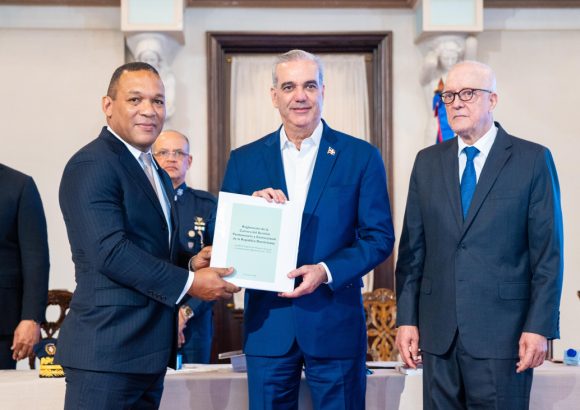
Santo Domingo – Dominican Republic President Luis Abinader presided over the third national summit focused on advancing the country’s long-running penitentiary reform agenda on Thursday, where top justice and correctional officials laid out detailed progress updates, ongoing challenges, and forward-looking milestones for the nationwide overhaul of the correctional system.
During the official gathering, representatives confirmed that nine new purpose-built penitentiary facilities are currently under parallel development across the nation, with two sites in the municipalities of Higüey and Barahona already fully completed and ready for operational use. Roberto Santana, director of the National Office of Support for Penitentiary Reform, outlined the remaining pipeline of projects: three additional new facilities are still in active development stages in San Juan, Hato Mayor, and Neiba, while the existing correctional center in Salcedo is undergoing targeted renovation works, and local authorities are in the process of securing suitable parcels of land to build a new facility in the Independencia province.
President Abinader addressed specific setbacks for the San Juan penitentiary project, noting that construction costs had surpassed the 25% overrun threshold legally permitted for public infrastructure contracts, requiring mandatory structural reinforcement assessments and a full new public bidding process to keep the project compliant with national procurement rules. He also noted that more than 2 billion Dominican pesos have already been allocated to finish the Las Parras correctional facility, though additional finishing works are still required before it can begin operations.
Official data shared at the meeting shows that the country’s total incarcerated population has dropped steadily from 27,481 in 2020 to 25,494 as of 2026, a reduction driven in large part by the work of the national public defender system, which facilitated the release of roughly 5,000 eligible inmates over the past calendar year. The multi-pronged reform package also includes targeted anti-corruption measures, resulting in the removal of 128 police officers who were previously assigned to penitentiary system roles, alongside major expansions to mental health support for inmates, highlighted by the launch of the country’s first dedicated correctional mental health treatment center in Najayo.
As part of the planned permanent closure of the outdated La Victoria correctional complex, authorities are executing a phased transfer of its remaining inmate population. The facility’s headcount has plummeted from 7,600 in 2020 to roughly 1,900 at present, with officials setting a target to bring the population below 1,000 by the end of this year. Once fully decommissioned, the 200,000-plus square meter La Victoria site will be redeveloped into a sprawling “Educational City” campus, planned to host multiple university campuses, public government service hubs, a public theme park, and a new terminal for the city’s cable car transit system.
During the summit, officials also formally unveiled updated national prison operation regulations and standardized correctional management guidelines. The International Committee of the Red Cross has selected the Dominican Republic as a showcase host to launch its new global guide for evidence-based penitentiary facility construction, recognizing the country’s reform progress as a regional benchmark. Even amid the notable advancements, Public Defender Rodolfo Valentín Santos cautioned that systemic gaps remain across parts of the correctional network, with persistent overcrowding, inadequate food provision, underfunded health services, and aging infrastructure still affecting a subset of existing facilities.
For full local news coverage, readers can access DominicanScope.
Nine new penitentiary centers under construction across Dominican Republic