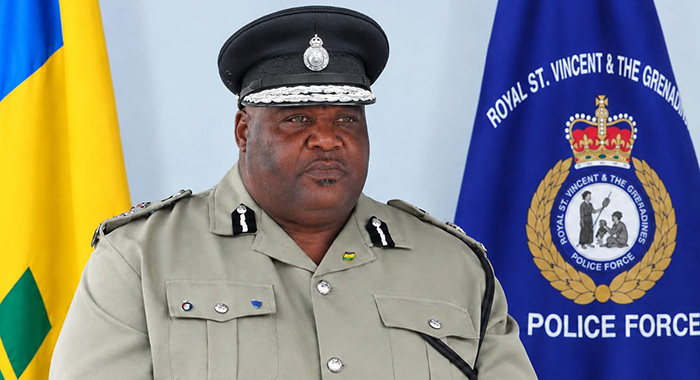
Delivered on behalf of the entire Royal St. Vincent and the Grenadines Police Force, a special public address from Police Commissioner Trevor Bailey has been released to mark the 47th anniversary of St. Vincent and the Grenadines’ political independence, extending warm congratulations to all Vincentian citizens residing both domestically and across the global diaspora.
Bailey frames the independence milestone not merely as a moment for celebration, but as a critical opportunity for nationwide reflection on the national legacy inherited from prior generations, the shared obligations of current citizens, and the kind of nation that will be passed on to future cohorts. He acknowledges that communities across the archipelago are increasingly voicing legitimate, well-founded concerns spanning public security, economic stability, national identity, and collective developmental direction, all of which deserve thoughtful, inclusive engagement and decisive, accountable leadership.
The commissioner urges the public to recall the extraordinary adversity that accompanied the nation’s founding on October 27, 1979, when the country formally severed its constitutional ties to the United Kingdom to take full control of its political destiny. Just six months before independence, the La Soufrière volcanic eruption displaced thousands of residents, destroyed livelihoods, and plunged entire communities into long, arduous recovery efforts. The nation’s founding leaders embarked on the project of independent statehood with no guarantees of prosperity and no roadmap for the decades ahead, sustained only by the unshakable conviction that Vincentians themselves were best positioned to shape the nation’s future through their own labor, judgment, and shared aspirations. Bailey emphasizes that statehood brought full authority to manage national affairs, but never eliminated hardship, and the ongoing work of building the nation remains unfinished 47 years later.
He argues that the same resilient, community-focused spirit that carried the nation through its turbulent founding era remains a vital, active force in modern Vincentian life, embodied in the consistent, quiet dedication of ordinary citizens who step up to support their communities through every period of uncertainty. That proven national resilience, he notes, forms the unshakable foundation of public security, the core of local community bonds, and the most reliable promise of a strong future for the country.
Against a current global landscape marked by widespread geopolitical conflict, mounting economic headwinds, rapid technological shifts, rising transnational criminal activity, and escalating climate threats that disproportionately impact small island developing states, Bailey stresses that while St. Vincent and the Grenadines values close collaboration with regional neighbors and international partners, the ultimate responsibility for safeguarding and advancing the national interest rests entirely with Vincentian citizens themselves.
As the head of a police institution with a 190-year history dating back to 1834, Bailey outlines sweeping ongoing operational and administrative reforms within the Royal St. Vincent and the Grenadines Police Force: the agency is scaling up intelligence-led policing frameworks, strengthening investigative capacity for serious crimes, enhancing frontline supervision, and embedding stricter standards for professional accountability and public transparency. The goal, he states, is to build a law enforcement body that is firm and unwavering in upholding the law, strictly disciplined in the use of its powers, and fully worthy of the public’s trust. He also addresses widespread public anxiety over violent crime and illegal firearms, noting that a sustained, lawful, and effective response to these threats cannot rely on police action alone, but requires active, collaborative partnerships with communities: when residents share credible information about criminal activity, reject violent behavior, and back lawful public safety efforts, they directly reinforce the effectiveness of local policing.
The commissioner issues a special direct message to the nation’s youth, encouraging them to prioritize their education, build practical, marketable skills, practice mutual respect, and reject unlawful behavior, noting that the police force will continue to invest in youth development through dedicated police youth clubs, school engagement programs, and community outreach initiatives to nurture the next generation of responsible, capable citizens. He also pays formal tribute to serving police officers across the mainland and the Grenadine islands, as well as staff in specialized units, recognizing the long, often uncelebrated hours of difficult work, high-stakes emergency responses, and personal sacrifice that underpin their service, alongside extending gratitude to officers’ families, retired personnel, and fallen colleagues who have passed on.
Aligning with this year’s official national independence theme, “Hand in Hand, Uplifting Our Nation,” Bailey reaffirms that the full promise of independent statehood is not a completed achievement, but an ongoing, collective responsibility. He closes by re-stating the police force’s formal commitment to upholding public peace, protecting lives and property, defending lawful civil freedoms, and continuously improving public-facing services, before extending a final wish for a peaceful, prosperous, united future for all Vincentians, alongside a formal happy independence greeting to every citizen at home and abroad.
Independence message by the acting Commissioner of Police