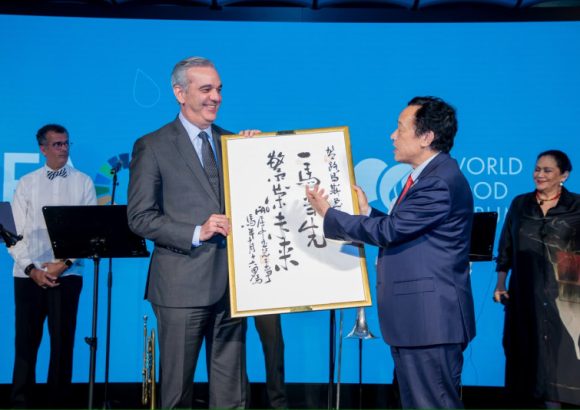
On a landmark Friday in Rome, Italy, the 2026 World Food Forum wrapped up its sessions with a momentous recognition: the Dominican Republic has officially been removed from the global Hunger Map, a milestone celebrated by top international food security leaders.
Qu Dongyu, Director-General of the United Nations Food and Agriculture Organization (FAO), opened the closing ceremony by extending sincere gratitude to Dominican President Luis Abinader for his unwavering commitment to eradicating hunger. Qu emphasized that the country’s success would not have been possible without the president’s decisive leadership and his administration’s intentional investment in targeted agricultural and social policies. These policies have expanded access to affordable, nutritious food for all Dominican communities and advanced broad, inclusive food security goals across the nation. Accompanying President Abinader at the ceremony was First Lady Raquel Arbaje, marking the high priority the Dominican government places on this global effort to end hunger. The ceremony specifically highlighted the country’s comprehensive work to boost domestic agricultural output and provide direct support to local producers, alongside long-term investments in improved national nutrition outcomes.
The ceremony wove cultural narrative into its policy dialogue, centering a beloved Dominican artistic work that encapsulates rural communities’ long-held hopes for prosperity. FAO Chief Economist Máximo Torero opened this cultural segment by drawing attention to Juan Luis Guerra’s iconic folk song *Ojalá que llueva café* (May It Rain Coffee). Torero noted that the decades-old track, which chronicles rural aspirations for stable, prosperous livelihoods, serves as a powerful global reminder of the core challenges facing food systems worldwide, and the deep connection between farmers’ well-being and global food abundance.
Torero went on to stress that ending global hunger requires systemic transformation of agri-food systems, with targeted action to address overlapping crises: accelerating climate change, growing water scarcity, and the urgent need for long-term agricultural sustainability. All these efforts, he emphasized, must center improving living and working conditions for smallholder and commercial producers alike.
Guerra, the celebrated Dominican singer-songwriter who penned the hit, joined the forum to share the deeper meaning behind his work. The song, one of the most influential of his decades-long career, has crossed national borders for its raw, empathetic portrayal of peasant aspirations. Guerra’s participation bridged Dominican cultural identity and the forum’s core mission, illustrating how art can amplify messages of hope and build global public awareness around the critical goal of ensuring sufficient, nutritious food for every person on the planet. He noted that the track is inherently tied to Dominican rural life, weaving the country’s national identity into a universal narrative that aligns perfectly with international efforts to end hunger and improve global nutrition.
The ceremony drew to a close with a moving performance from renowned Dominican vocalist Maridalia Hernández, who delivered a stirring rendition of *Ojalá que llueva café*, putting a musical capstone on the day’s discussions. Her performance celebrated Dominican artistic excellence while anchoring the forum’s core message: the global push to build sustainable agri-food systems and guarantee universal access to food. By integrating a cultural performance into the closing of the high-level policy event, organizers highlighted how hope for rural communities sits at the center of all global food security action.
The 2026 World Food Forum brought together a diverse cross-section of stakeholders committed to global food systems transformation, including government delegates, representatives from leading international organizations, agri-food specialists, youth advocates, and civil society actors. All gathered in Rome to coordinate collective action to eradicate hunger worldwide. President Abinader’s participation in the forum reaffirms the Dominican Republic’s active role in global dialogue on food security and sustainable development, and showcases the tangible progress the country has made through targeted policy investment.