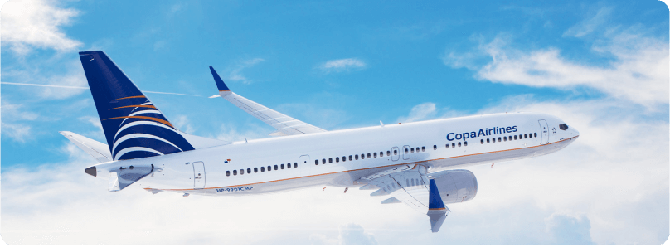
On October 9, a powerful 7.7-magnitude earthquake rocked southern Panama, triggering widespread disruption to infrastructure, prompting evacuations, and forcing dozens of international flights to divert to nearby airports. Among these diverted flights was a Copa Airlines journey traveling from Nassau, Bahamas to Panama City, whose passengers have since come forward with damning allegations of neglect, unequal treatment, and potential racial discrimination against the airline.
According to multiple passenger accounts shared widely on social media, what should have been a routine 2.5-hour trip stretched into an almost 12-hour nightmare trapped on the tarmac at Barranquilla, Colombia’s airport. Passengers first began boarding the flight just before 11:45 a.m., and were not permitted to disembark until nearly 11:30 p.m. that same day. Throughout the entire waiting period, passengers claim airline officials repeatedly made false promises that the plane would be cleared for departure within 30 minutes, offering no transparent updates on the delay or when they would be allowed to exit the aircraft.
Lareinae Toote, one of the Bahamian passengers who detailed her experience in a viral Facebook post, described grueling conditions on board. She alleged that the plane was stuck waiting for refueling with no access to food or potable water for most of the delay, and that the aircraft’s air conditioning system malfunctioned, cycling on and off repeatedly and turning the cabin into an increasingly uncomfortable, overheated space for the stranded group. Toote added that the prolonged wait led to multiple onboard disturbances that required law enforcement intervention, and several passengers suffered medical emergencies amid the chaos. “This was not just an inconvenience,” Toote wrote. “Being stuck on a plane for nearly 12 hours under these circumstances was physically and emotionally exhausting.”
The chaos did not end when passengers were finally allowed to exit the plane after midnight. Multiple passengers claim that Copa Airlines representatives had promised pre-arranged hotel accommodation for the stranded group, but no airline staff were present to coordinate support once passengers disembarked, leaving them to arrange shelter on their own in an unfamiliar country.
Elaina Cuffy-Stuart, a business-class passenger on the flight, added more specific allegations of discriminatory treatment against Bahamian and other English-speaking passengers. She claimed that Colombian passengers received preferential treatment throughout the delay, being permitted to exit the plane early while non-Colombian passengers were forced to remain on board. She also noted that all flight announcements were delivered exclusively in Spanish, leaving English-speaking travelers with no clear information about the delay or next steps. Most seriously, Cuffy-Stuart alleged that flight staff only distributed snacks and drinks to passengers of Hispanic origin, a practice she called “blatant racism.” Her claims of unequal treatment have not yet been independently verified by third-party outlets.
Cuffy-Stuart also described a disturbing incident where a Colombian passenger stormed the cockpit door, banged on it, and demanded to be let off the plane, a request that was ultimately granted. She questioned whether Bahamian passengers would have been extended the same privilege, writing “Imagine if one of us Bahamians did that.” After disembarkation, she added, airport officials refused to provide assistance to travelers who could not speak Spanish, leaving the Bahamian group stranded without working Wi-Fi, hotel bookings, or help rebooking their onward travel. She also noted that Copa’s customer call center and website were both unavailable, leaving passengers with no way to get support from the airline directly.
While most passengers shared overwhelmingly negative accounts of their experience, Mericha Rochelle, another traveler on the flight, offered a measured perspective, noting that the group avoided the far greater danger of being in Panama during the earthquake itself. “After everything we experienced, I’m just grateful I didn’t have to go through an earthquake in Panama. I know God was protecting all of us on that plane from something far worse as scary as our experience was,” she wrote. Still, Rochelle said she would not choose to fly with Copa Airlines again, and that the ordeal had altered her positive perception of Colombia as a travel destination. She did, however, express gratitude to local Colombians who stepped in to help the stranded passengers after they exited the airport.
The 7.7-magnitude quake that triggered the diversion left a trail of damage across central Panama. According to the U.S. Geological Survey, the tremor struck at a depth of 12.6 kilometers, with its epicenter located in a rural area of Herrera Province, roughly 200 kilometers outside Panama City. A second 6.6-magnitude aftershock hit the same region hours later, prompting additional evacuations, though a tsunami warning issued after the initial quake was ultimately lifted.
The earthquake damaged hundreds of structures, caused widespread power outages across six provinces, and forced a temporary shutdown of Tocumen International Airport, Panama’s main air hub, which reopened later the same day. At the time of last reporting, emergency officials confirmed at least 27 people had been injured, and nearly 900 homes had sustained damage, with no reported fatalities. The Panama Canal, one of the world’s busiest and most critical international shipping routes, remained fully operational throughout the emergency. In response to the disaster, the Panamanian government declared a national state of emergency over the following weekend, authorizing up to $100 million in emergency relief funding for affected communities.