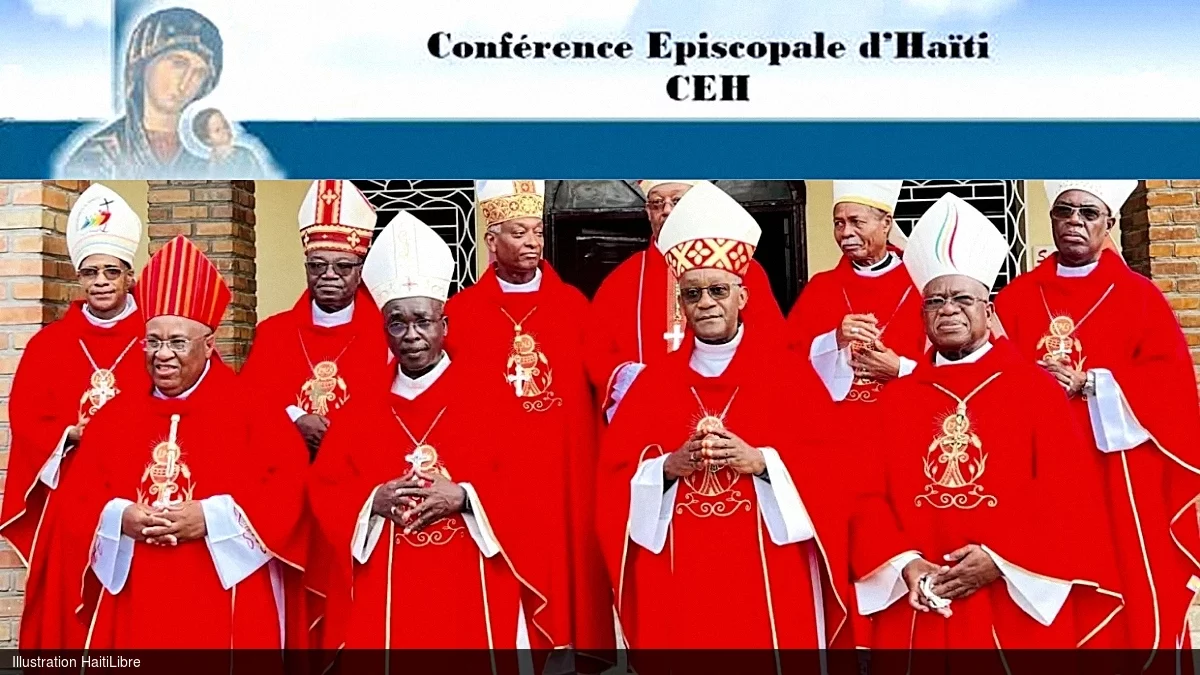
Haiti continues to grapple with one of the most crippling security and governance crises in its modern history, and the nation’s body of Catholic bishops has emerged as a leading voice calling for collective action to pull the country back from collapse. During the bishops’ recent plenary assembly, the Conference of Bishops of Haiti (CEH) released a public message sounding the alarm over rapidly worsening insecurity, chronic governance failure, and deep uncertainty hanging over the country’s upcoming scheduled elections.
In their message, the prelates painted a grim picture of daily life across the Caribbean nation, describing Haiti’s steady descent into chaos as a source of growing alarm for the nation’s people. On one side of the crisis, armed gangs have expanded their control over residential neighborhoods, driving a sharp surge in kidnappings that have left countless families traumatized. This wave of violence has also disrupted basic public services, forcing many schools and universities to suspend operations and cut off access to education for thousands of young Haitians. On the other side, the national government has been largely ineffective, failing to restore public order or extend basic protection to vulnerable civilian populations.
The bishops point to profound leadership vacuum at the national level, with no clear long-term strategy to address the country’s overlapping crises, leaving ordinary Haitians to fend for themselves without state support. The recent horrific massacre in the mountain town of Kenscoff, which left at least 61 people dead including 14 children, remains raw in the collective memory of the nation. “The blood of the victims cries out to heaven for justice,” the statement reads.
Against this bleak backdrop, the bishops raise urgent questions about the planned international anti-gang security deployment that has been billed as a turning point for Haiti. They ask whether the incoming force will deliver tangible relief to suffering communities, whether Haiti’s own national police and armed forces can successfully retake gang-controlled territory, and whether the international community will finally follow through on its repeated promises of support. At the same time, the statement explicitly acknowledges and commends the relentless work of Haiti’s domestic security forces, noting that many officers have paid the ultimate price for their service, and their on-the-ground commitment has already helped avert even worse catastrophe.
The message also highlights how growing violence has reshaped Haiti’s political landscape, creating a climate of deep uncertainty as the country approaches its long-awaited general elections. The bishops question whether the vote can be held in a context that meets basic democratic standards: they ask whether the election will be fully inclusive, impartial, and transparent, and whether ordinary citizens will receive adequate security guarantees to cast their ballots without risking their lives.
Amid the ongoing political impasse that has paralyzed the country for years, the bishops cite papal teaching to reject anti-democratic power grabs: “The Church cannot approve the formation of narrow ruling groups which usurp the power of the State for individual interests or ideological ends.” They emphasize that a return to constitutional order through free and fair elections is an absolute necessity for Haiti’s recovery, noting that the free choice of national leaders is a core pillar of democratic governance.
The statement argues that politics must return to its original purpose: a noble form of service focused on advancing the common good. Without a peaceful security environment, impartial state institutions, and broad national consensus, the bishops warn that the upcoming election risks generating new crises rather than delivering the stability Haitians desperately crave. They stress that holding a credible vote requires more than just scheduling a ballot date; the conditions that give elections democratic legitimacy must be put in place first. The safety of citizens, they argue, must take priority over the voting process itself – no Haitian should be forced to choose between exercising their democratic rights and protecting their own life.
For these reasons, the CEH is issuing a formal call for all stakeholders – from state authorities and political parties to civil society organizations, business leaders, and international partners – to step up and meet their specific obligations. The shared priority must be protecting civilian populations, addressing the unfolding humanitarian emergency, restoring state authority across the country, and laying the groundwork for a free, fair, and credible electoral process.
In closing, the bishops urge all Haitians to set aside partisan bickering, narrow self-interest, and decades of division that have held the nation back. “It is urgent to move beyond petty factional squabbles, narrow self-interest, and fruitless hatred,” the statement reads. “Let us join hands, reconcile, and save Haiti, our shared homeland. Our Nation must relearn the art of dialogue and mutual forgiveness rooted in justice and truth.”
The message was signed by all senior leaders of the Conference of Bishops of Haiti, including Mgr Max Leroy MÉSIDOR, Metropolitan Archbishop of Port-au-Prince and CEH President, and all other sitting bishops across the country’s dioceses.