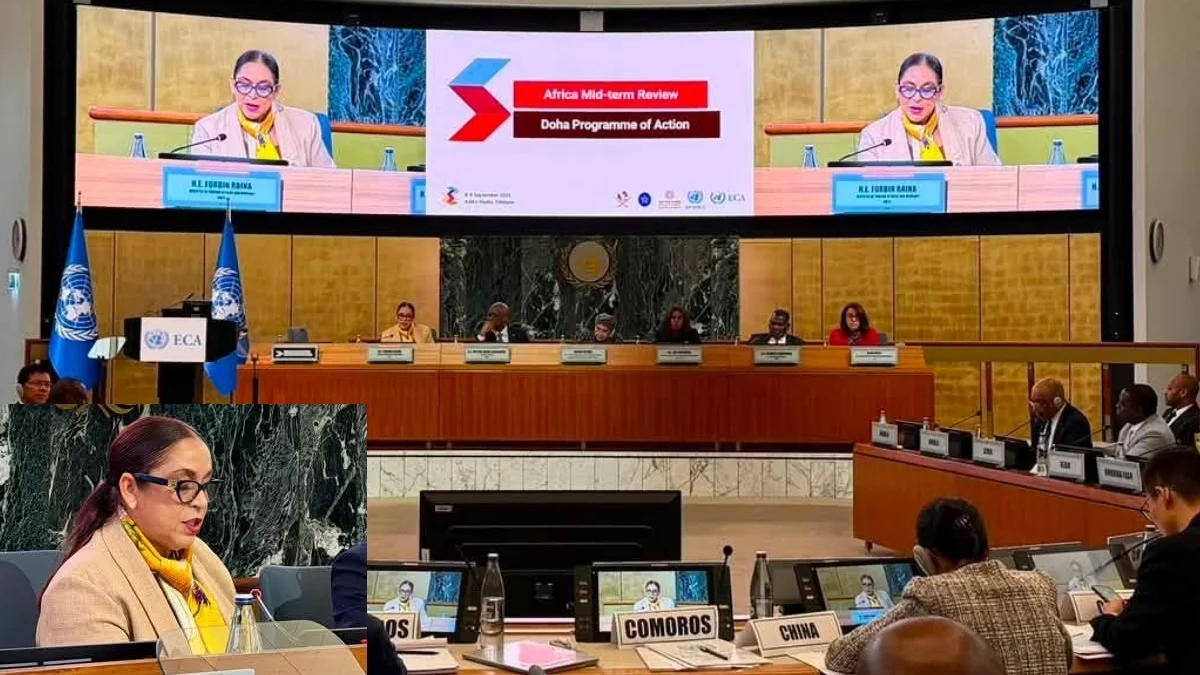
Against the backdrop of ongoing crisis and fragility in Haiti, the country’s top diplomat has made a urgent call for collective action from African nations and the wider international community to back Haiti’s core national priorities. Speaking at a UN-hosted ministerial gathering in Addis Ababa, Ethiopia on Tuesday, September 9, 2026, Haitian Foreign Minister Raina Forbin used the mid-term review conference for the Doha Development Agenda for Least Developed Countries (LDCs) as a platform to amplify Haiti’s specific needs and deepen its strategic partnership with the African continent.
The high-level meeting, organized by the United Nations Office of the High Representative for Least Developed Countries, Landlocked Developing Countries and Small Island Developing States, was designed to assess progress on development commitments for the world’s most vulnerable nations, creating an ideal opportunity for Haiti to bring its urgent challenges to the forefront of global discussion among LDC stakeholders.
In her keynote address to the assembled delegates, Forbin underlined that lasting security and institutional stability are non-negotiable prerequisites for Haiti to meet the development goals laid out in the Doha Development Agenda. Without foundational progress on security, she argued, no meaningful long-term development or democratic advancement can take root in the country.
Against that framework, the foreign minister issued a clear call for African states and the entire international community to step up coordinated action aligned with Haiti’s national priorities: resolving the acute security crisis, holding inclusive democratic elections, and kickstarting broad-based economic recovery. She highlighted that solidarity from African nations has already made an tangible difference, specifically commending Chad, Sierra Leone, and Côte d’Ivoire for their existing commitments to support Haiti through the multinational Gang Suppression Force (GSF).
Forbin pressed for two key next steps to move the security mission forward: a renewal of the GSF’s mandate, and the rapid, full deployment of all planned personnel and assets to the country. Beyond deployment, she emphasized that the force urgently needs sustained international commitments of the financial, logistical, and operational resources required to carry out its counter-gang stabilization mission effectively.
Looking beyond the immediate security emergency, Forbin also called for a reimagining of global financing mechanisms for crisis-affected fragile states. She argued that current financing frameworks often fail to meet Haiti’s unique context, and new instruments are needed that can simultaneously support short-term stabilization, bridge the gap between humanitarian response and long-term economic growth, and drive sustained development outcomes.
Forbin framed the Addis Ababa meeting as a critical milestone in strengthening the decades-long strategic alliance between Haiti and the African continent, and in advancing Haiti’s interests within the global LDC community. She noted that Haiti and Africa share deep historical ties, and that this shared legacy should now be leveraged as a foundation for mutual solidarity, regional and cross-continental stability, and inclusive development for all.