For thousands of ordinary people across the Caribbean, daily life unfolds as a constant series of small, draining hurdles that never make front-page headlines. Take Keisha, for example: she forces herself out of bed at 4:30 a.m. not for an early meeting or a family obligation, but because tap water is finally running — a temporary gift that will vanish without warning. She rushes to finish laundry and fill every available container before the supply cuts out again, turning to her partner Rhaj to ask when they will finally be able to afford their own water storage tank, like her mother already has.
By 6:10 a.m., Rhaj is already out the door. His workplace is only 20 minutes from their home, but he leaves hours early because public transit is notoriously unreliable and gridlock is a guarantee. As they talk, the couple’s unmet needs pile up: a small car like their neighbor Moses just bought, so they can drive their children to private after-school tutoring — or even enroll them in private school entirely, since their local public school has fallen far short of what their kids need.
Later that morning, Keisha meets her friend Lasonta to queue for passport applications for their daughters. Even arriving early, the line stretches out the building door, and two hours pass with no end in sight. What many people dismiss as simple bureaucratic inefficiency has deeper roots: the passport application process itself is rooted in a post-emancipation system designed to control formerly enslaved people through endless paperwork, registration requirements, and deliberate barriers. By the time Keisha and Lasonta’s day wraps up, the power cuts out, forcing Keisha to calculate how long her fridge’s perishable food will last and beg Rhaj for a private generator like Lasonta’s.
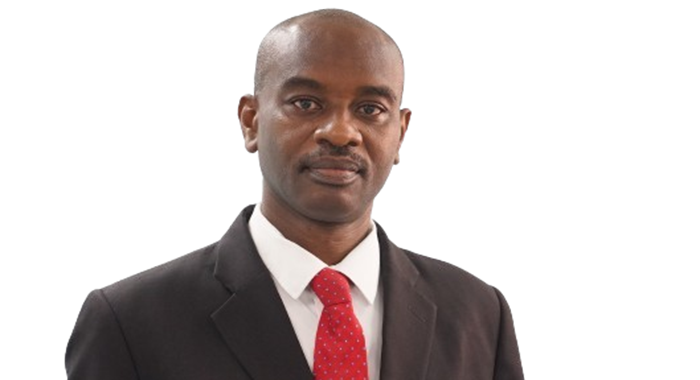
These daily struggles are not isolated misfortunes for Keisha, Rhaj and Lasonta. They are the defining feature of what University of the West Indies Five Islands Campus Pro Vice-Chancellor and Principal Professor C. Justin Robinson calls the Endurance Economy: a system where ordinary citizens do not participate in an economy they choose, but simply endure one that has been built to serve everyone but them. These constant small inconveniences never qualify as public disasters, so they never make local news, never trigger emergency cabinet meetings, and never get counted in national economic statistics. They are simply accepted as the unspoken baseline of everyday life for thousands across the region.
Robinson first introduced the concept of the Endurance Economy in his earlier article *No One Is Coming to Save Us*, and this piece launches a series that will dissect the system and outline actionable solutions. He pushes back hard against the common, lazy claim that this culture of endurance is an inherent cultural trait of Caribbean people, arguing instead that it is the direct result of systemic institutional failure. The same people dismissed as unmotivated or indifferent when working at public agencies like the passport office or water authority deliver world-class service at private sector operations including international hotels, offshore call centers, and global accounting firms. The difference is not the workers — it is the institutional structure: clear expectations, robust accountability, performance incentives, and the critical right of customers to take their business elsewhere if service fails.
Tracing the Endurance Economy’s origins, Robinson links it to the region’s historical Plantation Economy, first conceptualized by scholar Lloyd Best. That system was organized entirely around the needs of external foreign actors, leaving local populations to scrape by on whatever resources were left over. That legacy persists today: local people remain afterthoughts, served only after institutions have protected their own procedures, hierarchy, revenue, and convenience.
The Endurance Economy endures in large part because its costs are invisible. Unlike a Category 4 hurricane or a collapsing hospital roof — events that trigger immediate public action and official inquiries — the endless small nuisances of daily endurance only produce private frustration and are often even blamed on the people who suffer them. Robinson describes this as “death by a thousand cuts”: an accumulation of small burdens that drain collective prosperity without ever sparking public outcry.
American journalist Annie Lowrey terms the hours lost waiting in queues and repeating fruitless visits to government agencies the “time tax”: an unlegislated levy that never appears on any national budget, collected from citizens trying to access services that are already rightfully theirs. Keisha and Lasonta paid this tax waiting for hours for a passport; Rhaj pays it every single morning when he leaves home two hours early for a 20-minute commute. This tax is levied on top of official government taxes, and it hits the poorest and most marginalized hardest. Wealthy and well-connected people can simply buy their way out: paying for private water tanks, backup generators, or private education to avoid public failures. The time tax never shows up when finance ministers present national budgets, so it never gets addressed.
Complicating the push for reform, the people with the resources and influence to demand change are often the same people who have already bought their own private exits from the system. When Rhaj and Keisha buy a water tank, they stop caring about public water outages. When Keisha’s mom buys a generator, she stops calling the electric company to complain. When the pair send their kids to private school, they stop agitating for better public education. None of these private choices are morally wrong — families are just trying to protect their own well-being — but every exit removes a powerful voice from the movement demanding public sector repair.
To dismantle the Endurance Economy, Robinson argues, we must first make its invisible burdens visible. Building on colleague Professor Troy Lorde’s call to fix CARICOM’s missing infrastructure, he proposes creating a mandatory annual Endurance Account, paired with public dashboards that measure and publish the full cost of coping with the Endurance Economy. These dashboards would track concrete metrics: hours citizens spend waiting in queues or making repeat visits to agencies, total annual hours of water and power outages, how much household income goes to private backup systems and substitutes for failed public services, and the average wait time for routine applications, claims, and repair requests. Robinson asks whether Caribbean governments can legislate a legal requirement for all public agencies to publish their own annual time tax data.
Once the lost productive time and household costs are formalized on the public record, Robinson says, the national political conversation can finally shift. By turning anecdotal complaints about queues and outages into formal public data, coping will no longer be mistaken for prosperity, and ordinary citizens will finally have the evidence they need to demand meaningful reform. No external actor is going to come count these hidden costs for the Caribbean, Robinson says: the first step to dismantling the Endurance Economy is to put its costs on the national ledger, and stop sweeping private, daily hardship under the rug. The second part of this series will take a deeper dive into customer service failures in the Endurance Economy.
The opinions shared in this piece are those of the author alone, and do not necessarily reflect the editorial stance of iWitness News.