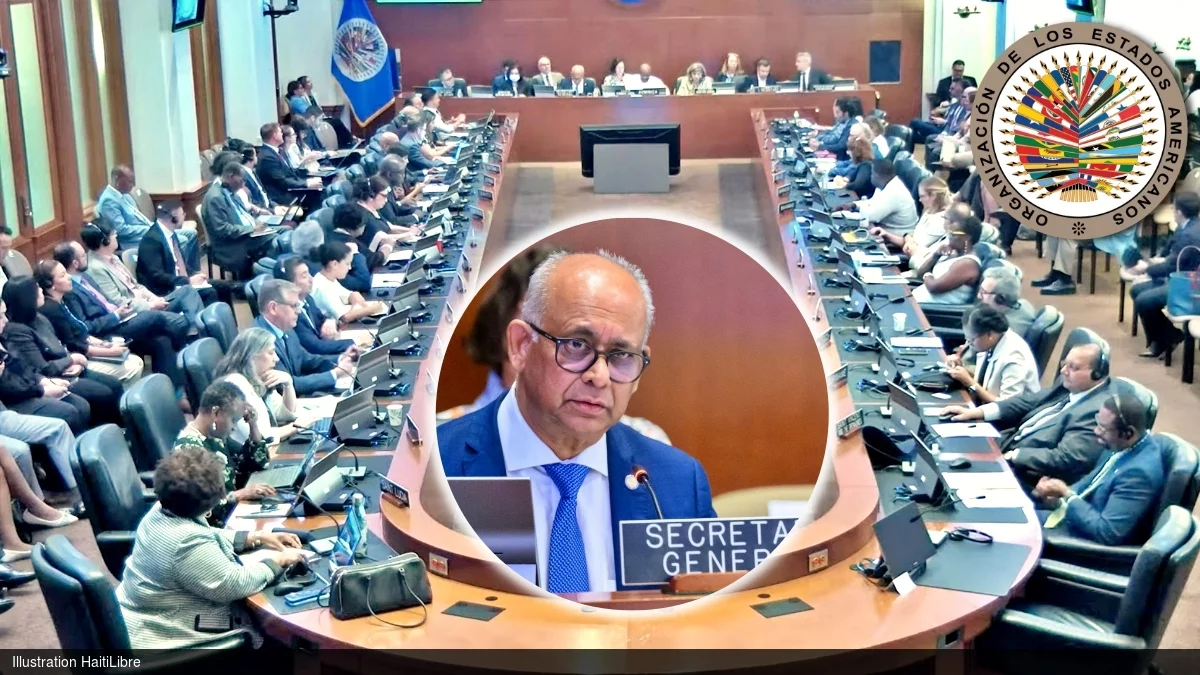
At a formal meeting of the Organization of American States Permanent Council held on September 3, 2026, OAS Secretary General Albert R. Ramdin delivered a comprehensive update on Haiti’s ongoing crisis, drawing firsthand insights from a high-level international delegation visit to the Caribbean nation he led between August 16 and 19.
Opening his address, Ramdin emphasized that Haiti has reached a defining crossroads, with two interconnected priorities demanding immediate, coordinated action from both domestic Haitian leadership and the global community: stabilizing the country’s collapsing security landscape and holding a transparent, credible electoral process to rebuild legitimate democratic institutions.
“Our responsibility is clear: to strengthen security efforts, advance electoral preparations, deliver on the commitments already made, and ensure that international cooperation translates into tangible improvements in the daily lives of the Haitian people,” Ramdin told council members.
On the security front, the OAS chief outlined a multi-layered strategy to curb widespread gang violence that has paralyzed much of the country. He stressed that the multinational Gang Suppression Force (GSF) must receive adequate staffing, sustained funding, robust logistical backing, and enhanced operational capabilities to produce meaningful results. Parallel to deploying the GSF, Ramdin added, long-term stability requires investment to strengthen the Haitian National Police and reform the country’s fractured criminal justice system.
Turning to elections scheduled for December 13, Ramdin acknowledged incremental progress from Haiti’s Provisional Electoral Council (CEP) and National Identification Office (ONI) but warned that preparation timelines need to be accelerated to meet the polling date. He confirmed that the OAS has received an official invitation to field an international election observation mission, and preliminary logistical and planning work for the deployment is already underway.
Beyond the core priorities of security and elections, Ramdin highlighted new development and humanitarian advances stemming from the delegation visit. In partnership with the Pan American Health Organization and local stakeholders, the OAS will establish dedicated trauma centers to treat police officers injured in gang-related violence. The organization also announced it had facilitated Haiti’s accession to the Development Bank of Latin America and the Caribbean (CAF), a milestone that unlocks approximately $168 million in development financing, technical assistance, and planning resources for the country. A new cooperation agreement with Brazilian non-governmental organization Viva Rio was also launched to create economic opportunities for youth and women displaced by systemic violence.
During the council session, Haitian Foreign Minister Raina Forbin reaffirmed her government’s commitment to restoring security and constitutional order, echoing Ramdin’s call for urgent, tangible action from international partners. “We must now move from solidarity to action, from commitments to implementation, and from promises to results,” Forbin said. “Two urgent priorities guide our actions today: security and elections.”
Carla Barnett, Secretary-General of the Caribbean Community (CARICOM), also addressed the session, stressing that all regional and international interventions must center the priorities of the Haitian people. “Our objective must remain to support the Haitian people in their search for solutions to the current crises of insecurity and governance, so that they can focus on long-term investment planning, job creation, and access to essential social services,” Barnett noted.
To sustain momentum for these efforts, Ramdin unveiled a series of new follow-up initiatives led by the OAS. These include an upcoming environmental technical mission to address unmet ecological needs, regular coordination meetings with partner international organizations, and a convening of the Group of Friends of Haiti to mobilize additional political, technical, and financial support. The OAS will also facilitate a visit from a private sector delegation to assess untapped investment opportunities that can create much-needed jobs, particularly for vulnerable youth.