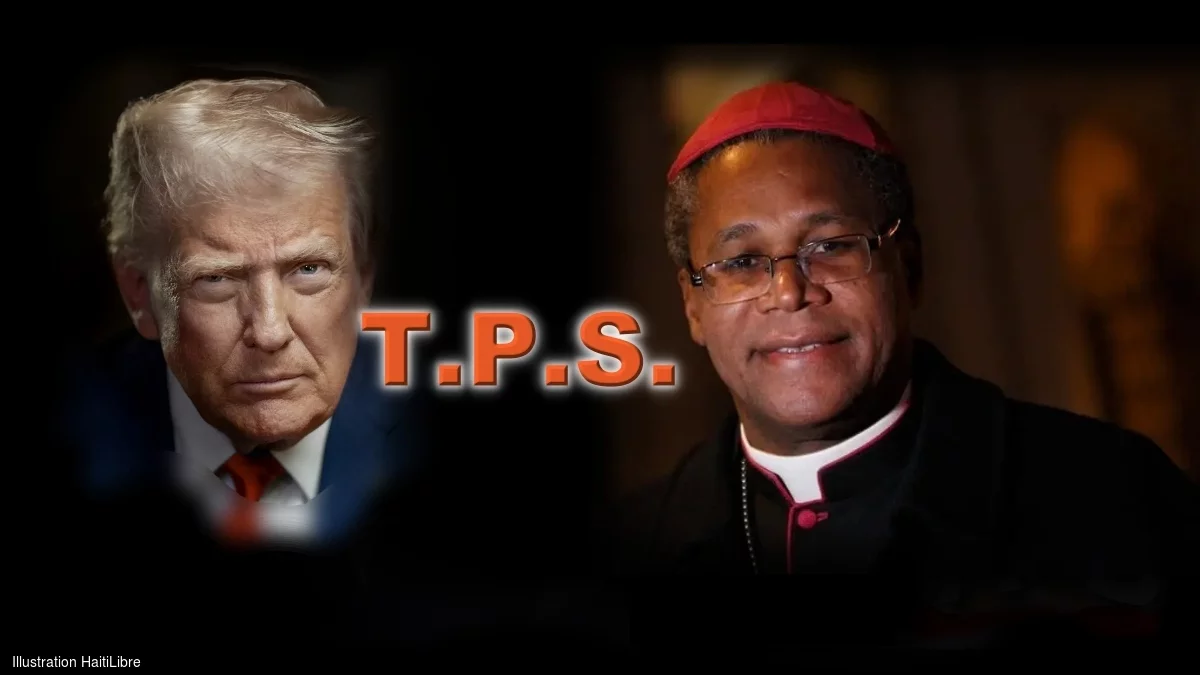
In the wake of the Trump administration’s termination of Temporary Protected Status (TPS) for Haitian migrants, the United States has seen a sharp spike in forced deportations of Haitian nationals back to their crisis-stricken home country. Designed as a humanitarian safeguard, the TPS program has long offered protection to foreign-born migrants whose home nations face catastrophic conditions — from armed conflict and natural disasters to large-scale humanitarian collapse — that make safe repatriation impossible. Now, facing what he calls an ongoing public and humanitarian emergency, one of Haiti’s senior Catholic leaders has issued a urgent, public plea to former U.S. President Donald Trump to reverse course on the TPS cancellation.
Bishop Pierre-André Dumas, who leads the Diocese of Anse-à-Veau-Miragoâne and serves as vice president of Haiti’s Episcopal Conference, recently outlined the urgency of the crisis in an interview with Vatican News, explaining why he felt compelled to break his public silence and deliver a formal letter to Trump directly. “The core question we must answer is this: Is Haiti today a country where any person can be deported safely?” Dumas said. “The reality on the ground gives us a devastating, undeniable answer: No.”
In his formal appeal to the former president, Dumas emphasized that Haiti’s ongoing political, economic, and security collapse leaves it completely unfit to absorb large numbers of returning deportees. “Mr. President, we respectfully ask you to reconsider the status of all Haitian migrants impacted by the suspension of TPS, and to deploy every legal and humanitarian tool at your disposal to halt forced repatriations for as long as Haiti remains in this gravely unstable, dangerous state,” his letter reads.
Dumas went on to highlight the deep social and economic contributions Haitian TPS beneficiaries have made across the United States, noting that these migrants work full-time jobs, contribute to federal and local tax systems, raise their families, participate actively in local faith and community groups, and add tangible value to American society every day. Many of these migrants, he added, are parents to U.S.-born children who hold American citizenship by birthright.
The bishop stressed that the appeal does not seek to violate U.S. law or undermine national border security. “We are not asking the United States to abandon its own laws, nor are we asking the United States to compromise the security of its borders,” he wrote. “We are simply asking the United States to apply its own frameworks with humanity when human lives hang in the balance.”
The termination of Haitian TPS followed a 2025 Supreme Court ruling that cleared the way for the Trump administration to revoke the protected status, triggering a wave of deportation operations that have already seen multiple repatriation flights carry Haitian migrants back to their home country. Regional and international human rights bodies, including the Inter-American Commission on Human Rights, have already raised public alarms over the policy, with multiple reports documenting abusive treatment of deportees during transport back to Haiti.