Barbados is set to roll out virtual court hearings across two Magistrates’ Courts starting this month, a long-awaited modernization push designed to cut through systemic backlogs and streamline judicial operations, according to an official announcement from Minister of Legal Affairs and Criminal Justice Michael Lashley on Sunday. While the legal community has broadly welcomed the shift as a necessary update to the island’s justice system, leading defense attorneys are sounding the alarm about critical risks to due process and accused persons’ rights if in-person hearings are sidelined.
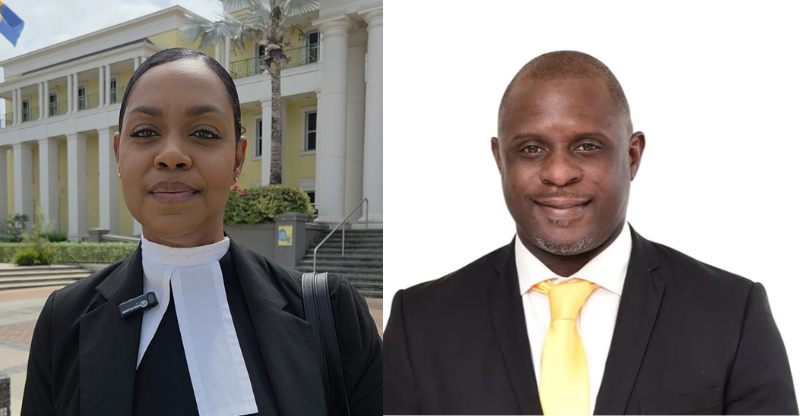
Leading the charge of cautious advocacy is experienced defense attorney Lesley Cargill-Straker, who agrees that the criminal justice system needs urgent modernization but argues efficiency cannot come at the cost of fair adjudication. She stresses that core components of a just trial—from confidential attorney-client communication to accurate assessment of witness testimony—depend on in-person interaction that virtual platforms cannot fully replicate.
One of Cargill-Straker’s most pressing concerns centers on remanded prisoners, who currently are guaranteed an in-person court appearance every 28 days. This regular face-to-face contact allows attorneys to take updated client instructions, address emerging legal concerns, complete required documentation, and build the trust-based attorney-client relationship that is foundational to effective representation. Trekking to a prison for every private consultation, she notes, is logistically unfeasible for most legal practitioners. Telephone calls, meanwhile, are often an inadequate substitute due to high costs, strict access restrictions, and widespread distrust among incarcerated people of prison-managed virtual communication tools. Compounding these issues are existing systemic barriers: the prison already faces chronic shortages of private meeting rooms and understaffing that make confidential off-site client communication difficult at best.
Beyond practical legal challenges, Cargill-Straker highlights the human impact of eliminating regular in-person court appearances for remanded people. For many incarcerated individuals awaiting trial, the trip to court is the only chance they get to interact with people outside the prison system—an important consideration for a system focused on rehabilitation and eventual reintegration into society. She also points to gaps that would marginalize vulnerable groups: unrepresented accused people without access to digital devices or reliable internet would be locked out of meaningful participation in their own cases. Even for represented clients, she questions whether magistrates can accurately gauge a witness’s demeanor or detect outside prompting when testimony is delivered remotely via video platforms.
Virtual hearings, Cargill-Straker acknowledges, do bring clear benefits for the legal community. For attorneys who often have cases scheduled in multiple courts across the island on the same day, virtual appearances eliminate the need to rush across Barbados to make a hearing call, or request costly adjournments when simultaneous scheduling makes physical presence impossible. For accused people released on bail, virtual hearings eliminate the need to take a full day off work or rearrange personal commitments just to wait hours in a courthouse for a brief hearing that may end in a minute.
Fellow attorney Rasheed Belgrave shares the broadly positive view of the reform, noting that hybrid virtual-in-person proceedings are already well-established in Barbados’s High Court, so the rollout to Magistrates’ Courts is a natural and manageable expansion. Bail hearings, for example, are already regularly conducted via Zoom in criminal matters, so the model has already been tested locally.
Belgrave adds that the shift will bring significant benefits to the Prison Service, reducing the number of prisoners that need to be transported to court on a daily basis. The current system is already prone to delays: when the prison faces operational challenges, courts are often only notified that the prison transport bus is not running on a given day, leaving attorneys with little option but to accept a new remand date. The change will also boost overall public and court security, Belgrave argues, coming in the wake of recent high-profile prisoner escapes.
Virtual proceedings also offer a critical contingency for when magistrates cannot physically attend court due to unexpected emergencies, a situation that has already been managed effectively with virtual tools in the High Court. Belgrave explains that scheduling specific time slots for different hearing types—including case mentions, adjournments, bail hearings, and legal submissions—allows courts and legal teams to organize their work far more efficiently, cutting down on wasted time and long wait times.
Looking ahead, Belgrave says the greatest efficiency gains will come once the system is expanded to all Magistrates’ Courts, and he has called for extending virtual hearings to the civil division, particularly for maintenance and family access matters. Family cases already take up a disproportionate share of court time, forcing parties to wait for hours for their hearing. Virtual proceedings would cut these delays, and make it easier for social service personnel from the merged Social Empowerment Agency, the National Assistance Board, Welfare Department, National Disabilities Unit, and Paredos parenting programmes to attend hearings without lengthy travel. He says he is optimistic that the technology will deliver meaningful improvements to Barbados’s judicial system once fully implemented.
The rollout, set to launch later this month, will serve as a test case for how the hybrid model can balance modern efficiency with long-standing commitments to judicial fairness.