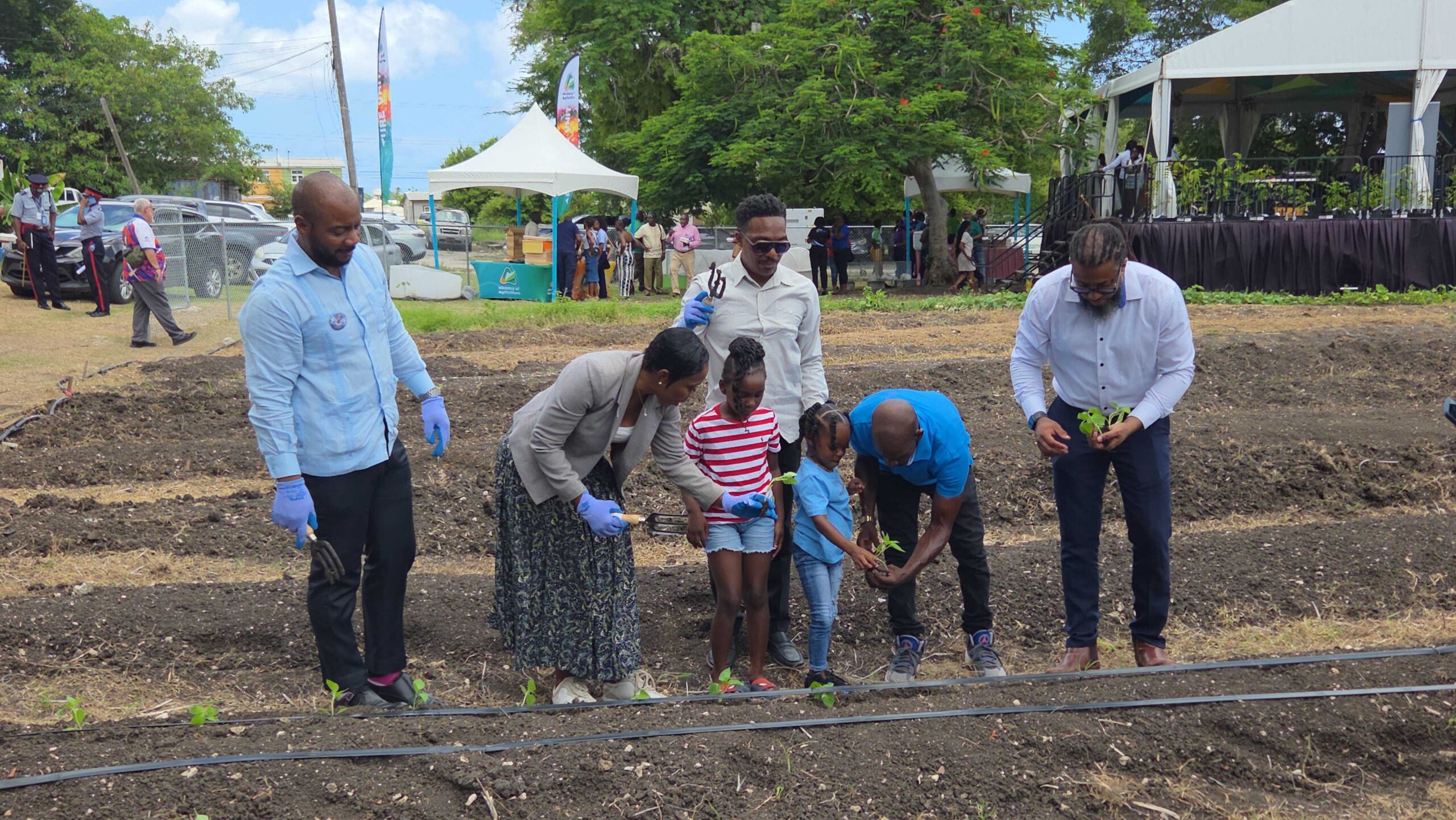
Four years after it was first rolled out as an emergency response to widespread COVID-19 economic disruption, Barbados’ Project CARE has been reborn as a permanent national initiative focused on lifting vulnerable households through sustainable agriculture, improved food security, and income generation. What began as the Community Agriculture Response and Empowerment, a stopgap measure to counter pandemic-era supply chain breakdowns and widespread income loss, has evolved into a core pillar of the country’s social and economic development strategy, with a new mandate to build long-term household resilience, nurture agricultural entrepreneurship, and strengthen national food and nutrition security.
The relaunch event brought together a cross-sector coalition of stakeholders, including ministers from the social care and agriculture portfolios, sitting parliamentarians, local community leaders, and representatives from two leading regional and global agricultural bodies: the Inter-American Institute for Cooperation on Agriculture (IICA) and the United Nations Development Programme (UNDP). Unlike the original programme, which centered on distributing basic inputs for backyard gardening, the revamped Project CARE expands its scope to include hands-on technical training, instruction in climate-smart farming practices, support for small-scale aquaponics systems, and training for small livestock rearing operations. Through intentional alignment with existing national social development programmes, officials are working to create clear pathways for participants to grow from small-scale household food production to full-fledged commercial agricultural businesses.
Neil Rowe, Deputy Speaker of the House of Assembly and MP for St Michael North West, emphasized the programme’s transformative potential for marginalized groups and whole communities when supported by collective action. “Agriculture can help us build second chances,” Rowe remarked. He highlighted the diverse range of people the initiative is designed to serve: residents who have past mistakes and are looking to rebuild, young people yet to find their professional path, families struggling to make ends meet with insufficient income, and individuals who simply need a vote of confidence to pursue their goals. Rowe stressed that sustained impact cannot be achieved by parliamentarians or farmers working alone, noting, “When the government, communities, farmers, schools, businesses and individuals work together, we can create opportunities that have a lasting impact.” He framed the relaunched initiative not as just another agricultural policy, but as a targeted investment in people, local communities, and Barbados’ long-term future.
Adrian Forde, Minister of People Empowerment and Elder Affairs, centered his remarks on the interconnectedness of social development, agricultural innovation, and climate change adaptation. He noted that local farmers play an irreplaceable role in national stability amid accelerating environmental volatility, drawing a parallel between the vulnerabilities of low-income households served by social programmes and the challenges facing Barbados’ agricultural sector. “Our agriculture is fierce with the vagaries of climate change,” Forde said. “In the same way that persons in the One Family programme are faced with vulnerabilities as it relates to poverty, lack of proper housing, and lack of proper food and nutritional supplies, our agriculture is equally faced with pests and climate change vulnerabilities.”
Forde praised the programme’s integration of climate mitigation strategies, including natural drainage systems adapted from traditional Barbadian conservation practices, and paid tribute to the ingenuity of local producers. “Farmers turn what is called the soil – Barbadians may call it mud as we know it – and produce money. If farmers are magicians, don’t forget it. You are the only people who can turn soil into money, and that, my friends, is true magic,” he said. Forde concluded that the revamped Project CARE positions Barbados as a proof of concept for small island developing states, demonstrating that even nations facing unique structural challenges can build resilience, address food insecurity, and move closer to the goal of national food self-sufficiency.