Barbados’ Magistrates’ Courts are grappling with a systemic crisis of crippling delays in the completion of case files, with some accused individuals waiting three years or longer to receive the documentation needed to move their cases forward, two top legal experts have revealed. This backlog has extended pre-trial remand stays for many defendants and left both people accused of crimes and their accusers in prolonged legal limbo, creating significant threats to the fairness of the island nation’s justice system.
Last week, acting Chief Magistrate Douglas Frederick publicly voiced his frustration over the repeated adjournments that result from incomplete files prepared by investigating officers. He noted that while Barbados Police Force is widely regarded as one of the most efficient in the world, capable of apprehending suspects within a week of most reported crimes, the failure to finalize case files after an arrest remains an intractable bottleneck. “Today, the prosecution would have gotten up and would have said: ‘We have no file. We have no file.’ And if you look at the dates of the matter, you will see that it is a little frustrating to people coming and they don’t have the files,” Frederick said.
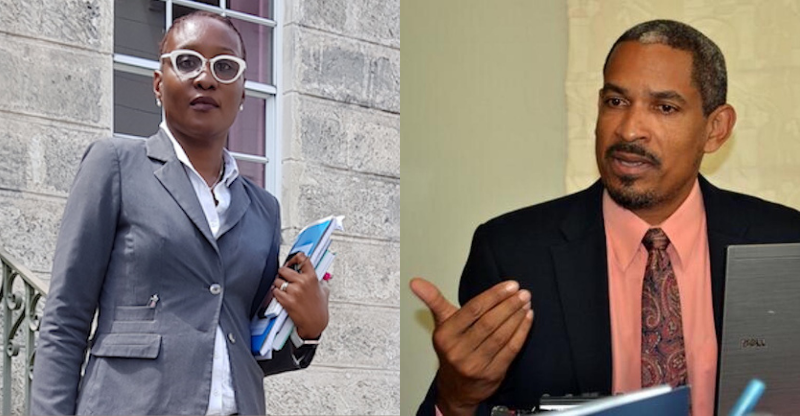
Senior Counsel Angella Mitchell-Gittens, speaking in an interview with Barbados TODAY, explained that file delays have become so routine that legal professionals no longer expect files to be ready within the first 12 months after an individual is charged. “I guess generally speaking you expect that there’s going to be a period when there is no file. So on average I would say within the first year I don’t have any expectation of a file and maybe sometimes even approaching the second year you have no expectation of a file,” she stated.
Mitchell-Gittens traced the root of the issue to systemic under-resourcing, noting that a small pool of overstretched police investigators are responsible for handling all active cases, especially the more complex investigations that require significant time and resources. The human cost of these delays, she emphasized, is far-reaching. For defendants held in pre-trial detention, the delays translate to months or years of unnecessary incarceration before their case even begins. Even for defendants granted bail, the lingering open case can derail employment opportunities and upend daily life for years. Some cases remain unresolved for as long as five or six years, with defendants repeatedly appearing in court only for the matter to be adjourned once again due to a missing file.
While some judicial officers choose to dismiss straightforward cases that have gone without a file for two years, Mitchell-Gittens noted that there is no universal rule for when dismissal is required – the decision is left to the discretion of individual judges. Crucially, she added, even a dismissal does not always bring closure for the accused. If a case is thrown out without a full adjudication on its merits, prosecution can refile the charges at a later date, leaving defendants in a permanent state of uncertainty about their future.
Mitchell-Gittens also pointed out that even defendants who wish to plead guilty and resolve their cases quickly are trapped by the backlog. Many people who have admitted wrongdoing have been forced to return to court every 28 days for months on end, simply waiting for their file to be completed. She proposed a procedural change to ease this backlog: courts could accept partial evidence to establish that a case is triable, then transfer the matter directly to the High Court without waiting for a full, finalized file.
Fellow Senior Counsel Andrew Pilgrim echoed these concerns, calling the failure to deliver complete case files the “fundamental and principal cause of delay in the [Barbados justice] system.” He questioned the logic of arresting and charging individuals when years pass without investigators compiling the evidence needed to proceed with a trial. “What did you charge a person for if you don’t have evidence?” Pilgrim asked, noting that the delays touch both low-level and serious criminal cases. In some instances, he added, arrests are made prematurely, before investigators have done enough foundational work to build a complete file.
To push the system to reform, Pilgrim urged judges and magistrates to set firm, non-negotiable deadlines for prosecution to complete files. “Give the prosecution a deadline, say ‘I’m going to give you a year to be ready and if you’re not ready in a year, I’m going to dismiss it’, it will have a greater impact on the police,” he argued. He noted that while courts have historically granted police additional leeway to account for chronic understaffing, this flexibility has ultimately removed any incentive for the system to address the backlog and improve efficiency. Beyond prolonged detention and uncertainty, Pilgrim added that delays also weaken the quality of evidence, as witnesses’ memories fade years after the alleged crime – a problem that impacts both civilian and expert witnesses alike.