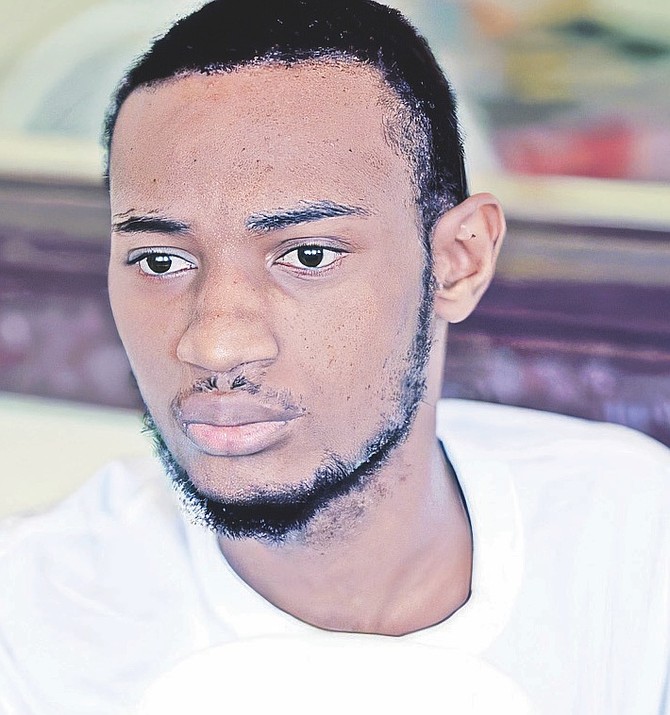
Nearly a decade after a 2016 police shooting left a 22-year-old man permanently paralyzed, a Bahamian court has approved an $80,000 emergency interim payment to cover urgent life-saving medical care he requires as his final damages claim remains pending.
Thorne Clarke, now a working professional whose mobility has been impaired from the sternum down following the shooting, recently developed a life-threatening stage four pressure ulcer on his right buttock that has become infected, requiring immediate surgical intervention. The emergency payment, ordered by Justice Camille Darville Gomez, comes after Clarke’s legal team argued he could not cover the mounting out-of-pocket medical costs on his own.
The conflicting accounts of the 2016 incident have never been fully resolved. Police maintained at the time that officers responded to a report of a suspicious individual, surrounded Clarke’s Nissan vehicle after he attempted to drive away, and opened fire only when Clarke tried to knock down an officer who feared for his life. Clarke has repeatedly disputed this narrative: he claims he complied with initial orders to stop, only began moving after receiving no explanation for the police stop, and had traveled less than 10 feet when officers opened fire. He also denies attempting to harm any officer, and alleges that after shooting him, police dragged him from his crashed vehicle (which hit a wall after he lost control of his legs following the injury), handcuffed him, and assaulted him while he was incapacitated. Police have stood by their original account of the shooting.
Clarke launched his civil lawsuit against the Commissioner of Police and the Attorney General in May 2018, and a default judgment was entered against the defense in September 2019 after they failed to enter a plea. The remaining dispute centers entirely on the total amount of damages Clarke should receive: he is seeking $2.064 million in compensation, while the defense values the claim at just over $539,000, including more than $348,000 for pain and suffering linked to his permanent paraplegia, loss of bladder and bowel function, and loss of sexual sensation. A damages assessment hearing concluded in May 2025 before Assistant Registrar Jonathan Deal, but a final ruling has not yet been issued.
In the months leading up to the interim payment application, Clarke’s health declined sharply. The pressure ulcer, a common and dangerous complication for people with long-term paraplegia, grew to 6 centimeters by 4 centimeters and became infected in late April, triggering a high fever and impaired speech that required a nine-day admission to Princess Margaret Hospital. Treating physician Dr. Vernard McPhee, who is caring for Clarke at the New Hope Medical Center for Advanced Wound Care, recommended urgent surgery to close the wound, eliminate a MRSA infection, and reduce the risk of life-threatening further complications. The procedure involves vacuum-assisted wound closure, debridement, suturing, and potentially reconstructive gluteal flap surgery, with an estimated cost of $57,488.32. Clarke already carries an outstanding $11,358.89 medical bill from prior treatment of the bedsore, and has paid all costs out of pocket to date, struggling to cover recurring expenses for medical equipment, care labor, and medication.
To accommodate his condition, Clarke now leaves work daily at 2 p.m., since prolonged sitting increases his infection risk. He told the court the uncertainty around his medical care has left him struggling with anxiety about losing his job, recurring infection, and repeated hospitalizations. His legal team initially requested $200,000 in interim funds, later reducing the request to $100,000 during a second court hearing.
The defense opposed the application, arguing that with the damages assessment already complete and a ruling pending, an interim payment would create a risk of overpayment that could not be recovered later, and amounted to procedural overreach. Justice Darville Gomez rejected this argument, noting that Bahamian Civil Procedure Rules explicitly allow interim payment applications “at any time” regardless of whether the damages assessment process has concluded.
At the same time, the judge acknowledged the need for caution to avoid overpayment and an unnecessary second assessment of damages. Using the defense’s own $539,250.03 valuation as a conservative baseline for the final award, the judge found that $80,000 – equivalent to roughly 14% of the defense’s proposed total, compared to the 18% that $100,000 would represent – struck the appropriate balance. This amount covers the projected surgical cost and outstanding bills, while creating a buffer against the risk of overpayment that the defense highlighted. The judge also noted that the initial surgical cost estimate could rise if additional treatment is needed, so the payment does not need to match the estimate exactly.
“I am therefore satisfied that $80,000.00 is no more than a reasonable proportion of the likely final judgment,” the justice wrote in her ruling, “and that it is just to exercise the discretion in the Claimant’s favour.” The $80,000 will be deducted from Clarke’s final damage award, and the defense has also been ordered to cover Clarke’s legal costs for the interim payment application. Justice Darville Gomez emphasized that the ruling does not predetermine the size of Clarke’s final compensation, and leaves Assistant Registrar Deal’s pending damages ruling entirely unaffected.