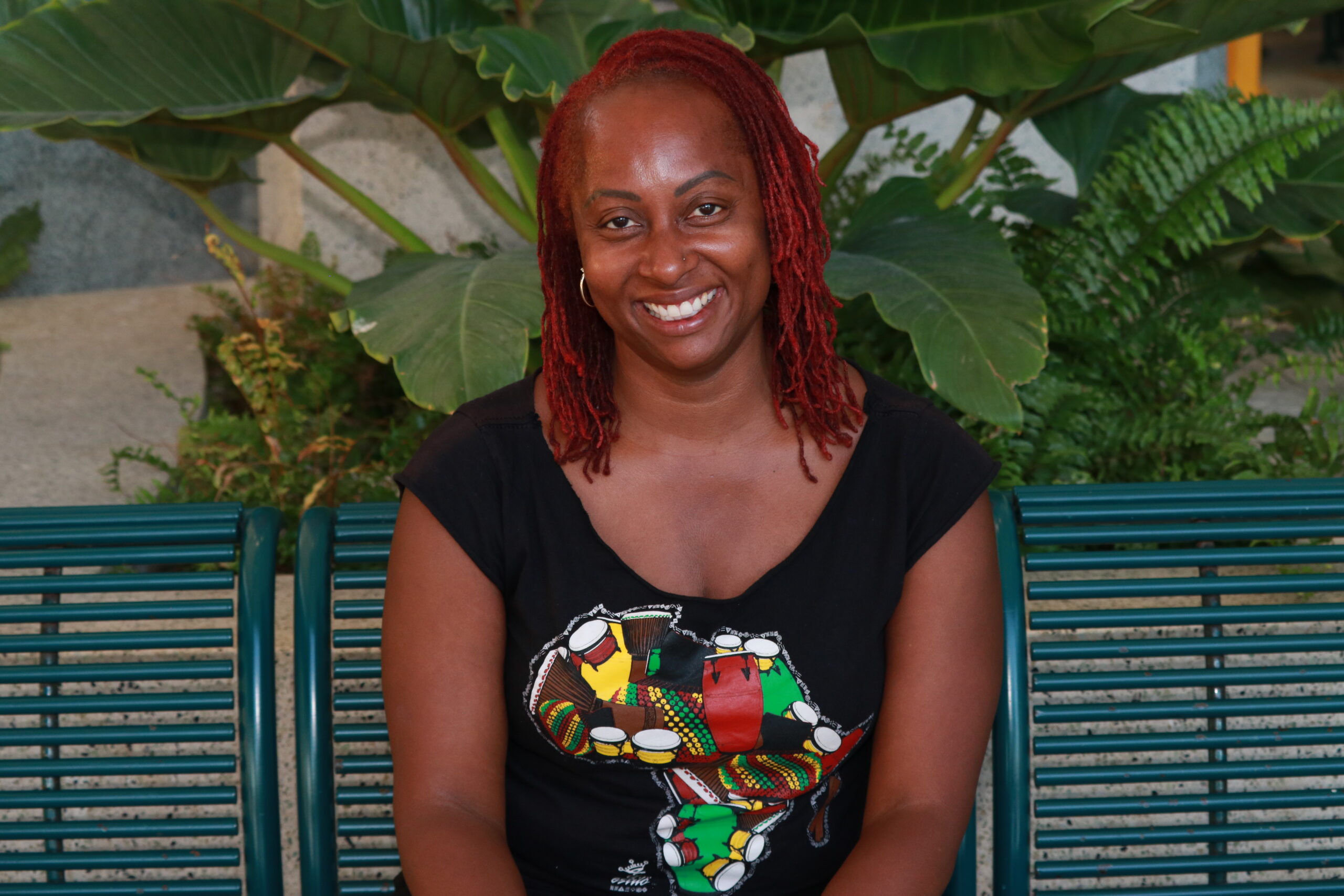
What began as a routine tropical vacation for California native Rufiena Jones in 2022 evolved into a life-altering mission that is redefining how members of the African diaspora engage with Caribbean history. What Jones expected to be a relaxing getaway quickly shifted when she uncovered a critical, under-shared chapter of African diaspora history rooted in Barbados — and left the island knowing she had to return to share that story with others.
“The day I landed, I knew I was meant to come back, and I knew I was meant to bring other people with me,” Jones shared in an interview, reflecting on that first fateful trip. Now, on her eighth visit to the Caribbean island, Jones has turned that personal calling into the Sankofa Wellness Project, a heritage tourism initiative launched in 2022 that will soon rebrand to Sankofa Heritage Travel. Unlike standard beach-focused tourism, the project frames Barbados not just as a vacation destination, but as a vital stop for people of African descent seeking to reconnect with their ancestral history, cultural identity, and collective roots.
Jones argues that Caribbean nations like Barbados are often overlooked by diaspora communities prioritizing West African countries such as Ghana and Senegal when tracing their ancestry — an oversight that leaves a major gap in understanding the full scope of the transatlantic slave trade and the cultures enslaved Africans built after crossing the Atlantic. “If we want to understand our past as descendants of Africa, we can’t leave the Caribbean out,” she explained. “We must come here. We must experience the culture here and hear the stories here because this is a major part of that history.”
Before her first trip, Jones herself shared that same gap in knowledge. It wasn’t until she encountered an atlas two years before her first visit that she learned just how many enslaved Africans were trafficked to Barbados, a statistic rarely taught in mainstream education. Further research revealed that Barbados was one of Britain’s earliest and most influential slave societies, whose plantation system became a model that spread across the entire Caribbean. That discovery fundamentally reshaped her understanding of the island’s central role in Black Atlantic history.
“I didn’t know Barbados had such a rich history,” she said. “We don’t necessarily learn that. So to be here, the way that it feels here, the way that I can feel and sense this deep, rich African connection… I know that there’s a story here that needs to be told that the diaspora needs to hear and engage with.”
A former Fulbright scholar with nearly a year of teaching experience in Thailand, Jones has long viewed travel as a tool for cross-cultural understanding, but she says Barbados offered a unique, visceral connection she never found elsewhere. Though she emphasizes she is still learning and does not identify as a professional historian, Jones has identified distinct African influences woven into every layer of Barbadian life, from music and movement to language and community structures, that have persisted beneath centuries of British colonial rule.
A lifelong dancer with decades of experience studying Afro-Cuban, Afro-Brazilian, Afro-Haitian, and traditional West African dance forms, Jones has centered that cultural insight into the itineraries she curates. The Sankofa project brings small groups of visitors to the island for key cultural events, including the annual Barbados Food and Rum Festival and Crop Over, a historic harvest festival that marks the end of the sugar cane growing season. Her programming blends guided historical tours, immersive community experiences, and cultural excursions designed to help participants deepen their understanding of their ancestral roots, with the Emancipation Day and Crop Over season featuring prominently in trip schedules due to its historical significance.
Jones welcomed her first official group of 11 clients to Barbados in November 2025, alongside two representatives from the Barbados Association of Southern California who won their trips through Barbados Tourism Marketing Inc.’s We Gatherin’ Southern California initiative. She returned earlier this year with three more California travelers to experience the 2025 Crop Over festival.
Jones’ long-term vision extends far beyond Barbados. She hopes to grow the initiative into a interconnected travel network that links the Caribbean, West Africa, and African diaspora communities in the United States, including the Gullah Geechee people of South Carolina’s Lowcountry. “I want to keep expanding it,” she said. “I want to keep people coming to the Caribbean so that after that we can go to West Africa and see those cultural connections and then also go to the south of the United States… It’s one big story.”