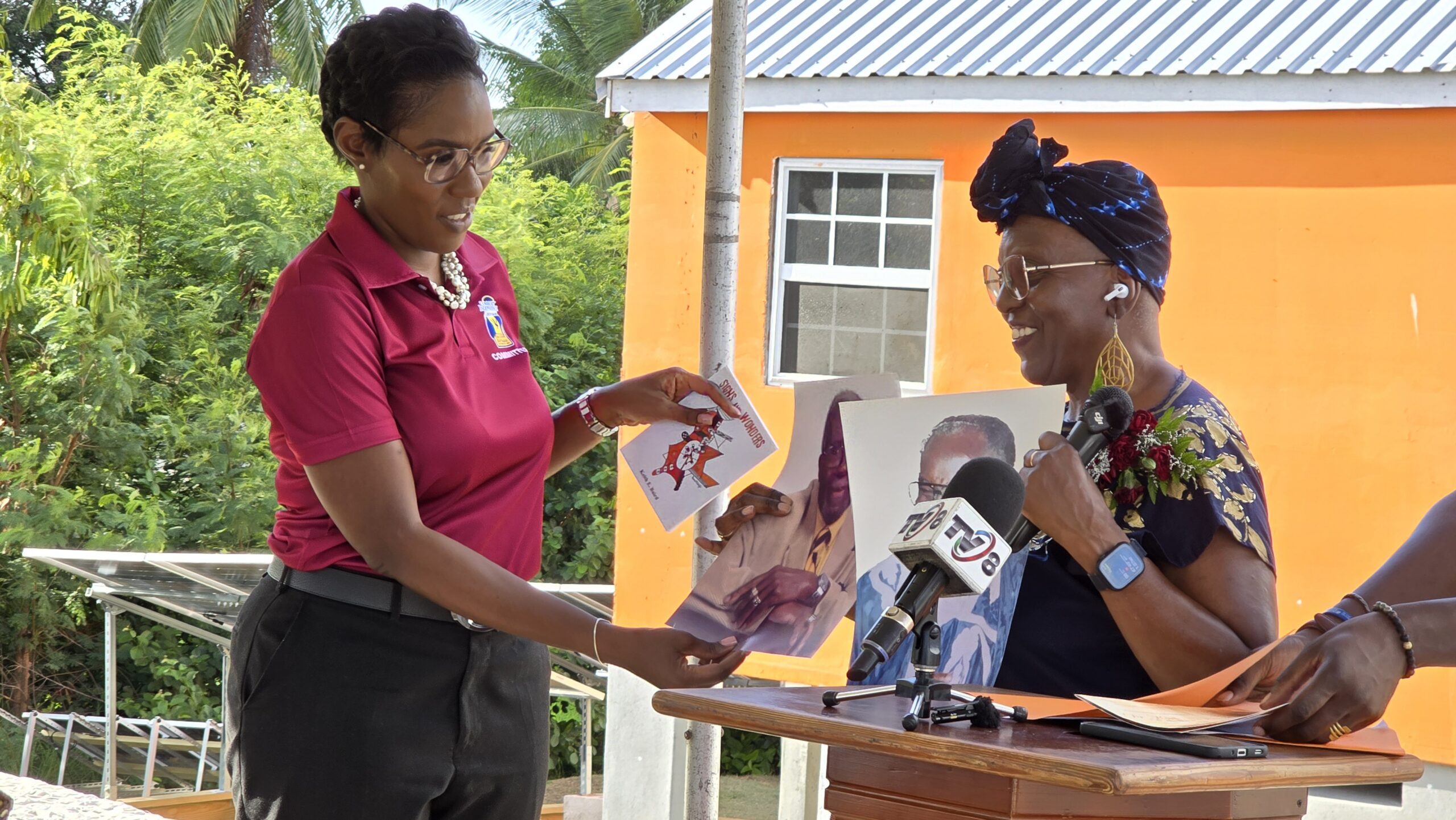
In a heartfelt ceremony honoring a trailblazing thinker whose work reshaped global conversations around racial and cultural identity, the St. Thomas Parish Independence Committee of Barbados has unveiled a permanent commemorative sign celebrating the life and legacy of Dr. Keith Baird, a native-born Barbadian-American linguist, anthropologist, and educator.
Born in the small Arch Hall community of St. Thomas, Dr. Baird passed away as one half of the pair of native intellectuals credited with popularizing the shift away from the term “Negro” to the Afrocentric descriptor “Afro-American” – a 1966 movement that redefined how Black communities name and see themselves. Working alongside activist and scholar Richard B. Moore, who laid out the case for terminological change in his 1960 text *The Name “Negro”: Its Origin and Evil Use*, Dr. Baird argued that the term “Negro” was inherently tied to the history of chattel slavery, created to dehumanize Black people by framing them as property fit for enslavement.
At the core of Dr. Baird’s scholarship and activism was the concept of “semantic liberation” – the radical idea that marginalized communities have the inherent right to define the language used to describe themselves. He maintained that reclaiming self-nomenclature was a foundational step toward reclaiming cultural and historical identity, arguing that a deep connection to one’s ancestral roots was essential for both individual and collective advancement, particularly for communities targeted by systemic oppression and deliberate cultural erasure.
Speaking at Sunday’s unveiling ceremony, Petra Ramsay-Rollock, chair of the St. Thomas Parish Independence Committee, emphasized the lasting impact of Dr. Baird’s work. “Baird believed that understanding one’s history and cultural roots was essential for personal and collective growth, particularly for communities that faced systemic oppression and cultural erasure. Baird has left an indelible mark on the world,” she said.
Ramsay-Rollock underscored that Dr. Baird’s contributions brought new dignity and respect to how Black people are described globally, noting that his work reveals a deeper truth about the power of language: “His contributions continue to inspire those who seek to understand the profound connection between language, culture, and identity. Dr. Baird taught us that language is more than words; it is the heartbeat of a people, the vessel of our history, and the foundation of our independence.”
Framing the new commemorative sign as more than just a memorial, Ramsay-Rollock explained that it stands as a beacon highlighting Barbados’ outsized impact on global racial justice discourse. “The sign is not just a marker; It is a beacon, reminding us that Barbados has produced minds that have shaped global conversations, and that Saint Thomas stands proudly as the birthplace of brilliance,” she added.
Tyrell Giles, personal assistant to St. Thomas Member of Parliament and Home Affairs and Information Minister Gregory Nicholls, echoed that sentiment, calling on young Barbadians to follow Dr. Baird’s example by embracing their ancestral roots and taking pride in their unique identity. “As Barbados continues to strengthen its own sense of national identity, particularly among young people like myself and the two parish ambassadors, I dare say that there is much we can take from his example. Know where we come from, understand the sacrifices and achievements of those who came before us, take pride in our identity, and then we can use that foundation to help build something greater for those who will come after us,” Giles said.
Giles further urged attendees to honor the legacy of past trailblazers while accepting the responsibility to lift up coming generations. “May his life remind us that our communities can produce thinkers, leaders, and change makers whose ideas can reach the world. As we honour the past, may we also accept our responsibility to inspire the future. May the legacy of Dr Baird continue to be a pillar of strength and a pillar of progress,” he said.
Dr. Baird’s daughter, Diana Baird N’Diaye, who attended the ceremony alongside her son, warned of ongoing efforts in the United States to erase the progress Black communities have made in advancing self-determination and recognizing the contributions of people of African descent. “There’s a whole lot of things going on that would want to erase the progress that has been made to erase the contributions of people of African-American or people of African descent, but know that that cannot be erased. That, as my dad used to recognise, we are an international people who share roots on the continent, and those roots can never be erased,” she said.
She stressed that her father’s work remains a reminder of the enduring importance of solidarity, self-knowledge, education, and intergenerational connection to cultural heritage. To mark the occasion, Baird N’Diaye donated a collection of her father’s original poetry, titled *Signs and Wonders*, along with personal family photographs to the Arch Hall community, fulfilling what she said would have been her father’s wish to leave his work in his place of birth.
The event drew dozens of Arch Hall residents, family members, and local leaders, all gathered to celebrate the life of a scholar whose work transformed understandings of language, identity, and Black liberation across the African diaspora.